
The first sound on a Manuel Antonio morning is usually not the surf but the rustle of a capuchin monkey crossing a hotel roof, followed by the creak of branches and the chatter of birds in the trees above the winding hill road. The light comes up gold over the Pacific, the air is already warm, and the smell of coffee drifts from open-air breakfast terraces. Three days here give you the national park, a long public beach and one slower day to spread the rest around.
Is three days enough in Manuel Antonio?
Three days is enough for most travelers, especially if you like a mix of one good forest walk, some beach time and a few unhurried meals. The area is compact: a small national park, one long public beach and a hillside of restaurants and lodges that all sit along a single winding road. Nothing here asks for a long checklist, so a short stay feels full rather than rushed.
What three days cover well is the park trails, a stretch of Playa Espadilla, sunset from a hillside terrace and one outing beyond the park gate. What they leave out is a deeper look at the wider central Pacific coast.
With more time, you could add a guided nature walk on a second morning, a boat or kayak outing, or a night in another part of the coast. Travelers who want a lot of adventure activities, or who prefer to do nothing for long stretches, may want a fourth or fifth day. For a first visit built around monkeys, sloths and sea views, three days is a comfortable fit.
Day 1 in Manuel Antonio
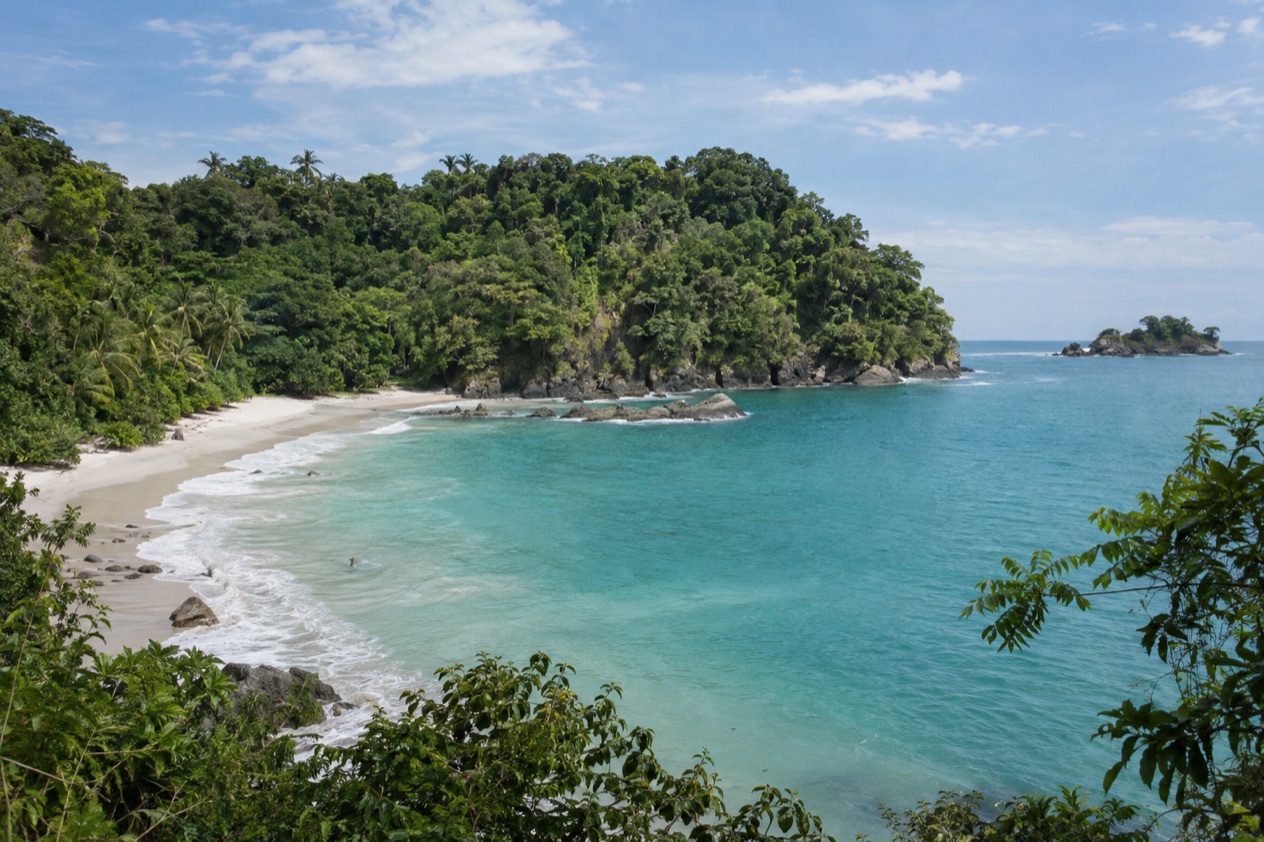
Pass the morning in Manuel Antonio National Park, a compact place of wooded paths and white-sand coves including Playa Manuel Antonio and Playa Espadilla Sur, where sloths and monkeys frequently appear near the trails. Go early, when the forest is cooler and animals tend to be more active, and walk slowly with your eyes on the branches.
Because the park’s rules and entry process can change, check its official page before you leave.
Rip currents are very dangerous, so treat the water with caution even when it looks calm. Check with the front desk about how the water looks today, obey whatever flags are posted, and stay close enough to grab your kids. Wading and shade under the trees may be all you want, and that is a fine plan.
In the afternoon, leave the park and head back toward your hotel for a rest while the heat peaks, since rain in the green season tends to arrive later in the day. For the evening, pick a hillside restaurant with a sea view, the kind of open terrace where grilled fish, a casado (the plate of rice, beans, salad and a main) and fresh fruit juice are the standard order.
Plan things so that, before you eat dinner, you get to see the sun set across the water. A small tip: carry a light rain jacket in the daypack, because showers can show up on almost any day.
Day 2 in Manuel Antonio
Day 2 moves outside the park gate to Playa Espadilla, the long public beach. Start with a late breakfast, then walk the sand in the softer light of the morning, when the stretch is quiet and the surf reads clearly.
This is a beach for strolling, watching surfers and looking back at the green headland. The same warning about rip currents holds true: this stretch of open beach runs long and the water shifts, so check with a nearby surf school or your hotel about conditions that day.
Midday is for shade. Tuck into a beachside or roadside eatery for ceviche, fried fish or a plate of gallo pinto, the rice-and-beans staple, and let the heat pass.
If you want something active in the afternoon, a surf lesson is a classic choice here. Otherwise, a slow wander along the shore and a cold drink at a beach bar make an easy second afternoon.
As the day cools, drift toward the hill road for an evening of sunset views. The strip between the beach and the park entrance has plenty of terraces, and you can often hear howler monkeys settling in the trees nearby.
Pick a different restaurant from the night before, perhaps one serving local seafood in a more casual setting. Choose your evening restaurant with your return route in mind.
Day 3 in Manuel Antonio
Day 3 works well as a slower day, with an optional outing if you still have energy. Manuel Antonio is about two hours by road from Jaco, and some travelers use the last day for a side trip along the coast before heading on. Jaco is about two hours away by road, so keep the last day in Manuel Antonio if you want a slow finish.
If you stay put, treat the morning as a gentle one. Sit over a long breakfast of fruit, eggs and strong Costa Rican coffee, and watch the trees for sloths, which are slow enough to spot if you scan carefully.
A last dip near the hotel, a stroll down the hill to browse a few small souvenir stalls, or an hour with a book on a terrace are all good ways to spend the hours. Remember that wildlife sightings are a chance, not a promise.
For the evening back in town, head down to Quepos, the working town just north of the hillside. It has a more local feel than the tourist strip, with small sodas (family-run lunch counters), bakeries and simple seafood places filled with residents.
Order a plate of whatever the kitchen is proud of, then walk the waterfront as the lights come on. It is a relaxed way to close the trip, and a good place to pick up a few last gifts such as coffee before you leave.
Where to stay for three days in Manuel Antonio
For this plan, the best base is along the hill road between Quepos and the park entrance. Along that single winding road, hotels and rentals climb with views of the sea, so where you stay decides whether you walk to the beach or take the bus.
A spot closer to the park gate makes Day 1 easy, since you can reach the trails early without a long ride. A spot partway up the hill trades a little convenience for bigger views and a quieter night.
Travelers who prefer a more local feel, with grocery stores, bakeries and everyday restaurants, may choose Quepos itself and take a short bus or taxi up to the park. Those who want to be steps from the long beach might favor a lodging near Playa Espadilla.
Light sleepers should remember that monkeys and birds start early, and that rooms with open balconies let the forest sounds in. Whatever you choose, think about how you will get to the beach and back in the evening, because that is what the choice really decides.
What to skip if you only have three days in Manuel Antonio
Skip a second beach town. It is tempting to squeeze in a stop elsewhere on the coast, but the road time eats half a day for a beach that looks much like the one you already have. Use that time for a second walk in the park, or for a long lunch with a view. Manuel Antonio rewards slowing down more than adding stops.
Skip a far excursion that needs a very early start. Day trips from the capital or from distant volcanoes mean long hours on the road, and the drive from San Jose alone takes about three to three and a half hours each way. Keep your three days for the coast and save the highlands for a trip built around them.
Skip trying to see every viewpoint and every cove in one day. The park is small, and a slow morning shows more animals than a fast one. Skip, too, any plan that has you swimming at a remote beach with no one around. With rip currents a real risk and many beaches unguarded, the smarter use of your time is a relaxed afternoon in the shade, a surf lesson with a local instructor or a hillside sunset.
Getting around Manuel Antonio in three days
Most of your movement happens on one road that links Quepos, the hillside and the park entrance. Your spot to stay shapes whether the beach is a stroll or a bus ride, so you can reach the sand on foot from a hotel beside the entrance, though a place farther up the hill generally calls for a bus or a taxi.
Taxis fill in the gaps, especially after dark, when walking the winding unlit road is not a good idea. Getting to Manuel Antonio itself takes about three to three and a half hours by road from San Jose and about two hours from Jaco, so plan your arrival day around that drive.
Good to know before you go
The U.S. State Department rates Costa Rica Level 2, ‘Exercise increased caution,’ due to crime; it says petty crime is common throughout Costa Rica and that violent crime also affects tourists, including armed robbery, homicide and sexual assault.
In Costa Rica the official money is the colon, yet tourist areas take U.S. dollars almost everywhere, and lots of hotels, tours and restaurants list their rates in dollars. Change is often handed back in colones, so keep a few small bills handy.
Along the Pacific coast, roughly December through April is dry, while about May through November brings a lush, wet season, when showers tend to arrive in the afternoon. In October, rain falls on almost every day, so a light rain jacket belongs in the daypack. Do not leave anything valuable visible while you are at the beach or when your car is parked.
Sources
- Open-Meteo / ECMWF ERA5, normals 1991-2020 computed for the grid cell at 9.392N 84.1366W, checked October 8, 2026
- U.S. Department of State, Costa Rica Travel Information, Safety and security (https://travel.state.gov/content/travel/en/international-travel/International-Travel-Country-Information-Pages/CostaRica.html), checked October 8, 2026
- U.S. Department of State, Costa Rica Travel Advisory, issued April 1, 2026 (https://travel.state.gov/content/travel/en/traveladvisories/traveladvisories/costa-rica-travel-advisory.html), read via the State Department open data API on October 8, 2026
To plan your stay
- Best Time to Visit Manuel Antonio: Dry Season, Green Season, Sea Temperatures and Festivals
- Where to Stay in Manuel Antonio: Quepos, the Hill Road and the Beach End
- Manuel Antonio in January: Weather, Beaches, Wildlife and a Two-Day Plan
- Manuel Antonio in February: Weather, Beaches, Park Walks and a Two-Day Plan