
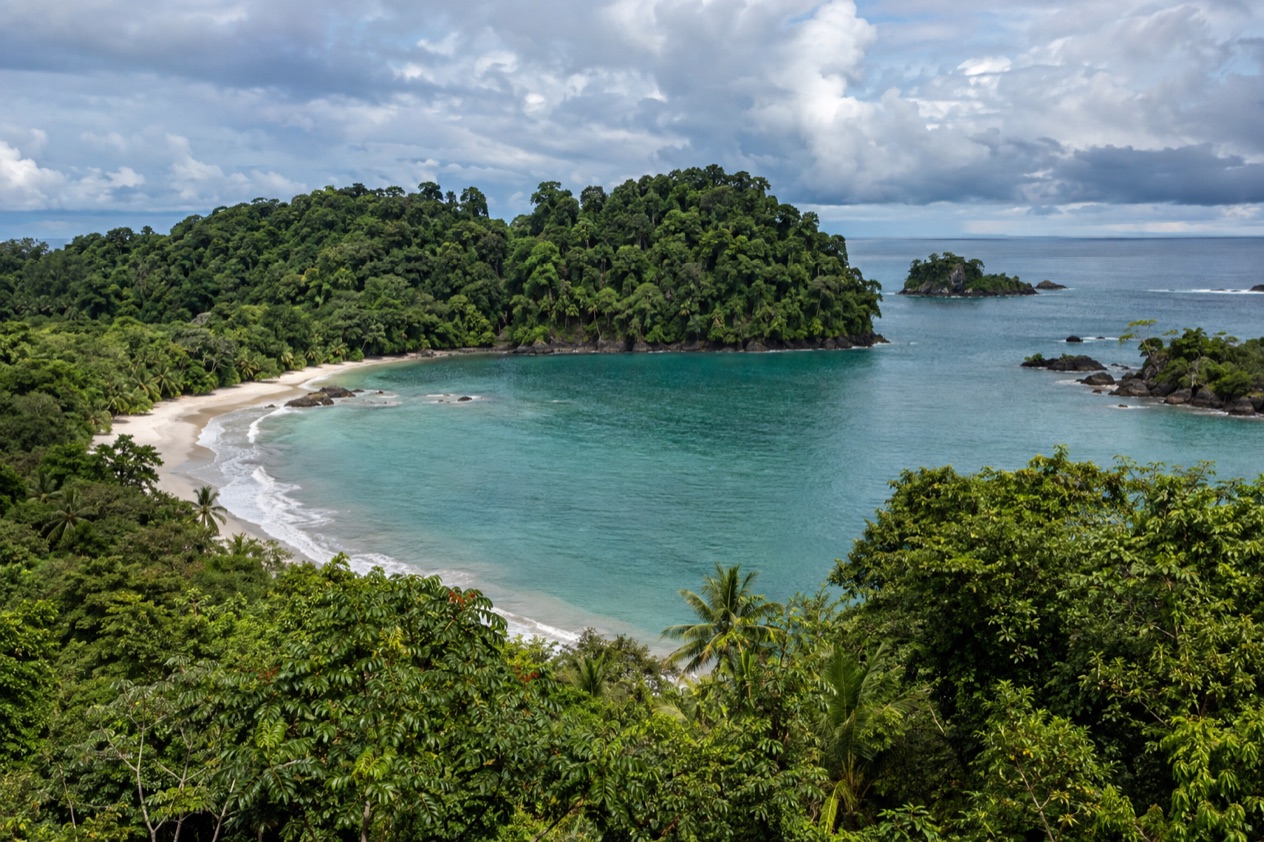
In November, Manuel Antonio wakes to the racket of howler monkeys and the smell of wet earth rising off the forest after a night of rain. The hills are at their greenest, the afternoon clouds stack up over the Pacific, and the beaches have room to spare. November suits those who want thick jungle, quieter paths and big evening skies.
What is the weather like in Manuel Antonio in November?
November is warm, humid and wet: this is the heart of the green season, with showers on nearly every day and mornings that are often the best part of it.
| Month | Average high (°F) | Average low (°F) | Rain days | Sea (°F) |
|---|---|---|---|---|
| October | 78.7 | 70.4 | 29.9 | 85.1 |
| November | 78.9 | 70.3 | 28.8 | 83.1 |
| December | 79.6 | 70.4 | 25.7 | 84.4 |
Rain here usually follows a rhythm. Mornings often start bright and steamy, with the best light for walking the forest, and clouds build through the early afternoon before a downpour rolls in off the ocean.
Some days the rain is a short, heavy burst, on others it settles in for the evening and the night, and a gray, drizzly day is not unusual. The heaviest falls are a regular part of the month, so the plan works best when the outdoor things come first.
Even the nights stay warm, so you can eat on a terrace in a T-shirt, though a thin layer helps against air conditioning and the damp. Days are a little over eleven and a half hours long, with the light fading quickly in the evening. Everything feels slightly sticky, and clothes dry slowly, so quick-dry fabrics are far more useful than cotton.
When the sky clears at the end of a storm, the hills steam and the ocean turns silver and pink. These breaks make some of the best photographs of the trip, and they are worth a wait on a hotel balcony with a cold drink.
Can you swim in Manuel Antonio in November?
That water won’t jolt you. It stays warm enough for a slow, easy soak, closer to a lukewarm bath than a plunge.
Warm water is one thing, calm water another. This coastline frequently delivers powerful waves, particularly after a night of storms, and the rip currents present a grave danger, claiming the lives of several U.S. tourists each year. Since lifeguards and cautions about hazardous water are absent at most beaches, check the surf before entering and stay out when conditions are unsafe.
After a walk, plenty of visitors head to the park’s little coves, Playa Manuel Antonio and Playa Espadilla Sur, to cool down, and for the shallow rocky corners a snorkeling mask comes in handy. Playa Espadilla, the long public beach beyond the park gate, offers extra space and bigger waves, a better fit for beginners taking a board lesson and for strong swimmers than for small children. Bring a rash guard against the sun between clouds, and a dry bag for the sudden shower.
What to do in Manuel Antonio in November
November is when the forest is at its loudest and most alive, and the crowds thin out. November 2 is All Souls’ Day (Dia de los Difuntos), when some families head for the cemeteries. Farther inland, the coffee harvest begins around the end of the year, and the first roasts begin to appear in cafés.
Food follows the season in a simple way. Look for a casado, the dish of rice, beans, plantain, salad and grilled fish or chicken, at small family-run places called sodas, along with fresh fruit juices made from whatever is ripe. After a wet afternoon, a bowl of hot soup or a cup of local coffee tastes especially good.
Walking the national park
Most visitors arrive for the park. From the entrance, the forest trails lead down to the beaches, and along the way you can often spot capuchin monkeys, squirrel monkeys, sloths, iguanas and many birds. In November the canopy is thick and wet, so spotting animals takes patience, and a guide with a scope helps a great deal.
Go early, when the air is cooler and animals are most active, and plan to be out before the afternoon clouds break. Wear shoes with grip, since the paths turn slick, and keep your food sealed because raccoons and monkeys are bold. Because rules and entry specifics can shift, look at the park’s official website before you head out.
Beach time and coastal walks
Between showers, the beaches are the place to be. Playa Espadilla is a long, open sweep where surf schools work with beginners, and its far end is quieter. Inside the park, the small coves are shaded by trees and ideal for a rest after a hike.
A walk along the shore at low tide shows tide pools, hermit crabs and shorebirds, and the sunsets can be spectacular when the clouds break. Keep an eye on the sky, and head back when you hear thunder.
Wet-weather outings
The rain does not cancel everything. A night walk with a guide often turns up frogs, insects and sleeping birds, and the wet air makes the forest sound louder after dark. A good way to use an afternoon might be a tasting of chocolate or coffee, a leisurely lunch at a restaurant on a hillside looking out at the clouds, or a boat ride through the mangroves close to Quepos.
Many visitors also spend a slow hour at a hotel pool or spa, which fits the mood of the month. Sunset from a terrace, with a drink in hand and thunder far out at sea, becomes the evening event.
A two-day itinerary for Manuel Antonio in November
Day 1 belongs to the national park. Make the park your first activity of the day, and walk the main trails toward the coves. Spend the late morning on the sand and in the water at the park’s beaches, then leave before the clouds thicken and the afternoon rain arrives.
Lunch is a casado at a soda near the park road, followed by a rest while the first downpour passes. If the rain stops, walk the town’s shoreline for the light before sunset, which comes early in the evening. Dinner can be fresh fish at a restaurant in the hills, where the view over the water carries on after dark.
Day 2 moves to the open beach and the surrounding area. In the morning, when the ocean tends to be calmest, either sign up for a surf lesson or enjoy a long stroll on Playa Espadilla, and stay mindful of the flags and the water. Late morning, head toward Quepos for the market, a coffee and a stroll along the waterfront.
In the afternoon, a mangrove boat trip or a chocolate tasting is a good way to stay dry, and a night walk with a guide makes a lively end to the evening. If the weather turns hard, a long lunch, a spa session or an hour in a hotel pool fills the gap until the sky clears.
Is Manuel Antonio busy in November?
No, November ranks among the calmer periods here, when the trails see fewer people and the beaches offer more space.
The wet weather keeps many travelers away, so the park paths feel less crowded and restaurants rarely have a wait. Rooms are easier to find, and many hotels offer lower green-season rates. Rental cars and tours are simpler to arrange than in the dry months, though the holiday weekend around November 2 brings some local travelers to the coast.
Even so, a habit of booking early for the holiday weekend and for popular guided walks is a good one, while the rest of the month can be arranged closer to the date. Look at the park’s official page for entry arrangements before choosing a day.
What to pack for Manuel Antonio in November
Bring clothes for hot, sticky days and quick downpours, and store all of it in thin layers that dry quickly.
- A light rain jacket, since showers arrive without warning in the afternoon.
- Quick-dry shirts and shorts, because damp air slows ordinary cotton.
- Shoes with grip for muddy forest paths, plus sandals for the beach.
- Sunscreen and a hat, for the bright hours between clouds.
- A dry bag for phones, cameras and documents.
- Pack bug spray for the woods and for after dark.
Good to know before you go
The U.S. State Department rates Costa Rica Level 2, ‘Exercise increased caution,’ due to crime; it says petty crime is common throughout Costa Rica and that violent crime also affects tourists, including armed robbery, homicide and sexual assault.
Since November sits within the rainy season, schedule your outdoor activities before noon and leave the later hours open. Roads can be slick after heavy rain, and travel times may stretch, so leave a margin when you have a flight or a tour to catch. The Atlantic hurricane season runs to the end of the month, so keep an eye on forecasts before you travel.
Manuel Antonio in November vs October and December
Going four weeks earlier means more rain and an even greener, wetter forest, with the sea at its warmest and the beaches the quietest. October suits travelers who want the lowest crowds and do not mind gray days.
Moving four weeks later brings a clear change: the showers ease, the skies open more often and the trails dry out. December also brings the holiday season, with more visitors, busier restaurants and rooms that need to be booked well ahead.
Choose October if you want solitude and low rates and do not mind rain. Stay with November for a balance of quiet and a little more sun, and shift to December if dry hours matter more than space.
Is November a good time to visit Manuel Antonio?
For travelers who love a lush, quiet forest and don’t mind planning around the rain, November is indeed a good time.
It suits wildlife lovers, photographers, budget-minded travelers and anyone who prefers an empty trail to a full one. It is less suited to people who want guaranteed sunshine all day, long beach afternoons or a packed schedule of outdoor tours.
On arrival, plan the park walk for the first clear morning and keep the afternoons loose. What is special about November here is the sound and color of the place: the roar of the howlers at dawn, the steam off the hills and the sky turning pink over a quiet beach after the last storm.
Sources
- Open-Meteo / ECMWF ERA5, normals 1991-2020 computed for the grid cell at 9.392N 84.1366W, checked October 8, 2026
- Open-Meteo Marine API, average 2015-2024, checked October 8, 2026
- sunrise-sunset.org, sunrise and sunset calculated for the 15th of the month, checked October 8, 2026
- U.S. Department of State, Costa Rica Travel Information, Safety and security (https://travel.state.gov/content/travel/en/international-travel/International-Travel-Country-Information-Pages/CostaRica.html), checked October 8, 2026
- U.S. Department of State, Costa Rica Travel Advisory, issued April 1, 2026 (https://travel.state.gov/content/travel/en/traveladvisories/traveladvisories/costa-rica-travel-advisory.html), read via the State Department open data API on October 8, 2026
To plan your stay
- Things to Do in Manuel Antonio: National Park Trails, Beaches, Day Trips and Food
- Where to Stay in Manuel Antonio: Quepos, the Hill Road and the Beach End
- Day Trips from Manuel Antonio: Carara Macaws, Tarcoles Crocodiles, Jaco and Quepos
- 3 Days in Manuel Antonio: Park Trails, Beaches and a Slow Final Day