
On the evening of September 14, children in Quepos and the hills around it walk the streets with paper lanterns called faroles, while the jungle behind the beaches drips after the afternoon rain. Howler monkeys start up at dawn, the sea stays bathwater warm, and the trails smell of wet earth and leaves. September is the green heart of the rainy season in Manuel Antonio, a quieter month for travelers who like their forest lush and their beaches with room to spare.
What is the weather like in Manuel Antonio in September?
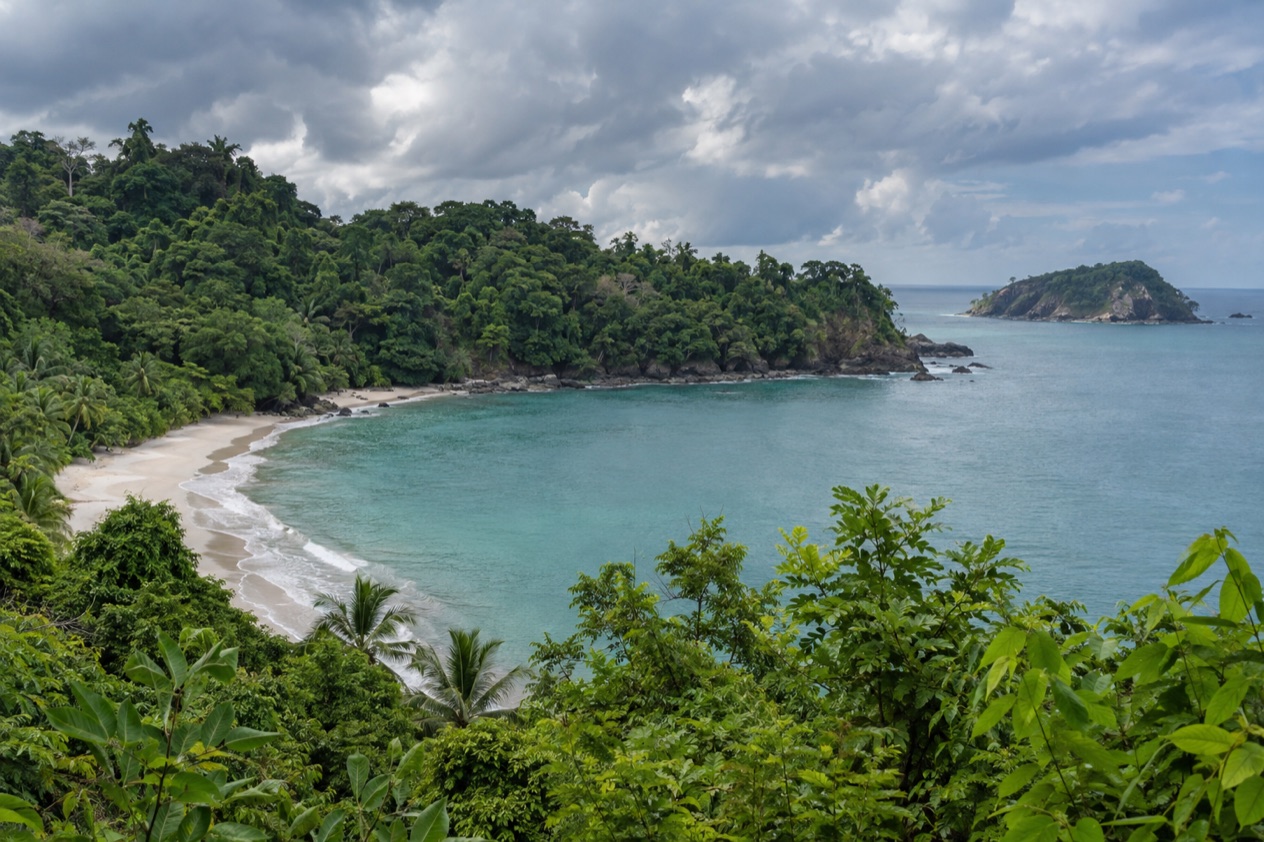
In Manuel Antonio, September brings warmth, humidity and rain, and while mornings tend to be bright, the afternoons often grow gray and wet.
| Month | Average high (°F) | Average low (°F) | Rain days | Sea (°F) |
|---|---|---|---|---|
| August | 79.8 | 70.8 | 29.9 | 85.5 |
| September | 79.4 | 70.6 | 29.4 | 85.7 |
| October | 78.7 | 70.4 | 29.9 | 85.1 |
Rain is nearly a daily companion this month, so think in terms of rhythm rather than dry and wet days. Many mornings start with sun and a soft haze over the hills, and that is the best window for the park, the beach and a walk down to the water. By early afternoon clouds often stack up over the ridge, and the rain that follows can be heavy.
Heat and humidity stay steady from dawn to dusk. In the sun, afternoons turn muggy, a T-shirt is plenty for dinner on a terrace thanks to warm evenings, and nighttime brings almost no relief from the heat. Around twelve hours of daylight means the sun comes up early and sets in the early evening, so dinner plans start in the dark.
Dress for quick-drying comfort: light cotton or synthetic layers, a real rain jacket, and sandals that handle wet stone. The forest looks its richest now, every leaf washed and the waterfalls in the hills running full, though views of the coastline can disappear behind low cloud for a while.
Can you swim in Manuel Antonio in September?
The water is definitely warm enough for a long, relaxing dip, and you slip in without a gasp.
Inside the national park and right next to it, those beaches rank as the go-to places to swim, their light-colored sand sweeping in curves among headlands covered in trees. The water can be calm on certain days and, on others, the waves come in with genuine power, depending on the tide and the swell. Rip currents are very dangerous and cause several drownings of U.S. tourists each year, while most beaches have no lifeguards or warnings about unsafe conditions.
Families usually do best at the quieter coves, going in the morning before the clouds gather and keeping children within arm’s reach. Snorkelers can try the calmer spots on a clear morning, though runoff after heavy rain can cloud the water. Pack a rash guard, water shoes for rocky edges, and a dry bag, because rain may show up before you leave the beach.
What to do in Manuel Antonio in September
September’s big date is Independence Day on September 15. On the evening of September 14, children carry paper lanterns, the faroles, through town in the Desfile de Faroles, and the next day brings school bands and flags. It is a local celebration more than a tourist show, and watching from the sidewalk with a cold drink is the best way to enjoy it.
Beyond the holiday, the month suits the forest. Rain keeps the canopy dripping and loud, with frogs, insects and birds all in full voice. When it comes to eating, this is the time of year for satisfying, stick-to-your-ribs dishes: a casado (rice, beans, plantain, salad and a choice of meat or fish), gallo pinto (rice and beans) in the morning, ceviche on a terrace, and fresh fruit juices that cool you down between showers.
The national park in the morning
Arrive at the park entrance early, when the trails are cool and the animals are moving, and spend the morning on the forest paths with a naturalist guide if you want help spotting wildlife. Sloths, white-faced monkeys, agoutis and birds are possible sightings, never promises, and a guide with a scope makes a big difference in finding them.
Trails turn muddy and slippery after rain, so wear shoes with grip. A morning in the park can combine forest paths with time at the beaches, provided conditions are safe for swimming. Before you head out, check the park’s official page for current rules, hours and ticketing.
Quepos and the hillside road
Quepos, just north of the park, is the practical town for markets, pharmacies, bakeries and local sodas, the small family restaurants that serve a casado. In September it feels more like a working town than a resort, and the Independence Day lantern parade gives it a sweet, neighborly mood.
The road between Quepos and the park winds up and over a ridge with sea views, and hotels and rentals line it all the way. Where you decide to stay decides whether the beach is a walk or a bus ride away, so think about that before you book. A terrace at sunset, between rain squalls, is one of the month’s quiet pleasures.
Rainy-day pleasures
When the afternoon downpour settles in, do what locals do: find a covered restaurant, order coffee or a fruit smoothie, and watch the storm roll over the canopy. A long lunch in a covered restaurant can fill the gray hours easily.
If the clouds break near the end of the day, the light turns golden and the forest steams. Birds come out, the monkeys settle, and a short walk along the road or the beach is worth the effort.
A two-day itinerary for Manuel Antonio in September
Day 1 belongs to the park. Be at the entrance early, walk the main trails while the air is cool and animals are active, and finish on a beach for a swim before the clouds build. Eat a casado at a small restaurant near the road for lunch, since the middle of the day is the hottest and stickiest.
By mid-afternoon the rain often arrives, which is the time for a rest at the hotel, a shower and a nap. Come back out for the evening, when the light is soft and dinner in a hillside restaurant looks over the dark water. Sunset comes in the early evening, so plan to be seated as the sky changes.
Day 2 moves into town and the hills. Start with breakfast of gallo pinto and fruit, then head to Quepos for the market, the waterfront and a stroll among the bakeries. Spend the morning in Quepos, then keep the afternoon flexible in case rain arrives.
When the rain comes down hard, have a backup plan in your pocket, whether that means a leisurely lunch, a tasting of chocolate or coffee, a spa session or a cooking class. When the weather clears, head to a viewpoint on the hillside road for the evening, and if it is September 14, catch the lantern parade in the streets.
Is Manuel Antonio busy in September?
No, September is one of the quieter months here, with fewer visitors on the trails and more room on the beaches.
The rains keep many travelers away, so the park feels calmer and hotels often have rooms to spare. Restaurants rarely need much notice, and rental cars and transfers are easier to line up than in the dry months. Independence Day around September 15 brings a local holiday feel and some domestic travelers, so book rooms a little earlier if your trip includes that date.
Even in a quiet month, the habit that pays off is booking the places you care most about first: the room with the view, the guide for the park, any boat outing. For the park itself, rely on its official page for current rules and any reservation requirements, since they change.
The quiet has a trade-off: wet trails, gray afternoons and some tours that cancel in poor weather. If you can be flexible about the daily plan, September rewards you with a calmer, greener Manuel Antonio.
What to pack for Manuel Antonio in September
Bring clothing and gear that handle heat, damp air and surprise showers, choosing pieces that dry fast and keep your equipment safe.
- A light rain jacket, because afternoon showers can be heavy.
- Shoes with good grip for muddy, slippery park trails.
- Pack fast-drying clothing, because in this humidity nothing takes long to dry.
- A dry bag or waterproof case for phones, passports and cameras.
- Sunscreen and a hat for the bright mornings.
- Pack insect repellent for the forest and for your evenings.
- Water shoes and a rash guard for rocky beach edges and sun.
Good to know before you go
The U.S. State Department rates Costa Rica Level 2, ‘Exercise increased caution,’ due to crime; it says petty crime is common throughout Costa Rica and that violent crime also affects tourists, including armed robbery, homicide and sexual assault.
September falls within the rainy season, so build slack into the day and keep the most important outings for the morning. On the hill, the road between Quepos and the park twists and turns.
When U.S. travelers enter, they must satisfy requirements for a passport that remains valid throughout the entire stay, plus either a return ticket or evidence of onward travel to a different country. It is possible that officials will permit a visit of as long as 180 days with no visa, though that cannot be counted on.
Manuel Antonio in September vs August and October
Moving a month earlier to August changes the air and the sea very little, since the temperatures are nearly identical. What shifts is the feel of the calendar: August is a summer vacation month for many families, so the park and beaches can see a few more visitors, and rooms book up sooner.
Moving to October pushes you deeper into the green season. Rain days stay near constant and the amount of rain climbs, so gray skies and soaked trails are more likely, and the sea is a touch cooler. In exchange, the forest is most lush, and the beaches and trails can feel almost private.
Choose August if you have school-age children on a summer schedule, or if you want the Independence Day lantern parade out of your plans. Choose September if you want a calm balance of warm sea, green forest and a local festival. Choose October if you can live with gray skies for the quietest trails and the lushest scenery.
Is September a good time to visit Manuel Antonio?
Yes, September is a good time for travelers who value green forest, warm water and quiet trails over guaranteed sunshine.
It suits wildlife lovers, photographers who like moody skies, couples who enjoy a long lunch while rain falls, and anyone who prefers beaches with room to spare. It is less ideal for people who need a dry afternoon every day, who plan long boat outings, or who want clear horizon views at every sunset.
Once you get there, make the park your priority: head out early, when the air is cool and the wildlife is lively, and leave your afternoons open. Then follow the rhythm of the place, with a swim in the morning, a long lunch when the sky darkens and a walk when the light returns. What makes September special here is the evening of the 14th, when paper lanterns bob through the streets under a sky still smelling of rain, while the forest above the town hums with frogs.
Sources
- Open-Meteo / ECMWF ERA5, normals 1991-2020 computed for the grid cell at 9.392N 84.1366W, checked October 8, 2026
- Open-Meteo Marine API, average 2015-2024, checked October 8, 2026
- sunrise-sunset.org, sunrise and sunset calculated for the 15th of the month, checked October 8, 2026
- U.S. Department of State, Costa Rica Travel Information, Safety and security (https://travel.state.gov/content/travel/en/international-travel/International-Travel-Country-Information-Pages/CostaRica.html), checked October 8, 2026
- U.S. Department of State, Costa Rica Travel Advisory, issued April 1, 2026 (https://travel.state.gov/content/travel/en/traveladvisories/traveladvisories/costa-rica-travel-advisory.html), read via the State Department open data API on October 8, 2026
- U.S. Department of State, Costa Rica Travel Information, Entry and exit requirements (https://travel.state.gov/content/travel/en/international-travel/International-Travel-Country-Information-Pages/CostaRica.html), checked October 8, 2026
To plan your stay
- Things to Do in Manuel Antonio: National Park Trails, Beaches, Day Trips and Food
- Where to Stay in Manuel Antonio: Quepos, the Hill Road and the Beach End
- Day Trips from Manuel Antonio: Carara Macaws, Tarcoles Crocodiles, Jaco and Quepos
- 3 Days in Manuel Antonio: Park Trails, Beaches and a Slow Final Day