
In June the hills above Manuel Antonio steam after a morning shower, and the howler monkeys start their low roar from the canopy just as the first light reaches the beaches. The green season has begun, the forest is turning thick and glossy, and the trails smell of wet leaves. It is a month for early starts, long lazy afternoons under a roof, and a coast that feels like itself rather than a postcard.
What is the weather like in Manuel Antonio in June?
June is warm, humid and wet, with clear mornings giving way to showers that arrive in the afternoon and sometimes settle in for the evening.
| Month | Average high (°F) | Average low (°F) | Rain days | Sea (°F) |
|---|---|---|---|---|
| May | 80.4 | 72.0 | 29.7 | 87.6 |
| June | 79.8 | 71.3 | 28.6 | 85.8 |
| July | 79.8 | 70.8 | 29.9 | 85.2 |
Rain is part of almost every day in June, so plan around it rather than hoping to dodge it. Mornings are usually the best window: the sky is often bright, the air is soft, and the forest is busy with birds. Clouds build through the middle of the day, and the downpours that follow can be heavy, loud on the tin roofs and over within an hour or two, or they can linger into the night.
Heat and humidity stay constant, so the nights hardly cool off. You can dine outdoors in a T-shirt most evenings, and when a brief rain passes through, folks duck beneath the awning. Around the middle of the month, you get roughly twelve and a half hours of daylight, so a sunny morning unfolds before the clouds roll in.
Dress in light, quick-drying layers and carry a thin rain jacket in your day bag. The hills are green and the sea is warm, but the light can turn gray and flat once the clouds close in, so photographers do best at first light.
Can you swim in Manuel Antonio in June?
The marine data shows the water is as warm as a lukewarm bath, so you can swim for a long, comfortable stretch, and cold is never the problem.
The real question is waves and currents. Rip currents pose a serious threat, taking the lives of multiple U.S. tourists annually, and most beaches have neither lifeguards nor any caution about hazardous conditions.
Sheltered bays shape the curve of the beaches in and around the national park, so they tend to be calmer than the exposed stretches close to Quepos. Even so, conditions change by the hour, so ask a local or a hotel staffer about the day’s water, and follow any flags you see.
For families with little kids or swimmers who get anxious, paddling in the shallow water is the best bet. Bring a mask for the clear patches and plenty of sunscreen, since the cloud cover hides how strong the sun is.
What to do in Manuel Antonio in June
June does not bring a famous festival to Manuel Antonio. What it brings is the green season itself, which changes the feel of everything: fewer people on the trails, a loud and lush forest, and an easier rhythm in town. The best days are built around the morning, with the afternoon kept for rest, food and a good view from under cover.
Walking the national park
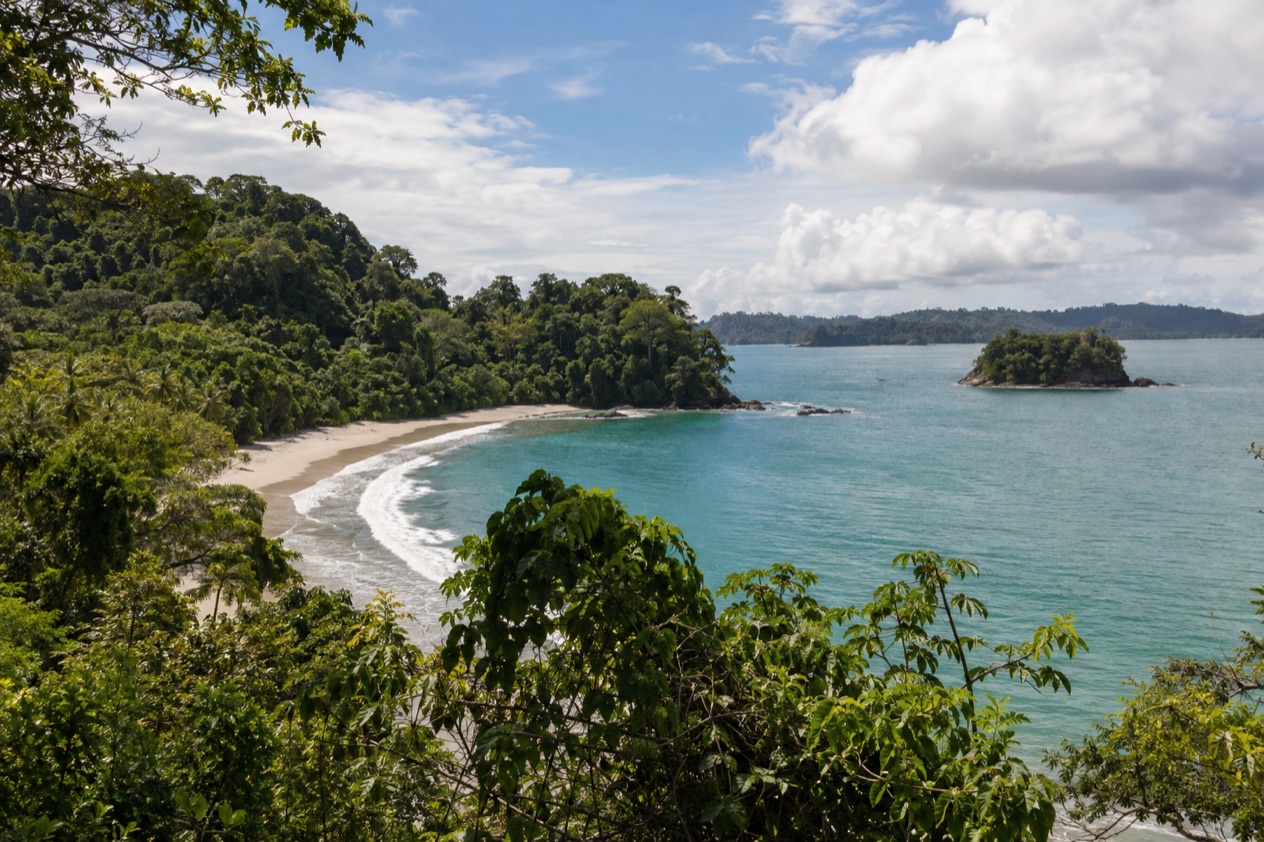
The park is the reason most people come, and June is a good month for it. Trails wind through rainforest down to coves with white sand, and wildlife shows up often: white-faced capuchin monkeys, raccoons, iguanas, agoutis and, with luck, a sloth hanging motionless high in a tree. These are chances, never promises, and a guide with a spotting scope makes a big difference in finding animals.
Go as early as you can. The morning light is clear, the animals are active and the humidity is easier to bear. Trails can be slick after rain, so wear shoes with grip, and keep food sealed because the monkeys are expert thieves. Check the park’s official SINAC page for current entry and reservation requirements when you set the day.
Beach time and the hillside road
Outside the park, the beach by the main road is lined with simple restaurants and chairs, and it is where most visitors spend their afternoons. A room high on the hill gives you the best sunsets and the loudest monkeys.
Many people spend a clear morning in the park and a cloudy afternoon on a hotel terrace, watching the rain move across the water. The sunsets, when the sky opens near evening, turn the horizon orange over the islets offshore.
Food and the mood in town
Eating here is easy and relaxed. Your casado comes with rice, beans, plantain and salad, plus your pick of fish, chicken or beef, and it also delivers gallo pinto, the rice-and-beans dish that comes with eggs at breakfast. Fresh fish on the coast is simply grilled or served as ceviche, and cold fruit drinks of pineapple, watermelon or passion fruit are a good answer to the humidity.
Restaurants on the hill have open sides with views of the canopy, so a shower becomes part of dinner. In June there are more empty tables, the pace is slower and the staff have time to chat. Quepos below has its own market and a lived-in feel that is worth a short visit. With the days so changeable, keep a second plan in your pocket: a long lunch, a spa afternoon, a coffee on a covered terrace or a swim in a hotel pool while the clouds empty out.
A two-day itinerary for Manuel Antonio in June
Day 1 begins at first light, with breakfast of gallo pinto and fruit and an early walk in the national park, when the sky is clearest and the animals are on the move. Stay on the trails through the late morning, then drop to one of the coves for a swim while the sun still holds. Eat a casado at a simple place near the entrance before the heat peaks.
By early afternoon the clouds build. Head back up the hill for a rest, a pool or a shower, and let the rain pass. If it clears toward evening, watch the sunset from a terrace on the hill, then eat fresh fish at an open-air restaurant with the forest sounds all around.
Day 2 starts later and gentler. Spend the clear morning in Quepos, wandering the market and the waterfront and picking up fruit and snacks. The sea is warm, so a swim near the hotel is easy in the forenoon.
Keep the afternoon flexible with a long lunch, a coffee tasting or a slow hour of reading on a covered balcony. If the sky opens again before dark, walk down to the beach for a last wade and the sunset, and finish with a casual dinner in town.
Is Manuel Antonio busy in June?
No, June is one of the calmer stretches on this coast, as the green season keeps many visitors away and the trails and beaches feel more open.
Travelers who come now are mostly people who like quiet and do not mind showers, along with a few families on school breaks and some lingering visitors from the dry months. Restaurants have free tables on most nights, and rooms are easier to find. Even so, it pays to book the first night and any guided tour a little ahead, especially around weekends and any holiday week.
The national park is the one place that can still feel full on a clear morning, with groups arriving together at opening time. Reservation rules can change, so look at the park’s official page when you choose your day.
What to pack for Manuel Antonio in June
Pack for heat, humidity and sudden rain, and for trails that are often wet.
- A light rain jacket, because showers arrive most afternoons.
- Quick-drying clothes, since nothing dries slowly in this humidity.
- Shoes with grip for muddy park trails.
- Sunscreen and a hat, as clouds hide strong sun.
- For the evenings and the forest, bring bug spray.
- A dry bag for phones and cameras.
Good to know before you go
The U.S. State Department rates Costa Rica Level 2, ‘Exercise increased caution,’ due to crime; it says petty crime is common throughout Costa Rica and that violent crime also affects tourists, including armed robbery, homicide and sexual assault.
June falls in the Atlantic hurricane season, which runs on its own calendar and matters little to the Pacific side’s daily weather, though heavy rain days are normal here. Getting around is mostly by one winding road, so allow extra time when the weather is bad, and book your first night and your park day before you arrive. Where you stay on the hill largely determines whether you can walk or need a bus to reach the beach.
Manuel Antonio in June vs May and July
Moving the trip to May gives you a slightly warmer sea and a touch more of the dry-season feel, but the rain is already a regular visitor and the first showers of the green season are just as common. Crowds are a little thicker early in the month, and the forest is a bit less lush than it becomes by June.
July is greener still, with a little more rain and a sea that is slightly cooler though still very warm. The trails are quieter, with fewer groups, and the feel is of a coast settling into its wet rhythm, though some visitors return for school vacations later in the summer.
If you want the most sun and do not mind a few more people, lean toward May. If you want the greenest forest and the emptiest trails, July suits you. June sits in the middle, with clear mornings and the green season in full voice.
Is June a good time to visit Manuel Antonio?
Yes, June is a good time for travelers who love green forests, warm water and quiet trails and who are happy to plan their days around the morning.
It suits wildlife watchers, photographers who like moody light, couples looking for slow days and anyone who prefers an uncrowded beach to a perfect sky. It is a harder fit for people who want guaranteed sun every hour, long open-air afternoons or the busiest nightlife. If rain on a vacation bothers you, choose the dry months instead.
On arrival, book the park morning first, since that is the part of the trip that rewards an early start. Then let the rest of the days arrange themselves around the weather. What stays with you from June is the sound of the forest after rain, when steam rises off the canopy and the monkeys call across the valley.
Sources
- Open-Meteo / ECMWF ERA5, normals 1991-2020 computed for the grid cell at 9.392N 84.1366W, checked October 8, 2026
- Open-Meteo Marine API, average 2015-2024, checked October 8, 2026
- sunrise-sunset.org, sunrise and sunset calculated for the 15th of the month, checked October 8, 2026
- U.S. Department of State, Costa Rica Travel Information, Safety and security (https://travel.state.gov/content/travel/en/international-travel/International-Travel-Country-Information-Pages/CostaRica.html), checked October 8, 2026
- U.S. Department of State, Costa Rica Travel Advisory, issued April 1, 2026 (https://travel.state.gov/content/travel/en/traveladvisories/traveladvisories/costa-rica-travel-advisory.html), read via the State Department open data API on October 8, 2026
To plan your stay
- Things to Do in Manuel Antonio: National Park Trails, Beaches, Day Trips and Food
- Where to Stay in Manuel Antonio: Quepos, the Hill Road and the Beach End
- Day Trips from Manuel Antonio: Carara Macaws, Tarcoles Crocodiles, Jaco and Quepos
- 3 Days in Manuel Antonio: Park Trails, Beaches and a Slow Final Day