
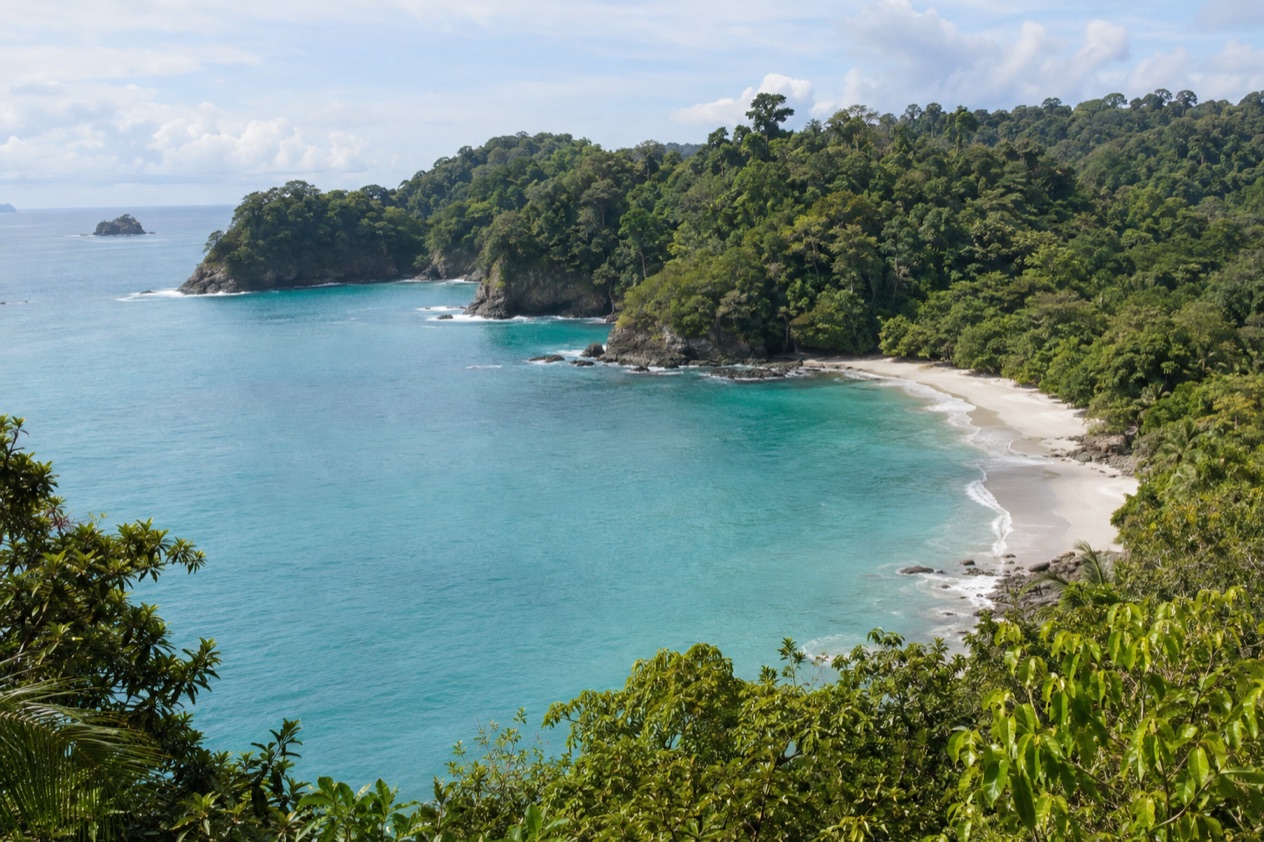
Early in the morning on the hill above Manuel Antonio, capuchin monkeys cross the wires outside the breakfast terraces and the Pacific shows through the trees in slices of blue. Down in Quepos, fishing boats are already working, bakeries are selling empanadas and the market streets fill with people on errands. The two worlds sit on either side of one winding road, and choosing where to sleep along it shapes the whole trip.
What is the best area to stay in Manuel Antonio?
For a first visit, the middle of the hill road is the usual answer, with sea views, forest around you and the beach reachable by a short bus ride or a drive. Beach lovers who want to step out and be on sand do better at the lower end near the park gate, close to Playa Espadilla.
Budget travelers and anyone who likes everyday Costa Rican life choose Quepos. Families tend to prefer a hotel with a pool and a calm setting on the hill, and anyone after a lively evening will want to be close to the restaurants and bars near the beach end or in town.
The geography is simple, and that is what makes the decision matter. Lodging options rise up the slope from Quepos to the park entrance on a single curving road, which means your choice of bed determines if you stroll to the beach or ride the bus.
Quepos sits at the bottom, a working town with a bus station, shops and a waterfront. The road then rises through forest, with lodgings tucked into the slope on both sides, and eventually drops toward the long public beach and the park gate.
Each stretch has its own rhythm. In town you hear traffic, church bells and street vendors. Halfway up, the sounds are birds, insects and the occasional howler monkey before sunrise. Near the beach, you hear surf, music from restaurants and the chatter of people heading to the sand. None of these is better in the abstract. They suit different kinds of days, and the sections below say who each one fits.
A word on the wildlife that shapes the experience everywhere. In and around the park, white-faced capuchins, squirrel monkeys, sloths, iguanas and raccoons turn up often, and guests are requested not to feed them. Sleeping on the hill puts you closest to forest animals at breakfast, while the beach end puts you closest to the park trails. Seeing wildlife is always a chance rather than a promise, wherever your room is.
One more thing differs from area to area: the evening. Up the hill, nights are quiet and dark, with dinner at your hotel or a short ride to a restaurant with a view. Near the beach, you can stroll to dinner.
In Quepos, you can eat where locals eat and then walk back. Think about what you want after sunset, because the road between the areas is not one you will want to travel back and forth every night.
The best areas to stay in Manuel Antonio
Quepos town
Quepos is the practical base, a small Pacific port with supermarkets, pharmacies, bakeries, sodas (simple local lunch counters serving casados, the plate of rice, beans, plantain and a protein) and the buses that run up the hill. It feels like a real town rather than a resort, with fishing boats, a market and evenings of people sitting outside shops and talking.
Lodging here leans toward guesthouses, small hotels and apartments, which makes it the natural choice for budget travelers, long stays and people who like to cook a few meals. The trade-off is that you are not near the beach or the forest.
Getting to the park means a bus or a taxi up the hill, and the town itself has no swimming beach worth planning around. A good tip is to eat your big casado lunch in town and keep the evening simple.
The lower hill, just above Quepos
As the road leaves town and begins to climb, the first stretch mixes small hotels, apartments and houses with the first glimpses of the water. It is a sensible middle ground, with the town’s services close and the quieter hillside feel starting to set in. The road climbs from Quepos toward the park, with lodging along the way.
This area suits travelers who plan to split the days between the park, a few day trips and some time in town. You give up the beachfront convenience of the far end, but you also avoid its crowds.
If you have a rental car, ask the hotel about parking before you book. If you do not, check how your hotel handles the ride to the park, since the road is one lane each way and winding.
The middle hill road with sea views
This is the classic Manuel Antonio stay: boutique hotels, villas and larger resorts clinging to the slope, each with a terrace aimed at the sunset. Mornings bring monkeys, toucans and sometimes a sloth in the trees near the rooms, and the forest feels close in a way the lower areas cannot match. Many hotels have a pool, and some are all-inclusive, which keeps you on the property for meals.
It suits couples, honeymooners, families who want a pool and travelers who value scenery over walkability. The catch is the road.
Plan on taking the bus from the hill to the beach, and ask your hotel directly about step-free access. A useful tip is to ask whether the room has a view of the water or only of the trees, since the two can be very different on the same hillside.
The beach end near the park gate
At the bottom of the road toward the park, the hill flattens into a strip of restaurants, shops, tour offices and lodgings near the long public beach of Playa Espadilla, which lies outside the park gate. This is where you can walk from your room to the sand, to a smoothie stand and to dinner without needing a ride. It is the liveliest area in the evening and the most convenient for the park entrance.
Lodging here ranges from simple guesthouses and hostels to mid-size hotels and apartments, and the mood is casual, with sandals and beach towels everywhere. The compromise is noise and crowds, especially in busy weeks, and fewer views than higher up. Rip currents are very dangerous and cause several drownings of U.S. tourists each year.
Manuel Antonio areas compared
| Area | Best for | Feel | Getting around |
|---|---|---|---|
| Quepos town | Budget travelers, long stays | Working port town with markets and local meals | Walk in town, bus or taxi up the hill |
| Lower hill | Mixed itineraries, first-timers on a flexible plan | Quiet hillside close to town services | Bus or taxi, car helpful |
| Middle hill road | Couples, families, view seekers | Forest, terraces, pools and sunsets | Taxi, shuttle or bus, a car is useful |
| Beach end near the park gate | Beach days, early park visits, nightlife | Casual, busy and sociable | Walk to beach, park and restaurants |
The main trade-off is beach against calm. The closer you sleep to the sand, the more you gain in convenience and evening life, and the more you give up in views, forest sounds and quiet. Up the hill, you wake to birds and a wide horizon, but every outing becomes a small logistical decision, and dinner often means going back to the hotel or taking a ride.
The second trade-off is local life against resort comfort. Quepos gives you a town, ordinary prices at the market and a feel for how people live along this coast, while the hill gives you pools, spa services and a polished setting. Many travelers split their stay, spending a few nights up the hill and a night or two near the beach or in town, which costs only one extra move along the same road.
Finally, think about the time of year. During the rainier season, a hotel with a covered terrace gives you somewhere to sit when it rains. In those months, a hotel with a good covered terrace, restaurant and pool matters more, and walkability to a nearby restaurant may matter more still when the road is wet.
How to choose your hotel in Manuel Antonio
Start with the all-inclusive question. Start by deciding whether you value the hill’s scenery or the beach end’s walkability.
They make less sense if you want to eat in different places, since leaving means a ride each time. A hotel with breakfast and a few restaurants within walking distance gives more freedom, particularly near the beach end.
Beachfront or near-beach lodging is easier for families with small children, anyone who dislikes steep paths and travelers who want to go to the sand several times a day.
The hillside gives better views and more privacy. Be clear which you are paying for, because a room described as having an ocean view can be a distant glimpse through leaves, while a beach-end room may have no view at all.
Lagoon-side and river-side stays are not the point here. This is a hill and beach destination, so the useful distinction is between sea-facing slope, forest slope and flat ground near the beach. Ask which way the room faces, whether it has a balcony and how many steps lead from the parking area to the door. These details change the experience more than a star rating.
Booking timing depends on the calendar. Holiday weeks and the dry-season months, roughly December to April, are the busy period, and the better hillside hotels fill early.
In the wetter months, the green season, rooms are easier to find and the park feels quieter, though rain falls on most days. In July and October, rainy days are the norm, while January is noticeably drier. If your trip lines up with a national holiday or a long weekend, book earlier than you would otherwise.
Families should look for a pool, a shaded area, a restaurant that serves early dinners and a room layout that works for several people. Because the area is full of stairs and slopes, strollers are awkward on the hill, and travelers with limited mobility should ask directly about step-free access, the distance from parking and the route to the pool. Many hotels can answer precisely, and a clear answer before booking is worth more than a general promise.
Before you confirm, check a few practical things:
- Noise: rooms facing the main road or a bar can be loud, while rooms at the back of a hillside property are quieter.
- Transfers: ask how guests get to the beach and the park, and whether the hotel runs a shuttle or relies on taxis.
- Walking distance: a short distance on the map can be a steep climb, so ask about the actual path.
- Wildlife: monkeys and raccoons are curious, so keep food away from balconies and open doors, and do not feed them.
- Rain: in the green season, look for covered dining and a room that does not depend on a sunny balcony.
- Sea conditions: ask about rip currents and the beach flags before swimming at any beach.
A last consideration is how long you stay. Two nights are enough for the park and a beach afternoon, but three or four let you move at a human pace, with a slow morning, a tour or a boat outing, and an evening without a schedule. If you can, spend the first night near where you land and the rest where you want to wake up, rather than forcing one hotel to do everything.
Good to know before you go
The U.S. State Department rates Costa Rica Level 2, ‘Exercise increased caution,’ due to crime; it says petty crime is common throughout Costa Rica and that violent crime also affects tourists, including armed robbery, homicide and sexual assault.
Manuel Antonio lies just south of Quepos, so your journey ends on the same winding road that serves every hotel, and it is worth confirming with your lodging how you will make the last stretch from town or from your arrival point. Carry some cash for small purchases. Wildlife wanders near rooms and trails alike, so keep your distance and do not feed the animals.
Sources
- Open-Meteo / ECMWF ERA5, normals 1991-2020 computed for the grid cell at 9.392N 84.1366W, checked October 8, 2026
- U.S. Department of State, Costa Rica Travel Information, Safety and security (https://travel.state.gov/content/travel/en/international-travel/International-Travel-Country-Information-Pages/CostaRica.html), checked October 8, 2026
- U.S. Department of State, Costa Rica Travel Advisory, issued April 1, 2026 (https://travel.state.gov/content/travel/en/traveladvisories/traveladvisories/costa-rica-travel-advisory.html), read via the State Department open data API on October 8, 2026
To plan your stay
- Best Time to Visit Manuel Antonio: Dry Season, Green Season, Sea Temperatures and Festivals
- Things to Do in Manuel Antonio: National Park Trails, Beaches, Day Trips and Food
- Manuel Antonio in January: Weather, Beaches, Wildlife and a Two-Day Plan
- Day Trips from Manuel Antonio: Carara Macaws, Tarcoles Crocodiles, Jaco and Quepos