
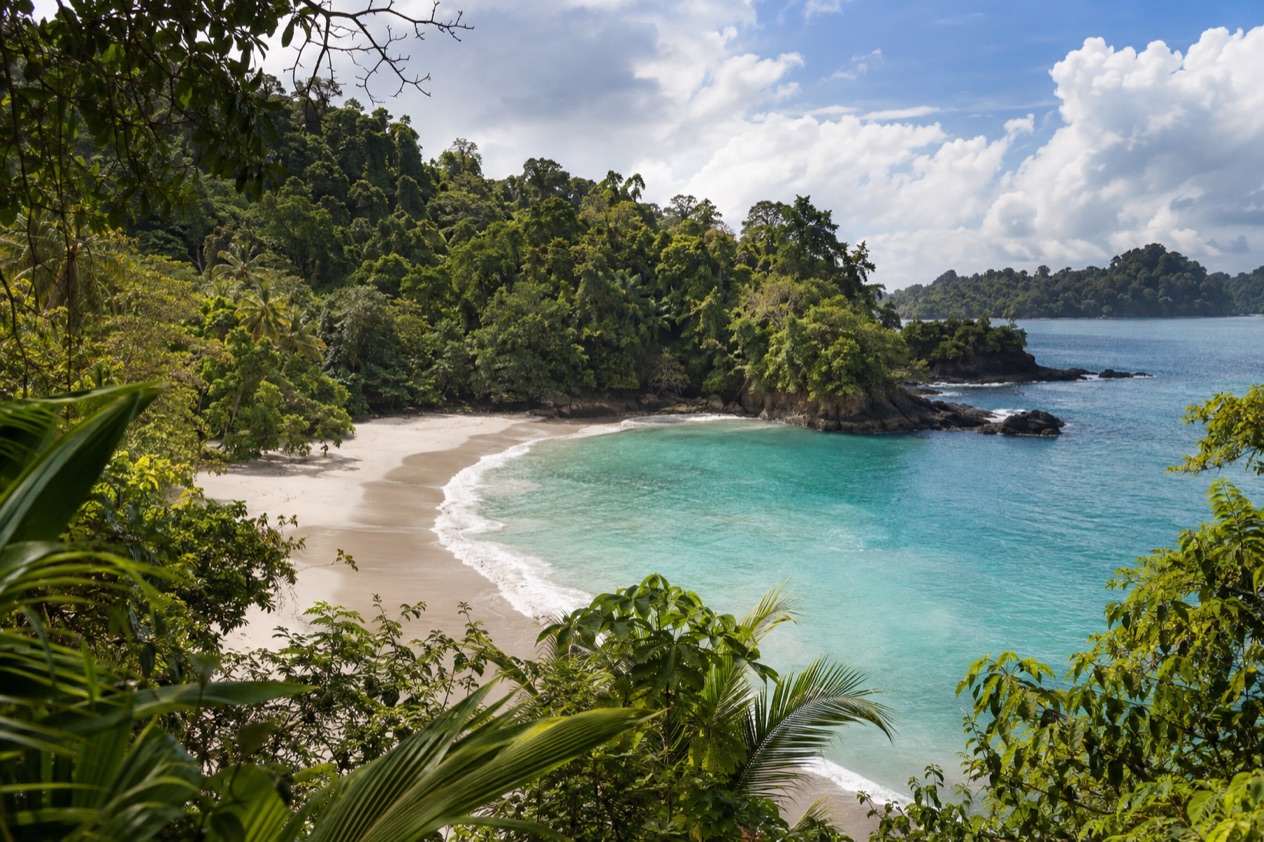
In May the first regular afternoon rains roll over the hills of Manuel Antonio, and the forest answers within days. The canopy turns a deeper green, howler monkeys roar from the treetops at dawn, and the road down from Quepos smells of wet earth and ripe mango.
The sea is as warm as a bath, but calm-looking water can still conceal dangerous currents. It is a month for travelers who like a lush, green Pacific coast and don’t mind carrying a rain jacket.
What is the weather like in Manuel Antonio in May?
May in Manuel Antonio is hot, humid and green, with rain recorded on nearly every day of the month, so plan on getting wet at some point rather than hoping to dodge it.
| Month | Average high (°F) | Average low (°F) | Rain days | Sea (°F) |
|---|---|---|---|---|
| April | 81.9 | 72.9 | 22.3 | 87.6 |
| May | 80.4 | 72.0 | 29.7 | 87.6 |
| June | 79.8 | 71.3 | 28.6 | 85.8 |
The rhythm of the day is what matters. Mornings often start bright and sticky, with sun on the leaves and the best light for photographs, and the rain usually builds later, in the afternoon.
When it comes it can be heavy, with warm drops and a loud drumming on the canopy, and some days it settles in for longer. Not every day follows the pattern, so treat mornings as your prime time outdoors and keep afternoons flexible.
Heat is part of the picture too. Highs stay in the low 80s, which sounds mild until you add the humidity of a rainforest, so you will be damp from walking even before the first shower. Evenings stay warm enough for dinner on a terrace in a T-shirt, with the sound of frogs and insects rising once the rain stops.
Daylight lasts about twelve and a half hours in mid-May, so the sun is up early and the day winds down before dinner. Clothes dry slowly in this climate, so bring fabrics that dry fast and a light layer you do not mind soaking.
Can you swim in Manuel Antonio in May?
Yes, the water is warm enough for a long, comfortable swim, as warm as it gets on this coast, and you will not need a wetsuit even for a long snorkel.
Warm does not mean easy. Rip currents pose serious hazards, leading to multiple drownings of U.S. tourists annually, while the majority of beaches lack lifeguards and fail to post warnings about unsafe conditions.
Conditions change from day to day and from one stretch of sand to the next, and calm-looking water says nothing about the current. Ask your hotel or a local surf school about the day’s conditions, follow the flags wherever there are any, and keep children within arm’s reach at all times.
After heavy rain the water can turn cloudy, which is a poor day for snorkeling. Bring a rash guard, water shoes for rocky entries and a dry bag for the afternoon downpour.
What to do in Manuel Antonio in May
May opens with Labor Day on the first of the month, a national holiday when Costa Rican families head to the coast and the beaches near Quepos feel lively and local. After that the calendar is quiet, and the real event of the month is the arrival of the green season. The forest is at its freshest, waterfalls swell, and the animals are active in the cooler, cloudier hours.
The mornings belong to the national park, and the afternoons belong to the porch, the pool or a table with a view. Take the park early, when the trails are cooler and the wildlife is moving. Because park access and rules can shift, look at the official page for the park before you build your plans around it.
The national park and its wildlife
Manuel Antonio is a small park wrapped around a headland of forest, and its trails lead from the entrance to the beaches and to quiet lookouts over the bay. You may see white-faced capuchin monkeys, squirrel monkeys, sloths hanging in the cecropia trees, raccoons by the beach and a lively crowd of lizards and birds. Nothing is promised, since animals move on their own schedule, but the odds of a sighting are good when you are patient and quiet.
Arrive during the first hours once the gates open, when temperatures are lower and wildlife is busiest, and think about hiring a guide. Guides carry spotting scopes and can find a sloth that you would walk right past. Never feed the monkeys, even when they look hopeful, and watch your bag on the beach, because raccoons and capuchins know how to open zippers.
Beaches, surf and a lazy afternoon
Outside the gate, Playa Espadilla stretches along the coast with palm shade, surf shops and rows of beach chairs. It is a place to spend a slow morning when the park feels too much, or a quick hour before the rain. Surf lessons run here for beginners, and the water is warm enough that falling off a board feels like part of the fun.
Because the afternoon sky often turns gray, schedule the beach for the first half of the day and keep the late hours for something under a roof. Even when clouds are out, you still need sunscreen, because thin cloud does not block the sun’s strength.
Food, sunsets and the Quepos side
Start your quest for a good meal here with a casado, the everyday plate of rice, beans, plantain, salad and your choice of fish, chicken or beef, served at small family spots called sodas. Fresh fish, ceviche and coconut water are easy to find, and mango, pineapple and papaya are on every breakfast table. Gallo pinto, the mix of rice and beans, comes with eggs in the morning.
Hotel terraces and restaurants on the road between Quepos and the park look out over the sea, and a sunset here, when the cloud breaks, turns the water orange. In Quepos itself, you can browse the market, have coffee on the waterfront and see the small fishing boats come in. It is the practical base for groceries, the bank and buses.
A two-day itinerary for Manuel Antonio in May
Day 1 starts early, because May mornings are the brightest part of the day. Have a quick breakfast of gallo pinto and fruit, then spend the morning in the national park, walking toward Playa Manuel Antonio and looking for monkeys and sloths.
Have lunch at a simple soda near the park road, then rest through the hottest and wettest hours. If the afternoon is clear, a walk on Playa Espadilla suits the late light. As evening comes, find a restaurant with a terrace for fresh fish and a cold drink while the frogs start up.
Day 2 starts with a slower morning, a coffee and a guided nature walk or a surf lesson on Playa Espadilla while the sky is still bright. Spend the middle of the day in Quepos and have lunch there, then go back to the hotel pool for the afternoon.
If the weather turns, which it often does, switch to the rain card: a long lunch, a cooking or chocolate class, a spa session or a quiet hour on a covered balcony watching the downpour hit the forest. When the rain eases, a short walk to a viewpoint for the last light makes a fine finish before dinner.
Is Manuel Antonio busy in May?
No, May is one of the calmer months here, with the winter rush behind you and the park trails and beaches feeling less crowded.
Labor Day on the first of the month brings Costa Rican visitors to the coast, so it can feel busier and livelier then. Outside that stretch, many rooms are easier to find, restaurants have free tables at dinner, and rental cars are less in demand. The park still draws visitors every day, and the first hour after opening is the most peaceful.
Plan the way most travelers do: book early for the holiday weekend, and later for the quiet weeks of the month. If a particular day matters to you, visit the park’s official page for current entry and reservation rules before finalizing your plans.
Quiet does not mean empty. Tour groups still arrive in the mornings and the main trail can feel busy around midday. Going early, or on a weekday, gives you the forest at its calmest.
What to pack for Manuel Antonio in May
Bring a quick-drying, lightweight bag plus clothing suited to both the forest and the beach, and prepare for heat, humidity, and rain that arrives without warning.
- A light rain jacket or poncho, since the afternoon showers can be heavy.
- Quick-dry clothes, because damp things dry slowly in the humid air.
- Sturdy sandals or trail shoes with grip for wet park paths.
- Sunscreen and a hat, as the sun is strong even through cloud.
- Insect repellent for the forest and evenings.
- A dry bag or zip bags for your phone, camera and passport.
- A rash guard and water shoes for swimming and rocky entries.
Good to know before you go
The U.S. State Department rates Costa Rica Level 2, ‘Exercise increased caution,’ due to crime; it says petty crime is common throughout Costa Rica and that violent crime also affects tourists, including armed robbery, homicide and sexual assault.
May is the start of the green season, so expect regular afternoon rain, and keep your plans loose enough to move outdoor stops to the morning. Labor Day on the first of the month is a national holiday, and the coast fills with local travelers around it.
Roads and trails get slippery in the wet, so allow extra time between stops. As with any tropical trip, it is worth checking the forecast before you travel.
Manuel Antonio in May vs April and June
Moving the trip four weeks earlier brings you to April, when the sea is just as warm but the rain days are fewer, so you get more sunshine for the beach and the trails. The cost is a busier coast, with more visitors in the park and on the sand, and rooms that go sooner. April is the better choice if sun matters more to you than quiet.
Moving four weeks later, June is greener still, with rain on almost as many days as May, and a sea that has cooled slightly. The coast is quiet, the forest is lush and the waterfalls run strongly. If you like empty trails and a very green landscape, June suits you, though heavy afternoons are more likely to interrupt your plans.
Stay with May if you want a middle path: the sea is at its warmest, the forest has turned green, and the crowds have thinned. Shift to April for a better chance of bright beach days, and to June if you want the quietest, wettest version of the green season.
Is May a good time to visit Manuel Antonio?
Yes, May is a good time for travelers who enjoy lush scenery, warm water and a calmer coast, and who accept that rain is part of the trip.
It suits wildlife watchers, who find the animals active in the cooler, cloudier hours, as well as photographers who love deep greens and dramatic skies, and anyone who wants a quieter park. Couples and families with flexible plans will enjoy it, especially if they treat the afternoons as pool or café time. Those who want guaranteed sun on the sand all day, or who dislike humid air and sudden downpours, would do better in a winter month.
On arrival, set the first morning aside for the park, because the early hours are the best of May. Then let the rest of the days follow the sky: beach and trails before lunch, rest or a covered stop when the clouds close in. The evening chorus of frogs and the smell of wet forest after a storm are what make May here feel special.
Sources
- Open-Meteo / ECMWF ERA5, normals 1991-2020 computed for the grid cell at 9.392N 84.1366W, checked October 8, 2026
- Open-Meteo Marine API, average 2015-2024, checked October 8, 2026
- sunrise-sunset.org, sunrise and sunset calculated for the 15th of the month, checked October 8, 2026
- U.S. Department of State, Costa Rica Travel Information, Safety and security (https://travel.state.gov/content/travel/en/international-travel/International-Travel-Country-Information-Pages/CostaRica.html), checked October 8, 2026
- U.S. Department of State, Costa Rica Travel Advisory, issued April 1, 2026 (https://travel.state.gov/content/travel/en/traveladvisories/traveladvisories/costa-rica-travel-advisory.html), read via the State Department open data API on October 8, 2026
- U.S. Department of State, Costa Rica Travel Information, Entry and exit requirements (https://travel.state.gov/content/travel/en/international-travel/International-Travel-Country-Information-Pages/CostaRica.html), checked October 8, 2026
To plan your stay
- Things to Do in Manuel Antonio: National Park Trails, Beaches, Day Trips and Food
- Where to Stay in Manuel Antonio: Quepos, the Hill Road and the Beach End
- Day Trips from Manuel Antonio: Carara Macaws, Tarcoles Crocodiles, Jaco and Quepos
- 3 Days in Manuel Antonio: Park Trails, Beaches and a Slow Final Day