
Early on a January morning, the howler monkeys start up before the sun clears the ridge, and the hillside road down to the park fills with the smell of coffee and frying plantains. By October the same hills are wrapped in cloud, the forest drips, and the sky builds a gray wall over the Pacific every afternoon. Manuel Antonio has a bright, busy dry season and a quieter, deeply green one, and each suits a different kind of traveler.
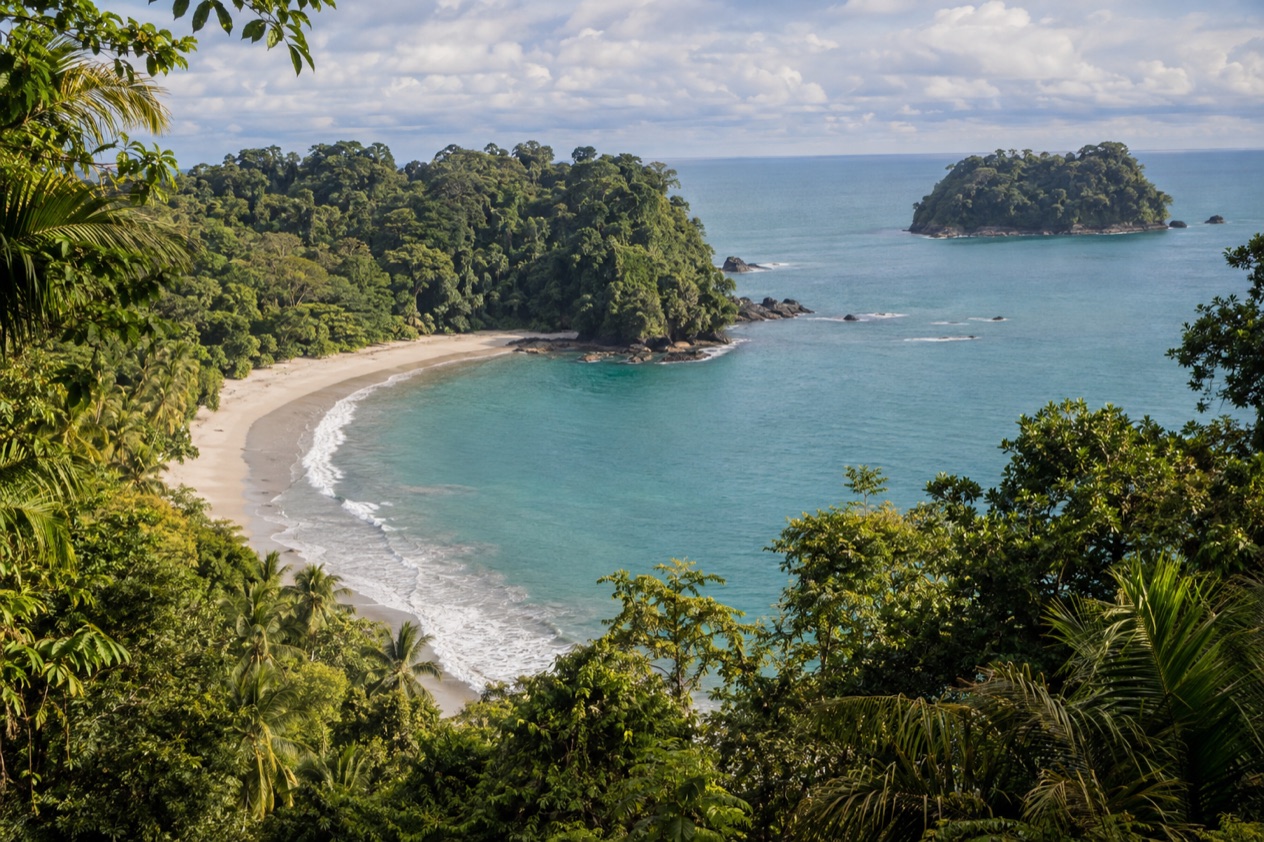
When is the best time to visit Manuel Antonio?
The best time for most visitors is the dry season, roughly December through March, when mornings are usually bright and the beaches and park trails are most pleasant. It is also when the area is busiest, so the choice comes down to how much sun you want against how much company you can tolerate.
For beach days and swimming, February and March are the easiest bet. Mornings tend to be clear, the sea is at its warmest of the year and Playa Espadilla and the small beaches inside the park are at their liveliest.
For sightseeing and wildlife, the early hours matter more than the month. Around the park, capuchin monkeys, squirrel monkeys, sloths and iguanas turn up often no matter the season, and the habit that repays you best is a morning walk ahead of the heat and the afternoon clouds.
If you care about quiet and a lower bill, the green season from May to November has its own appeal. Rain usually arrives in the afternoon, mornings are often workable, the forest is at its lushest and the road along the hill is easy to share. Plan outings early, keep the afternoons for a pool, a long lunch or a nap, and accept that some days will be gray from start to finish.
Families should know that March brings spring break, and the beaches and restaurants can feel livelier. If your children do better with calm, January or early December are gentler, and the green months suit families who like quiet pools and don’t mind a rainy afternoon indoors.
Manuel Antonio weather by month
Temperatures barely move through the year, so the real difference is how often it rains.
| Month | Average high (°F) | Average low (°F) | Rain days | Sea (°F) |
|---|---|---|---|---|
| January | 80.4 | 71.1 | 19.6 | 85.7 |
| February | 81.7 | 72.3 | 12.7 | 86.8 |
| March | 82.7 | 73.4 | 14.6 | 87.2 |
| April | 81.9 | 72.9 | 22.3 | 87.6 |
| May | 80.4 | 72.0 | 29.7 | 87.6 |
| June | 79.8 | 71.3 | 28.6 | 85.8 |
| July | 79.8 | 70.8 | 29.9 | 85.2 |
| August | 79.8 | 70.8 | 29.9 | 85.5 |
| September | 79.4 | 70.6 | 29.4 | 85.7 |
| October | 78.7 | 70.4 | 29.9 | 85.1 |
| November | 78.9 | 70.3 | 28.8 | 83.1 |
| December | 79.6 | 70.4 | 25.7 | 84.4 |
Warm and humid is the constant, with afternoons in the low 80s and nights that never turn cool. The dry season is a matter of degree: February and March see the fewest wet days, while January and December still catch a fair number of light showers.
April is the turning point, with showers returning and the first heavy downpours. From May to November it rains almost every day, usually as an afternoon or evening storm, and the wettest weeks of September and October can bring long, soaking spells. Mornings in those months are often the best part of the day.
What is there to do in Manuel Antonio in each season?
Dry season, December to April: beaches and park trails
This is the season for the classic Manuel Antonio day. The long public beach of Playa Espadilla, outside the park gate, is the place for a late-afternoon walk and for watching the sunset over the water.
Boat trips, kayaking along the coast and guided wildlife walks are all at their most appealing now, and the hillside restaurants with sea views fill for dinner. Reserve rooms and popular tours ahead, and leave the hottest hours for a pool. By April the clouds build earlier, so the best stretch for the sun is the first half of the day.
Green season, May to November: rainforest at full volume
The forest is loud and brilliantly green, waterfalls run harder and the air smells of wet earth. Mornings are the working hours: a guided walk at opening time, a swim before noon, then a slow lunch when the clouds roll in. Birdwatchers and photographers often prefer this season because the light is soft and the crowds are thin.
Pack a light rain jacket and shoes that dry quickly. Leave long hikes and any plan that needs a clear sky for the drier months, and keep a rainy-afternoon option in mind, such as a cooking class, a chocolate or coffee tour, or a spa.
Shoulder weeks: late November, December and April
Late November and early December are the moment the rain begins to ease and the hills are still lush. You get a green landscape, a warm sea and fewer people, before the holiday rush. April works in reverse: sunny mornings with growing afternoon storms, and a quieter beach once Easter week has passed.
When is Manuel Antonio cheapest and least crowded?
The quietest months are the green ones, especially September and October, when the road to the park is easy, the beaches have room to spare and hotels are often happy to see you. Many guests simply stay away then, so you can usually find a room with a view without planning months ahead.
The busiest weeks come with holidays. Christmas and New Year fill the hillside hotels, Easter week sends Costa Rican families to the coast, and March spring break brings a lively crowd of American students and groups. School vacation from about early July to late August adds some visitors during the rainy months. Expect peak-season rates and fuller restaurants in all these windows.
If you want sun and fewer people, aim for January after the first week, or the weeks just before and after Easter. Weekdays are calmer than weekends on Playa Espadilla, when Costa Rican families come for the day.
Which months should you avoid in Manuel Antonio?
No month is truly off limits, but September and October are among the hardest if you want sunshine, since rain falls on nearly every day. Heavy rain can also muddy trails and make roads slick.
The Atlantic hurricane season is not the main concern on the Pacific side, though the rainy months can bring storm systems and long, heavy downpours. Check the forecast before you travel and keep your plans flexible. The heat is steady all year, and it feels strongest in March and April, just before the rains, when midday on the sand is draining.
If your heart is set on sunbathing and swimming all day, avoid May through November. If you simply want the forest and a good book, those months are among the most beautiful. Whatever the month, the sea has rip currents, most beaches have no lifeguards and warnings are rare, so choose your swimming spot with care.
When can you swim in Manuel Antonio?
The sea stays warm in Manuel Antonio all year, but whether it is safe to swim depends on the day’s waves, currents and tides. From February to May the sea is the warmest of the year, and in November it cools slightly, though it still feels like bathwater to most visitors.
Several U.S. tourists drown every year because of rip currents, which are extremely hazardous, and on most beaches there are no lifeguards and no signs warning of dangerous conditions. Waves and currents change from day to day and with the tides, so choose your swimming spot with care.
In the green months the water can be cloudy after heavy rain, and storms in the afternoon mean swimming is best in the morning. The small beaches inside the park are sheltered by forest and are often the nicest places for a dip, while Playa Espadilla is long, open and better for walking.
Festivals and events in Manuel Antonio through the year
Winter holidays and Carnival
Christmas and New Year are celebrated warmly on the coast, with lights strung along the hotel terraces, special menus in the restaurants and families arriving from San Jose. December 25 and January 1 are the busiest days of the season, with parties on the sand and in Quepos, the town just north of the park.
Easter week, which moves from year to year, is the biggest domestic holiday, when Costa Rican families fill the beaches. Book well ahead and expect crowds on Playa Espadilla.
Nature seasons: whales and turtles
Humpback whales visit the central and southern Pacific coast of Costa Rica in two stretches of the year, one from roughly December to April and another from about July to October, and boat trips from the Quepos area sometimes spot them. Dolphins are also a chance on coastal tours. These are chances, never promises, and the sea decides the day.
Sea turtles nest on Pacific beaches at various times of the year, though not usually on the busy beaches around the park. If turtles interest you, ask a local guide which stretches of coast are known for nesting. In the park itself, the daily wildlife show is the monkeys, sloths and iguanas, and they are there in every season.
Local fiestas and the green months
Independence Day on September 15 is a national holiday, marked with school parades and lanterns carried through the streets in the evening, and it brings a quiet burst of local spirit to the rainy months.
In the green season, the real event is the forest itself. Rain brings frogs, loud insects and a surge of new leaves, and a night walk with a guide is a good way to meet it. Pura vida, the local saying for a relaxed, grateful outlook, fits a wet afternoon well: sit on a porch, watch the clouds, and wait for the sun to return.
Sources
- Open-Meteo / ECMWF ERA5, normals 1991-2020 computed for the grid cell at 9.392N 84.1366W, checked October 8, 2026
- Open-Meteo Marine API, average 2015-2024, checked October 8, 2026
- sunrise-sunset.org, sunrise and sunset calculated for the 15th of the month, checked October 8, 2026
- U.S. Department of State, Costa Rica Travel Information, Safety and security (https://travel.state.gov/content/travel/en/international-travel/International-Travel-Country-Information-Pages/CostaRica.html), checked October 8, 2026
- U.S. Department of State, Costa Rica Travel Advisory, issued April 1, 2026 (https://travel.state.gov/content/travel/en/traveladvisories/traveladvisories/costa-rica-travel-advisory.html), read via the State Department open data API on October 8, 2026
To plan your stay
- Things to Do in Manuel Antonio: National Park Trails, Beaches, Day Trips and Food
- Where to Stay in Manuel Antonio: Quepos, the Hill Road and the Beach End
- Day Trips from Manuel Antonio: Carara Macaws, Tarcoles Crocodiles, Jaco and Quepos
- 3 Days in Manuel Antonio: Park Trails, Beaches and a Slow Final Day