
A bull moose stands in a yard in Anchorage, steam rising from its nose, chewing willow twigs as if the neighborhood belonged to it. Out on the coast, a humpback rolls at the surface and a bald eagle watches from a spruce. Alaska’s wildlife is part of daily life here, from city edges to remote parks, and this is a look at what you may see, where to look and how to do it well.
What wildlife can you see in Alaska?
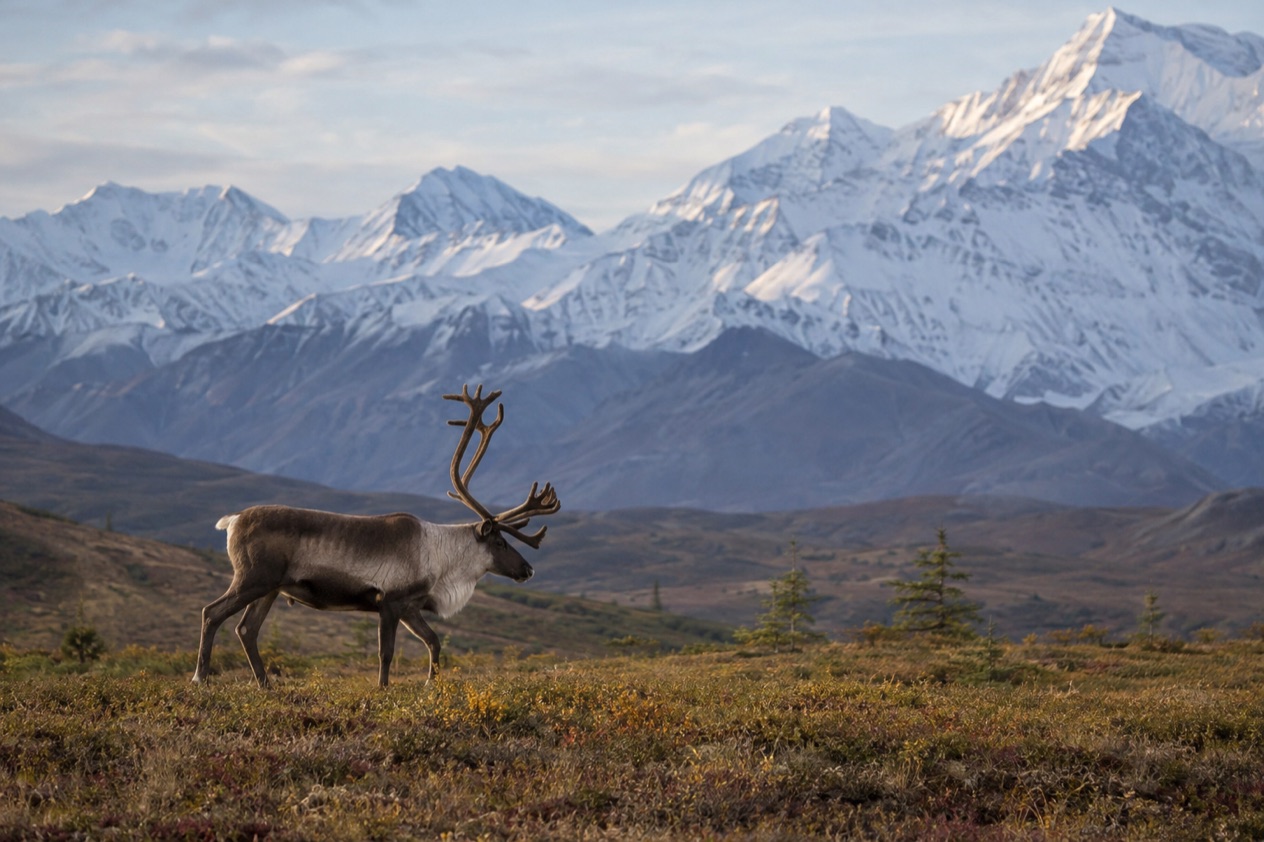
You can see an unusually wide range: bears, moose, whales, eagles, wolves, caribou and millions of migrating birds. All three North American bear species live in Alaska, which is rare anywhere in the country: black bears, brown bears (the grizzlies are among them) and polar bears. Every sighting is a chance, never a promise, and the state’s wildlife viewing program says plainly that finding animals across such vast wildlands often takes knowledge and preparation.
Bears
Brown bears are the ones most visitors hope for. The Alaskan population is estimated at a healthy 30,000, and the biggest animals live where salmon are plentiful. In parts of coastal Alaska, bears feed mostly on spawning salmon that come near shore, and that rich diet helps explain their enormous size. Adults can weigh well over a thousand pounds in the largest males.
Inland, the picture changes. In Denali, bears may wait at the burrows of Arctic ground squirrels, hoping to pick off a few of the small rodents. Polar bears are a different journey altogether, reached on guided tours above the Arctic Circle.
Moose
Moose are the animal you are most likely to meet without trying. Anchorage alone is home to roughly 1,500 of them, and they wander through parks, trails and backyards. An adult can stand almost six feet tall at the shoulder, and only the males carry antlers, which a big bull grows at a pound of bone a day over a summer.
Fall brings the rut, in late September and early October, when adult males are focused on mating. As the season turns colder, moose browse willow, birch and aspen twigs, so you often find them in thickets near water and along the edges of town.
Whales, eagles and seabirds
Humpback whales are known for breaching and other surface behavior, which is why whale watchers love them. A group of humpbacks has been seen bubble-net feeding near Juneau, a cooperative technique that is among the most remarkable things whales do. Day cruises out of Anchorage’s region also look for puffins and otters.
Bald eagles are easier to find than most people expect. In Southeast Alaska, fish make up about two thirds of their diet, mostly pink and coho salmon. Along southern Alaska’s estuaries they also take herring and eulachon, and they feed on mussels, crabs and sea urchins. Kachemak Bay is one place where eagles are photographed taking flight.
Denali’s mix of animals
Denali was the first national park created to protect wildlife, and it shelters 39 species of mammals. More than 160 bird species spend the summer there, and the park has a single amphibian, adapted to the cold, and no reptiles at all. Guides there look for wolves and caribou as well as bears, always with the understanding that the animals decide.
Where are the best places?
Many places are worth a visit, and a good starting point is Anchorage, where moose, birds, salmon streams and a wildlife sanctuary all sit within reach of the city. From there, parks, coasts and viewing programs spread across the state. The Alaska Department of Fish and Game publishes viewing sites, maps, and road and ferry routes for wildlife watching, plus information by season, including festivals and other events.
Anchorage and its wetlands
The Anchorage Coastal Wildlife Refuge is the easy entry. Potter Marsh, Kincaid Park and Carr-Gottstein Park all give access, and you may watch birds, moose and the occasional bear. Millions of birds pass through on annual migrations, and salmon fill nearby rivers and streams all summer long.
Beyond the shoreline, flights from the city go to see bears fishing, and day cruises look for whales, puffins and otters. Those trips are for travelers who want the big landscapes without leaving the Anchorage area as a base.
Alaska Wildlife Conservation Center
This sanctuary sits in the Girdwood and Portage area, ringed by the Chugach Mountains, about 45 minutes south of Anchorage. It takes in injured and orphaned animals year-round, and most become permanent residents with spacious enclosures. It is dedicated to conservation, education, research and quality animal care.
Experiences include Moose Encounters, Bear Encounters and Walk on the Wild Side Tours. The center advises booking tours early because they fill up fast. For travelers who want a guaranteed sighting, this and the Alaska Zoo are the dependable choices, and the zoo adds an Early Bird Breakfast Tour and a Wild VIP Zoo Experience.
Denali National Park and Preserve
Denali pairs wildlife with scale. Mount McKinley rises to 20,310 feet above a landscape where bears, wolves and caribou live, and guides there work to show visitors what they can find. The park suits travelers who are happy to spend long hours looking and who accept that some days bring little.
Permit sites: McNeil River, Round Island and Pack Creek
Viewing permits are available for McNeil River, Round Island and Pack Creek. These are places where the state manages viewing directly, so planning starts with the permit rather than the trip. The Department of Fish and Game’s viewing program is the place to learn how those sites work.
Fairbanks and Creamer’s Field
Creamer’s Field Wildlife Refuge gained important land and trails, giving walkers a way into a landscape of fields and woods. It is a place for unhurried birding and quiet watching, away from the larger parks and the bigger crowds.
How do you watch wildlife responsibly?
You watch responsibly by giving animals room, keeping food away from them and following the rules of the place you are in. In Alaska, people must keep all human sources of food secure from bears, and the department provides a page on bear resistant containers for doing it properly.
Bears and food
A bear that learns to find human food becomes a danger to itself and to people. That is why securing food is a requirement, not a courtesy. Fish and Game also asks that dangerous bear situations be reported using its wildlife encounter form, which helps managers respond.
For learning more, four bear safety videos are available on loan from the department’s area offices in Anchorage, Fairbanks and Juneau. A 19-minute DVD called HEY BEARS!!! How YOU Can Stay Safe in Bear Country is free for classrooms or youth groups. The Anchorage Bears Story Map also shows data from a project that tracked nine bears with GPS collars carrying video cameras, a vivid look at how bears move near a city.
Whales and boats
Whale watching comes with regulations, including limits on how close vessels can get to the whales. The rules protect animals that can reach about 56 feet in length, and that feed and breed under real pressure. Humpbacks also sing, with male songs lasting from 4 to 33 minutes, and the best thing a boat can do is cut the engine and let the whales set the pace.
Watching from a distance, or from home
Many travelers enjoy a sighting most when they stay a respectful distance away and let the animal go about its business. The department also offers virtual viewing through trailcams, webcams, video, audio and tracking maps, which suits anyone who wants to learn before a trip or follow animals afterward.
Guided tours and permitted sites exist partly to keep people and animals apart in the right ways. The state’s wildlife viewing program can point out opportunities, teach you about the animals and provide safety tips, so it is a sensible first stop when you plan.
Good to know before you go
Alaska’s wildlands are vast, so a little preparation goes a long way, and the state’s viewing program is there to help with sites, maps and safety tips. Keep food secure from bears everywhere you go.
The Alaska Wildlife Conservation Center’s discounted annual Wolf Pack membership ran only from October 1 through October 9 at 5pm, so that offer has ended. Moose are still in their rut season in early fall, a good reason to keep your distance from big bulls.
Sources
- Alaska Department of Fish and Game, Wildlife viewing (https://www.adfg.alaska.gov/index.cfm?adfg=viewing.main), checked October 11, 2026
- Alaska Department of Fish and Game, Living with bears (https://www.adfg.alaska.gov/index.cfm?adfg=livingwithbears.main), checked October 11, 2026
- Alaska Department of Fish and Game, Moose species profile (https://www.adfg.alaska.gov/index.cfm?adfg=moose.main), checked October 11, 2026
- National Park Service, Denali wildlife (https://www.nps.gov/dena/learn/nature/wildlife.htm), checked October 11, 2026
- Wikipedia, Brown bear (https://en.wikipedia.org/wiki/Brown_bear), checked October 11, 2026
- Wikipedia, Humpback whale (https://en.wikipedia.org/wiki/Humpback_whale), checked October 11, 2026
- Wikipedia, Bald eagle (https://en.wikipedia.org/wiki/Bald_eagle), checked October 11, 2026
- Alaska Wildlife Conservation Center (https://www.alaskawildlife.org/), checked October 11, 2026
- Visit Anchorage, wildlife viewing (https://www.anchorage.net/outdoors/wildlife-viewing/), checked October 11, 2026