
The weight drops through green water until the line goes slack on the bottom, and then comes the waiting: a rod tip nodding with the swell, herring smell on your hands, gulls circling the stern. When a halibut takes the bait, the rod doubles over and the whole boat leans in to watch.
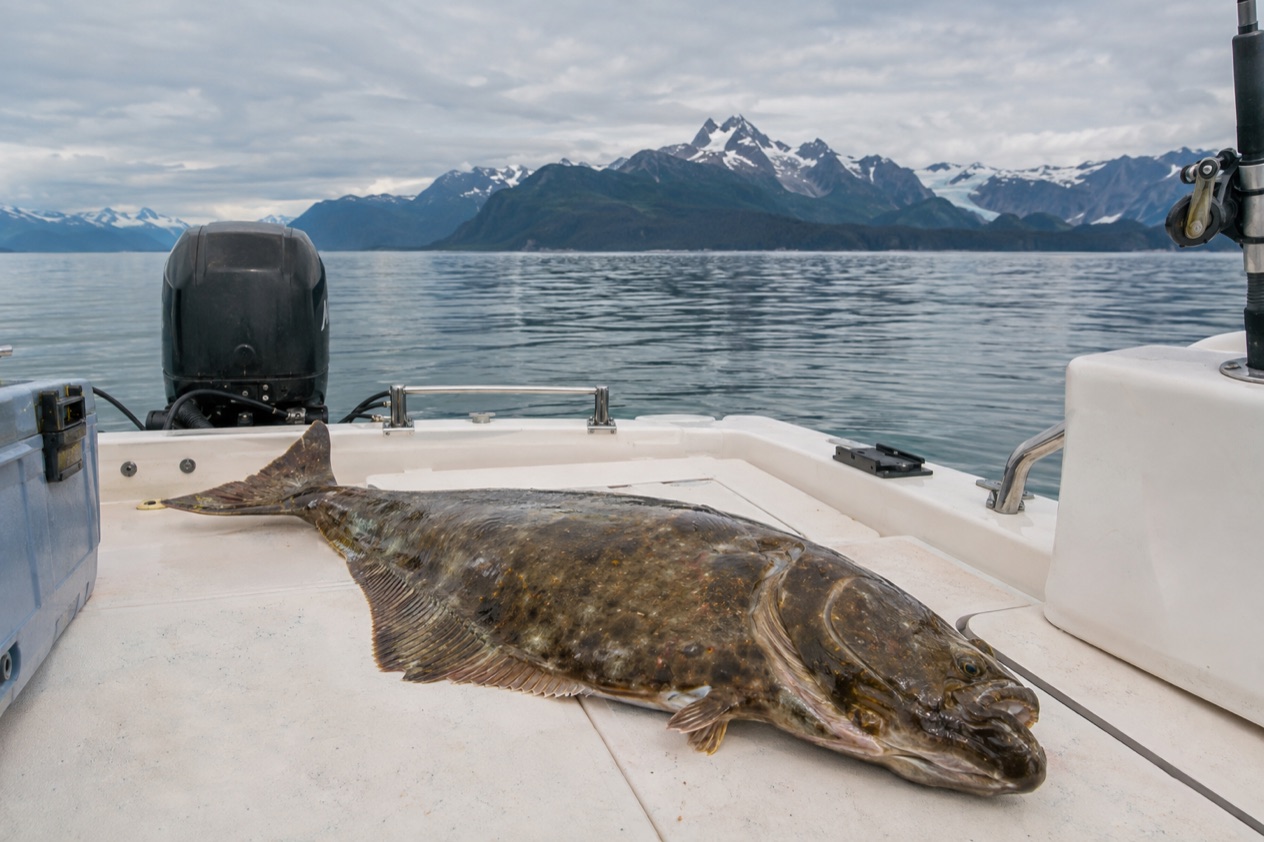
Where can you fish for halibut in Alaska?
You can fish for halibut along much of Alaska’s saltwater coast, but the effort is concentrated in a few places: Cook Inlet, Southeast Alaska, the Kodiak area and the mouth of Deep Creek in Lower Cook Inlet together account for over 65% of the fishing and harvest. Homer, on the Kenai Peninsula, sits at the center of that map and wears its nickname on signs all over town.
The fish itself explains the style of fishing. Pacific halibut live on or near the bottom, in cold water, so every trip is about getting bait down to the seafloor and holding it there. A halibut is a flatfish, with both eyes on one side of its head, and a big one is closer to a living barn door than to anything you would call a fish.
Homer and Kachemak Bay
Homer calls itself the Halibut Capital of the World, a claim it backs with the sheer volume of sport and commercial fishing in the area. The town is a jumping-off point for Kachemak Bay, Cook Inlet and the Gulf of Alaska, which means a boat leaving the harbor can fish very different water depending on the day’s plan.
Around the harbor, the working waterfront is part of the show. Fishing boats tie up beside charter vessels, deckhands haul coolers along the docks, and the talk in cafés is about who caught what. Homer also gives you other species to pair with halibut, since anglers fishing saltwater from this port can reach king salmon, lingcod, rockfish and silver salmon across the season.
The Nick Dudiak Fishing Lagoon, also called the Fishing Hole, is a good stop for anyone who wants to fish from shore on the Homer Spit. It is stocked with kings and silvers and has a handicapped accessible platform and ramp, a parking lot, fish cleaning tables, restrooms and a picnic area.
Seward and the Kenai Peninsula
The town wraps around a boat harbor beneath steep mountains, and its historic downtown carries one of the largest public mural collections in the state, so a day on the water pairs well with an evening of walking the streets.
Seward also has the Alaska SeaLife Center, the state’s only public aquarium. It is a natural stop for anyone who wants to see the fish and sea creatures of these waters up close after a day of hauling them in. Around the Kenai Peninsula you will also find public-use cabins and wilderness lodging for anglers who want to stay near the water.
Kodiak, Southeast Alaska and the far ports
Kodiak and the towns of Southeast Alaska are the other big names on the list of busy halibut grounds. Kodiak and Southeast Alaska are among the areas where much of Alaska’s halibut fishing effort and harvest are concentrated. Anglers there fish the same cold bottom, with the same heavy gear, in scenery of forested islands and rocky shores.
The record book reaches even further out. The largest sport-caught halibut on record came from Dutch Harbor near Unalaska, a catch that still frames every conversation about how big these fish can grow.
| Benchmark | Weight |
|---|---|
| Typical halibut taken by anglers | 15 to 20 lb |
| Fish regularly caught | over 150 lb |
| Minimum for Alaska’s state trophy fish program | 250 lb |
| Largest recorded sport-caught halibut (Dutch Harbor, 1996) | 459 lb |
When is the season?
In Homer, anglers start targeting halibut in earnest in May and keep at it through September, which makes it a fishery of the open-water months rather than the dark ones. Other species fill the calendar around it, and visitors build a trip around two or three of them at once.
| Fish at Homer | When |
|---|---|
| Halibut | May through September |
| King salmon at the Nick Dudiak Fishing Lagoon | May through early July |
| Lingcod retention | Opens July 1 |
| Silver salmon | Mid-July through September |
| Stocked silvers back at the Nick Dudiak Fishing Lagoon | From mid-July |
Early season: spring kings and the first halibut trips
Anglers can target king salmon at the Fishing Hole from May through early July. Shore anglers line the lagoon with rods, kids watch the water, and the picnic area fills with people trading tips. King salmon, also called Chinook, are present around Homer year-round, but the lagoon’s stocked run gives shore anglers a clear window to fish for them.
At the same time, boats begin heading out for halibut. This is a good moment for anglers who like a slower start to the year, with the first big fish of the season coming over the rail and the harbor beginning to wake up after winter.
Midsummer: lingcod opens and silvers return
Once lingcod retention opens, many anglers plan their bottomfish trips with that date in mind. Lingcod are fierce, toothy fish that live around rocky bottom, and the Alaska state record for them is 85 pounds. A day that mixes halibut and lingcod gives you very different fights on the same trip.
By mid-July the stocked silvers begin returning to the lagoon, and silver salmon become a popular target for Homer anglers well into September. For people who fish for the table, this is the stretch when a trip can send a cooler home with several kinds of fish.
Why the winter months belong to the fish
Halibut spawn in winter, with activity peaking from December through February, and most spawning takes place off the edge of the continental shelf in deep water, between 600 and 1,500 feet.
Pacific halibut prefer water between 37.4 and 46.4 °F, so they are at home in the cold. Seward is also described in a winter visitation guide as one of the best times to visit the town, though that is a reason to come for the town itself rather than for halibut.
How do the charters work?
The captain picks the spot, you drop your line and wait, and the rest is a mix of patience, muscle and a fair amount of shouting when something big bites.
On the water
Most anglers prefer to fish with bait, especially herring, though squid, octopus, cod pieces and other small bottom fish also work. The bait goes down on a heavy line until it touches bottom, and then you wait. The bite can be a gentle tug or a sudden slam, and the first sign is often the rod tip bending toward the water.
Bringing a large halibut up from the bottom is slow, heavy work. When the fish finally surfaces, flat and pale on its underside and dark on top, everyone on deck tends to stop and look.
Rules and the people behind them
Fishing for Pacific halibut is regulated by the International Pacific Halibut Commission, whose members from the United States and Canada meet yearly to make the rules for the next fishing season. Guided sport fishing operators must also register and report their activity through eLogbooks, which is part of how the fishery is managed.
If your day also includes deepwater rockfish, anglers who target those species are required to have equipment on board to descend the fish back to depth. This helps reverse the effects of barotrauma, and it is the kind of detail a good captain will explain before the lines go in.
If you want to try without your own gear
Alaska’s Rod Loaner Program rents fishing gear for free, a helpful route for anyone who wants to fish without buying equipment. The state’s GoFishAK interactive maps also help anglers discover sport fishing opportunities across Alaska, so you can look at the coast before choosing a port.
For a break from the water, hatchery tours let visitors see fish up close and learn how they are managed. It is a quieter way to understand the life cycle behind the fishery, and it suits travelers who want the story of the fish as well as the catch.
Good to know before you go
Rockfish trips come with their own gear requirement, and the state’s Division of Sport Fish works year-round to protect and improve the fisheries you are fishing. Pair the days on the water with the town around you: the Homer Spit, the Seward harbor and its murals, or a hatchery visit.
Sources
- Wikipedia, Pacific halibut (https://en.wikipedia.org/wiki/Pacific_halibut), checked October 11, 2026
- Homer, fishing (https://www.homeralaska.org/fishing/), checked October 11, 2026
- Alaska Department of Fish and Game, Sport fisheries (https://www.adfg.alaska.gov/index.cfm?adfg=fishingsport.main), checked October 11, 2026
- Visit Seward, things to do (https://www.seward.com/things-to-do), checked October 11, 2026