
A king salmon on the line does not feel like other fish. The rod bends hard, the reel sings, and for a few long minutes everyone nearby on the bank or the boat stops talking to watch. Alaska’s state fish draws anglers to glacier-green rivers on the Kenai Peninsula and to the salt water around Homer, and each place has its own rhythm, its own rules and its own way of making the wait part of the pleasure.
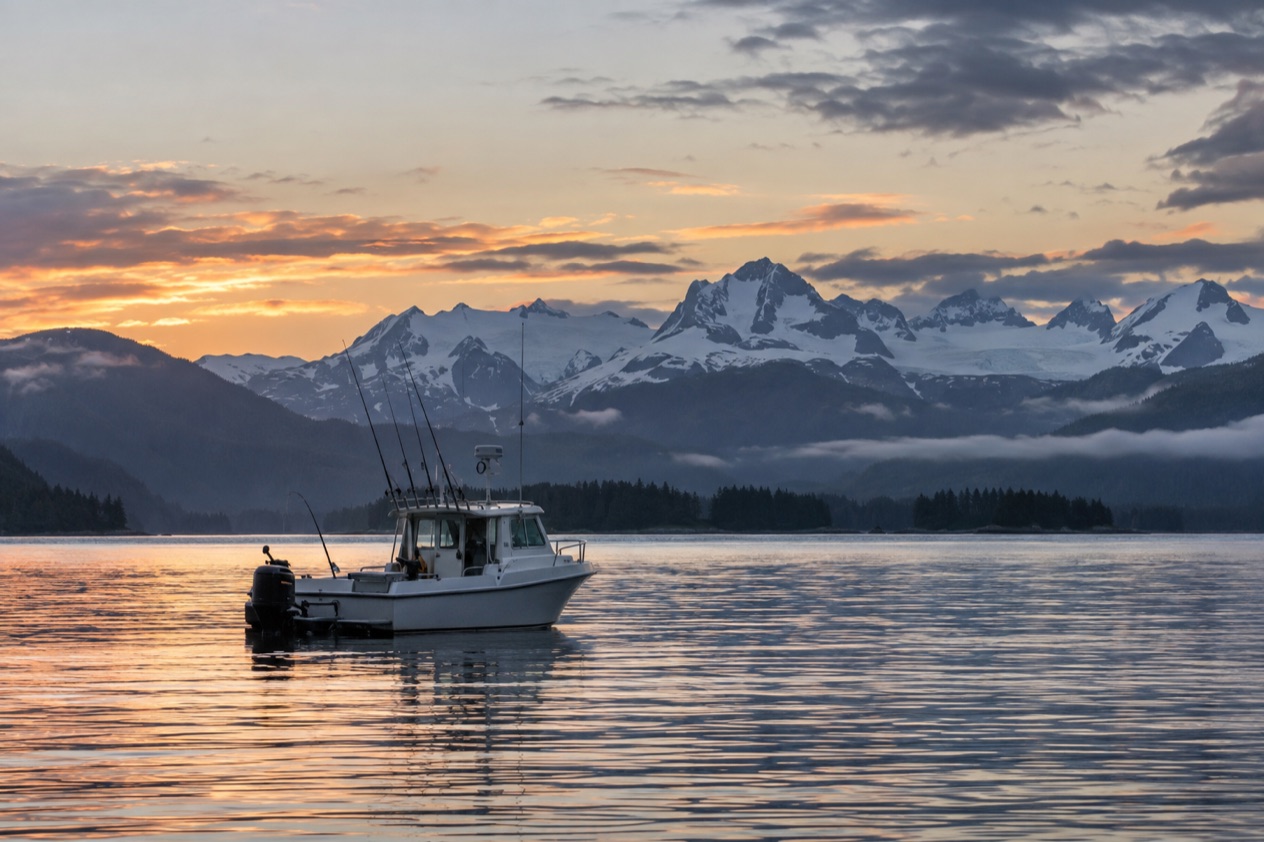
Where can you fish for king salmon in Alaska?
Kings, also called Chinook, are the largest of the Pacific salmon, and Alaska named the species its state fish for its size and flavorful flesh. Their natural range stretches along the Pacific coast of North America up to Kotzebue Sound in Alaska.
What you do depends on the kind of day you want. The Kenai is a river experience, with current, cold air coming off the mountains and a line of anglers working the same seams of water. Homer is a salt-water and harbor experience, with gulls, boat engines and the smell of the docks. Both can be done in the same trip, and they give very different pictures of the fish.
The Kenai River
The Kenai is described as the most popular sport fishing destination in Alaska, particularly for king salmon. It runs 82 miles westward from Kenai Lake to Cook Inlet, passing near the towns of Kenai and Soldotna. Its fame rests partly on size: mature kings here have averaged around 37 pounds, and the sport-caught world record, a fish of about 97 pounds, came out of this river on May 17, 1985.
The river changes character as it goes, and each stretch has its own feel. The upper reaches run through mountain country and include the whitewater of Kenai Canyon. The middle river flows through a calmer, more forested landscape. Near the mouth, the water is pushed and pulled by the tides, so the rhythm of the day follows the sea as much as the river.
| Section | Length (miles) | Notes |
|---|---|---|
| Upper River | 17.3 | Kenai Lake to Skilak Lake, with whitewater rapids in Kenai Canyon |
| Middle River | 19.5 | Skilak Lake downstream to the Sterling Highway bridge near Soldotna |
| Lower River | 12 | Final stretch to Cook Inlet, greatly influenced by changing tides |
One thing to know about the Kenai before dreaming of a record: in recent years the king salmon fishery here has been closed or heavily restricted because of low returns of fish. The river is still a place to see, and other species draw anglers, but kings are not something to count on. Pink salmon, for example, run only in even-numbered years, which shapes what the river looks like from one summer to the next.
Homer, Kachemak Bay and the Fishing Lagoon
Homer, which calls itself the Halibut Fishing Capital of the World, is the jumping-off point for the waters of Kachemak Bay, Cook Inlet and the Gulf of Alaska. Anglers who go out salt water from the port can reach king salmon, halibut, lingcod, rockfish and silver salmon, so a day on a boat can end with a mixed catch. King salmon are present in these waters year-round, which is unusual for a fish people associate with a short summer run.
If you prefer to keep your feet on land, the Nick Dudiak Fishing Lagoon, also known as The Fishing Hole, sits on the Homer Spit and is stocked with both kings and silvers. It has a handicapped accessible platform and ramp, a parking lot, fish cleaning tables, restrooms and a picnic area. That makes it a place where a whole group can spend the day, with some people casting and others at the picnic tables watching the spit’s boat traffic.
The lagoon is a good fit for anyone who wants to fish without chartering a boat. Fishing from a platform is a quieter, more social experience than a boat trip, with neighbors comparing lures and swapping stories between bites. Boat days out of Homer suit those who want open water, big scenery and the chance at more than one species.
Far north on the Yukon
Kings also swim in far more distant water. The Yukon River has the longest freshwater migration route of any salmon, more than 1,900 miles from the Bering Sea to spawning grounds upstream of Whitehorse in Yukon. It is a reminder that the fish you hook on the Kenai or in Homer belongs to a species whose travels cross a continent. Like all six Pacific salmon species, kings are anadromous and die after spawning.
When is the season?
It depends on the place, because in Homer kings are present year-round while the lagoon fishery runs from May through early July. That span is the clearest window the lagoon gives anglers, and it fits the way the Homer summer builds, with long evenings, busy docks and a spit that fills with campers and boats. Anglers who fish out on the bay are working water where kings are around at any time of year.
The rest of the Homer season unfolds around that window. Halibut fishing begins in earnest in May and continues through September. Lingcod retention opens on July 1, and many anglers plan their bottomfish trips around that date. From mid-July through September, silver salmon become a favorite target, and stocked silvers return to the Nick Dudiak Fishing Lagoon starting in mid-July.
A season in sequence at Homer
Think of it as a relay. Late spring and early summer belong to kings at the lagoon and to the first halibut trips. By July, lingcod open, and the kings give way to silvers as the main salmon story. Through late summer, the halibut fishery goes on, and the harbor stays busy with boats coming in and fish being cleaned at the tables.
This order matters if you are building a trip around a particular fish. A traveler who wants kings from the lagoon should aim for the early part of the season, while someone who wants a mix of species can choose a boat day in midsummer and hope for a varied catch. Silvers suit those who arrive in the second half of summer.
Kings on their spawning grounds
Kings can be found on their spawning redds, their nests in the gravel, from September to December. That is a quieter, more natural-history side of the fish, far from the rod and reel. It is the end of the story: after the long river migration, the adults spawn and die, and the next generation begins in the same cold streams.
Seeing this cycle is part of understanding why managers watch king returns so closely. When fewer fish come back, as has happened on the Kenai in recent years, the pressure shows up in closures and restrictions. A season on paper is a guide, not a guarantee, and the fish decide the rest.
What rules apply?
The rules that shape a king salmon trip come from Alaska’s Division of Sport Fish, which works year-round to protect, manage and improve sport fisheries across the state. For travelers, the most important point is that the Kenai king fishery has been closed or heavily restricted in recent years because of low returns. A river that was once the first name in king fishing now asks anglers to follow restrictions closely.
Over 105 miles of the Kenai River and its lakes are managed by the Alaska Department of Natural Resources as the Kenai River Special Management Area. It starts a few miles inland of the river mouth at Cook Inlet and reaches 82 miles upstream. That means much of the water you will fish or float is a managed area, with its own layer of oversight on top of the fishing rules.
Guides, gear and the boat day
Guided sport fishing operators in Alaska must register and report their activity through eLogbooks. For a visitor, this is a reassuring detail about how the industry is managed, because the guides taking you out are part of a system that tracks catch and effort. It is one way the state keeps an eye on fish that are valuable and, in places, struggling.
If you do not own gear, the Rod Loaner Program rents fishing equipment for free, which lets anglers get out on the water without a big purchase. The GoFishAK interactive maps help anglers discover sport fishing opportunities across the state, which is useful when you are deciding between a river and a harbor.
Saltwater rules around Homer
On the salt water, one rule is specific: anglers who target deepwater rockfish species must have equipment on board to descend the fish back to depth, which helps reverse the effects of barotrauma. It matters on mixed-species days out of Homer, where rockfish can come up alongside halibut and lingcod. A good boat day includes some conservation habits as well as a full cooler.
Lingcod retention opens on July 1, so the calendar itself is a rule. Combine that with the lagoon’s May through early July window for kings, and it is clear that timing is part of the regulation. Knowing what you are allowed to keep, and when, belongs in the plan from the start.
Good to know before you go
Pick your fish before you pick your town. Kings on the Kenai are a question mark because of restrictions, while Homer offers kings through the lagoon season and in the bay, with silvers, halibut and lingcod filling out the summer.
The state’s Division of Sport Fish also offers hatchery tours where visitors can see fish and learn how they are managed, a good plan for a day when the water is not cooperating. In remote country, the Tanana River drainage has six recreational public use cabins for anglers who want to go farther afield.
Sources
- Wikipedia, King salmon (https://en.wikipedia.org/wiki/King_salmon), checked October 11, 2026
- Alaska Department of Fish and Game, Sport fisheries (https://www.adfg.alaska.gov/index.cfm?adfg=fishingsport.main), checked October 11, 2026
- Wikipedia, Kenai River (https://en.wikipedia.org/wiki/Kenai_River), checked October 11, 2026
- Homer, fishing (https://www.homeralaska.org/fishing/), checked October 11, 2026
- Wikipedia, Pacific salmon (https://en.wikipedia.org/wiki/Pacific_salmon), checked October 11, 2026