
On a July evening in Anchorage, the sky stays pale long after dinner, joggers pass the lakeside parks, and a moose may be browsing at the edge of a green belt with the Chugach Mountains standing behind it. Alaska’s largest city is a place of museums, restaurants and a busy airport, wrapped in wilderness on every side. It suits travelers who want a comfortable base for glaciers, wildlife and mountain trails, plus a few good days in town before or after the wilder parts of the trip.
Where is Anchorage and what is it like?
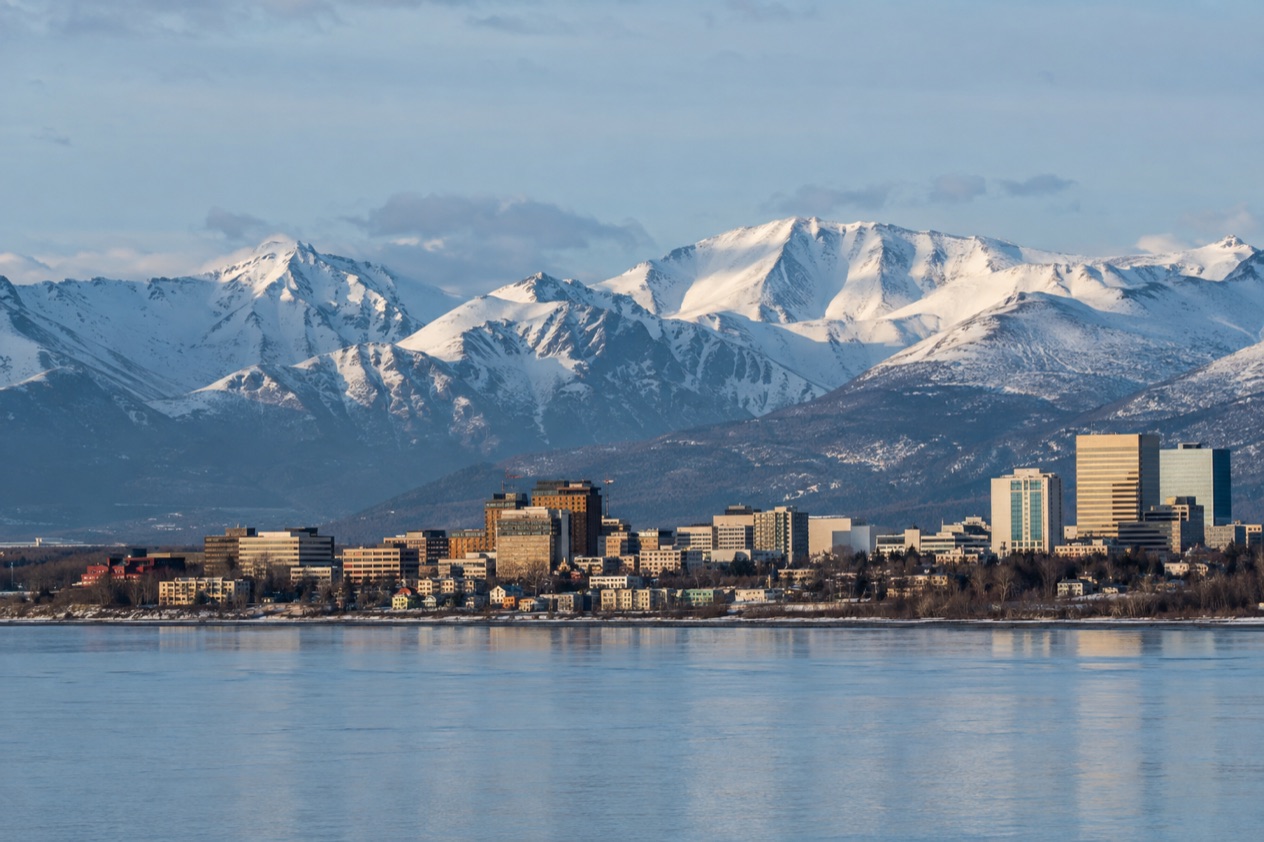
Anchorage sits in Southcentral Alaska, at the head of Cook Inlet, with the Chugach Mountains close behind the city and open water in front of it. It is an urban enclave surrounded by wilderness, a place where a downtown museum, a coffee shop and a trailhead can all be reached in the same afternoon. About 291,000 people were counted here in the 2020 census, which makes it by far the largest city in the state.
The municipality is enormous, stretching from Eklutna in the north to Portage in the south, and it takes in suburbs such as Eagle River as well as wild mountain country. The land is Dena’ina Ełnena, the homeland of the Dena’ina Athabascan people, and the Native Village of Eklutna is part of that story today. The modern city began as a tent camp near Ship Creek in 1915, when Alaska Railroad construction began, and it was rebuilt after the Good Friday earthquake of 1964, one of the strongest ever recorded.
The pace is that of a working city with an outdoor streak. Residents bike, ski and hike right from town, and the menus lean on what the state pulls from the water: salmon, halibut, king crab and reindeer sausage. Visitors who love the idea of wilderness with a hot meal and a comfortable bed at the end of the day tend to love Anchorage.
Travelers hoping for a tiny frontier village may find it larger and more spread out than the postcards suggest, and the city works best as a launch point rather than a place to linger without a plan. One warning applies to everyone: visitors are told not to walk on the mudflats along the shore, because of extreme tides and fine glacial silt that can trap a person. Look at the flats from the trails and viewpoints instead.
What is there to do in Anchorage?
Anchorage offers hiking, sightseeing, tours, wildlife viewing, museums and glacier viewing, and the real draw is how quickly a city day turns into a mountain or wildlife day. Four reasons bring people here: Alaska Native culture and history, animals, the Chugach trails and the view from the air.
Museums and Alaska Native culture
The Anchorage Museum sits in walkable downtown and has been open since 1968. It is a large art, history, ethnography, ecology and science museum, and it has been named among the Top 50 Museums to Visit in the U.S. by Condé Nast Traveler. Seven ground-floor galleries hold the Art of the North collection, an Alaska history gallery tells the story of Russian, Native, gold rush and pioneer Alaska, and the Smithsonian Arctic Studies Center shows Alaska Native artifacts on long-term loan.
The Alaska Native Heritage Center, ten miles from downtown on 26 wooded acres, opened in 1999 and shares the heritage of Alaska’s 11 major cultural groups, among them the Athabaskan, Tlingit, Haida, Yup’ik and Inupiaq peoples. Pair it with the museum and you understand much more of what you see later on the road. The museum also welcomes visitors on a snowy winter day as well as in summer, so it works as a rainy or cold day anchor.
Wildlife in and around the city
Moose wander through the city itself, and the Anchorage Coastal Wildlife Refuge is where you may watch birds, moose and occasional bears, reached at Potter Marsh, Kincaid Park or Carr-Gottstein Park. Salmon fill nearby rivers and streams through the summer, and birds arrive on their annual migrations in the millions. None of it is guaranteed on a given hour, so give a place time.
For sightings you can count on, the Alaska Zoo and the Alaska Wildlife Conservation Center keep animals in view. The conservation center is a sanctuary that takes in injured and orphaned animals, most of which stay for good, and it offers Moose Encounters, Bear Encounters and Walk on the Wild Side Tours. It lies in the Girdwood and Portage area, about 45 minutes south of Anchorage.
Chugach State Park and Eklutna Lake
Chugach State Park begins about seven miles east of downtown and covers roughly 495,000 acres, one of the four largest state parks in the country. Eagle River’s Mount Baldy rises to 3,218 feet and draws hikers and hang-gliders alike. In Anchorage, you can hike mountain trails in the long summer evenings and paddle turquoise waterways inside a vast state park.
Eklutna Lake is the park’s showpiece for a day out. The largely flat Lakeside Trail runs 12.7 miles along the shore to the mile-long Eklutna Glacier Trail, which leads to the moraines at the foot of the glacier.
In summer you travel on foot, by mountain bike, ATV or on horseback, and in winter by snowmobile, snowshoes or cross-country skis as regulations and weather allow. On the water, only non-motorized boats and boats with an electric motor are permitted.
Flightseeing and winter pleasures
Alaska has about six times as many pilots per capita as the rest of the country, and flightseeing tours and charters leave Anchorage all year by floatplane, fixed wing and helicopter. Flights depart from Merrill Field, from Lake Hood, the world’s busiest floatplane base, or from nearby Girdwood. Some flights go to see bears fishing, and others head toward Denali, North America’s tallest peak at 20,310 feet, which lies to the northwest of the city.
Winter brings its own list: skiing, skating, dog sledding, snow biking and flightseeing over the Chugach Mountains and the Alaska Range, when clear skies keep pilots flying. On clear nights from late September through the middle of April, the northern lights may show above the city, most often yellow-green and sometimes red, blue or purple. Local guides who hunt for the lights can help improve your odds.
How many days do you need in Anchorage?
Three days is the usual minimum, and that is enough to see the city properly and take one real outing beyond it. People spend at least that long here during their Alaska travels, often as a bookend to a longer trip by train, motorcoach or road.
A short stay fits the Anchorage Museum, a visit to the Alaska Native Heritage Center, a dinner of Alaska seafood and one stretch outdoors, such as the refuge at Potter Marsh or a trail near Eagle River. If you arrive on a late flight, keep the first evening for a walk downtown and let the museum fill the first morning, especially on a gray day.
With extra days, spend one on Eklutna Lake and the old village of Eklutna, the oldest inhabited location in the Anchorage area, first settled more than 800 years ago. Another can go to the Girdwood and Portage area, where the wildlife sanctuary and the ski resort are found. A flightseeing trip is a good use of a day with clear skies, since the mountains reveal themselves from above.
A longer stay opens up the rest of the state. Fairbanks is just over an hour away by air, and Juneau less than two hours. Many Alaska vacation deals bundle motorcoach and train excursions with overnight stays, and you can book an Alaska Railroad trip directly. Extended stay accommodations are available for those who want to settle in, because Alaska is a big place with plenty to see.
In winter, a stay of several days allows for dog sledding, which typically runs from October through March, and for the late-winter events that put the city in a festive mood. Either way, build in a spare day for weather or for a flight that has to wait for clear skies.
Where to stay in Anchorage
Anchorage offers hotels, motels, inns, resorts, lodges, cabins, extended stay properties, hostels, pet friendly places, bed and breakfasts, luxury options, vacation rentals, university and hospital hotels, and campgrounds and RV parks. Which area fits depends on whether you want museums and restaurants on foot, a suburb near the trails, or a mountain base.
Downtown Anchorage
Downtown has first-class, convenient, centrally located hotels, and it is the walkable part of the city, with the Anchorage Museum among its anchors. It suits first-time visitors, travelers connecting to a train or a tour, and anyone who wants dinner and a stroll within a few blocks of the door.
In the long days of summer you will notice the light more than the street noise, so a room with good curtains matters more than a room with a view.
Eagle River and the suburbs
Eagle River is a community within the municipality, set between Joint Base Elmendorf-Richardson and Chugach State Park. It has its own hotels and feels quieter than downtown, which suits travelers heading for trails, Mount Baldy or the Bear Paw Festival in July. A bike trail runs alongside the Glenn Highway from Anchorage past Eagle River to Chugiak, so cyclists can link the suburb and the city.
Other places near the park include Chugiak, Palmer and the village of Eklutna, all within minutes of the park boundary. These are the areas for people who care more about a morning trail than an evening restaurant, and who do not mind driving into town for a meal.
Girdwood, lodges, cabins and campgrounds
Girdwood and Portage hold two resorts or lodges, both with free internet and wheelchair accessible facilities and pathways. The area is surrounded by the Chugach Mountains, and it makes a natural base for skiers, since a world-class ski resort sits close to Anchorage. It also suits a quieter night out of the city.
Beyond town there is a spectacular array of Alaska fishing and wilderness lodges and affordable family and romantic getaways near Anchorage. Cabins stand on trails, lakes and streams and along ocean shorelines, and campgrounds and RV parks round out the choices for those who prefer to sleep outdoors.
How do you get to Anchorage and get around?
Visitors arrive by air at Ted Stevens Anchorage International Airport, the main airport hub of the region, five miles southwest of downtown. More than 240 flights arrive daily, and non-stop service comes from cities including Seattle, Denver, Chicago, Minneapolis, Los Angeles and Phoenix. In summer the list grows to include Atlanta, Dallas-Ft. Worth, Houston, Newark, Portland, Salt Lake City and San Francisco.
The airport is a hub for Alaska Airlines, and Lake Hood, the busiest seaplane base in the world, lies right next to it. Travelers are reminded that they may need a Real ID or another acceptable ID to fly. Flights to Anchorage arrive from U.S. cities across the country in winter too, and the city can also be reached by road in winter.
Inside the state, Anchorage is the hub for onward travel. You can fly from Anchorage to Fairbanks in just over an hour with Alaska Airlines or Ravn Alaska, and Juneau is less than two hours by air. Alaska Railroad trips can be booked for travel from the city as well.
Within the city, downtown is walkable, and the Anchorage Museum sits in the middle of it. The Alaska Native Heritage Center is ten miles from downtown, so it calls for a ride. Eklutna lies 24 miles northeast of the city near Mile 26 of the Glenn Highway, and the Seward Highway follows the edge of Chugach State Park along Turnagain Arm on the way toward Girdwood.
Turnagain Arm has the largest tides in the United States, up to 40 feet, and at low tide it turns into a broad mud flat. The flood tide often begins with a tidal bore that can reach 6 feet high. It is a sight to watch from the highway pullouts and shore trails, not to walk into.
When is the best time to visit Anchorage?
The best time to visit Anchorage is from May to early September, when the days are long, the trails are open and the summer services are running. In summer the city can see up to 19½ hours of daylight, with the sun setting just before midnight, which stretches every day into a long evening of hiking, paddling and dinners outside. July afternoons climb to about the mid-60s, and nights are cool, with showers on a handful of days.
Summer is also festival season. Summer Solstice and the Fourth of July bring events across the city, Eagle River hosts the Bear Paw Festival in July, and Girdwood has its Forest Fair. The Alaska Federation of Natives Annual Convention is another event on the Anchorage calendar. These are the weeks to expect more people at the museum, the refuge and the trailheads.
Winter is a different trip, not a lesser one. January afternoons sit in the low 20s, with about a foot of snow in the month, and the daylight is short, so plan around it. In exchange you get dog sledding, which typically runs from October through March, skiing, skating and a chance at the northern lights from late September through the middle of April.
The Iditarod Trail Sled Dog Race starts here on the first Saturday of March, on Fourth Avenue at D Street, and the ceremonial run goes 11 miles to Campbell Creek Science Center. The restart is at Willow the next day, and the mushers and dogs then cover roughly 1,000 miles to Nome. Fur Rondy, Alaska’s largest and oldest winter festival, began in 1936 and brings the Outhouse Races, the Running of the Reindeer and the Open World Championship Sled Dog Races.
Good to know before you go
Keep the mudflats and the tide at a distance, and remember that in winter the days are short and the nights are cold, while in summer the evenings run late and curtains help. Visitors can sign up for the Anchorage Local E-newsletter to follow local events, and the free Official Anchorage Visitor Guide lists businesses across Southcentral Alaska. The Eagle River campground and the Heritage Center carry the fees below.
| Fee | Amount | Who pays |
|---|---|---|
| Eagle River Campground group camping area, per night | $150 | Groups, reservable online |
| Eagle River Campground tent platform, per night | $35 | Tent-only groups |
| Alaska Native Heritage Center, adult admission | $15 | Alaska residents 18 and older, with ID |
| Alaska Native Heritage Center, child admission | $13 | Alaska resident children 4 to 17, with ID |
Sources
- Visit Anchorage (https://www.anchorage.net/), checked October 11, 2026
- Alaska.org, dest anchorage (https://www.alaska.org/destination/anchorage), checked October 11, 2026
- Wikivoyage, Anchorage (https://en.wikivoyage.org/wiki/Anchorage), checked October 11, 2026
- Wikipedia, Anchorage, Alaska (https://en.wikipedia.org/wiki/Anchorage,_Alaska), checked October 11, 2026
- Wikipedia, Anchorage Museum (https://en.wikipedia.org/wiki/Anchorage_Museum), checked October 11, 2026
- Alaska Native Heritage Center (https://www.alaskanative.net/visit), checked October 11, 2026
- Wikipedia, Chugach State Park (https://en.wikipedia.org/wiki/Chugach_State_Park), checked October 11, 2026
- Alaska State Parks, Chugach region (https://dnr.alaska.gov/parks/aspunits/chugach/chugachindex.htm), checked October 11, 2026
- Wikipedia, Turnagain Arm (https://en.wikipedia.org/wiki/Turnagain_Arm), checked October 11, 2026
- Wikipedia, Eklutna, Alaska (https://en.wikipedia.org/wiki/Eklutna,_Alaska), checked October 11, 2026
- Wikipedia, Eagle River, Alaska (https://en.wikipedia.org/wiki/Eagle_River,_Alaska), checked October 11, 2026
- Ted Stevens Anchorage International Airport (https://www.ancairport.com/), checked October 11, 2026
- Wikipedia, Joint Base Elmendorf–Richardson (https://en.wikipedia.org/wiki/Joint_Base_Elmendorf–Richardson), checked October 11, 2026
- Alaska Wildlife Conservation Center (https://www.alaskawildlife.org/), checked October 11, 2026
- Wikipedia, Chugach Mountains (https://en.wikipedia.org/wiki/Chugach_Mountains), checked October 11, 2026
- Wikipedia, Climate of Alaska (https://en.wikipedia.org/wiki/Climate_of_Alaska), checked October 11, 2026
- NOAA NCEI, U.S. Climate Normals 1991-2020, monthly (https://www.ncei.noaa.gov/access/services/data/v1?dataset=normals-monthly-1991-2020&stations=USW00026451), station Anchorage Intl Ap, elevation 120 feet, checked October 11, 2026
All our pages
When to go
- Best Time to Visit Anchorage: Long Summer Days, Northern Lights, Weather by Month and Festivals
- Anchorage in January: Weather, Northern Lights, Dog Sledding and Winter Plans
- Anchorage in February: Fur Rondy, Northern Lights, Dog Sledding and Weather
- Anchorage in March: Iditarod Start, Winter Weather and Northern Lights
- Anchorage in April: Spring Thaw, Northern Lights, Museums and Weather
- Anchorage in May: Weather, Long Evenings and What to Do
- Anchorage in June: Long Daylight, Solstice Events and What to Do
- Anchorage in July: Long Daylight, Weather and What to Do
- Anchorage in August: Weather, Salmon Season, State Fair and What to Do
- Anchorage in September: Weather, Fat Bear Week, Northern Lights and What to Do
- Anchorage in October: Weather, Northern Lights Season and What to Do
- Anchorage in November: Snow, Northern Lights, Dog Sledding and What to Do
- Anchorage in December: Snow, Dog Sledding, Northern Lights and Short Days
- Anchorage to Denali by Train: The Denali Star Route, Season Dates, Fares and What to Know
- Anchorage to Seward by Train: The Coastal Classic, Schedule, Fares and What to Know
Things to do
- Things to Do in Anchorage: Museums, Alaska Native Heritage, Chugach Trails and Day Trips
- Day Trips from Anchorage: Seward, Girdwood, Whittier and Talkeetna
- 3 Days in Anchorage: Museums, Native Culture, Wildlife and a Girdwood Day Trip
- 7 Days in Alaska: Itinerary: Anchorage, Denali and Fairbanks
- Anchorage Museum: Art of the North, Smithsonian Arctic Studies Center and Discovery Center
Where to stay
Getting there
- Anchorage from the Lower 48: Flights, Roads, Ferries and Trains Once You Arrive
- Ted Stevens Anchorage International Airport (ANC): Terminals, Airlines and Getting to Town
- Anchorage Airport to Denali: Driving the Parks Highway, the Train and the Park Road in Fall
- Anchorage Airport to Girdwood: Seward Highway Drive, Coastal Classic Train and Arrival Basics
- Anchorage Airport to Seward: Driving, the Coastal Classic Train, the Park Connection Bus and Resurrection Bay
- Anchorage Airport to Whittier: Getting There, the Coastal Classic Train and What Waits at the Water
- Anchorage Car Rental: Airport Pickup, What to Bring and the Roads You Can Drive
- Anchorage to Denali: By Train or Car, the Park Road and How Long to Stay
- Anchorage to Fairbanks: Denali Star Train, the Parks Highway and Flights
- Anchorage to Girdwood: Seward Highway Drive, Alaska Railroad and Road Conditions
- Anchorage to Homer: Driving the Seward and Sterling Highways, Flights, Ferry and Bus
- Anchorage to Juneau: Flights, the Ferry Question and What to Know
- Anchorage to Kenai: Driving, Flying and the Bus Through Soldotna
- Anchorage to McCarthy: The Drive, the Gravel Road, Rental Cars and the Footbridge
- Anchorage to Palmer: The Glenn Highway Drive, the Train Question and What Waits in the Valley
- Anchorage to Seward: Train, Bus and Drive Along the Seward Highway
- Anchorage to Talkeetna: Train, Car, Motorcoach and the Parks Highway
- Anchorage to Valdez: The Drive, the Flight and What to Know Before You Go
- Anchorage to Whittier: The Tunnel, the Glacier Discovery Train and What Waits at the Dock