
Leave Anchorage with the Chugach Mountains on one side and the tidal flats of Turnagain Arm on the other, and the city falls away quickly. Girdwood, home of Alyeska Resort and a patch of temperate rainforest, sits at the end of that stretch of the Seward Highway. Travelers drive it, and the Alaska Railroad also stops there.
How do you get from Anchorage to Girdwood?
Girdwood lies 37 miles south of Anchorage, and the drive takes about 1 hour by car. The train is slower, about 1.5 hours, but it leaves the driving to someone else and lets you watch the scenery.
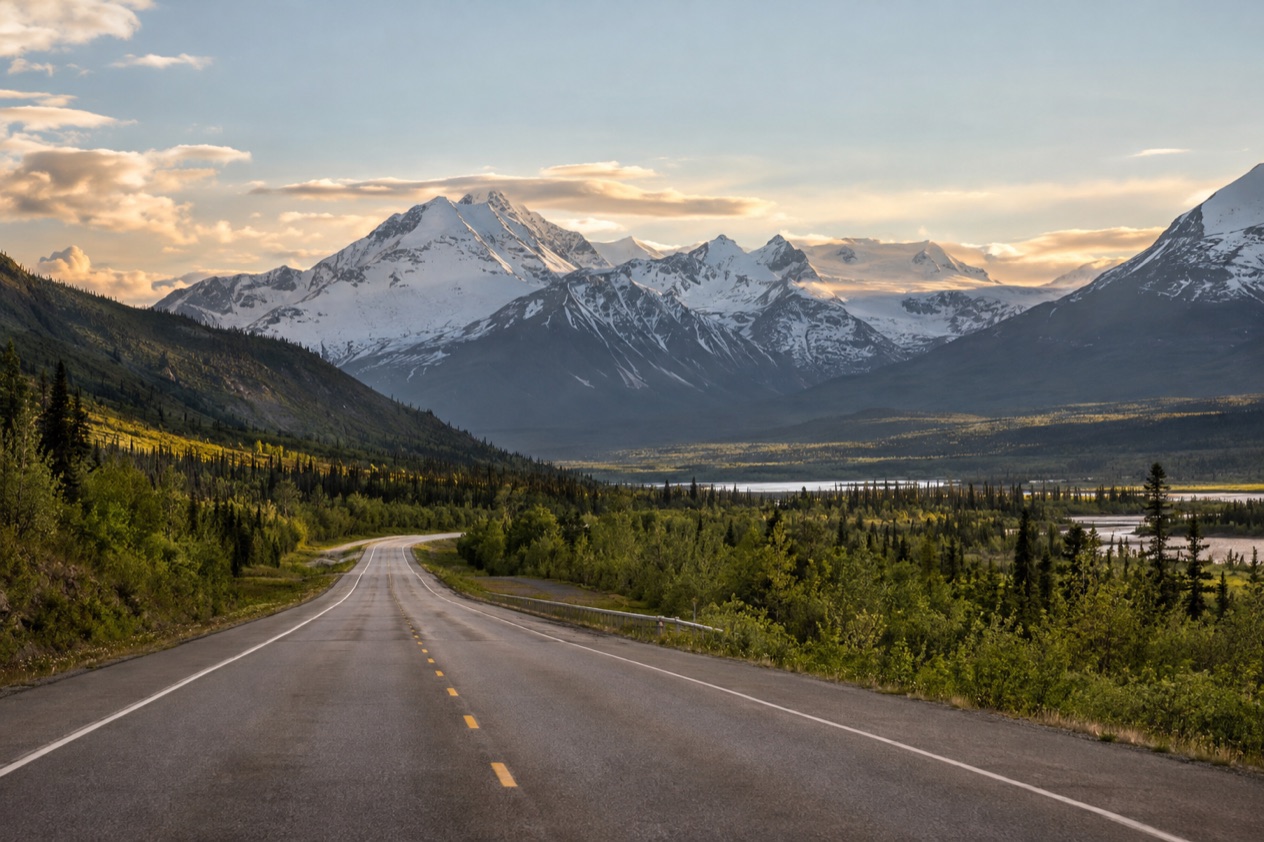
The main access to town is the Seward Highway, which is scenic but can be slow during peak summer travel times. The road is designated a National Forest Scenic Byway, a State Scenic Byway and an All-American Road, so the route itself is part of the outing. It runs through Chugach National Forest and along Turnagain Arm on its way toward the Kenai Peninsula.
By car on the Seward Highway
From Anchorage you follow the Seward Highway, which stretches 125 miles to Seward and is part of the unsigned Interstate Highway System as Interstate A-3. Girdwood is one of the first places you reach, so there is no complicated navigation. Because the highway is a byway, expect views of water and mountains for much of the drive, and expect other drivers to be looking at them too.
Summer weekends and busy travel days can slow the road, so a trip that takes an hour in light traffic can stretch when people are heading south. If you plan to be in Girdwood for a meal or a tram ride at a set time, leave with some margin. Alyeska Resort sits in the heart of the Chugach Mountains and is about 45 minutes outside Anchorage by the resort’s own reckoning, a useful reminder that timing depends on where you start and where you stop.
By train on the Alaska Railroad
There is a train from Anchorage to Girdwood, and it takes about 1.5 hours. Two Alaska Railroad trains stop in Girdwood: the Coastal Classic, which runs between Anchorage and Seward, and the Glacier Discovery, which stops in Whittier, Portage and Spencer Glacier. Which one suits you depends on whether you are continuing on toward Seward or toward the glacier stops.
Riding means you can look out the window instead of at the road, which matters on a route known for its water and mountain views. It also means you arrive in Girdwood without a car, so your plans there stay within reach of where the station and your lodging put you.
Which options are there?
There are two main options, the car and the train, and each shapes what you do once you arrive in Girdwood. The table sets the basics side by side.
| Option | Route | Time from Anchorage |
|---|---|---|
| Car | Seward Highway | About 1 hour |
| Alaska Railroad, Coastal Classic | Anchorage to Seward, stops in Girdwood | About 1.5 hours |
| Alaska Railroad, Glacier Discovery | Stops in Girdwood, Whittier, Portage and Spencer Glacier | About 1.5 hours |
Driving yourself
A car gives you the freedom to stop where you like along Turnagain Arm and to move around Girdwood on your own schedule. The trails and sights in the valley are spread out: Winner Creek Trail winds through the northernmost rainforest in the US to a thundering waterfall, Crow Creek Gold Mine is a historic gold mine area open to the public, and Alyeska Resort sits at the base of the mountain.
If you ride the aerial tram at Alyeska Resort, you reach the top of the mountain, where there is a restaurant, a bar and a gift shop. Hikers can instead take the North Face Trail up Mt. Alyeska. A paved six-mile bike trail runs from Alyeska Resort to Bird Point, and U.S. Bicycle Route 97 follows the Seward Highway along its whole length.
Taking the Alaska Railroad
The train suits travelers who would rather watch the landscape than drive it, and who plan to spend their time near where they get off. Girdwood is a stop on both the Coastal Classic and the Glacier Discovery, which means it can be a day trip in itself or one step on a longer journey toward Seward or toward the glacier stops.
Once in Girdwood, the ski area is the best known draw, since Alyeska Resort is home to Alaska’s largest ski area. In the cold months, skiers and snowshoers have over 30 miles of untracked trails to explore. In April, the Slush Cup festival takes place on the second weekend of the month.
Staying at the resort
If you plan to sleep in Girdwood, Alyeska Resort offers ski-in/ski-out accommodations for skiers. Hotel guests staying two nights or more can decline housekeeping services and receive a $5 per day dining voucher through the resort’s Green Stay initiative. The name Alyeska comes from the Aleut word meaning great land of the white to the east, a fitting name for a place built around snow.
What should you know before you travel from Anchorage to Girdwood?
The main thing to know is that the Seward Highway is the only road you need, and its conditions can change what the drive feels like. Alaska 511, the state’s traveler information service, lists road conditions in categories: Good, Fair, Difficult, Very Difficult, Hazardous, Road Closure and No Winter Maintenance. Reading those labels before you leave tells you quickly whether the road is straightforward.
Using Alaska 511 before you drive
The Alaska Department of Transportation has partnered with Waze to publish Waze-reported incidents and closures on the Alaska 511 website, so the site carries more than official notices. On the map page you can add a camera to My Cameras by clicking a camera icon and then the My Cameras button in the popup. On the camera page, the My Cameras option is under the three dots icon below the camera image.
An account lets you do more. You must log in to save routes for future viewing, and creating an account also lets you receive notifications. Route notifications are sent by default on weekdays from 6 AM to 6 PM via SMS, which suits a commuter more than a weekend visitor, so look at the settings if your trip falls outside those hours.
The road itself
On a five-mile section of the Seward Highway south of Anchorage between Hope Junction and the top of Turnagain Pass, Alaska DOT&PF posted updated speed limits in July 2016: 55 mph in the right lane and 65 mph in the left lane. That stretch lies beyond Girdwood on the way toward the Kenai Peninsula, so it matters mainly if you continue past town.
The highway spends approximately 72 miles inside Chugach National Forest, and the scenery is the reason people take it. Summer travel times can be slow, so the drive is worth treating as part of the day rather than as a gap between stops.
Picking the right trip for the moment
What you do in Girdwood changes with the season. The Winner Creek Trail and the North Face Trail are there for walkers, the Crow Creek Gold Mine is open to the public as an attraction, and the aerial tram carries visitors up Mt. Alyeska. In the colder months the focus shifts to skiing and snowshoeing, with Alyeska Resort at the center.
If you arrive by train, plan your day around what is within reach of the stop. If you drive, you can link the valley’s trails, the resort and the bike path to Bird Point in whatever order suits you.
Good to know before you go
The trails, the tram and the ski area suit different times of the year, so decide what you came for and pick the day to match. Whichever way you travel, the road and the rail line both follow the same stretch of coast and mountains.
Sources
- Wikipedia, Seward Highway (https://en.wikipedia.org/wiki/Seward_Highway), checked October 11, 2026
- Alaska.org, dest girdwood (https://www.alaska.org/destination/girdwood), checked October 11, 2026
- Wikivoyage, Girdwood (https://en.wikivoyage.org/wiki/Girdwood), checked October 11, 2026
- Alyeska Resort, Girdwood (https://www.alyeskaresort.com/), checked October 11, 2026
- Alaska 511 (https://511.alaska.gov/), checked October 11, 2026
To plan your stay
- Best Time to Visit Anchorage: Long Summer Days, Northern Lights, Weather by Month and Festivals
- Things to Do in Anchorage: Museums, Alaska Native Heritage, Chugach Trails and Day Trips
- Where to Stay in Anchorage: Downtown, Eagle River, Girdwood and Lodging Types
- Know Before You Go to Anchorage: Weather, Wildlife, Getting Around and Local Habits