
Somewhere in Anchorage, a traveler is staring at a cruise confirmation or a kayaking reservation that says Whittier and wondering how a town on Prince William Sound fits into a map of roads. The answer runs through a mountain. You reach Whittier by road via the Seward Highway and the Portage Glacier Highway, ending in the Anton Anderson Memorial Tunnel, or you ride the Glacier Discovery Train from the Alaska Railroad depot.
How do you get from Anchorage to Whittier?
You get from Anchorage to Whittier either by driving the Seward Highway to Portage and turning onto the Portage Glacier Highway, or by taking the Glacier Discovery Train, and both routes end by passing through the same mountain tunnel. Whittier sits at the end of the line, so there is no continuing road beyond it. The town is a place you arrive at, step off, and usually leave again the same way.
By road: the Seward Highway and the Portage Glacier Highway
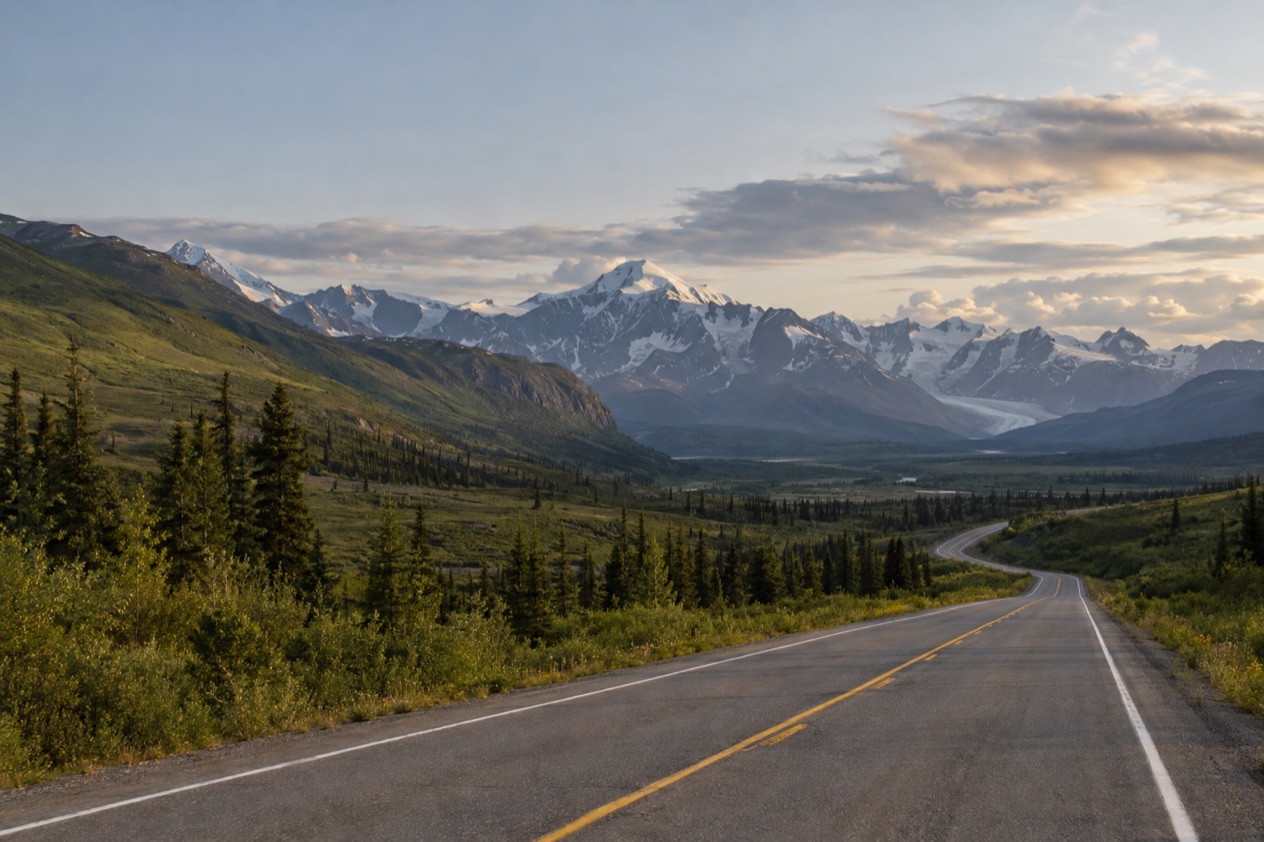
From Anchorage you follow the Seward Highway to Portage. There the Portage Glacier Highway takes over, running 11.59 miles through the Chugach National Forest to the Alaska Marine Highway ferry terminal in Whittier. Forest, rock walls and the glacier country around Portage set the mood before the road disappears into the mountain.
The tunnel is the defining moment of the drive. The Anton Anderson Memorial Tunnel is the largest combined rail and highway tunnel in North America, and it runs on a schedule for traffic, which means your arrival time depends on the tunnel’s hours as much as on your own pace. Inside, cars are held to a slow crawl, and the passage takes about ten minutes from one end to the other.
When you come out, the landscape is different. Whittier is a small harbor town wedged between steep mountains and the water of Passage Canal, and most of the visitor action happens near the docks. If you are driving, the toll is collected on the way in, and the details are laid out in the section on what to know before you travel.
By rail: from the Anchorage depot
The Glacier Discovery Train leaves from Anchorage and runs to Girdwood, Whittier, Portage, Spencer and Grandview. It follows much of the same route as the Coastal Classic train, with an added turn off the main line to Whittier and a turnaround point at Grandview. The Alaska Railroad Depot is at 411 West 1st Ave in Anchorage, and the phone number is +1 907 265-2494.
Along the way the train stops briefly at Girdwood, the resort town, before continuing to Whittier. At Whittier it travels through the mountain tunnel and connects to a glacier and wildlife cruise in Prince William Sound. For a traveler who wants the glaciers and has no wish to think about toll booths or tunnel schedules, this is the version of the trip where the route is simply handed to you.
Getting to the start of the trip
People begin at the airport, which is 5 miles southwest of downtown Anchorage. Ted Stevens Anchorage International Airport (ANC) has non-stop flights in summer from Atlanta, Chicago O’Hare, Dallas-Ft. Worth, Denver, Houston, Los Angeles, Minneapolis, Newark, Phoenix, Portland, Salt Lake City, San Francisco and Seattle/Tacoma, among others.
People Mover bus Route #40 serves the North and South terminals and connects to the downtown Transit Center. It runs every 15 minutes on weekdays and every 30 minutes evenings and weekends. From downtown, the railroad depot is on West 1st Avenue.
Which options are there?
There are two ways to reach Whittier from Anchorage, driving your own vehicle through the tunnel or riding the Glacier Discovery Train, and once you arrive, the town offers a handful of boat and trail outings from the harbor. The choice between road and rail mostly comes down to what you want from the day.
Driving yourself
Driving puts the schedule in your hands, within the tunnel’s open hours. You choose where to pull over around Portage and the Chugach National Forest, and you can head for the trailheads in Whittier on your own timing. Motorcycles pay the same toll as a regular vehicle, while trailers, RVs and buses pay more.
What you cannot do is cross on foot or on a bicycle. Pedestrians and bicycles are prohibited from the Anton Anderson Memorial Tunnel except during the annual Walk to Whittier in June, so even a hiker or cyclist in Anchorage needs a vehicle or the train to reach the town.
The Glacier Discovery Train
The train does more than carry you to a dock. It stops at places reachable only by rail, which gives you day trip options that a car cannot offer. At Portage, passengers may get off to visit the Alaska Wildlife Conservation Center, home to black and brown bears, moose, caribou, wood bison and more.
At Spencer, the whistle stop is a backcountry area in the Chugach National Forest, developed with the U.S. Forest Service. A 1.3-mile gravel path leads to Spencer Lake and views of Spencer Glacier.
Once you are in Whittier
Prince William Sound near Whittier has the world’s largest concentration of tidewater glaciers, and that is the reason people make the trip. The 26 Glacier Cruise offers a no-seasickness guarantee, which tells you something about how seriously the operator takes the open water. Sea kayaking tours launch from the docks, and kayak drop-offs are available in more remote parts of the Sound.
Jet ski tours provide dry suits and expert guides to lead visitors to glaciers and scenic viewpoints. On land, Whittier has several hiking trails, including the Whittier Creek Trail and the popular Portage Pass Trail, which offers views of Passage Canal and Portage Glacier. The water is cold, so these are outings on the water, not swims.
What should you know before you travel from Anchorage to Whittier?
Before you go, know that the tunnel keeps set hours, charges a toll to eastbound vehicles only, and is closed to anyone on foot or on a bicycle. Those three rules shape the whole trip, so they come first. After that, a few habits around road conditions and lodging help the day run smoothly.
Tunnel tolls and exemptions
The toll is collected from eastbound vehicles, meaning those heading into Whittier. Amounts depend on the kind of vehicle, from a regular car or motorcycle up to large buses and oversize loads.
| Vehicle | Toll (eastbound) |
|---|---|
| Regular vehicle or motorcycle | $13 |
| Vehicle pulling a trailer | $22 |
| Small bus or regular RV | $38 |
| Large bus | $137 |
| Oversize vehicle, 10 to 11 feet wide and 14 to 15 feet high | $330 per use |
| State government agency or school district vehicle | $11 |
Vehicles owned by the Alaska Railroad or the Alaska DOT&PF, and emergency or law enforcement vehicles, are exempt from the toll.
Tunnel hours
The tunnel’s hours differ between summer and winter months, and they decide how late you can stay in town. Plan your return so you are at the tunnel before it closes for the night. Whittier has little else to do once the last boats are in, and the town is not a place to be stranded.
| Season | Opens | Closes |
|---|---|---|
| Summer months | 5:30 a.m. | 11:15 p.m. |
| Winter months | 7:00 a.m. | 10:45 p.m. |
Checking the road and the Walk to Whittier
Alaska 511, run by the Alaska Department of Transportation, is the place to look at road conditions before you leave Anchorage. It uses the categories Good, Fair, Difficult, Very Difficult, Hazardous, Road Closure and No Winter Maintenance, and it publishes Waze-reported incidents and closures through a partnership with Waze. Cameras can be saved to My Cameras from the map page or the camera page.
If you create an account and log in, you can save routes and receive notifications. By default, route notifications go out by SMS on weekdays from 6 AM to 6 PM. Saving a route for the Seward Highway and Portage Glacier Highway is a sensible habit before a day that depends on a tunnel schedule.
The one time pedestrians are allowed through the tunnel is the Walk to Whittier, held each June. Whittier has hosted it since 2002, except in 2010. It is a local tradition that turns a passage normally reserved for vehicles and trains into something you cross with your own feet.
Where to sleep
Whittier has two small hotels and vacation rentals in the apartment complex where most of the town resides. Visitors choose to stay in nearby Girdwood or Anchorage instead. If you do sleep in town, remember that your tunnel crossing still has to fit inside the open hours.
Good to know before you go
Anchorage is best for visitors between May and early September, when summer days bring up to 19½ hours of sunlight and the sun sets just before midnight. Highs around 68°F and lows around 55°F make for cool, layered days, and the tunnel’s longer summer hours stretch the day even further. Prince William Sound stays cold in any month, so plan boat and trail days rather than swimming, and look at Alaska 511 before you head out of town.
Sources
- Wikipedia, Whittier Tunnel (https://en.wikipedia.org/wiki/Whittier_Tunnel), checked October 11, 2026
- Wikipedia, Anton Anderson Memorial Tunnel (https://en.wikipedia.org/wiki/Anton_Anderson_Memorial_Tunnel), checked October 11, 2026
- Alaska Railroad, Glacier Discovery (https://www.alaskarailroad.com/ride-a-train/our-trains/glacier-discovery), checked October 11, 2026
- Alaska.org, dest whittier (https://www.alaska.org/destination/whittier), checked October 11, 2026
- Alaska 511 (https://511.alaska.gov/), checked October 11, 2026
- Wikivoyage, Anchorage (https://en.wikivoyage.org/wiki/Anchorage), checked October 11, 2026
To plan your stay
- Best Time to Visit Anchorage: Long Summer Days, Northern Lights, Weather by Month and Festivals
- Things to Do in Anchorage: Museums, Alaska Native Heritage, Chugach Trails and Day Trips
- Where to Stay in Anchorage: Downtown, Eagle River, Girdwood and Lodging Types
- Know Before You Go to Anchorage: Weather, Wildlife, Getting Around and Local Habits