
Past the last Anchorage subdivisions, the city simply stops and the Chugach Mountains begin, close enough that the ridgelines frame ordinary street views. In Eagle River, a river and a nature center sit at the foot of the same slopes.
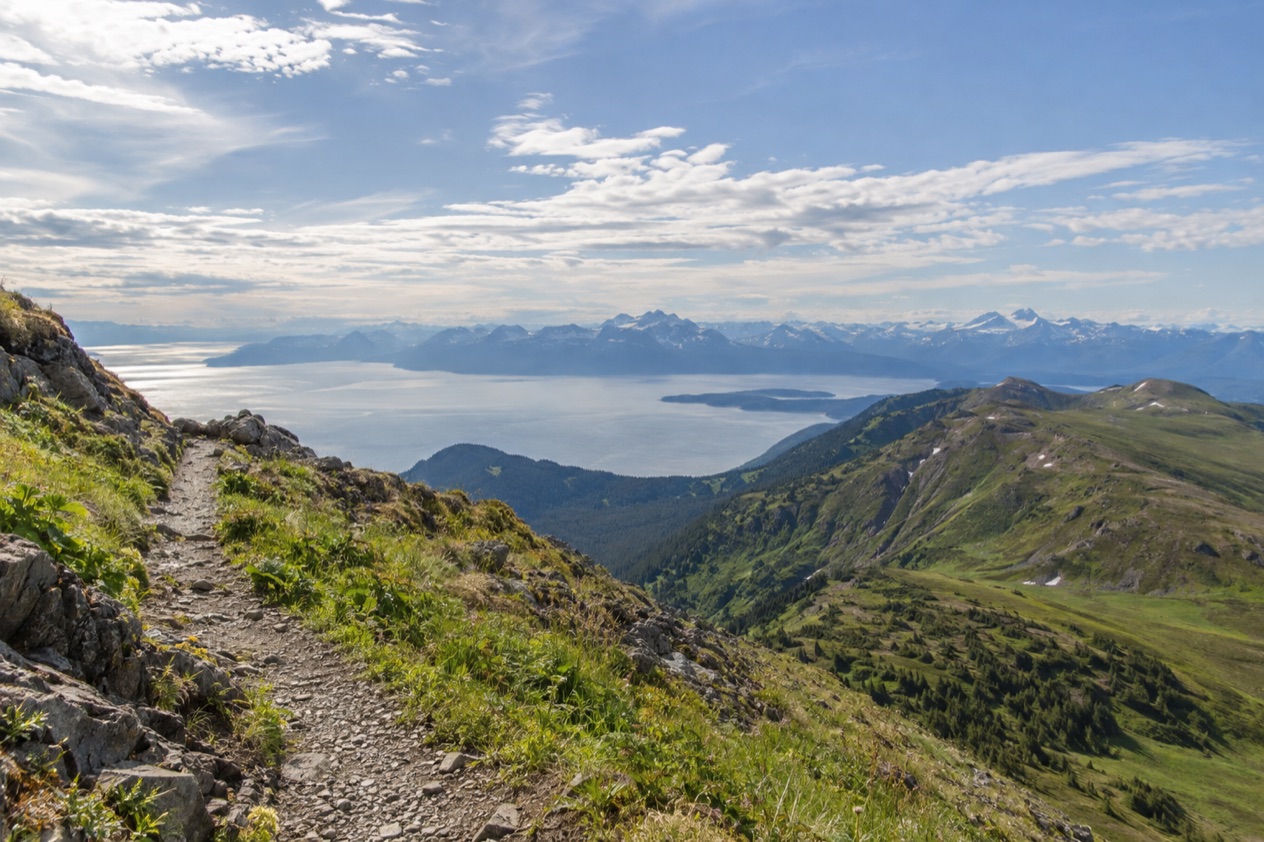
Chugach State Park is the wild backyard of Southcentral Alaska’s biggest city, a place of lake shores, glacier moraines and trailheads near Anchorage. It suits anyone who wants real mountain country without leaving the Anchorage area.
Is visiting Chugach State Park worth it?
Yes, if you want big mountain scenery that starts at the edge of a city, and it suits hikers, paddlers, cyclists and families who like a nature center stop as much as a long trail. The park holds roughly 495,000 acres and is one of the four largest state parks in the country, which gives it room for very different days.
What sets it apart from other places near Anchorage is how close the wilderness feels. The park’s western boundary lies seven miles east of downtown, and communities such as Eagle River, Chugiak, Girdwood, Palmer and the village of Eklutna all sit within minutes of it.
You can pick a lakeside trail that leads toward a glacier, a mountain summit above Eagle River, a creek with picnic tables, or a multi-day route toward Girdwood. In winter, the Lakeside Trail at Eklutna Lake can be traveled by snowmobile, snowshoes or cross-country skis as regulations and weather permit.
It is also a park with a local pulse. Anchorage residents hike, ski and bike here as part of everyday life, and the state park is where the city’s outdoor habits play out. A visit gives you the scenery and a glimpse of how people in the area spend their free days.
What to see at Chugach State Park
Eklutna Lake and the Lakeside Trail
Eklutna Lake is the park’s long ribbon of water, and the Lakeside Trail follows its shore for 12.7 miles. At the end it meets the Eklutna Glacier Trail, which runs a mile to the moraines at the foot of Eklutna Glacier. The trail is described as largely flat, so you spend your energy on the distance and the views of mountain walls rising from the water.
In summer you can travel it on foot, by mountain bike, ATV or on horseback. In winter it opens to snowmobiles, snowshoes and cross-country skis, as regulation and weather permit. On the water, only non-motorized boats and boats with an electric motor are allowed, so paddlers get a quiet lake. Bold Airstrip, at the inlet of the lake, is the one place in the park where drone takeoff and landing is permitted.
Eagle River Nature Center and the Albert Loop Trail
The Eagle River Nature Center is run by a non-profit organization in association with the park. Its exhibits explain the wildlife and the geology of the surrounding mountains, which makes it a useful first stop if you want to understand what you are about to walk through. It is also a natural pause for families between trail time.
The Albert Loop Trail near Eagle River is closed in the fall, when bears are using the area for fishing. The closure reduces encounters between people and bears, so in autumn this trail is not part of the plan.
The Historic Iditarod Trail over Crow Pass
Also called the Crow Pass Trail, the Historic Iditarod Trail crosses the park for 28 miles and links Eagle River with Girdwood. It is the park’s long-distance route, following an old sled-dog corridor through high alpine country. The name carries a bit of Alaska history, and the Iditarod Trail Sled Dog Race has its first checkpoint at the VFW post near the middle Glenn Highway interchange in Eagle River.
Because it connects two communities rather than looping back, this is a route for people who like point-to-point travel through the mountains. You trade a quick summit view for a sense of crossing the range from one side to the other.
Mount Baldy, Glen Alps and McHugh Creek
Mount Baldy rises 3,218 feet above Eagle River and is popular for hiking and hang-gliding. On the Anchorage side, the Glen Alps Trailhead is another doorway into the park, and a privately run service called the Flattop Mountain Shuttle provides round-trip transportation between downtown Anchorage and that trailhead.
Hours, tickets and rules
The park is a stretch of mountains with many entry points rather than a single gated attraction, and the fees documented here cover selected camping and gathering facilities. The group sites and pavilion at Eagle River Campground and the group areas at Eklutna Lake carry the fees shown here.
| Site | Fee per night | Notes |
|---|---|---|
| Eagle River Campground, group camping area | $150 | Reservable online |
| Eagle River Campground, tent platforms | $35 | Tent-only group camping |
| Eagle River Campground, picnic pavilion | $35 | Reservable online |
| Eklutna Lake Group Camping Areas A and B (each) | $150 | Plus a $4.50 transaction fee. Each area allows 60 people and up to 20 vehicles, or 120 people and 40 vehicles when both are reserved together |
Drone takeoff and landing is illegal in the park except at Bold Airstrip at the inlet of Eklutna Lake. Pets must be under control whether on or off leash.
Trapping also takes place in the park, and trappers must tag all traps and snares with an assigned trap ID. Trapping is prohibited within a quarter mile of trailheads, and maintained trails have a buffer of 50 yards. On Eklutna Lake, only non-motorized and electric-motor boats are allowed.
How to get to Chugach State Park
Most visits begin in Anchorage, since the park’s western boundary lies seven miles east of downtown. From there the Glenn Highway and the Seward Highway both run through the Chugach Mountains, and the communities beside the park, from Eagle River and Chugiak to Girdwood and Palmer, serve as bases. Joint Base Elmendorf-Richardson, Indian, Bird and the village of Eklutna also lie within minutes of the park.
If you are based in downtown Anchorage and are heading to the Glen Alps Trailhead, the privately run Flattop Mountain Shuttle provides round-trip transportation between the two. For Eagle River, the community sits between Joint Base Elmendorf-Richardson and the park, and a bike trail runs beside the Glenn Highway from Anchorage past Eagle River to Chugiak, which links the communities for cyclists.
The Historic Iditarod Trail connects Eagle River and Girdwood on foot across the range, so a trek can start in one community and end in the other. Eklutna Lake has its own trail corridor, and the Lakeside Trail starts from its shore.
When to visit Chugach State Park
The park changes completely with the seasons. In summer the Lakeside Trail at Eklutna Lake opens to walkers, mountain bikers, ATV riders and horseback riders, and Eagle River temperatures range from about 50°F to 70°F, comfortable for a day outdoors. The Bear Paw Festival fills Eagle River in July with events across the community, and Lion’s Park hosts a Fourth of July celebration, so July gives you a town party along with the trail.
Fall brings a closure on the Albert Loop Trail near Eagle River, because bears use the area for fishing. Plan around that if you are visiting now, and choose other trails. The quieter season suits people who like their mountain days without a festival nearby.
Winter is a different park. Eagle River’s January temperatures run from 6°F to 20°F, and the community receives 69 inches of snow in a year. Eklutna’s Lakeside Trail can then be used by snowmobile, snowshoe or cross-country ski, as regulation and weather permit. Cross-country ski trails also run along Birchwood Road near Chugiak High School and around Eagle River High School.
From Thanksgiving until Christmas Day, a five-pointed star lights up the slopes of Mount Gordon Lyon and can be seen from Anchorage at night. It is also lit on 9/11. The Air Force’s Joint Base Elmendorf-Richardson maintains it, and it has been part of the skyline since around 1960.
Tips for your visit
Pick one area rather than trying to sample the whole park. Eklutna Lake suits a day along the water, with the glacier moraines as a goal for those who keep going to the end of the trail. Eagle River suits a slower day built around the nature center and a nearby trail. Girdwood and the Crow Pass route belong to travelers who want the long crossing.
Pair the park with the town beside it. Eagle River has the Harry J. McDonald Memorial Center for hockey, figure skating, leisure skating and indoor soccer, a useful indoor option when the weather turns.
Rafting, hiking and skiing are all local pastimes there, and the Iditarod checkpoint at the VFW post is a nice stop for anyone curious about the sled dog race. In Anchorage, museums, wildlife viewing and learning about Indigenous cultures round out a trip.
Families will find the Eagle River Nature Center a good place to begin, since its exhibits cover the wildlife and geology around you. The Lakeside Trail is described as largely flat, which is useful to know when planning a day with a mix of ages. If you bring a dog, remember that it must be under control whether on or off leash. Keep an eye out for trap tags and stay on maintained trails.
Good to know before you go
Camping and group sites are reservable online, and the fees are listed with the other rules above. The park became a protected area through legislation signed in 1970, and the same mountains also fall partly within Chugach National Forest.
Remember that bear closures apply in fall, that drones are restricted nearly everywhere, and that trapping happens in the park at a distance from trailheads and maintained trails. Respect the rules and the park rewards you with quiet lake shores and wide mountain views.
Sources
- Wikipedia, Chugach State Park (https://en.wikipedia.org/wiki/Chugach_State_Park), checked October 11, 2026
- Alaska State Parks, Chugach region (https://dnr.alaska.gov/parks/aspunits/chugach/chugachindex.htm), checked October 11, 2026
- Wikipedia, Chugach Mountains (https://en.wikipedia.org/wiki/Chugach_Mountains), checked October 11, 2026
- Wikipedia, Eagle River, Alaska (https://en.wikipedia.org/wiki/Eagle_River,_Alaska), checked October 11, 2026
- Visit Anchorage, things to do (https://www.anchorage.net/things-to-do/), checked October 11, 2026
- Alaska State Parks, Division of Parks and Outdoor Recreation (https://dnr.alaska.gov/parks/), checked October 11, 2026