
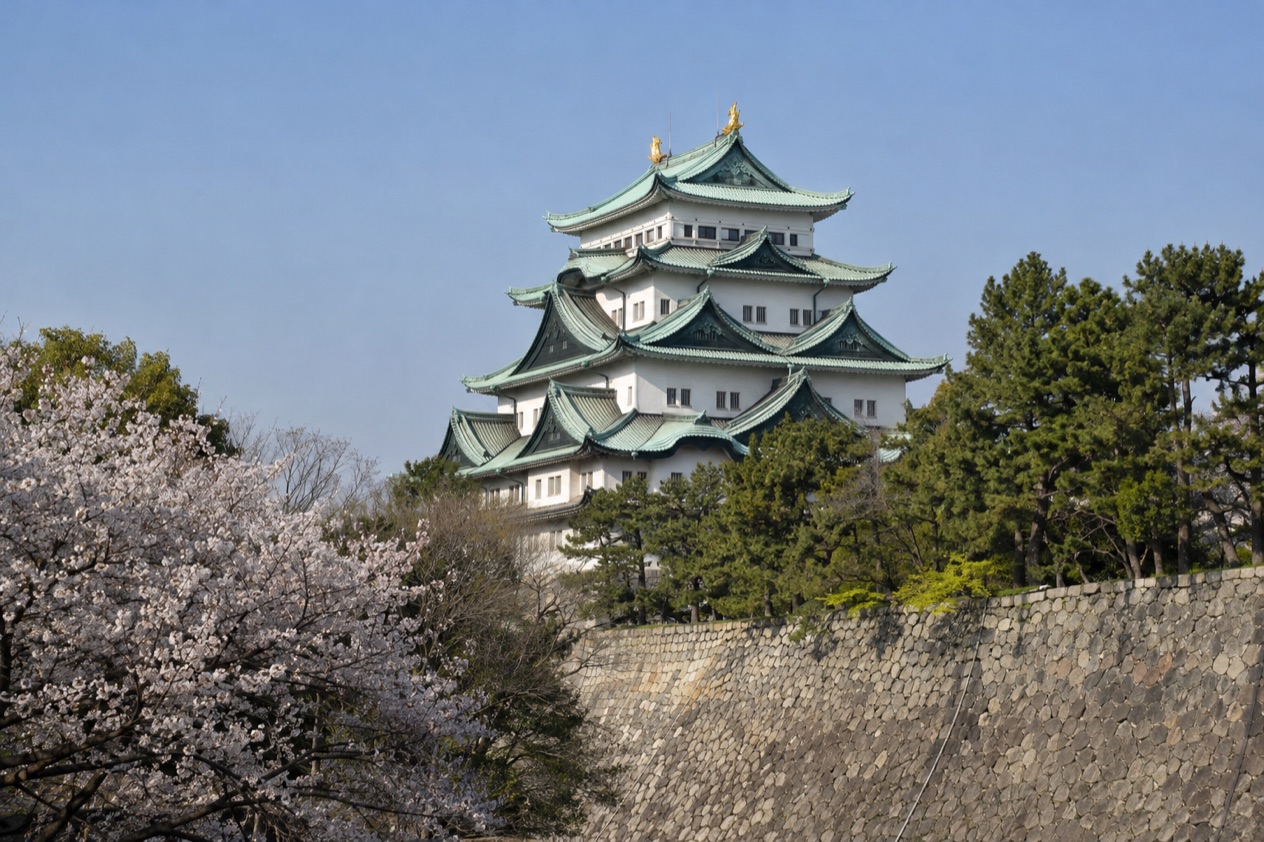
When the cherry trees open around Nagoya Castle, petals drift onto the moat and the smell of grilled eel brushed with sweet sauce rolls out of the lunch counters nearby. The year here runs from bright, crisp winters through a damp early summer to a long, sticky heat, with blossom and maple seasons on either side.
Nagoya is a big working city in central Honshu with a cuisine all its own, so every season turns up on the plate as well as in the parks and shrine grounds. Spring and autumn bring the gentlest weather, yet each month has its own reason to come.
When is the best time to visit Nagoya?
Late March through April and again from late October through November are the best months for travelers, when the air is mild enough for long days outdoors and the city is dressed in blossom or maple color. Spring brings the cherry trees around the turn of March into April, and autumn colors arrive toward the very end of November. In between, May is warm and green, and October is the calm stretch after the summer heat has finally let go.
For sightseeing, those shoulder seasons suit the city’s way of being visited, which means a castle, a great Shinto shrine, a zoo with botanical gardens, a port aquarium and a tower, spread across town and mostly taken outdoors. April afternoons call for a light jacket rather than a coat, and by mid-autumn you can walk the castle grounds and the gardens comfortably in a sweater. Winter days are cold but often bright, which suits travelers who prefer clear skies to color.
Food lovers can pick almost any month, because Nagoya cooks by season. Hitsumabushi, grilled eel served over rice and eaten in three ways, is a summer tradition. Miso katsu, tebasaki chicken wings, kishimen flat noodles and the bubbling pots of miso nikomi udon are at home through the cooler months, and the city’s morning-set breakfasts of thick toast, boiled egg and coffee are a pleasure whenever you wake up hungry.
If you want nature and a gentler pace, April and November reward you most, and January and February offer low, clear light and fewer outdoor plans competing for your attention. Families do well in spring and autumn, when the zoo and botanical gardens and the aquarium can fill a day without the heat of August, and when the Nagoya Sightseeing Pass, which covers Nagoya Castle, MIRAI TOWER, the aquarium and the zoo, ties those stops together. A city of this size, home to the Chukyo metropolitan area of about 10 million people, is also easy to pair with a longer trip across Honshu in any of these seasons.
Nagoya weather by month
Nagoya runs from cool, bright winters to a hot, humid summer, with the wettest stretch falling between June and September.
| Month | Average high (°F) | Average low (°F) | Precipitation (in) | Days with 1 mm or more of precipitation | Hours of sunshine | Daylight on the 15th |
|---|---|---|---|---|---|---|
| January | 48.7 | 34.0 | 2.00 | 5.2 | 174 | 10 h 02 min |
| February | 50.9 | 34.5 | 2.55 | 6.2 | 176 | 10 h 54 min |
| March | 58.1 | 40.3 | 4.57 | 8.8 | 200 | 11 h 54 min |
| April | 68.2 | 49.5 | 5.02 | 9.4 | 200 | 13 h 02 min |
| May | 76.3 | 58.8 | 5.92 | 9.7 | 206 | 13 h 59 min |
| June | 81.7 | 66.9 | 7.34 | 11.6 | 152 | 14 h 31 min |
| July | 88.5 | 74.3 | 8.32 | 12.0 | 166 | 14 h 19 min |
| August | 91.8 | 76.5 | 5.49 | 8.5 | 201 | 13 h 31 min |
| September | 84.4 | 69.8 | 9.12 | 10.5 | 160 | 12 h 27 min |
| October | 73.9 | 58.6 | 6.48 | 9.0 | 169 | 11 h 22 min |
| November | 63.1 | 47.5 | 3.11 | 6.1 | 167 | 10 h 21 min |
| December | 53.1 | 38.1 | 2.23 | 6.2 | 170 | 9 h 49 min |
Winter is the lighter half of the year for precipitation, with only a handful of wet days each month, but it is not simply dry. Cold fronts bring flurries, and snow or sleet turns up on 9.4 days in an average January, though the season’s totals stay small, about 1.6 inches in January. Summer is the opposite, with showers in June, heavy rain in July, humidity climbing into the low 70s as a percentage, and September taking the largest rainfall of any month.
What this changes in your bag is simple. From December to February you want a proper coat, a scarf and gloves, and in March and April a sweater and a light jacket will do. From June to September pack light cotton, a hat and a compact umbrella, and expect nights that stay warm in July and August. October and November ask for layers you can add and remove.
The light shifts a great deal over the year. In June the sun lingers well into the evening, which stretches a sightseeing day, while in December it sets early and the city lights come on while you are still finishing dinner. Sunshine is generous in spring and late summer, and dips noticeably in the rainy weeks of June and again in September.
What is there to do in Nagoya in each season?
Spring belongs to cherry blossoms, summer to eel, festivals and indoor stops, autumn to leaves and walking, and winter to hot pots and bright cold days. The city rewards you whichever you choose, as long as the plan fits the weather.
Spring: cherry blossoms around the castle
The first cherry blossoms in Nagoya usually open around March 24, and full bloom tends to arrive around April 2. Dates move from one spring to the next, so the trees may be early or late. The moat and grounds of Nagoya Castle, the lawns of Tsuruma Park and the banks of the Yamazaki River are classic spots for hanami, the blossom-viewing picnic with bento boxes, snacks and a sense of lingering under the branches.
After the petals fall, May turns warm and green, and the botanical gardens at Higashiyama fill with new leaves and flowers. Spring is also a good time to see Atsuta Shrine, whose grounds are marked by old camphor trees, and to cross the city between sights in a light jacket. If a wet day arrives, the aquarium and MIRAI TOWER are covered by the sightseeing pass along with the castle and the zoo.
The rainy season and summer
June and July are the wet and humid weeks, and they suit an indoor itinerary: the port aquarium, a tower view when the clouds lift, a museum, the covered arcades of the shopping streets and long lunches. Nagoya’s meshi (its local dishes) fit this part of the year well, with eel, miso katsu and tebasaki chicken wings, all of them rich and savory.
August is the hottest month, with nights that barely cool down, so it is a time to go slowly, to eat hitsumabushi and to plan the festivals and summer evenings in town rather than long hikes or a marathon of outdoor temple stops. Keep the strenuous days for autumn or spring.
Autumn leaves and winter
October is mild and bright, and maple leaves in Nagoya usually change around November 28, so the best color falls in the last days of November and early December. The castle grounds and the city’s gardens fill with red and gold, and the Nagoya Castle Autumn Festival adds events to the season.
Winter is the season for hot pots, oden and miso nikomi udon. Snow or sleet falls on about 4.8 days in an average December, usually as flurries rather than deep drifts. New Year brings visits to the shrines, and the long clear evenings make the illuminated streets pleasant for strolling in a good coat. Leave swimming and strenuous outdoor plans for another time.
When is Nagoya least crowded?
The quieter stretches of the year are most likely deep winter outside New Year, the weeks of rain in June, and the gaps between the national holidays. The busy moments follow the Japanese calendar: Golden Week, the run of public holidays from late April into early May, Obon in mid-August, and the New Year break, when many families travel within Japan.
The bloom and leaf seasons gather people, too. When the cherry trees open around the castle and Tsuruma Park, locals and visitors come to sit beneath them, and the weeks of maple color at the end of November draw people to the gardens and shrine grounds. Nagoya also receives business travelers through much of the year, being an industrial hub of the Chubu region, so weekdays can feel different from weekends.
Outside the holiday weeks, rooms are likely to be easier to find, and the castle, the zoo and the aquarium may feel less pressed. January and February are the best candidates for a calm trip, with their cold, bright skies and the savory warmth of the city’s food. June is another quiet window if you can accept umbrellas and humidity, with indoor sights to fill the wet hours.
If you want blossom or leaves, the trade is plain. The same weeks that look best on the calendar are the ones many other people have picked, so a flexible day or two on either side of the usual dates can change the feel of a visit.
Which months should you avoid in Nagoya?
No month rules the city out, but July and August ask the most of you for heat, June for rain, and September for the heaviest rainfall of the year. Which of these matters depends on how much of your trip you plan to spend outdoors.
June and July are the rainy season, with showers that can settle in for days, and the humidity makes the air feel heavy even between spells. Indoor stops soften the effect, but do not erase it.
September is the wettest month by rainfall, and the heat has not fully left. Cold is a smaller obstacle. February sees snow or sleet on about 6.8 days, yet totals stay light and the sun returns often, and early March can still bring a few flurries, so the cold months mostly call for a warm coat rather than a change of plan.
The blossoms and the maple leaves are the matter of timing. First bloom has landed anywhere from mid to late March in recent years, and full bloom from the end of March to the first week of April, while leaf color gathers around the end of November. Arriving a week off those windows can mean bare branches or fallen petals, and no date can promise a sight.
Festivals and events in Nagoya through the year
Winter and early spring: New Year, Setsubun and blossom
The year opens with hatsumode, the first shrine visit of the year, from January 1 and through the first days. Atsuta Shrine is the city’s great gathering place for it, with lines of people offering coins and prayers and stalls selling warm snacks. Dress warmly, because the cold is real even on bright days.
In early February, Setsubun marks the turn toward spring with bean-throwing at shrines and temples, where the cry is for demons out and good fortune in. March and April bring the hanami season, with picnics under the trees at the castle and in the parks, and the first spring festivals in shrines across the city.
Summer: Atsuta Festival, sumo and Obon
Early June brings the Atsuta Festival at Atsuta Shrine, a traditional celebration with ceremonies, martial arts displays and lanterns on the shrine grounds in the evening. In early July, Tanabata, on July 7, hangs paper wishes from bamboo in shops and streets, and the Nagoya grand sumo tournament is usually held in July at the Aichi Prefectural Gymnasium, a chance to watch the sport up close.
In mid-August comes Obon, when families return to their home towns to honor their ancestors and the city’s atmosphere shifts, with summer dance gatherings in neighborhoods. Fireworks and lantern evenings fit these warm nights, and a cold drink or a bowl of shaved ice is the usual companion.
Autumn: the Nagoya Festival and the castle’s autumn season
The Nagoya Festival, held usually in autumn, is the city’s big parade, with costumed figures re-creating the three warlords of the region, Oda Nobunaga, Toyotomi Hideyoshi and Tokugawa Ieyasu, along the main avenues. Floats and dancers join in, and it is a good way to feel local pride and history in one afternoon.
The Nagoya Castle Autumn Festival fills the castle grounds with events as the leaves change, and the Honmaru Palace admission runs until 1 hour before gate closing during it. Around the same weeks, the gardens and shrine grounds turn red, and the city eats chestnut sweets and uiro, the soft steamed rice cake that Nagoya claims as its own.
Sources
- Japan Meteorological Agency (JMA), Normal values 1991-2020, monthly (https://www.data.jma.go.jp/stats/etrn/view/nml_sfc_ym.php?prec_no=51&block_no=47636), station Nagoya, elevation 51 m, checked October 11, 2026
- Computed from the date and the latitude of the place (sunrise equation, solar elevation -0.833 degrees), October 11, 2026
- Visit Nagoya, the Nagoya city guide (https://www.nagoya-info.jp/en/), checked October 11, 2026
- Wikipedia, Nagoya (https://en.wikipedia.org/wiki/Nagoya), checked October 11, 2026
- Wikivoyage, Nagoya (https://en.wikivoyage.org/wiki/Nagoya), checked October 11, 2026
- Japan National Tourism Organization, autumn in Japan (https://www.japan.travel/en/guide/autumn-guide/), checked October 11, 2026
- Japan National Tourism Organization, spring in Japan (https://www.japan.travel/en/guide/spring-guide/), checked October 11, 2026
- Japan Meteorological Agency, cherry blossom first-bloom dates 2021-2026 and 1991-2020 normal (https://www.data.jma.go.jp/sakura/data/sakura003_07.html), checked October 11, 2026
- Japan Meteorological Agency, cherry blossom full-bloom dates 2021-2026 and 1991-2020 normal (https://www.data.jma.go.jp/sakura/data/sakura004_07.html), checked October 11, 2026
- Japan Meteorological Agency, maple color-change dates 2025-2026 with difference from the 1991-2020 normal (https://www.data.jma.go.jp/sakura/data/phn_014.html), checked October 11, 2026
To plan your stay
- Things to Do in Nagoya: Castle, Atsuta Shrine, Nagoya-meshi and Day Trips
- Where to Stay in Nagoya: Nagoya Station, Sakae, Osu and the Castle Area
- Nagoya from Tokyo: Shinkansen Services, Local Trains, Centrair Airport and a Day in the City
- Know Before You Go to Nagoya: Entry, Money, Getting Around and Local Etiquette