
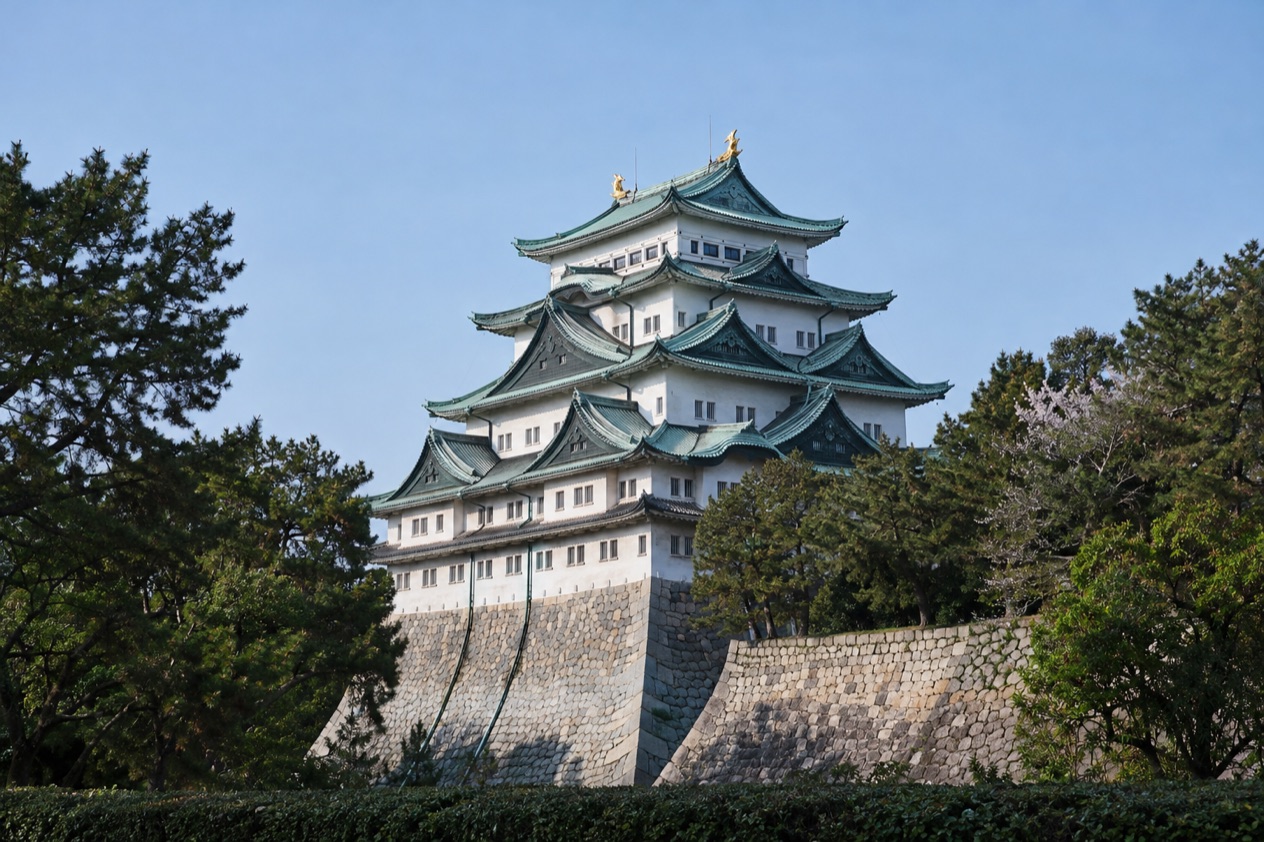
A bowl of hitsumabushi arrives at the table, grilled eel laid over rice in a wooden tub, and you are told to eat it in three ways: plain, then with scallions and wasabi, then with broth poured over. Outside, a golden pair of shachi, the tiger-headed fish ornaments, catches the light on the roof of the castle keep. Nagoya is a working city of factories, department stores and shrine groves, and it suits travelers who like to fill their days with a castle, a museum or two and some serious eating.
What are the best things to do in Nagoya?
The city is the capital of Aichi Prefecture and sits on the Pacific coast in central Honshu, and its attractions are spread across several districts rather than gathered in one old quarter.
That spread is part of the charm. One day can pair a samurai-era castle with a bowl of miso-simmered udon, and the next can bring you to a Lego-brick theme park or a zoo with botanical gardens. These are the essentials, each told in more detail further down.
- Nagoya Castle, with its reconstructed keeps and the Honmaru Palace, for a look at the city’s samurai past.
- Atsuta Shrine, home of the sacred Kusanagi sword, for a walk among old camphor trees and wooden halls.
- The Toyota Commemorative Museum of Industry and Technology, where looms lead step by step to cars and robots.
- Nagoya-meshi, the local cooking: hitsumabushi, miso katsu, tebasaki wings and kishimen noodles.
- Higashiyama Zoo and Botanical Gardens, a day for animals and flowers in the same grounds.
- Port of Nagoya Public Aquarium and Legoland Japan Resort, the two waterfront outings for families.
- Ghibli Park, the Studio Ghibli landscapes that opened in Aichi Prefecture on November 1, 2022.
- An evening in Sakae or the Osu shopping streets, when lanterns, grills and arcades come alive.
The NAGOYA Sightseeing Pass is built around several of these stops, including the castle, Chubu Electric Power MIRAI TOWER, the aquarium and the zoo with its botanical gardens. It is described as a great-value way to enjoy the city’s major attractions, which makes it worth a look if your list matches those names.
Beyond the obvious stops, Nagoya rewards slow wandering. A shrine courtyard, a covered arcade of vintage shops and a coffee shop serving a thick slice of toast with red bean paste can each fill an hour, and the Chukyo area around the city, home to about 10 million people, offers plenty more within reach.
Sights and landmarks in Nagoya
Nagoya’s landmarks are a castle, a shrine, a museum devoted to the industry that made the region, and a TV tower rising from a downtown park. Nagoya is the fourth-largest city in Japan, and it feels like one in its wide avenues and busy station district, yet its main sights are each set in their own green or quiet pocket.
Nagoya Castle
The castle is the first image people have of Nagoya. Its two main keeps were reconstructed from 1957 to 1959, and the Honmaru Palace, with its painted sliding doors and polished corridors, was reconstructed from 2009 to 2018. Walking the grounds, you pass stone walls, moats and gates that give a sense of the scale of a feudal stronghold.
Inside the palace, rooms open one after another onto screens painted with tigers, pines and landscapes in gold and rich color. During the Nagoya Castle Autumn Festival, admission to the Honmaru Palace is until one hour before gate closing, so plan the palace first if you visit then. The golden shachi on the roof are the detail photographers look for.
Atsuta Shrine
Atsuta Shrine is among the best-loved Shinto sites in central Japan. It dates back to around 100 AD and houses the sacred sword Kusanagi, one of the three Imperial Regalia of Japan, though the sword is never shown to the public. What you see instead is a wooded precinct where gravel paths lead beneath tall trees to plain, dignified wooden halls.
Locals come to pray, to buy charms and to stop at tea stalls and noodle counters near the grounds. The shrine sits in Atsuta-ku, and visiting it gives a quiet counterweight to the castle, with less display and more atmosphere of daily worship.
Toyota Commemorative Museum of Industry and Technology
Nagoya sits at the heart of Toyota country, and the museum in Nishi-ku explains how a carmaker grew out of a weaving business. The display starts with textile looms and then gradually goes over into the history of cars, also featuring high-tech robots. Machines are shown in motion, so you hear the clatter of the old looms before you reach the gleaming vehicles.
It suits anyone curious about how things are made, from engineers to people who simply like watching a complicated machine do its work. The path from cloth to car is clear enough that you do not need to know anything about engineering to follow the story.
More landmarks and neighborhoods
Chubu Electric Power MIRAI TOWER stands among the trees and fountains of the Sakae district and is one of the landmarks the Sightseeing Pass includes. The Port of Nagoya Public Aquarium is another of the city’s named attractions, and Higashiyama Zoo and Botanical Gardens belongs on the same list. Osu, an area of shopping arcades around a Buddhist temple, is where vintage clothes, electronics and street snacks sit side by side.
Outdoor things to do in Nagoya
Outdoors in Nagoya means the grounds of a castle, the paths of a shrine, and a zoo that doubles as a botanical garden. These are green spaces made for strolling, and each belongs to a different part of the city, so they also work as a way to see its districts.
Higashiyama Zoo and Botanical Gardens
Animals and plants share one park here, which makes the visit feel closer to a day in a garden than a trip to a zoo. Paths wind past enclosures, ponds and greenhouses, and the botanical side adds flowering trees, shaded corners and seasonal beds. It is listed among Nagoya’s major tourist attractions in the Sightseeing Pass.
Travelers who like to wander without a fixed route will find it rewarding, since you can follow whichever path looks interesting. Bring a camera and a plan to walk a lot, because the grounds ask for time rather than a quick pass.
The castle grounds and Atsuta Shrine woods
Before you step inside any building at Nagoya Castle, the outer grounds are worth walking. Stone ramparts, moats and open lawns frame the keep from several angles, and the garden spaces around the palace add a softer note. Nagoya Castle also holds an Autumn Festival.
Atsuta Shrine offers a different kind of outdoor time. The grounds are heavy with old trees, and the long approaches give you room to slow down. It pairs well with a visit to a nearby noodle shop, since the shrine’s neighborhood is full of places serving local specialties.
Waterfront and city views
The Port of Nagoya area opens the city to its bay. Here you find the public aquarium and Legoland Japan Resort, which is located in Minato-ku and opened on April 1, 2017. The harbor air and wide skies make a change from the downtown streets, and the area suits an outing that mixes walking with a ride or an exhibit.
For a view from above, Chubu Electric Power MIRAI TOWER rises over Sakae and lets you look out across the streets and rooftops. The park beneath the tower is a place to sit between shopping and dinner.
Day trips from Nagoya
Day trips from Nagoya lead to anime landscapes, hilltop castles and pottery towns, all within Aichi Prefecture and the countryside around it. Chubu Centrair International Airport, on an artificial island 30 minutes south of central Nagoya, is the region’s international gateway, which tells you how much traffic passes through this part of Honshu.
Ghibli Park
Ghibli Park opened on November 1, 2022, and it spreads across 7.1 hectares (18 acres) of Aichi Prefecture. It is not a ride park. Instead, it re-creates scenes and places from Studio Ghibli films, from a hillside village to buildings that look as if they stepped out of a frame, and you walk among them.
Fans of Spirited Away, My Neighbor Totoro or Howl’s Moving Castle will recognize details everywhere. Even visitors who know only one film tend to enjoy the craft of the sets and the open landscape around them. For the studio’s other places, the Ghibli Museum is in Mitaka, Tokyo, a separate trip altogether.
Inuyama and its castle town
Inuyama is one of the day trips people take for a castle that stands over a river. The town below has old streets with tea houses and snack stalls, and the whole outing has the feel of stepping out of the city and into a smaller, older Japan. Plan to wander the lanes as well as visit the castle.
It suits travelers who liked Nagoya Castle and want to see a castle in a more intimate setting. Combine it with a stroll along the riverbank and a lunch of grilled skewers and sweet dumplings.
Tokoname and Seto, the pottery towns
Aichi has a long tradition of ceramics, and two towns carry it forward. Tokoname is known for its pottery, including the lucky-cat figures and clay teapots that line its walking lanes, where kilns and workshops stand beside narrow streets. Seto gives its name to the Japanese word for ceramics, setomono, and its studios and museums show the craft at work.
Both towns reward a slow pace and a willingness to browse. They suit travelers who like handmade things, and you can bring home a bowl, a cup or a small figurine as a souvenir of the trip. Other outings include the Legoland Japan Resort, a theme park for families built from bricks, and the city’s castle-and-shrine circuit, which can be done in one day without leaving Nagoya.
What to eat in Nagoya
Eating in Nagoya means nagoya-meshi, a regional cuisine of rich, salty-sweet flavors built on red miso, chicken wings, eel and thick noodles. The food is hearty and distinctive, and it is one of the strongest reasons to plan meals as carefully as sightseeing.
Hitsumabushi and miso katsu
Hitsumabushi is grilled eel chopped and laid over rice, served in a wooden tub with a small pot of broth, scallions and wasabi. You scoop it into a bowl and eat it in stages: plain, then with the toppings, then as a soup. The grilling gives the eel a smoky edge against the sweet sauce.
Miso katsu is a fried pork cutlet covered in a thick, dark sauce made from red miso. It arrives crisp under the sauce, with shredded cabbage on the side and a bowl of rice, and it is the city’s most direct comfort food. Many diners finish a meal with miso soup in the same deep flavor.
Tebasaki, kishimen and miso udon
Tebasaki are fried chicken wings coated in a peppery, sweet glaze and sprinkled with sesame. They are the classic snack with a beer in an izakaya, the Japanese pub, and you eat them with your hands. Kishimen are flat, wide wheat noodles served in a light broth, easy to slurp and gentle on the stomach.
Miso nikomi udon takes the opposite approach. Firm noodles simmer in a clay pot of dark miso broth with egg, scallions and chicken, and the pot arrives bubbling. It is a dish for a cool day, with a lid you lift to release the steam.
Coffee shops, toast and sweets
Nagoya has a strong coffee shop culture, and a morning set often includes a drink with thick toast, sometimes topped with sweet red bean paste, a combination known as ogura toast. The shops are comfortable places to sit with a newspaper. For something sweeter, look for uiro, a soft steamed rice sweet, and for ankake spaghetti, a spicy pasta in thick sauce that is a local curiosity.
Markets and arcades such as Osu are good for snacking on the move, with stalls selling skewers, croquettes and fried treats. Aichi’s sake and local beers pair well with the heavier dishes, and many izakaya list regional bottles on the menu.
Things to do in Nagoya at night
Nights in Nagoya center on Sakae, the downtown district where department stores, bars, karaoke rooms and izakaya sit within a few blocks of one another. The mood is relaxed, more after-work dinner than all-night club scene, and the city’s food makes the evening feel like an extension of the day.
Sakae and the tower lights
Chubu Electric Power MIRAI TOWER stands in a park in the middle of Sakae, and the area around it becomes a gathering place after dark, with lit-up storefronts and people crossing between shops and restaurants. A lit tower makes an easy landmark for meeting friends. The streets nearby are full of places for a drink, from tiny counters to large dining halls.
Izakaya are the usual choice for an evening meal. You order several small dishes to share, such as tebasaki wings, grilled skewers and miso-based stews, and add rounds of beer, highballs or Aichi sake. It is a good way to taste many local flavors at once.
Osu and quieter evenings
Osu’s arcades, built around a Buddhist temple, mix shops with food stalls and small cafes, and they suit a wander when you want something lighter than a full dinner. The neighborhood has a mix of old and new, with vintage clothes beside electronics and street snacks.
For a calmer night, a coffee shop, a tea room or a bar with a short list of whiskies gives you a place to sit. Hotels around Nagoya Station and Sakae also have lounges, and a walk along lit streets is a pleasure in itself.
Karaoke is a staple of Japanese nights, with private rooms where groups sing and order drinks. It is a social activity rather than a performance, and it works for friends or families who want something playful.
Things to do in Nagoya with kids
Children in Nagoya get a zoo, an aquarium, a brick-built theme park and a museum full of moving machines. The city’s attractions are spread out, so it helps to plan one big outing a day rather than trying to link several.
Legoland Japan Resort
Legoland Japan Resort is located in Minato-ku and opened on April 1, 2017. It is a theme park built around Lego, with rides, play areas and models made entirely of bricks. Children can build, ride and explore, and many of the attractions are designed to be hands-on.
It suits families with younger children who like to build and play. Plan for a full day of walking.
Zoo, aquarium and museum
Higashiyama Zoo and Botanical Gardens lets children see animals in a park setting, with plenty of room to run between enclosures. The Port of Nagoya Public Aquarium adds a rainy-day alternative with tanks and exhibits under a roof. Both appear among the city’s major attractions in the Sightseeing Pass.
The Toyota museum in Nishi-ku keeps older children interested with working looms, cars and robots. Seeing a machine in motion is more engaging than reading a label, and it gives school-age kids a chance to ask how things work.
Ghibli Park for film fans
Children who love Studio Ghibli films will find Ghibli Park a world to walk through. It opened on November 1, 2022, and its sets and landscapes echo scenes from the movies. Younger kids can run along paths and spot familiar details, while older ones enjoy the craft of the buildings.
Kids who prefer rides will do better at Legoland, while those who like stories and scenery will favor Ghibli Park.
Good to know before you go
Nagoya is the capital of Aichi Prefecture, and Chubu Centrair International Airport serves the region as Japan’s third major international gateway. The NAGOYA Sightseeing Pass is promoted for visits to several attractions named above, including the castle, the tower, the aquarium and the zoo.
Sources
- Visit Nagoya, the Nagoya city guide (https://www.nagoya-info.jp/en/), checked October 11, 2026
- Wikipedia, Nagoya (https://en.wikipedia.org/wiki/Nagoya), checked October 11, 2026
- Wikivoyage, Nagoya (https://en.wikivoyage.org/wiki/Nagoya), checked October 11, 2026
- Wikipedia, Atsuta Shrine (https://en.wikipedia.org/wiki/Atsuta_Shrine), checked October 11, 2026
- Japan National Tourism Organization, anime and manga (https://www.japan.travel/en/guide/japanese-anime-and-comics/), checked October 11, 2026
- Wikipedia, Ghibli Park (https://en.wikipedia.org/wiki/Ghibli_Park), checked October 11, 2026
- Wikipedia, Studio Ghibli (https://en.wikipedia.org/wiki/Studio_Ghibli), checked October 11, 2026
- Wikipedia, Legoland Japan Resort (https://en.wikipedia.org/wiki/Legoland_Japan_Resort), checked October 11, 2026
- Wikipedia, Toyota Commemorative Museum of Industry and Technology (https://en.wikipedia.org/wiki/Toyota_Commemorative_Museum_of_Industry_and_Technology), checked October 11, 2026
To plan your stay
- Best Time to Visit Nagoya: Cherry Blossoms, Autumn Leaves, Weather and Festivals
- Where to Stay in Nagoya: Nagoya Station, Sakae, Osu and the Castle Area
- Nagoya from Tokyo: Shinkansen Services, Local Trains, Centrair Airport and a Day in the City
- Know Before You Go to Nagoya: Entry, Money, Getting Around and Local Etiquette