
In November, Nagoya smells of sweet red miso simmering over katsu and of grilled eel glazed in dark sauce, and the maples around the castle grounds begin to turn. Office workers walk to lunch with scarves loosened, and families in formal kimono pass through shrine gates with children in tow. The city asks for a jacket rather than a sweater, which makes it a good month for a long walk followed by a longer meal.
What is the weather like in Nagoya in November?
November in Nagoya is cool and fairly settled, with mild afternoons for sightseeing and evenings that call for a real jacket.
| Month | Average high (°F) | Average low (°F) | Precipitation (in) | Days with 1 mm or more of precipitation | Hours of sunshine | Daylight on the 15th (hours and minutes) |
|---|---|---|---|---|---|---|
| October | 73.9 | 58.6 | 6.48 | 9.0 | 169 | 11 h 22 min |
| November | 63.1 | 47.5 | 3.11 | 6.1 | 167 | 10 h 21 min |
| December | 53.1 | 38.1 | 2.23 | 6.2 | 170 | 9 h 49 min |
The summer stickiness has gone. Walking from the castle to the shrines is comfortable, and you can sit at a table outside a café at midday without feeling the heat. Mornings and nights are where the season shows, so a layer you can take off and put back on matters more than a heavy coat.
Rain is much less frequent than in October, and it tends to arrive as a gray, drizzly day rather than a downpour. A compact umbrella is enough. Humidity has dropped as well, so the air feels crisper and the city looks cleaner against the sky.
Daylight is shrinking fast. By the time you finish dinner it has been dark for hours, and the lit-up streets and towers take over the city. Plan outdoor sights, gardens and shrine grounds for the daylight stretch and keep museums, markets and long meals for after dark.
What to do in Nagoya in November
The big November pleasure is the turn of the leaves. Maple color in Nagoya usually arrives around the end of the month, so the first days of November are still green and the last days are the ones with red in the branches. Japan’s own autumn guidance describes the color running from red to yellow and orange from mid-November into early December, which fits the city’s rhythm.
The month also suits indoor sights that are good to see in cooler weather. Nagoya has a castle, a shrine, a tower, a port aquarium and a zoo with botanical gardens, and the November air makes the outdoor ones pleasant to walk. Evenings belong to the food halls and izakaya, the Japanese pubs where small plates arrive one after another.
Nagoya Castle and its Autumn Festival
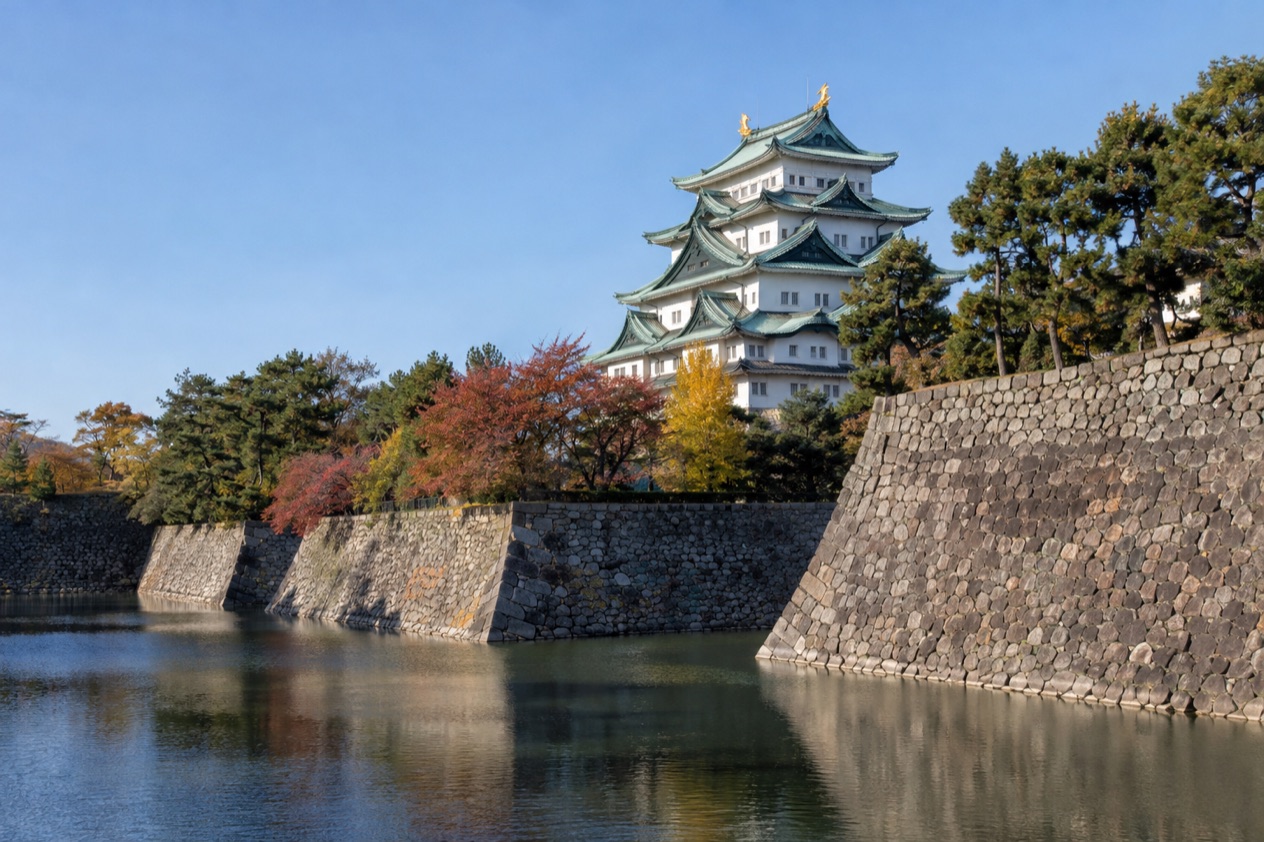
Nagoya Castle holds an Autumn Festival, and during it the Honmaru Palace takes its last admission one hour before the gate closes. That is worth knowing if you plan to arrive late in the day. Inside the grounds you walk among stone walls, moats and old trees, and the maples add color to a place that is otherwise gray stone and green copper roofs.
Give the castle a good stretch of the day, and walk the outer grounds before heading into the palace rooms. It suits anyone who likes to see a city’s history at street level, and the grounds work well in the cooler air of this month. The festival adds seasonal events to the visit, though what is on varies from one autumn to the next.
Atsuta Shrine and the Shichi-Go-San season
Atsuta Shrine sits in its own wooded grounds in the Atsuta ward, with tall trees and gravel paths that muffle the traffic noise. You walk beneath the trees to the main hall, and the November light through the branches makes the stroll the main pleasure here.
November 15 is Shichi-Go-San, when children of three, five and seven are dressed in kimono and brought to a shrine to be blessed. Around that date you may see families in formal dress posing for photographs near the gates. It is a quiet, colorful moment, and a reminder that shrines here are local places as much as sights.
Eating Nagoya meshi in the cool season
Nagoya has its own cuisine, called Nagoya meshi, and November is the right temperature for most of it. Miso katsu is a pork cutlet under a thick, dark, sweet-salty miso sauce. Hitsumabushi is grilled eel over rice, eaten in three stages: plain, then with condiments, then as a broth soup.
Tebasaki, peppery fried chicken wings, go with beer at an izakaya. Kishimen are flat, wide wheat noodles in hot broth, and ankake spaghetti is pasta in a peppery, thick sauce. Breakfast has its own local habit, ogura toast, thick toast with sweet red bean paste and butter, served in old-style coffee shops.
For the rest of the day, pick from the sights Nagoya is known for: the Port of Nagoya Public Aquarium, the Higashiyama Zoo and Botanical Gardens and the Chubu Electric Power MIRAI TOWER. The zoo and gardens are a pleasant place to see the foliage turn, and the aquarium is a dry alternative when the sky is gray. The tower lights up after dark and gives the evening a focal point.
A two-day itinerary for Nagoya in November
Day 1 begins at Nagoya Castle, because the grounds are best walked while the day is young and the light is flat and clear. Spend the morning on the walls, the moat and the palace, then break for miso katsu or kishimen at a casual restaurant near the castle or in the center.
In the afternoon, head to Osu, where the covered shopping arcades hold secondhand clothes, electronics, street snacks and a temple tucked among the shops. Covered arcades also make this the natural afternoon if clouds roll in. As darkness comes, move to Sakae and the MIRAI TOWER, then settle into an izakaya for tebasaki and beer.
Day 2 starts at Atsuta Shrine, with a walk under the camphor trees and the gravel paths before the day warms up. Late in the morning, have hitsumabushi at a restaurant that specializes in eel, since this is the dish Nagoya is known for. If you want a lighter start, ogura toast in an old coffee shop works first.
The afternoon goes to the Higashiyama Zoo and Botanical Gardens, where the garden trees show the season. If the weather turns wet, swap this for the Port of Nagoya Public Aquarium, which keeps you under a roof. Finish with a bowl of ankake spaghetti or a last round of local dishes in a station-area restaurant.
Is Nagoya busy in November?
November in Nagoya has a seasonal pull, with the autumn color and a castle festival, but the city is large and carries on at its own steady pace.
Nagoya is Japan’s fourth-largest city, with a metropolitan area of about ten million people, so its streets, stations and food halls are always busy with locals commuting, shopping and eating. A visitor arriving in November adds to a daily rhythm rather than changing it. The sights that draw the most attention in autumn are the ones with trees, the castle grounds and the zoo’s gardens.
The maple season arrives toward the end of the month, so the last week brings more people to the leaf-viewing spots than the first. Beyond that, the month feels like a settled stretch between the heat of early autumn and the cold of winter. Tables at popular restaurants fill at mealtimes as they do all year, and the city keeps its usual pace.
What to pack for Nagoya in November
Pack for a day that starts cool, warms through the afternoon and cools again after sunset, with the chance of a gray, drizzly day.
- A light jacket or a mid-weight coat, for the evenings in Sakae and at the MIRAI TOWER.
- Sweaters or long-sleeve layers you can peel off, for warm afternoons in the castle grounds.
- A compact umbrella, because the rain tends to come as drizzle.
- Comfortable walking shoes that are easy to slip off, since shrine and restaurant visits often involve taking them off.
- A scarf, for the shaded paths at Atsuta Shrine and the evening air.
- A small day bag, for the layers you shed and the snacks you pick up at Osu.
Good to know before you go
Two national holidays fall in November: Culture Day at the beginning of the month and Labor Thanksgiving Day in the last week. Shichi-Go-San on November 15 is not a day off, but it fills the shrines with families in formal dress.
The Autumn Festival at Nagoya Castle comes with a rule worth planning around: admission to the Honmaru Palace ends one hour before the gate closes. Aim to arrive well before closing. The New Year closures that affect restaurants and attractions come later, after this month ends.
Nagoya in November vs October and December
A month earlier, October is warmer and wetter, and the leaves have not started to turn. Afternoons can still feel like late summer, and the days are noticeably longer. You gain the extra light for sightseeing, but you miss the color and the crisp air that make November walks pleasant.
A month later, December is colder, with a small amount of snow in an average year, about an inch in total over a handful of days. The days are shorter, and the maples have usually finished by the time it begins. Japan’s winter guidance also notes that many restaurants and attractions close over the New Year holidays, so the end of December asks for more planning.
Choose October if you want warm afternoons and a longer day. Choose December if cold air and winter light appeal more than leaves. Choose November if you want the middle path, with cool air, fewer rainy days and the end-of-month color, and you do not mind the shorter evenings.
Is November a good time to visit Nagoya?
Yes, November is a good time for visitors who like walking, eating and sightseeing in cool air, especially those who care about the autumn leaves and a castle festival.
It suits travelers who plan days around outdoor sights and big meals. The mild afternoons work for the castle, the shrine and the gardens, and the evenings suit izakaya and the lit tower. It is less ideal for anyone who wants long daylight or warm weather into the night, and for those who want to see the leaves at their peak early in the month, since Nagoya’s color usually comes at the end.
On arrival, start with a bowl of something local, miso katsu or kishimen, then head to the castle grounds while you still have light. November in Nagoya is the season when the city’s food, shrines and the first red leaves all arrive together, and a day of walking and eating shows all three.
Sources
- Japan Meteorological Agency (JMA), Normal values 1991-2020, monthly (https://www.data.jma.go.jp/stats/etrn/view/nml_sfc_ym.php?prec_no=51&block_no=47636), station Nagoya, elevation 51 m, checked October 11, 2026
- Computed from the date and the latitude of the place (sunrise equation, solar elevation -0.833 degrees), October 11, 2026
- Japan Meteorological Agency, maple color-change dates 2025-2026 with difference from the 1991-2020 normal (https://www.data.jma.go.jp/sakura/data/phn_014.html), checked October 11, 2026
- Japan Meteorological Agency, kaede2020.pdf (https://www.data.jma.go.jp/sakura/data/kaede2020.pdf), checked October 11, 2026
- Japan National Tourism Organization, winter in Japan (https://www.japan.travel/en/guide/winter-guide/), checked October 11, 2026
- Japan National Tourism Organization, autumn in Japan (https://www.japan.travel/en/guide/autumn-guide/), checked October 11, 2026
- Japan National Tourism Organization, spring in Japan (https://www.japan.travel/en/guide/spring-guide/), checked October 11, 2026
- Japan National Tourism Organization, summer in Japan (https://www.japan.travel/en/guide/summer-guide/), checked October 11, 2026
- Wikivoyage, Nagoya (https://en.wikivoyage.org/wiki/Nagoya), checked October 11, 2026
- Visit Nagoya, the Nagoya city guide (https://www.nagoya-info.jp/en/), checked October 11, 2026
- Wikipedia, Nagoya (https://en.wikipedia.org/wiki/Nagoya), checked October 11, 2026
- Wikipedia, Atsuta Shrine (https://en.wikipedia.org/wiki/Atsuta_Shrine), checked October 11, 2026
- Japan National Tourism Organization, anime and manga (https://www.japan.travel/en/guide/japanese-anime-and-comics/), checked October 11, 2026
- Wikipedia, Ghibli Park (https://en.wikipedia.org/wiki/Ghibli_Park), checked October 11, 2026
- Wikipedia, Studio Ghibli (https://en.wikipedia.org/wiki/Studio_Ghibli), checked October 11, 2026
To plan your stay
- Things to Do in Nagoya: Castle, Atsuta Shrine, Nagoya-meshi and Day Trips
- Where to Stay in Nagoya: Nagoya Station, Sakae, Osu and the Castle Area
- Nagoya from Tokyo: Shinkansen Services, Local Trains, Centrair Airport and a Day in the City
- Know Before You Go to Nagoya: Entry, Money, Getting Around and Local Etiquette