
In the first days of January, Nagoya sounds like bells and wooden sandals on gravel, as families in their best coats walk under the torii of a shrine to make their first wish of the year. Lacquered boxes of osechi, the New Year dishes, sit on kitchen tables, and the city slowly shifts back to its usual rhythm once the holiday closures end.
After that comes a cold, bright stretch of winter with a castle to walk around, a shrine to visit and a very particular local cuisine to eat. This is Nagoya in January for travelers who like a city trip in the cold, with warm bowls and hot dishes waiting at the end of each outing.
What is the weather like in Nagoya in January?
January in Nagoya is cold and fairly dry, with chilly days, frosty nights and a good deal of winter sun.
| Month | Average high (°F) | Average low (°F) | Precipitation (in) | Days with 1 mm or more of precipitation | Hours of sunshine | Snowfall (in) | Daylight on the 15th |
|---|---|---|---|---|---|---|---|
| December | 53.1 | 38.1 | 2.23 | 6.2 | 170 | 1.2 | 9 h 49 min |
| January | 48.7 | 34.0 | 2.00 | 5.2 | 174 | 1.6 | 10 h 02 min |
| February | 50.9 | 34.5 | 2.55 | 6.2 | 176 | 2.0 | 10 h 54 min |
Daytime is a matter of a warm coat, a scarf and gloves, and you will want them while waiting for a train on an open platform or crossing the wide grounds of the castle. Indoors, stores, stations and restaurants are heated, so layers that come off easily work better than one heavy parka.
Rain is limited to a handful of days, and the month is also among the sunnier ones in the table, so many days are bright and clear even when the air is sharp. Snow or sleet shows up on a good number of days, yet the total stays small, so flakes are more likely to be a passing sight than something that disrupts a day of sightseeing. A compact umbrella and shoes with some grip are enough for the wet days.
Daylight is short but already lengthening, which suits a city where much of the best part of the day happens indoors anyway. Plan outdoor stops, such as the castle grounds and the shrine, for the hours when the light is up, and keep museums, aquariums and long meals for after dark. The air is on the dry side compared with summer, so lips and hands may feel it by the end of the trip.
What to do in Nagoya in January
The great tradition of the month is the New Year visit to a shrine, hatsumode, and in Nagoya the shrine that belongs to the story is Atsuta Shrine. The first days of the year also bring the holiday dishes, with osechi eaten at home, and the New Year closures that the Japan National Tourism Organization notes, when many restaurants and attractions are shut. Once the holiday settles, the city is open again, and winter becomes a good excuse to eat and walk.
Atsuta Shrine and the first shrine visit of the year
Atsuta Shrine stands in a wooded compound in Atsuta-ku, and a walk along its gravel paths under tall trees is a calm way to begin a winter day in the city. In January, hatsumode is the reason to go. Visitors toss a coin, bow, clap and make a wish, buy a paper fortune called omikuji and tie the unlucky ones to a rack, and pick up a charm for the year ahead.
Beyond the main hall, the paths pass smaller sub-shrines, lanterns and old trees, so you can wander without a plan. Dress warmly, because stone and gravel hold the cold, and wear shoes you do not mind getting a little dusty. Afterward, a hot bowl of noodles nearby makes a good second stop.
Nagoya Castle in winter air
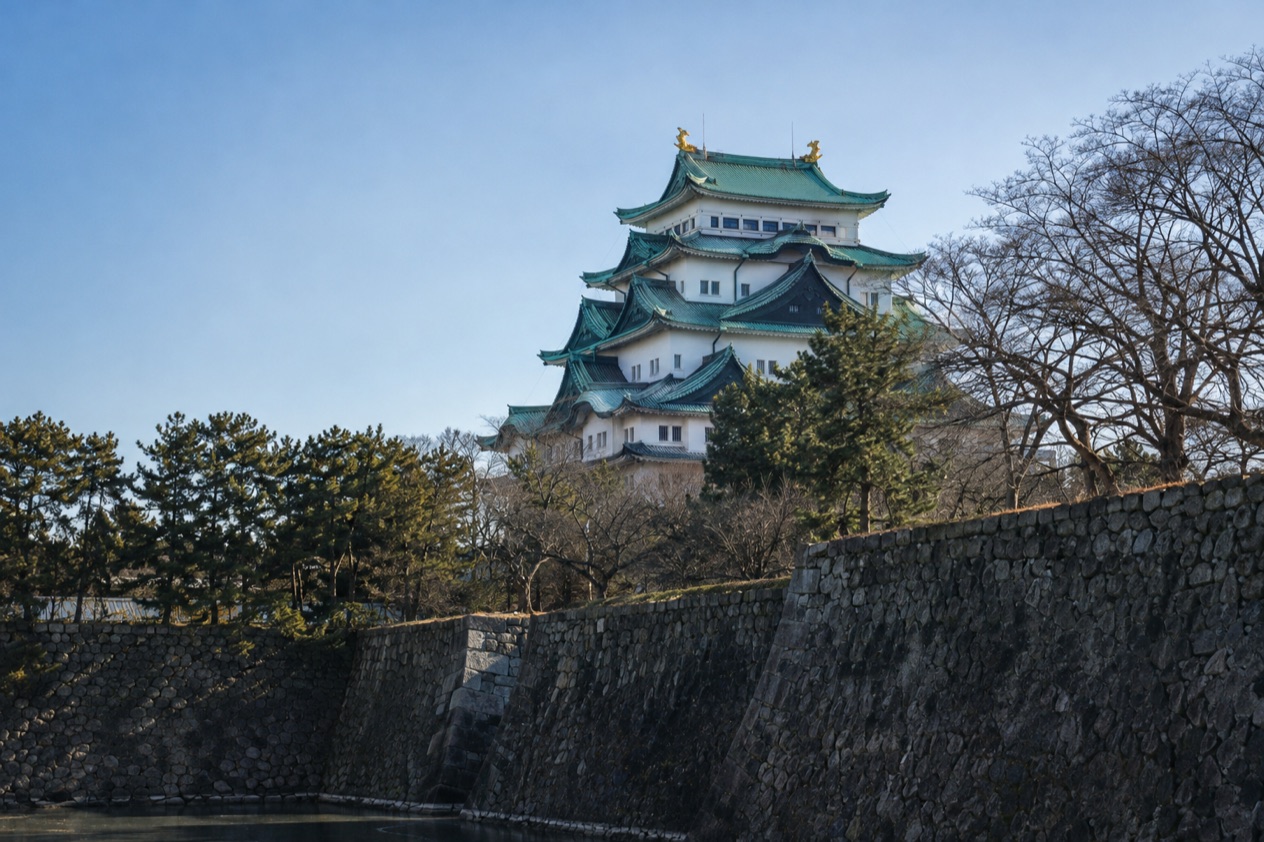
The bare branches of winter open up the lines of the stone walls and moats, and the golden ornaments on the roof stand out against a blue winter sky. Inside the Honmaru Palace, painted screens and polished wood corridors reward a slow visit, and the interior is a refuge when the wind is sharp.
Plum trees typically begin to flower in East Asia from January, so a walk through gardens in the city may turn up the first pink or white buds on bare branches. Treat it as a chance, not a promise. The NAGOYA Sightseeing Pass lists Nagoya Castle among the sights it covers, along with Chubu Electric Power MIRAI TOWER, Nagoya Port Aquarium and Higashiyama Zoo and Botanical Gardens.
Indoor days: the aquarium, the zoo and the tower
Port of Nagoya Public Aquarium is the natural plan for a gray or drizzly day, with large tanks that keep you warm and entertained. Higashiyama Zoo and Botanical Gardens mixes animal enclosures with garden paths, and its glasshouses give a welcome break from the cold. Chubu Electric Power MIRAI TOWER rises over the city center, and an evening there gives you a look at the lights of Nagoya on a clear winter night.
Winter air tends to be dry, so the city is often clear enough for a view, though no one can promise it. Keep a flexible plan and pair one outdoor stop with one indoor stop each day.
Eating Nagoya in winter
Nagoya has its own cuisine, and January is the month for the heavier dishes. Miso katsu is a pork cutlet under a dark, sweet red miso sauce. Kishimen are flat, wide noodles in hot broth, and miso nikomi udon is a thick udon simmered in an earthenware pot of dark miso, the kind of dish that warms you from the inside on a cold day.
Hitsumabushi, grilled eel over rice that is eaten three ways, with condiments and then with broth, is a meal for a long lunch. Tebasaki, the peppery fried chicken wings, belong to the izakaya (casual pub) evening, along with beer or sake. Urban shops generally open from 10:00 a.m. to 8:00 p.m. every day, so winter afternoons can be spent browsing department stores and underground malls, away from the cold.
Other winter pleasures include sweet red bean treats, hot tea and the sight of ski gear in the stores, since the ski season in Japan generally opens in December and runs until April, with peak season in January and February in places such as Hokkaido and the high mountains of Nagano.
A two-day itinerary for Nagoya in January
Day 1 starts with Atsuta Shrine, since the grounds are best walked when you are fresh and warm in your layers. Take the paths slowly, make your wish, try an omikuji, and leave time to look at the old trees. For midday, find a restaurant serving hitsumabushi, or a noodle shop, for a long hot meal, which also gives your hands time to thaw.
In the afternoon, head to Nagoya Castle and the Honmaru Palace for the screens, the corridors and the long views across the grounds. Daylight is short in January, so keep the outdoor part of the day for the hours when the sun is up.
In the evening, a pub meal of tebasaki and a drink makes a fitting close. If rain or sleet arrives, swap the walk for the aquarium and spend more of the day inside.
Day 2 begins at Higashiyama Zoo and Botanical Gardens, where a mix of enclosures, garden paths and warm glasshouses lets you move between outdoors and in as the cold requires. Look in the gardens for early plum buds, which sometimes appear in January. Lunch can be miso katsu or kishimen, a plain and filling break before the afternoon.
Spend the afternoon in the city center, in the underground malls and department stores, picking up local sweets and souvenirs. As evening comes, ride up Chubu Electric Power MIRAI TOWER to look out at the city lights, then finish with miso nikomi udon in a clay pot. On a wet day, make the Port of Nagoya Public Aquarium the main stop instead and keep the zoo for another trip.
Is Nagoya busy in January?
January in Nagoya is a month of two paces, the pause of the New Year holiday and the return of ordinary city life afterward. During the New Year holidays, many restaurants and attractions are closed, so the first days of the month can feel emptier on the streets and in dining rooms. Shrines are the exception, as people turn out for the first visit of the year.
Once the holiday ends, shops return to their usual hours, with urban stores generally open every day. The city is a large one, the center of a metropolitan area of about 10 million people, so ordinary weekdays bring commuters, shoppers and business travelers rather than a seasonal tourist surge. The season for blossoms and autumn leaves is elsewhere on the calendar, which leaves January to winter trips and ski travelers heading to the mountains.
There is no festival of the month that fills the whole city beyond the New Year shrine visits, so the pace is that of a working city in winter. Meals and sights are easy to plan around the holiday closures, and a look at what is open in the first days of the month is worthwhile before you set out.
What to pack for Nagoya in January
Pack for cold air, short days and a few wet or snowy spells, with clothes you can add and remove as you move between outdoors and heated interiors.
- A warm coat, for the cold at the castle and the shrine.
- Layers such as a sweater and thermal underwear, since shops, trains and restaurants are heated.
- A scarf, gloves and a hat, for the wind on open grounds and platforms.
- A compact umbrella, for the days when rain or sleet arrives.
- Shoes with good grip, for wet gravel and damp pavement.
- Lip balm and hand cream, because the winter air is dry.
Good to know before you go
The main thing about January is the New Year holiday, when many restaurants and attractions are closed, so plan the first days of the month around that. When a national holiday falls on a Sunday, the next working day becomes a public holiday, which can add another closure.
Rural areas may close shops earlier in the evening than the cities do, which matters if you head out of town for the day.
Nagoya in January vs December and February
Moving the trip four weeks earlier brings you to December, which is a few degrees milder, with a bit more rain and fewer snow days. The days are at their shortest, so there is less light for the castle and the gardens, and the holiday season is building toward the closures at the turn of the year. Winter lights and year-end shopping suit those who like a festive city.
Four weeks later, February is slightly milder than January in the daytime, with the nights just as cold and the days noticeably longer. It has a little more snow and a little more rain, and the plum blossoms that start in January are typically still open until late in the month. The New Year closures are over, so everything is open as usual.
Choose January if you want the New Year shrine visit and the pause of the holiday, along with the sunniest stretch of winter days. Choose February for longer light and plum buds, and December for the lights and the pre-holiday mood.
Is January a good time to visit Nagoya?
Yes, January suits travelers who like winter city trips, hot food and walks in crisp air, and who do not mind a cold coat and early evenings. It is a good month for anyone who wants to see a shrine in its New Year dress and to eat the heartiest dishes of the local cuisine, such as miso katsu, kishimen and hitsumabushi.
It is less suited to travelers who want warm weather, long days outside or a calendar packed with outdoor festivals. Those who dislike cold wind on open grounds should keep their plans centered on indoor sights such as the aquarium and the palace interiors. If you arrive during the first days of the month, check what is open before planning meals, then start with Atsuta Shrine to catch the New Year mood.
What stays with you from January in Nagoya is a hot pot of miso on a cold evening, a gravel path under bare trees and a castle roof glinting in winter light.
Sources
- Japan Meteorological Agency (JMA), Normal values 1991-2020, monthly (https://www.data.jma.go.jp/stats/etrn/view/nml_sfc_ym.php?prec_no=51&block_no=47636), station Nagoya, elevation 51 m, checked October 11, 2026
- Computed from the date and the latitude of the place (sunrise equation, solar elevation -0.833 degrees), October 11, 2026
- Japan National Tourism Organization, shop and attraction hours, national holidays (https://www.japan.travel/en/plan/business-hours-and-holidays/), checked October 11, 2026
- Wikipedia, Japanese New Year (https://en.wikipedia.org/wiki/Japanese_New_Year), checked October 11, 2026
- Wikipedia, Public holidays in Japan (https://en.wikipedia.org/wiki/Public_holidays_in_Japan), checked October 11, 2026
- Japan National Tourism Organization, winter in Japan (https://www.japan.travel/en/guide/winter-guide/), checked October 11, 2026
- Japan National Tourism Organization, skiing and snowboarding in Japan: regions, resorts, seasons (https://www.japan.travel/en/sports/snow/), checked October 11, 2026
- Wikipedia, Climate of Japan (https://en.wikipedia.org/wiki/Climate_of_Japan), checked October 11, 2026
- Japan National Tourism Organization, weather and seasons in Japan (https://www.japan.travel/en/plan/weather/), checked October 11, 2026
- Japan National Tourism Organization, skiing guide (https://www.japan.travel/en/guide/skiing/), checked October 11, 2026
- Wikipedia, List of ski areas and resorts in Japan (https://en.wikipedia.org/wiki/List_of_ski_areas_and_resorts_in_Japan), checked October 11, 2026
- Japan National Tourism Organization, flowers by season: cherry blossom, plum, wisteria, hydrangea, where and when (https://www.japan.travel/en/see-and-do/flowers/), checked October 11, 2026
- Wikipedia, Prunus mume (https://en.wikipedia.org/wiki/Prunus_mume), checked October 11, 2026
- Visit Nagoya, the Nagoya city guide (https://www.nagoya-info.jp/en/), checked October 11, 2026
- Wikipedia, Nagoya (https://en.wikipedia.org/wiki/Nagoya), checked October 11, 2026
- Wikivoyage, Nagoya (https://en.wikivoyage.org/wiki/Nagoya), checked October 11, 2026
- Wikipedia, Atsuta Shrine (https://en.wikipedia.org/wiki/Atsuta_Shrine), checked October 11, 2026
- Japan National Tourism Organization, anime and manga (https://www.japan.travel/en/guide/japanese-anime-and-comics/), checked October 11, 2026
- Wikipedia, Ghibli Park (https://en.wikipedia.org/wiki/Ghibli_Park), checked October 11, 2026
- Wikipedia, Studio Ghibli (https://en.wikipedia.org/wiki/Studio_Ghibli), checked October 11, 2026
To plan your stay
- Things to Do in Nagoya: Castle, Atsuta Shrine, Nagoya-meshi and Day Trips
- Where to Stay in Nagoya: Nagoya Station, Sakae, Osu and the Castle Area
- Nagoya from Tokyo: Shinkansen Services, Local Trains, Centrair Airport and a Day in the City
- Know Before You Go to Nagoya: Entry, Money, Getting Around and Local Etiquette