
In June, Nagoya settles into the rainy season, and the air smells of wet stone and warm broth from the eel restaurants. Umbrellas bob along the streets around the castle, and hydrangeas, the flowers of this month in Japan, turn the color of the sky. It is a month for indoor treasures, long meals of Nagoya specialties and green gardens between the showers.
What is the weather like in Nagoya in June?
June in Nagoya is warm, humid and often wet, a step up in heat from May and a step down from the sultry weeks of July.
| Month | Average high (°F) | Average low (°F) | Precipitation (in) | Days with 1 mm or more of precipitation | Hours of sunshine | Daylight on the 15th |
|---|---|---|---|---|---|---|
| May | 76.3 | 58.8 | 5.92 | 9.7 | 206 | 13 h 59 min |
| June | 81.7 | 66.9 | 7.34 | 11.6 | 152 | 14 h 31 min |
| July | 88.5 | 74.3 | 8.32 | 12.0 | 166 | 14 h 19 min |
Humidity sits around the low 70s percent in June, which is what makes the warm days feel heavy. Rain falls on more than one day in three, and sunshine drops sharply from May. Expect gray skies and a few bright spells rather than a steady downpour, and plan outings with a cafe, a museum or a covered arcade within reach.
Evenings stay mild, so a light shirt is enough after dinner, though the lows are high enough that rooms can feel sticky without air conditioning. A thin rain jacket or a compact umbrella matters more than a sweater. Fabrics that dry quickly will serve you better than cotton.
Daylight stretches long this month, with the sky light well into the evening. That gives you time for a late castle visit or a slow dinner after a wet afternoon indoors.
What to do in Nagoya in June
Nagoya is the capital of Aichi Prefecture, on the Pacific coast of central Honshu, and its June suits a mix of landmarks and long meals. The rainy season takes the edge off sightseeing marathons, so the best plan pairs one or two big stops with time at the table.
Hydrangeas (ajisai) are the flower of the month in Japan, and the leaves of one species, Hydrangea serrata, are used to make ama-cha, a sweet herbal tea. Gardens and shrine grounds are the places to look for them, and wet weather suits the blooms, with petals shining and the leaves deep green.
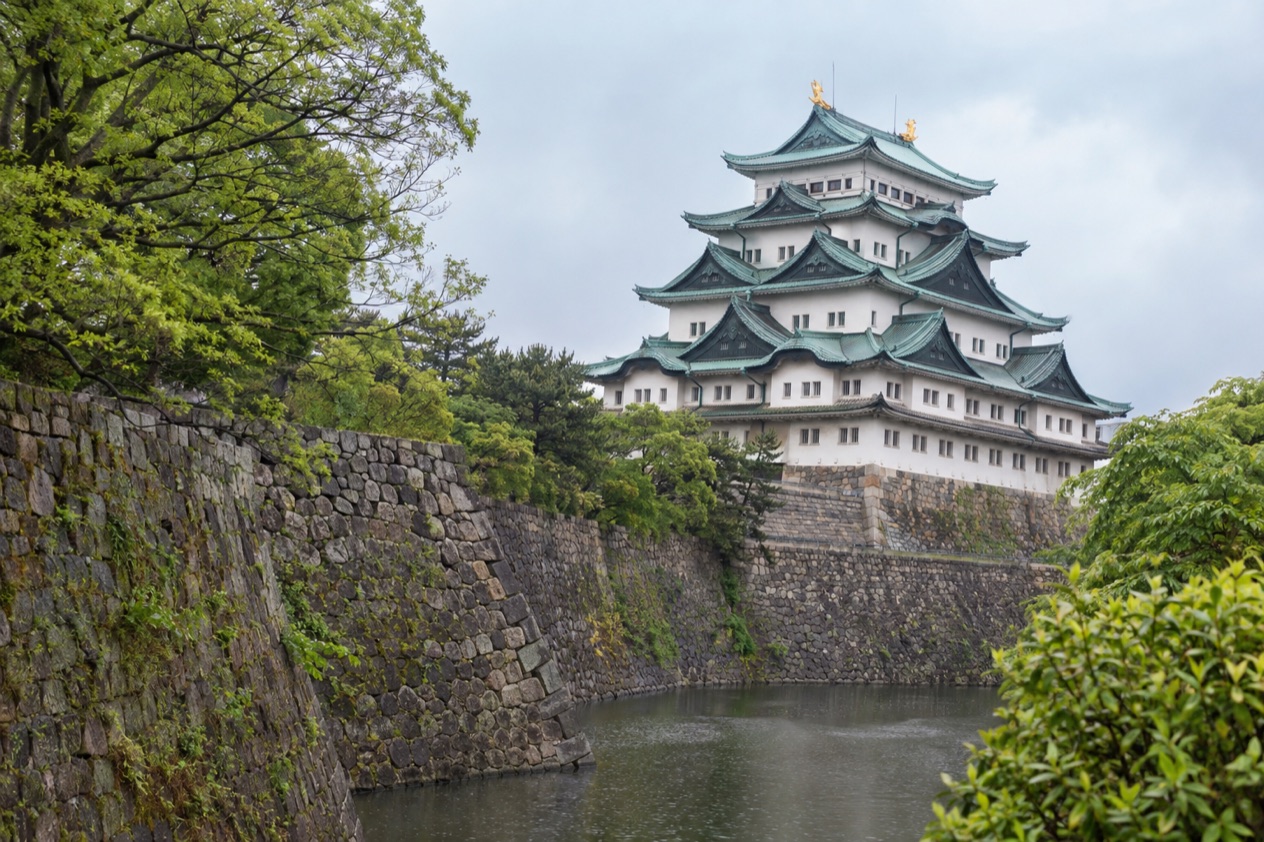
Nagoya Castle and the Honmaru Palace
You walk through tatami rooms and halls with painted screens, then step outside to the stone walls and the castle keep rising above the moat. The grounds are broad, so a compact umbrella is useful between buildings.
Give the castle a good part of a morning, and keep the afternoon for a meal. Visitors who like history and gardens will enjoy it most, and those who prefer to stay dry can linger in the palace rooms while showers pass.
Atsuta Shrine
Atsuta Shrine is among the landmarks Nagoya is known for, set among old trees that look their greenest in the rainy season. Paths run under the canopy, so the walk stays pleasant even in light drizzle, and the sound of rain on leaves replaces the usual chatter of a busy day.
Pair it with a bowl of noodles or a plate of hitsumabushi afterward. The shrine suits travelers who like a slow, shaded stroll and a sense of the city’s spiritual side.
Higashiyama Zoo and Botanical Gardens, and the Port Aquarium
Higashiyama Zoo and Botanical Gardens combines animals and plantings in one visit, and June is a good moment for the garden side, with the season’s flowers in bloom.
The NAGOYA Sightseeing Pass covers major attractions, including the castle, MIRAI TOWER, the aquarium and the zoo and gardens. It suits visitors who plan to see several of them across a rainy few days.
What to eat in Nagoya
Nagoya has its own cuisine, and humid June evenings suit it. Hitsumabushi, grilled eel over rice that you eat three ways, with condiments and then broth, is the signature plate. Miso katsu, a pork cutlet under a dark, rich miso sauce, and tebasaki, peppery fried chicken wings, belong to the city’s izakaya tables.
Kishimen, flat wheat noodles in a light broth, is the lunch to reach for on a wet day. Finish with a sweet bean treat or a cup of green tea at a cafe while the rain passes.
A two-day itinerary for Nagoya in June
Day 1 starts at Nagoya Castle in the morning, when you can do the palace rooms and then the grounds. Late morning is for the stone walls and the keep, and lunch is a bowl of kishimen at a noodle shop near the castle. In the afternoon, take the train to Atsuta Shrine and walk the tree-covered paths, which hold up well in light rain.
For the evening, head for a hitsumabushi restaurant and let the eel be the main event. If the rain turns heavy, skip the shrine paths and spend the afternoon in a covered shopping arcade or a department store food hall instead.
Day 2 begins at Higashiyama Zoo and Botanical Gardens, where June flowers are at their freshest in the morning. Spend the middle of the day among the gardens and enclosures, with lunch from a snack stall or a nearby cafe.
In the afternoon, go to the Port of Nagoya Public Aquarium, which doubles as the rain card for the whole trip. Dinner can be miso katsu or tebasaki at an izakaya, with long June daylight giving you a bright walk to the table.
Is Nagoya busy in June?
June is the rainy season in Nagoya, and it has its own quieter rhythm between the spring blooms and the summer heat, with hydrangeas as the main seasonal draw.
As the fourth-largest city in Japan and the center of a metropolitan area of about 10 million, Nagoya keeps its everyday pace through the month. Office workers fill the subway at commuting hours, and lunch counters near the castle and station stay lively.
What changes in June is the mood. Umbrellas replace sunhats, and the city turns to indoor attractions, cafes and long meals. Gardens and shrines are where you notice the season most, with wet greenery and the flowers of the month.
What to pack for Nagoya in June
Pack for warm, humid days and frequent rain, with light layers and gear that dries quickly.
- A compact umbrella or light rain jacket, since showers come on many days.
- Quick-drying shirts, because humidity keeps cotton damp.
- Comfortable shoes that handle wet pavement for castle grounds and shrine paths.
- A small towel or handkerchief for the sticky afternoons.
- A light layer for air-conditioned museums and trains.
- A waterproof bag or pouch for your phone and camera.
Good to know before you go
June falls in the rainy season in Nagoya, and the islands of Honshu and Kyushu have very humid, hot and sultry summers that begin to build this month. Plan each day with a covered option nearby, such as the castle palace, the aquarium or a food hall, so a downpour changes the order of your day rather than ruining it. Chubu Centrair International Airport sits on an artificial island south of central Nagoya, which is where many international visitors arrive.
Nagoya in June vs May and July
Moving four weeks earlier brings you to May, which is drier and sunnier, with far more hours of sunshine and cooler evenings. The days are better for long outdoor walks around the castle grounds and the zoo gardens, though hydrangeas will not yet be at their height.
Moving four weeks later puts you in July, which is hotter, more humid and slightly rainier, with the sultry summer fully in place. Sightseeing becomes a matter of short outdoor bursts between air-conditioned stops, and the hydrangeas fade.
Travelers who want walking weather should shift to May, while those who love gardens in the rain and fresh green scenery will find June rewarding. Anyone sensitive to heat should avoid July.
Is June a good time to visit Nagoya?
Yes, for travelers who enjoy food, gardens and museums and do not mind carrying an umbrella. Nagoya’s best June stops, the castle palace, the aquarium and the eel and miso katsu restaurants, all work well in wet weather.
Those who want clear skies and long outdoor days should choose another month. If you do come, start with the castle and an eel lunch, which gives you the city’s history and its flavors in the first day. What stays in the memory is the wet green of Atsuta Shrine’s trees and the smell of grilled eel drifting from a restaurant doorway while the rain comes down.
Sources
- Japan Meteorological Agency (JMA), Normal values 1991-2020, monthly (https://www.data.jma.go.jp/stats/etrn/view/nml_sfc_ym.php?prec_no=51&block_no=47636), station Nagoya, elevation 51 m, checked October 11, 2026
- Computed from the date and the latitude of the place (sunrise equation, solar elevation -0.833 degrees), October 11, 2026
- Japan National Tourism Organization, weather and seasons in Japan (https://www.japan.travel/en/plan/weather/), checked October 11, 2026
- Wikipedia, Climate of Japan (https://en.wikipedia.org/wiki/Climate_of_Japan), checked October 11, 2026
- Japan National Tourism Organization, flowers by season: cherry blossom, plum, wisteria, hydrangea, where and when (https://www.japan.travel/en/see-and-do/flowers/), checked October 11, 2026
- Wikipedia, Hydrangea (https://en.wikipedia.org/wiki/Hydrangea), checked October 11, 2026
- Japan National Tourism Organization, summer in Japan (https://www.japan.travel/en/guide/summer-guide/), checked October 11, 2026
- Wikipedia, Nagoya (https://en.wikipedia.org/wiki/Nagoya), checked October 11, 2026
- Wikivoyage, Nagoya (https://en.wikivoyage.org/wiki/Nagoya), checked October 11, 2026
- Visit Nagoya, the Nagoya city guide (https://www.nagoya-info.jp/en/), checked October 11, 2026
To plan your stay
- Things to Do in Nagoya: Castle, Atsuta Shrine, Nagoya-meshi and Day Trips
- Where to Stay in Nagoya: Nagoya Station, Sakae, Osu and the Castle Area
- Nagoya from Tokyo: Shinkansen Services, Local Trains, Centrair Airport and a Day in the City
- Know Before You Go to Nagoya: Entry, Money, Getting Around and Local Etiquette