
In February, Nagoya’s shrines fill with the sound of roasted soybeans hitting the ground and people calling out for devils to leave and fortune to come in. The days are cold and bright, the plum trees begin to open, and the city’s heavy, savory cooking suits the weather perfectly. It is a month for castle walks, hot noodles and shrine visits before the cherry blossom crowds of spring arrive.
What is the weather like in Nagoya in February?
February in Nagoya is cold but bright, with chilly mornings, cool afternoons and more sunshine than rain, so sightseeing works on most days if you dress in layers.
| Month | Average high (°F) | Average low (°F) | Precipitation (in) | Days with 1 mm or more of precipitation | Hours of sunshine | Daylight on the 15th |
|---|---|---|---|---|---|---|
| January | 48.7 | 34.0 | 2.00 | 5.2 | 174 | 10 h 02 min |
| February | 50.9 | 34.5 | 2.55 | 6.2 | 176 | 10 h 54 min |
| March | 58.1 | 40.3 | 4.57 | 8.8 | 200 | 11 h 54 min |
Afternoons reach the low 50s, which feels fine in a warm coat while you walk between sights, and mornings and evenings drop close to freezing. Most days are dry enough that rain is the exception, but a gray, damp day does come around now and then, so a compact umbrella earns its place in your bag.
Snow is possible in Nagoya, though it is light. The air is fairly dry, which makes the cold feel crisp rather than clammy.
A hat, gloves and a scarf make the early and late hours comfortable, while a sweater under a coat handles the middle of the day.
What to do in Nagoya in February
The big date of the month is Setsubun, the eve of spring in the old calendar, which falls in early February. The main ritual is mamemaki, in which roasted soybeans called fukumame are thrown out the front door or at someone in an oni (devil) mask while shouting “Oni wa soto!
Fuku wa uchi!” (Devils out! Fortune in!). Afterward, people eat one bean for each year of their age, plus one extra for luck in the coming year.
Shrines and temples across the city hold their own bean-throwing events around Setsubun. Watching one gives you a lively, slightly raucous side of Japanese tradition, with crowds reaching up to catch what is thrown. In shops and supermarkets you will also see bags of fukumame and oni masks on display for days beforehand.
Nagoya Castle and Atsuta Shrine
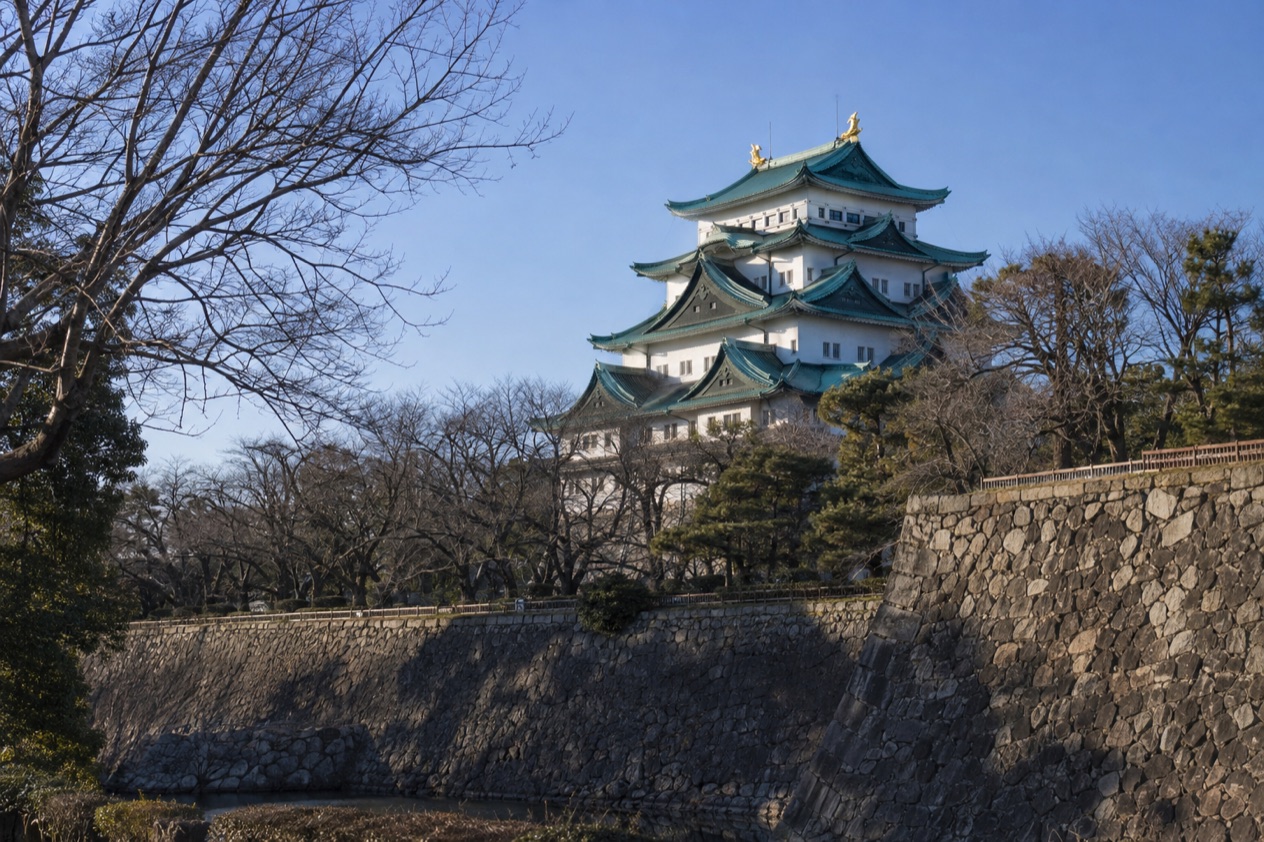
You see the stone walls, the moat and the main keep rising above bare winter trees, and the open sky makes the outline stand out. Inside, the Honmaru Palace shows the decorated rooms of the former residence.
Atsuta Shrine is another of the city’s celebrated landmarks. Its grounds are wooded, and in winter the walk under tall trees feels hushed. It is a fitting place to see Setsubun customs and to warm up afterward with something hot to eat nearby. The NAGOYA Sightseeing Pass covers Nagoya Castle, Chubu Electric Power MIRAI TOWER, Nagoya Port Aquarium and Higashiyama Zoo and Botanical Gardens.
Plum blossoms and early spring color
Plum trees (Prunus mume) typically flower from January until late February in East Asia, so February is the month to look for them in parks and shrine gardens. They open well before the cherry trees, with small, fragrant flowers on bare branches. Seeing them is a quiet way to feel the season turning.
In Toyota, in Aichi Prefecture, peach trees signal the arrival of spring with a long stretch of weeping peach trees in white, red and pink. That comes later than February, so treat it as a reason to return in the following weeks. Cherry blossoms in Nagoya usually start in the second half of March, so February is a different, calmer season.
Indoor stops and winter food
Higashiyama Zoo and Botanical Gardens and the Port of Nagoya Public Aquarium give you somewhere to go when the weather turns gray.
Winter is the season for Nagoya’s rich regional cooking. Think miso-based dishes, hot noodles in thick broth and fried chicken wings, all of which taste better on a cold evening. Warm tea or a bowl of soup at midday is a good reason to step inside between sights.
If you want snow, the mountains and northern regions of Japan are where heavy snow regularly falls, and the ski season generally runs from December to April. The Sapporo Snow Festival is held in February over seven days, but it is in Hokkaido, a different trip from a Nagoya stay.
A two-day itinerary for Nagoya in February
Day 1 starts at Nagoya Castle in the morning, when you want your walk outdoors while the day is at its brightest. Wander the grounds, see the keep and, if the Honmaru Palace is open, step inside out of the cold. Around midday, find a restaurant serving local specialties for a warming lunch of miso-based cooking or hot noodles.
In the afternoon, head to Atsuta Shrine and walk through its wooded grounds while the light is still good. If your visit coincides with Setsubun, look for bean-throwing events at shrines and temples. Finish with dinner in a casual izakaya, where small plates and something hot suit the cold evening.
Day 2 begins at Higashiyama Zoo and Botanical Gardens, where you can look for early plum blossoms among the garden trees. Have lunch at a simple local place nearby, then spend the afternoon at the Port of Nagoya Public Aquarium, which is a good indoor choice if the sky turns gray or rain arrives.
As evening comes, head up Chubu Electric Power MIRAI TOWER for a view over the city after dark. The sun sets early in February, so the lights come on while you are still having a relaxed dinner. If rain sets in, shift the aquarium earlier and keep the tower for the evening.
Is Nagoya busy in February?
February is a winter month in Nagoya, before the cherry blossom season in late March, so the city feels like it is waiting for spring rather than caught in a rush. The big draws of the month, like Setsubun events at shrines, bring local crowds to particular spots for a day, but the city as a whole keeps its usual pace.
Spring is what changes things. Cherry blossoms at the Nagoya station usually begin to open around late March, with full bloom in early April, and that is when parks and castle grounds see larger numbers. February sits comfortably ahead of that moment.
The cold also shapes how people move around. Visitors spend more time indoors at museums, aquariums and restaurants, and outdoor sights are enjoyed in shorter, brighter stretches. That rhythm makes February a month for a steady, unhurried visit rather than a packed schedule.
What to pack for Nagoya in February
Pack for cold mornings and evenings and cool afternoons, with layers you can add and remove as you move between outdoors and heated interiors.
- A warm coat, because mornings and evenings drop close to freezing.
- A sweater or fleece to wear under it for the milder afternoons.
- A hat, gloves and a scarf for early starts and evening walks.
- A compact umbrella for the occasional damp day.
- Comfortable shoes for walking the castle and shrine grounds.
- Lip balm and hand cream for the winter air.
Good to know before you go
February in Nagoya falls outside the cherry blossom season, so the city’s spring crowds are still weeks away. Setsubun is the main event of the month, and it is worth checking which shrine or temple you want to visit so you can plan your day around it. The New Year closures that affect many restaurants and attractions come earlier, in the first days of January, rather than in February.
Nagoya in February vs January and March
Moving the trip four weeks earlier puts you in January, which is a little colder, with shorter days and more days of snow or sleet. The plum blossoms are just starting, and the New Year holiday closures that affect many restaurants and attractions have just ended. Choose January if you want the deepest winter feel.
Four weeks later, in March, the afternoons turn noticeably warmer and the days are longer, but rain becomes more frequent and heavier. The cherry blossoms are close, with first bloom usually around late March, so the city starts to move toward its spring pace. Choose March if you want milder walking weather and the first hints of sakura.
February sits between the two. It has the Setsubun festival, plum blossoms, brighter days than January and less rain than March. Stay with February if you want those traditions and a calmer city, and shift to March if you want warmer afternoons and the cherry blossoms.
Is February a good time to visit Nagoya?
Yes, February is a good time for travelers who like cold, bright days, seasonal traditions and a city that is not yet in its spring rush. It suits people who enjoy castles, shrines, aquariums and hearty regional food more than outdoor lounging.
If you want cherry blossoms, warm afternoons or long evenings outside, another month will serve you better. Anyone who dislikes cold mornings should pack well or look at spring instead.
On arrival, start with Nagoya Castle on a clear day while the sun is out, and keep the aquarium or zoo for a gray one. Look for a Setsubun event at a shrine, and eat something hot at every opportunity. What makes February in Nagoya special is the sound of soybeans thrown for good fortune and the first plum blossoms opening on bare branches.
Sources
- Japan Meteorological Agency (JMA), Normal values 1991-2020, monthly (https://www.data.jma.go.jp/stats/etrn/view/nml_sfc_ym.php?prec_no=51&block_no=47636), station Nagoya, elevation 51 m, checked October 11, 2026
- Computed from the date and the latitude of the place (sunrise equation, solar elevation -0.833 degrees), October 11, 2026
- Wikipedia, Setsubun (https://en.wikipedia.org/wiki/Setsubun), checked October 11, 2026
- Japan National Tourism Organization, festivals and events (https://www.japan.travel/en/see-and-do/festivals-and-events/), checked October 11, 2026
- Sapporo Snow Festival official website (https://www.snowfes.com/english/), checked October 11, 2026
- Wikipedia, Sapporo Snow Festival (https://en.wikipedia.org/wiki/Sapporo_Snow_Festival), checked October 11, 2026
- Japan National Tourism Organization, winter in Japan (https://www.japan.travel/en/guide/winter-guide/), checked October 11, 2026
- Japan National Tourism Organization, skiing and snowboarding in Japan: regions, resorts, seasons (https://www.japan.travel/en/sports/snow/), checked October 11, 2026
- Wikipedia, Climate of Japan (https://en.wikipedia.org/wiki/Climate_of_Japan), checked October 11, 2026
- Japan National Tourism Organization, flowers by season: cherry blossom, plum, wisteria, hydrangea, where and when (https://www.japan.travel/en/see-and-do/flowers/), checked October 11, 2026
- Wikipedia, Prunus mume (https://en.wikipedia.org/wiki/Prunus_mume), checked October 11, 2026
- Japan National Tourism Organization, skiing guide (https://www.japan.travel/en/guide/skiing/), checked October 11, 2026
- Wikipedia, List of ski areas and resorts in Japan (https://en.wikipedia.org/wiki/List_of_ski_areas_and_resorts_in_Japan), checked October 11, 2026
- Japan National Tourism Organization, weather and seasons in Japan (https://www.japan.travel/en/plan/weather/), checked October 11, 2026
- Japan Meteorological Agency, cherry blossom first-bloom dates 2021-2026 and 1991-2020 normal (https://www.data.jma.go.jp/sakura/data/sakura003_07.html), checked October 11, 2026
- Japan Meteorological Agency, cherry blossom full-bloom dates 2021-2026 and 1991-2020 normal (https://www.data.jma.go.jp/sakura/data/sakura004_07.html), checked October 11, 2026
- Wikivoyage, Nagoya (https://en.wikivoyage.org/wiki/Nagoya), checked October 11, 2026
- Visit Nagoya, the Nagoya city guide (https://www.nagoya-info.jp/en/), checked October 11, 2026
- Wikipedia, Nagoya (https://en.wikipedia.org/wiki/Nagoya), checked October 11, 2026
To plan your stay
- Things to Do in Nagoya: Castle, Atsuta Shrine, Nagoya-meshi and Day Trips
- Where to Stay in Nagoya: Nagoya Station, Sakae, Osu and the Castle Area
- Nagoya from Tokyo: Shinkansen Services, Local Trains, Centrair Airport and a Day in the City
- Know Before You Go to Nagoya: Entry, Money, Getting Around and Local Etiquette