
GUIMARÃES · PORTO AND THE NORTH · WHERE PORTUGAL BEGAN
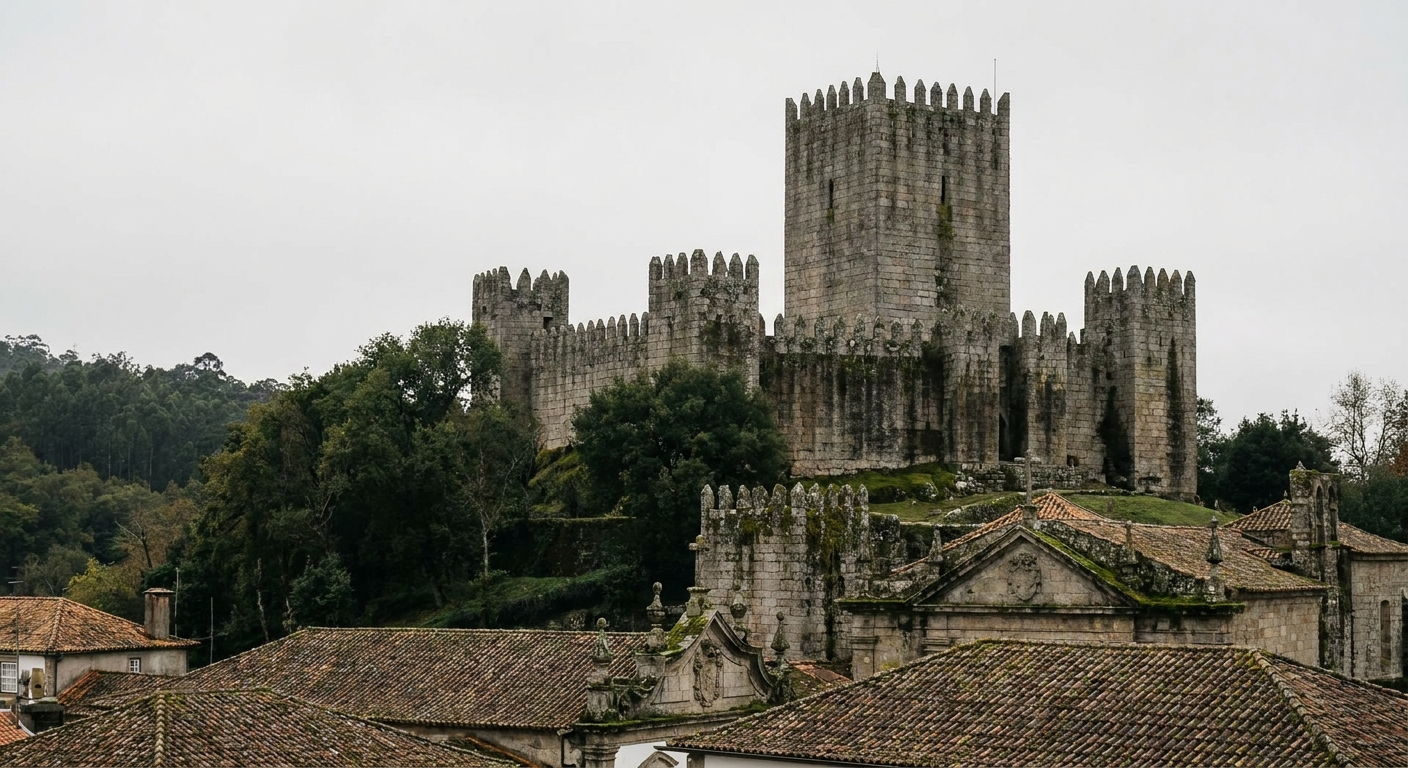
Portugal’s founding story sits on a single hillside. The castle keep stands at the top, the small Romanesque chapel of São Miguel do Castelo just below it, and the Paço dos Duques de Bragança on the slope beneath that, close enough that the three of them read as one visit. Below the hill, the medieval centre spreads into arcaded squares under granite balconies, listed by UNESCO and still working as a town rather than a set. Porto sits at the other end of the same rail line, which is why the first thing to settle here is not what to see but whether to sleep in it.
GUIMARÃES AT A GLANCE
A day trip out of Porto covers the castle, the Paço dos Duques and the old squares. A night adds the centre before the first coaches and an unhurried morning on Monte da Penha.
PORTO AND THE NORTH · UNESCO OLD TOWN · TRAIN FROM PORTO
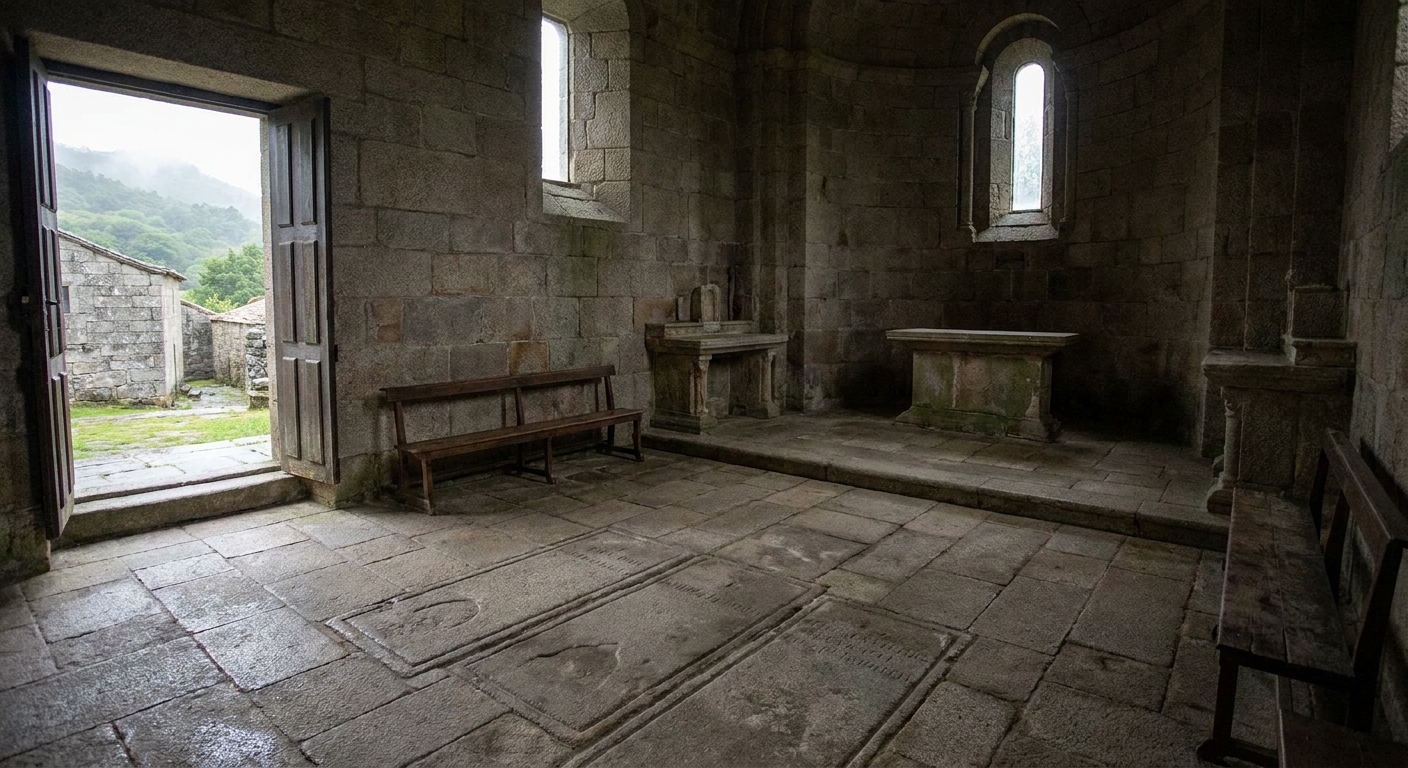
Go for: the wall walk on the keep, the tomb slabs underfoot in São Miguel do Castelo, the arcade of the old town hall linking Largo da Oliveira to Praça de São Tiago, and Penha’s granite boulder woods on a clear afternoon.
Think twice before: planning the day around the cable car, which answers to weather and maintenance, or around Penha views under low cloud. Check the operating hours the morning you go.
Monument hours and combined tickets are posted at each desk · train times from CP · full sources at the end of this guide
On this page
- Things to do in GuimarãesCastle, São Miguel chapel, Paço dos Duques
- The medieval centre of GuimarãesLargo da Oliveira and Praça de São Tiago
- Monte da Penha and the cable carWhen the climb pays and when it does not
- A day in Guimarães, hour by hourThe table, with the traps
- Where to stay in GuimarãesThe night weighed against the Porto day trip
- Getting to Guimarães from PortoThe Guimarães line, and the Braga connection
What to see in Guimarães: the castle, the Chapel of São Miguel and the Paço dos Duques
Take the three in a line up the hill or down it, the sequence changes nothing. The castle is a ring of granite curtain walls around a square keep, restored last century and close to empty inside, so what it hands you is the wall walk, the wind and the roofs of the old town below. A few steps downhill, the chapel of São Miguel do Castelo is a plain Romanesque box with worn tomb slabs set into the floor, traditionally named as the baptism place of Afonso Henriques. His statue stands on the grass between the chapel and the palace gate.
The Paço dos Duques de Bragança is the substantial visit and the one people argue about. Ruined for centuries and rebuilt as a state residence under the Estado Novo, it holds Flemish tapestries, armour and long chestnut ceilings shaped like upturned hulls, laid out room by room with the confidence of a regime that liked its history tidy. Travellers hoping for medieval fabric rather than reconstruction come out flat. When the clock is tight, the palace interiors are the stop to drop: the castle and the chapel are quick, and the streets below repay the time you keep.
The medieval centre of Guimarães: Largo da Oliveira, Praça de São Tiago and the arcades
Below the palace the streets stop being a monument circuit and start being a town. Largo da Oliveira is the hinge, with the Igreja de Nossa Senhora da Oliveira on one flank and the Padrão do Salado, a stone gothic canopy over a cross, planted in the open square. The arcade of the old town hall runs through the corner of it and delivers you into Praça de São Tiago, which is a smaller square with more chairs in it. Navigation is not the skill required. Everything inside the wall line connects, and the squares keep turning up.
Rua de Santa Maria is the spine, a granite lane of overhanging upper floors, timber framing and wooden balconies bolted to stone corbels. A surviving stretch of the old town wall carries the inscription Aqui Nasceu Portugal, here Portugal was born, in letters large enough to be read from across the road. At the western edge the centre opens onto Largo do Toural, wide and modern by comparison, where the old town hands over to the shopping streets and the everyday city.
Two indoor stops sit inside that grid when legs give out. The Museu de Alberto Sampaio occupies the old collegiate cloister beside the Oliveira church and holds the religious silver and painting of the district. At the other end of the register, the Plataforma das Artes e da Criatividade has recycled the former municipal market into gallery space around the Coleção José de Guimarães, with an open concrete court that locals cross on their way home. Between them, the tiled cafés on the squares do the rest of the afternoon.
Monte da Penha above Guimarães: the cable car, the sanctuary and when to skip it
Penha is the wooded granite hill standing over the town to the southeast. The Teleférico de Guimarães lifts from the eastern edge of the centre, near Parque das Hortas, and runs up the slope over treetops and rooftops, which is the reason most visitors choose it over the winding road that reaches the same summit by car. Operating hours shift with the season and the cabins stop for weather and maintenance, so the hours posted at the lower station on the day are the only ones worth planning around.
The top is not a viewing platform with a railing. The Santuário da Penha stands among pines, chapels and picnic ground are scattered through the trees, and footpaths thread between house-sized granite blocks with gaps and passages worn between them. On a clear day the Minho opens out below and the town shows its full shape, castle keep included. Under low cloud you get wet granite, resin and quiet, which some people prefer and most did not travel for.
That makes the sequencing simple on a single day. Do the historic centre first, look at the sky mid afternoon, and add Penha only if the air is clear enough to see the horizon. On an overnight stay the calculation loosens: the hill fits into a second morning, before the heat and before the first coaches reach the old town, and the boulder paths are worth an hour even when the long view is hazy.
A day in Guimarães, hour by hour
| Time of day | Where | Why then | The trap |
|---|---|---|---|
| Early morning | Largo da Oliveira and Rua de Santa Maria | Bakeries open onto empty arcades before the first groups arrive | Only available to people who slept here or caught the earliest train |
| Mid morning | Castle, São Miguel chapel, Paço dos Duques | All three sit within a few minutes of each other on the same slope | Buying tickets separately without asking the desk what a combined entry covers |
| Midday | Lunch between Praça de São Tiago and Largo do Toural | The squares have shade and the kitchens are working | Sitting down at the busiest terrace and losing the afternoon to service |
| Mid afternoon | Museu de Alberto Sampaio or the Plataforma das Artes | Indoor hours that hold up whatever the sky is doing | Saving the museums for after the monuments and finding the desks closed |
| Late afternoon | Monte da Penha by cable car | Long light on the granite blocks and the Minho beyond | Riding up under low cloud, when the summit gives trees and little else |
| Evening | The old squares, then a room in the centre | Terraces thin out and the granite carries footsteps | Assuming quiet squares mean the trains have stopped: departures for Porto run late into the evening, so check the current CP timetable |
Where to stay in Guimarães, and how the night compares with the Porto day trip
The day trip is a legitimate plan and we say so on our day trips from Porto page: one rail line, no car, and time enough for the castle, the chapel, the Paço dos Duques and a long walk through the medieval centre before a return train. What it costs is the timing. You are in the old town during the hours everyone else is, Penha usually falls off the list, and the squares you see are the squares at their busiest.
A night changes which Guimarães you get rather than how much of it. Sleeping inside the wall line, around Largo da Oliveira and Rua de Santa Maria, puts the early morning and the late evening on your doorstep and puts terrace noise under your window in summer. Rooms around Largo do Toural sit flat, close to the station side, and one step out of the granite lanes. Up the slope toward Penha there is a converted monastery run as a state pousada, quiet by construction and a drive or a walk from dinner. The base comparison for the whole region is on the region page, and zone thinking for the country is in our where-to-stay guide.
Getting to Guimarães by train from Porto, and the connection from Braga
Guimarães is the end of its own CP line out of Porto, with services running from Campanhã and from São Bento in the middle of the city. The station sits south of the historic centre, a level walk in to Largo do Toural, so nothing about arriving here needs a taxi or a rental. Times and ticket types belong to the operator rather than to this page, and our getting-around guide explains how the urban and regional services differ.
Braga looks close on the map and is close on the road, but the two towns sit on separate rail branches, so the train between them involves a change and the direct link is the regional bus. Travellers pairing the two in one day generally drive it or bus it and give each town half the daylight, which is thin for Braga’s churches and thin for the ducal palace. Splitting them across two days, with a night in one of them, is the version that leaves room for Penha or for Bom Jesus.
A car is dead weight inside the walls, where the lanes are granite and mostly closed to traffic, and useful the moment you head for the rural Minho, for Peneda-Gerês or up to the Penha summit under your own steam. Tolls and gearbox questions are covered in our car guide. Which months suit the north is a calendar matter handled on the month-by-month guide, and the wider trip fits together on the country hub.
When to go. The month-by-month case for Guimaraes — what the normals say, when the sea is warm enough to swim and which weeks fill up — sits on the best time to visit Guimaraes.
The last word
What the guidebooks undersell here is the sound. Car-free granite squares carry footsteps, and in the hour after the chairs go up on Largo da Oliveira you can hear a scooter three streets away and the water running in the fountain. The Padrão do Salado stands lit and unattended in the middle of it. Nobody is queueing, because the ticket desks shut with the afternoon and the coach parks emptied before dinner. The region guide places the town on the northern map.
Morning does the same thing in reverse. Shutters go up on Rua de Santa Maria, bread comes out under the wooden balconies, and the inscription on the old wall reads to an empty street rather than over a row of shoulders. Guimarães gives the visitor who stayed a version of itself with the monuments closed: the keep dark on its rock, wet granite in the arcades, and a first coffee in a square that belongs for an hour to the people who live around it.
Sources & data for this guide
- Town, monuments and visitor practicalities · visitportugal.com (Turismo de Portugal) plus ground observation · checked Sep 6, 2026
- Historic Centre of Guimarães, World Heritage inscription · UNESCO World Heritage List · checked Sep 6, 2026
- Castelo de Guimarães, Chapel of São Miguel do Castelo and Paço dos Duques de Bragança: opening hours, closures and combined-ticket terms are posted at each desk and change with the season. We publish no hours or fares here on purpose · checked Sep 6, 2026
- Rail service on the Guimarães line from Porto Campanhã and São Bento, and the connection toward Braga · CP Comboios de Portugal. Late-evening departures exist but vary by day of the week: check the current timetable before planning a return · checked Sep 6, 2026
- Teleférico de Guimarães to Monte da Penha: operating hours are seasonal and the cabins stop for weather and maintenance. Confirm at the lower station near Parque das Hortas on the day · checked Sep 6, 2026
- Museu de Alberto Sampaio and the Coleção José de Guimarães at the Plataforma das Artes e da Criatividade · municipal and museum information · checked Sep 6, 2026
- Editorial note: this page carries no prices, journey times or temperatures. Those live on the trip cost page, with the operators, and on the month-by-month guide. Street noise, crowd timing and the character of each sleeping zone are our own observations, not published data