
In August the cicadas drone in the maples of Kenrokuen, and the paper lanterns along the old teahouse lanes start to glow while the heat of the day is still lifting off the stone. Kanazawa is a castle town on the Sea of Japan coast of Honshu, and it spends this month between garden shade, cold noodles, fresh seafood and the quiet rituals of Obon, when families remember their ancestors. It is a good month for a traveler who likes to see gardens, crafts and old districts at a slow pace, with long evenings to fill.
What is the weather like in Kanazawa in August?
August in Kanazawa is hot, humid and the sunniest of the three summer months, with fewer rainy days than July or September.
| Month | Average high (°F) | Average low (°F) | Precipitation (in) | Days with 1 mm or more of precipitation | Hours of sunshine | Daylight on the 15th |
|---|---|---|---|---|---|---|
| July | 85.1 | 73.2 | 9.19 | 12.9 | 167 | 14 h 27 min |
| August | 88.3 | 75.4 | 7.06 | 9.3 | 216 | 13 h 36 min |
| September | 81.0 | 67.8 | 9.13 | 12.0 | 154 | 12 h 28 min |
The warmth is the first thing to plan around. Highs in the upper 80s and lows that stay in the mid-70s mean that nights bring little relief, and humidity hovers in the low 70s percent.
Japan’s summers on Honshu are described as very humid, hot and sultry, and Kanazawa fits that picture. Light, breathable clothes that dry quickly are the sensible choice, and a small towel or handkerchief in your bag becomes a habit by the second day.
The drier pattern of August also means the long sunshine hours are useful: the garden greens look their deepest, and the gold-leaf shops and the glass of the museums throw back strong light.
Daylight lasts well into the evening, which gives you time for an unhurried dinner after a day of sightseeing, and still leaves light for a walk through the old districts before the lanterns come on. You will want a layer only for air-conditioned trains, museums and restaurants, where the chill can surprise you after the heat outside.
What to do in Kanazawa in August
The calendar of the month is shaped by Obon, the Buddhist custom of honoring the spirits of one’s ancestors. It lasts three days, usually in the middle of August, and people travel back to their family places to visit and clean their ancestors’ graves.
In a city of temples like Kanazawa, you see it in small gestures: flowers and incense at family plots, lanterns, and a slightly different rhythm in the streets as many residents leave for their home towns or stay in for family gatherings. Treat temple grounds as places of prayer during these days and keep voices low.
Summer in Japan is also the season of hanabi, the fireworks that light up river banks and festival grounds, and of cotton yukata, the light cotton kimono that people wear for evening outings. Wearing one is a pleasure of the season, and you may spot them in the old teahouse districts at dusk. Meals lean toward the cool and the fresh: chilled soba or somen noodles, cold tofu, and seafood from the Sea of Japan.
Kenrokuen and Kanazawa Castle Park
Kenrokuen is one of Japan’s most iconic landscape gardens, and in August it is a garden of shade rather than color. Paths run past ponds, stone lanterns and old pines held up by wooden supports, and the moss glows green after a rain shower.
You walk slowly because the heat asks you to, and every bench under a tree becomes a small reward. Teahouses within the grounds let you sit with a bowl of matcha and a sweet while the cicadas sing.
Next to the garden stands Kanazawa Castle Park, with its pale walls, wide lawns and stone-lined moats. Both the castle park and Kenrokuen are illuminated at night, which suits a month when the evenings are long and pleasant for a stroll.
The lit trees and water give you a second visit with an entirely different mood, and the lanterns reflect in the ponds. If a day turns very hot, split the visit: the garden in one part of the day, the lit paths after dinner.
Higashi Chaya and the craft city
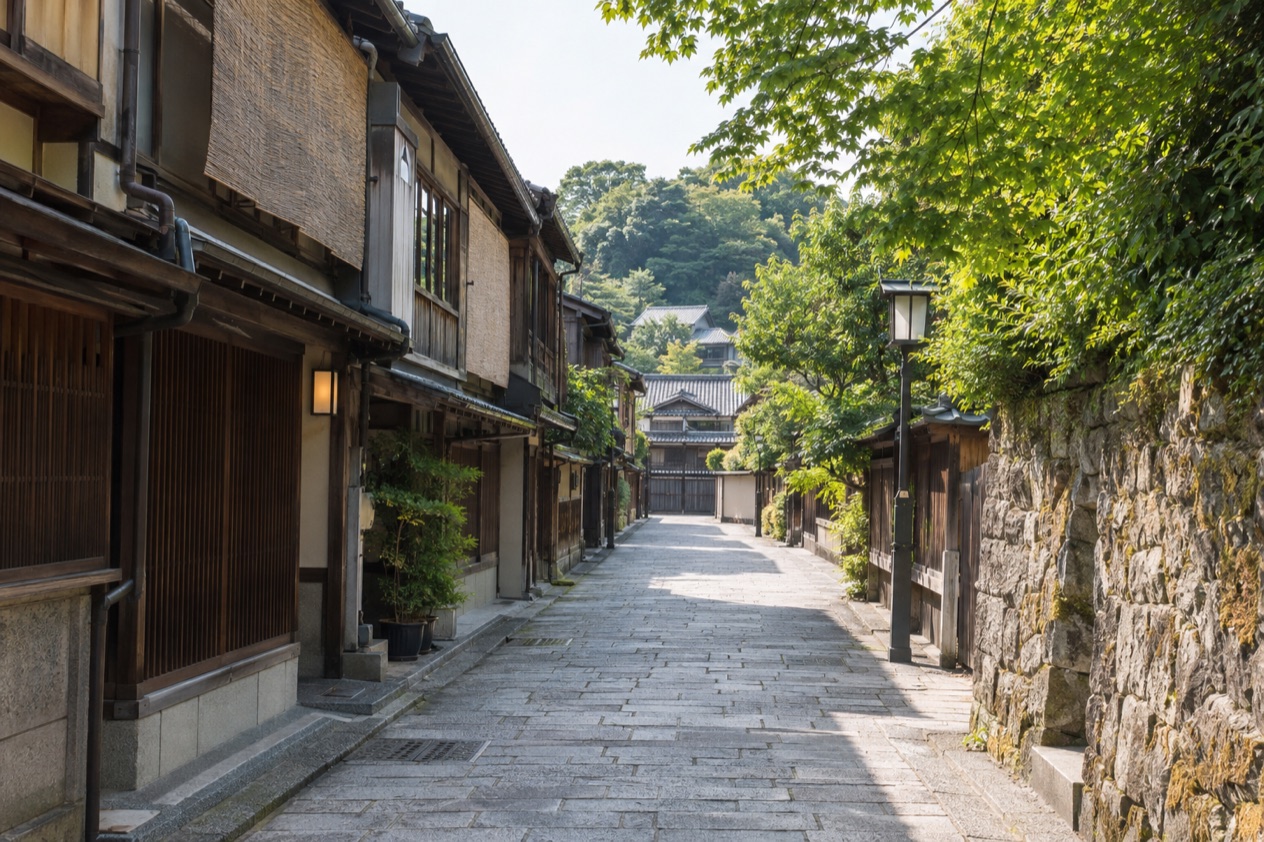
Kanazawa belongs to the UNESCO Creative Cities Network as a City of Crafts and Folk Art, and the Higashi Chaya district is where that heritage is easiest to feel. Lanes of wooden teahouses with slatted fronts, once the place where geisha entertained, now hold cafés, small galleries and shops selling gold leaf, lacquerware, Kutani ceramics and silk dyed in the local style. In August, a gold-leaf soft-serve cone is the souvenir everyone seems to carry, and it works well against the heat.
Take your time in the shops, since many are small workshops where you can watch a craftsperson at work, and some offer hands-on lessons in gold-leaf decoration. The lanes are lovely at dusk, when paper lanterns come on and the wood of the facades turns a deeper brown.
Omicho Market and the food of the Sea of Japan
Kanazawa sits on a narrow strip of land along the Sea of Japan, and the city eats accordingly. Omicho Market is the place where this shows: stalls of crab, sweet shrimp, squid, yellowtail and shellfish, plus vegetables, pickles and fruit. Many stalls turn the catch into a bowl of sushi or a plate of grilled fish on the spot, so a market visit easily becomes a meal.
Beyond the market, look for local dishes: jibuni, a simmered duck stew from the Kaga cooking tradition, and the delicate sweets served with tea, which trace back to the city’s days as a seat of a wealthy domain. In August, a cold noodle lunch or a bowl of rice with raw fish makes a lighter meal than the heavier winter stews of the region, and an evening at an izakaya, a casual pub, rounds it off with small plates and cold sake or beer.
Kanazawa was one of the most important cultural and artistic centers of Japan in the Edo period, and it remains a destination for people who love art and culture. Even in the August heat, that gives you plenty of indoor options: contemporary art galleries, traditional craft museums and the old samurai houses that preserve interiors of earlier centuries. Weave them between outdoor stretches, and the day finds its own rhythm.
Shops in a city like this generally stay open from morning until evening, so there is time for browsing after dinner. In the cooler hours of the evening, travelers drift back to the teahouse lanes or the riverside for a last stroll before turning in.
A two-day itinerary for Kanazawa in August
Day 1 starts early with Omicho Market, because August heat builds and the market is at its liveliest while the day is still fresh. Have a seafood breakfast there, perhaps a small bowl of rice topped with raw fish, and browse the stalls of fruit and pickles. Then walk on to Kenrokuen for the late morning, when the trees still give deep shade and the ponds are bright.
Midday is for something cool and indoors: a noodle lunch, then a break in an air-conditioned café or one of the teahouses in the garden. In the afternoon, cross to Kanazawa Castle Park and wander its lawns and moats.
Return to your hotel to rest through the hottest hours, then come back to the park and garden as evening falls, when both are illuminated and the day’s heat has loosened its hold. Dinner can be an izakaya meal of small plates and local fish.
Day 2 belongs to the old districts. Begin in Nagamachi, the samurai quarter, where earthen walls line narrow lanes and the old residences show tatami rooms and small gardens. Continue to Higashi Chaya for craft shops, gold-leaf sweets and a late lunch, then cross to the Kazuemachi teahouse lanes along the river for a more reserved atmosphere.
For the afternoon, keep to museums and galleries, such as the 21st Century Museum of Contemporary Art, which also gives you air conditioning. If rain arrives, that is your rain card: swap lanes for craft museums and gold-leaf workshops, and let the showers pass over a long coffee. As the sky clears toward evening, return to the teahouse district for dusk, when lanterns come on, and finish with a quiet dinner of Kaga cuisine.
Is Kanazawa busy in August?
August is a summer month in Kanazawa, and its main effect on the pace of the city is Obon, rather than any single famous festival of its own.
During Obon, which lasts three days, people return to their ancestral places and visit family graves. That means the movement of residents is large across Japan, and a city like Kanazawa sees both its own people leaving for home towns and families arriving. The timing shifts what you feel on the ground: some local businesses may adjust their routines, while the tourist heart of the city keeps going.
In urban areas, shops are generally open from 10:00 a.m. to 8:00 p.m. every day, which suits long summer evenings of browsing. In rural areas, shops often close earlier, sometimes as early as 6:00 p.m., so if you plan to drive out of town for the day, keep that in mind for shopping and meals.
The big summer festivals of Japan, such as the Nebuta in Aomori in early August or the Awa Dance Festival in Tokushima from August 12 to 15, are held in other cities, and they draw their own crowds there. Kanazawa’s August is more a month of gardens, museums and old lanes than of a single headline event, which gives the city a relaxed feel for those who prefer to wander.
What to pack for Kanazawa in August
Pack for heat, humidity and the odd downpour, with a bit of preparation for cold air conditioning indoors.
- Lightweight, quick-drying clothes, because the days are hot and humid and sightseeing means a lot of walking.
- A compact umbrella that also shades you from the sun, since showers can be heavy when they come.
- A thin layer for museums, trains and restaurants, where air conditioning can feel cold after the heat outside.
- A small hand towel or handkerchief to deal with sweat, a habit you will see all around you.
- Comfortable walking shoes that slip on and off easily for temples, tatami rooms and teahouses.
- A refillable water bottle and sun protection for the garden paths and castle grounds.
Good to know before you go
August is a very humid, hot and sultry month on Honshu, so plan your outdoor sightseeing with rest breaks in mind and keep an umbrella ready for sudden rain. Obon lasts three days in mid-August and is a family and religious time, so temples and graveyards are places of remembrance during these days. In urban areas shops are generally open from 10:00 a.m. to 8:00 p.m. every day, while rural shops often close as early as 6:00 p.m. When a national holiday falls on a Sunday, the next working day becomes a public holiday, which can change how a long weekend looks.
Kanazawa in August vs July and September
Moving the trip four weeks earlier brings you into July, which is a little cooler in the afternoons but wetter, with more rainy days and fewer hours of sun. The days are also longer, which stretches the evenings for garden walks. If you are happy to carry an umbrella and take the rain as it comes, July suits you, and the greenery is at its lushest.
Moving four weeks later, to September, the heat eases and nights become cooler, which makes long walks through Nagamachi and the teahouse lanes more comfortable. The rain, though, returns in force, and daylight shortens to a more modest length. September is the month for travelers who dislike hot nights and don’t mind a few gray days.
August is for those who want the sunniest and driest of the three, and who can accept the heat in return. If you wilt in humidity, shift toward September. If you want the longest light for evening strolls and don’t mind more showers, July is the one. If your priority is clear skies over the gardens and an Obon week to see, stay with August.
Is August a good time to visit Kanazawa?
Yes, August is a good time for travelers who can handle heat and who enjoy gardens, crafts and food more than beaches or hiking. It has the most sunshine of the summer months and the fewest rainy days, which helps when your plans center on outdoor places like Kenrokuen and the castle park.
It suits people who like to organize a day around the heat, with early starts at the market, cool indoor stops at midday and long evenings by the lanterns. It is less suited to anyone who struggles with humid weather or who expects a lively summer festival scene in the city itself. For them, another month, or another city’s festival, will give more.
On arrival, begin with something simple: a cold drink, a stroll through the nearest teahouse lane and a seafood dinner, then save the larger sights for the morning. August in Kanazawa is a month of lit gardens after dark, gold-leaf sweets in the heat and the soft rituals of Obon passing through a city of old temples.
Sources
- Japan Meteorological Agency (JMA), Normal values 1991-2020, monthly (https://www.data.jma.go.jp/stats/etrn/view/nml_sfc_ym.php?prec_no=56&block_no=47605), station Kanazawa, elevation 6 m, checked October 11, 2026
- Computed from the date and the latitude of the place (sunrise equation, solar elevation -0.833 degrees), October 11, 2026
- Japan National Tourism Organization, shop and attraction hours, national holidays (https://www.japan.travel/en/plan/business-hours-and-holidays/), checked October 11, 2026
- Wikipedia, Obon (https://en.wikipedia.org/wiki/Obon), checked October 11, 2026
- Wikipedia, Public holidays in Japan (https://en.wikipedia.org/wiki/Public_holidays_in_Japan), checked October 11, 2026
- Japan National Tourism Organization, summer in Japan (https://www.japan.travel/en/guide/summer-guide/), checked October 11, 2026
- Japan National Tourism Organization, festivals and events (https://www.japan.travel/en/see-and-do/festivals-and-events/), checked October 11, 2026
- Wikipedia, Hanabi (https://en.wikipedia.org/wiki/Hanabi), checked October 11, 2026
- Japan Meteorological Agency, Emergency Warnings (https://www.jma.go.jp/jma/en/Emergency_Warning/ew_index.html), checked October 11, 2026
- Japan National Tourism Organization, safety information (https://www.japan.travel/en/japan-safe-travel-information/), checked October 11, 2026
- Japan National Tourism Organization, weather and seasons in Japan (https://www.japan.travel/en/plan/weather/), checked October 11, 2026
- Wikipedia, Awa Odori (https://en.wikipedia.org/wiki/Awa_Odori), checked October 11, 2026
- Wikipedia, Climate of Japan (https://en.wikipedia.org/wiki/Climate_of_Japan), checked October 11, 2026
- Japan National Tourism Organization, Mount Fuji guide (https://www.japan.travel/en/fuji-guide/), checked October 11, 2026
- Official website for Mt. Fuji climbing, about the climb (https://www.fujisan-climb.jp/en/about/), checked October 11, 2026
- Wikipedia, Nebuta (https://en.wikipedia.org/wiki/Nebuta), checked October 11, 2026
- Wikivoyage, Kanazawa (https://en.wikivoyage.org/wiki/Kanazawa), checked October 11, 2026
- Japan National Tourism Organization, Kanazawa (https://www.japan.travel/en/destinations/hokuriku-shinetsu/ishikawa/kanazawa-and-around/), checked October 11, 2026
- Kanazawa Tourist Information Guide (https://www.kanazawa-tourism.com/), checked October 11, 2026
- Wikipedia, Kanazawa, Ishikawa (https://en.wikipedia.org/wiki/Kanazawa,_Ishikawa), checked October 11, 2026
To plan your stay
- Things to Do in Kanazawa: Kenrokuen, Samurai Streets, Gold Leaf and Day Trips
- Where to Stay in Kanazawa: Station Area, Tea House Streets, Downtown and Ryokan Choices
- Kanazawa from Tokyo: Hokuriku Shinkansen, Komatsu Airport and a Day in the Gardens
- Know Before You Go to Kanazawa: Entry, Money, Getting Around and Local Etiquette