
In July, Kanazawa smells of damp moss and warm wood. Cicadas buzz over the garden ponds, and a spoonful of shaved ice or a gold-leaf soft serve is the usual excuse to step out of the heat. The mood is green, humid and unhurried. This is a month for the city’s gardens, samurai lanes, craft workshops and seafood from the Sea of Japan, with long evenings to enjoy them.
What is the weather like in Kanazawa in July?
July in Kanazawa is hot, humid and one of the wetter months of the summer, with warm nights that give little relief.
| Month | Average high (°F) | Average low (°F) | Precipitation (in) | Days with 1 mm or more of precipitation | Hours of sunshine | Daylight on the 15th |
|---|---|---|---|---|---|---|
| June | 78.1 | 65.1 | 6.70 | 10.6 | 162 | 14 h 39 min |
| July | 85.1 | 73.2 | 9.19 | 12.9 | 167 | 14 h 27 min |
| August | 88.3 | 75.4 | 7.06 | 9.3 | 216 | 13 h 36 min |
Japan’s own travel authorities describe the summers of Honshu as very humid, hot and sultry, and Kanazawa fits that description. Humidity stays high, so clothes feel damp even on a cloudy day, and the number that matters is how the air feels on your skin rather than the thermometer. Light, breathable fabrics that dry quickly are the sensible choice, with a thin layer for air-conditioned museums and restaurants.
Rain is a regular part of the month, falling on more than a third of the days, so a compact umbrella or a light rain jacket belongs in your daypack. Many of the showers are the kind that you wait out in a tea house or a gallery, and the sunshine hours show the sun still gets plenty of room between the clouds. Sun protection matters on the clear stretches.
The light is generous at both ends of the day. Daylight stretches well into the evening, which leaves time for dinner and a walk after the heat has loosened its grip. By August the days shorten a little, but July still feels like a long, bright season.
What to do in Kanazawa in July
July in Kanazawa is about gardens in full leaf, cold sweets and seafood. The city is a historic one on a narrow strip of land along the Sea of Japan, and UNESCO counts it in its Creative Cities Network as a City of Crafts and Folk Art. That craft tradition shows up in lacquerware, ceramics and gold leaf, much of which you can see being made or try yourself, which suits a wet or sticky afternoon.
Most days fit one big outdoor visit and one indoor one. Walk the gardens and the old districts while the sky is bright, then duck into a museum, a workshop or a tea room when the humidity builds or a shower starts. The summer greens and the shine of wet stone make this a good month for photographs.
Kenrokuen and Kanazawa Castle Park
Kenrokuen is a strolling-style garden whose name means the Garden of Six Attributes. In July it is deeply green, with moss glowing after rain and ponds where carp drift under stone lanterns and little bridges. Paths wind around the water so that every turn gives a new framing of trees and rooftops.
Both the castle park and Kenrokuen are lit at night, which is useful in a month when the evenings stay mild and the daylight lasts so long. A lit garden after dinner is a calm way to end a hot day.
Plan around the weather rather than the clock. If the morning looks clear, spend it among the ponds and then move on to the castle grounds. If rain moves in, keep an umbrella handy, since the garden looks lovely wet, and shelter under a pavilion or in a nearby tea room.
Samurai lanes, tea districts and craft workshops
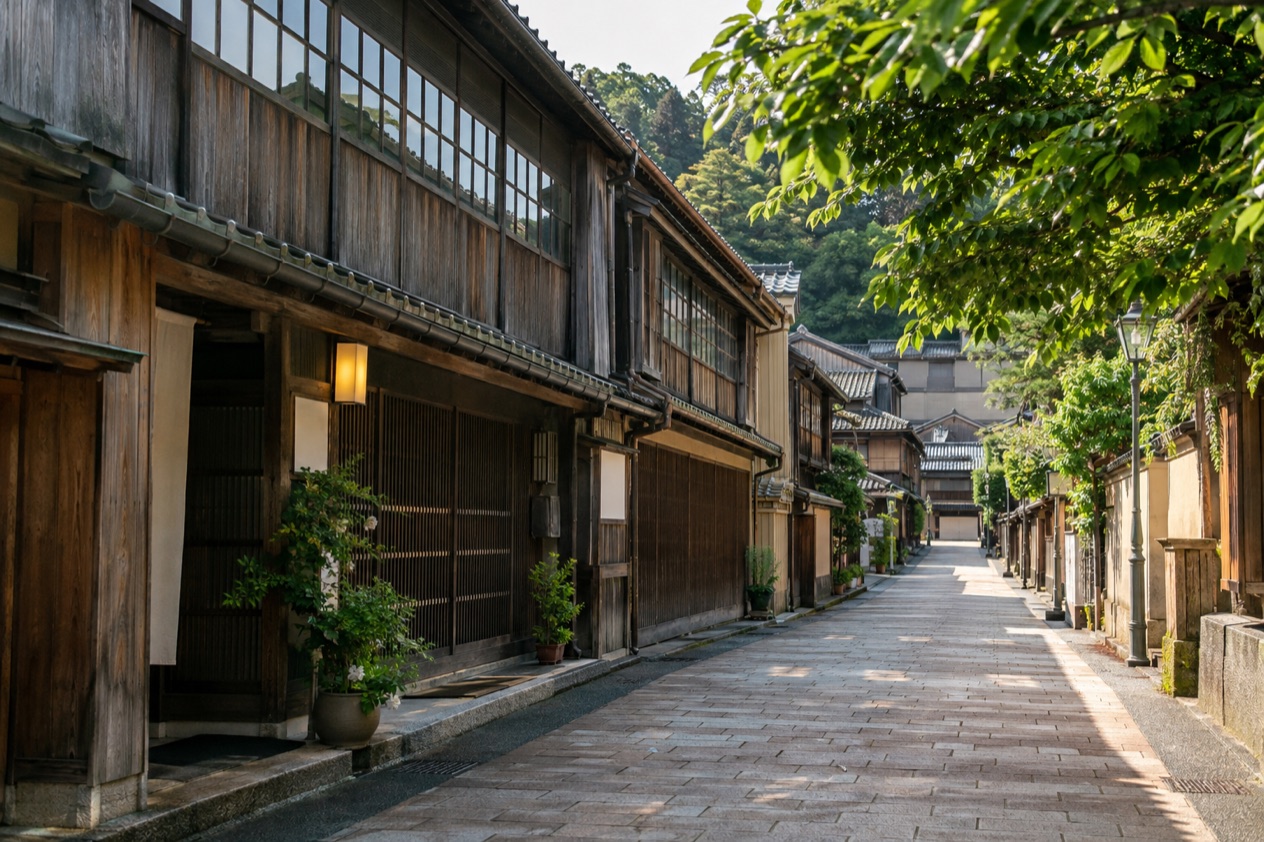
Kanazawa was one of the cultural and artistic centers of Japan in the Edo period, and its old quarters still carry that. In the Nagamachi samurai district, earthen walls line narrow lanes and the sound of a small canal runs alongside. Wooden gates and tiled roofs look darker and richer when the air is damp.
The tea house districts, with their latticed wooden facades, are where you sit down to matcha and a seasonal sweet. In summer the sweets lean toward cool, clear textures such as jelly and kudzu starch. The city’s gold leaf work is the other draw, from small workshops where you can see sheets pressed paper-thin to shops selling gold-flecked cosmetics and a gold-covered soft serve.
Pottery, lacquer and dyed textiles fill the shops in between. This is the part of the day to keep for a hot afternoon, because it is mostly indoors and lets you browse at your own speed. A small ceramic cup or a lacquered chopstick set makes a light souvenir.
What to eat in July
Seafood from the Sea of Japan is the reason people come to eat here. A bowl of rice topped with raw fish (kaisendon), sweet shrimp and fresh sushi are all easy to find around the city’s market streets. Summer calls for cold noodles, chilled tofu and pickles, with a glass of local sake or a cold barley tea alongside.
Kaga cuisine, the local style of cooking, adds more, including stewed duck dishes with a glossy sauce and refined seasonal vegetables served on beautiful local tableware. Izakaya, the casual Japanese pubs, are good for small plates in the evening, and a gold-leaf dessert is a fitting way to end a meal.
A two-day itinerary for Kanazawa in July
Day 1 begins with the garden, while the leaves are still shining. Start at Kenrokuen and take the paths slowly around the ponds, then cross to Kanazawa Castle Park and its stone walls. For lunch, look for a seafood bowl at a market-area restaurant, which keeps you out of the afternoon sun at the table.
In the afternoon, head to a contemporary art museum, since air-conditioned galleries suit the hottest hours and any passing shower. If an illumination is scheduled during your stay, return to Kanazawa Castle Park and Kenrokuen after dark. With a little over fourteen hours of daylight, there is plenty of time for outdoor sightseeing before evening.
Day 2 belongs to the old quarters. Begin in the Nagamachi samurai district, where the earthen walls and canal make a shady start, then visit a gold leaf workshop to see how a sheet is made or try decorating something yourself. Lunch can be Kaga cuisine at a small restaurant.
In the afternoon, spend time in a tea house district, sit down to matcha and a seasonal sweet, and browse the craft shops. Dinner is an izakaya meal of grilled fish and small plates. If rain sets in, turn the whole day indoors: workshops, tea rooms and museums fill the hours well, and the wet lanes look even better when it clears.
Is Kanazawa busy in July?
July is not the headline season in Kanazawa, because the city’s draws here are the gardens, crafts and food rather than a big bloom or a famous leaf season.
What defines the month is the heat and humidity, which set the pace more than any event. The days run slowly, with visitors choosing indoor stops in the hottest hours and coming out again toward evening. The city has the feel of a place that keeps going at a steady, unhurried rhythm.
July falls outside Kanazawa’s best-known blossom and fall-foliage seasons, so gardens, museums and craft districts set the pace. The Gion Festival, for example, belongs to Kyoto and holds its float processions on July 17 and 24, while the famous Tanabata festival in Sendai comes in August. Kanazawa suits a traveler who wants a quiet cultural stop rather than a festival crowd.
A clear day brings people to the garden, and a wet one sends them to museums and tea rooms. Plan one flexible outdoor visit and one indoor stop each day, and the pace of the city will take care of the rest.
What to pack for Kanazawa in July
Pack for heat, damp and the occasional downpour, with a bit of room for the cooler inside of museums and restaurants.
- Light, quick-drying clothes, because the air stays humid and shirts dry slowly.
- A compact umbrella or light rain jacket for the frequent showers.
- Comfortable walking shoes that handle wet stone paths in the gardens and old lanes.
- A thin layer for air-conditioned galleries and restaurants.
- Sunscreen and a hat for the clear stretches in the garden and castle park.
- A small towel or handkerchief for wiping off sweat between stops.
Good to know before you go
The main thing to keep in mind in July is the mix of heat and rain. Honshu summers are very humid, so build in indoor stops, drink plenty of water and keep the flexible plan from the itinerary handy. Showers can arrive on several days, so treat an umbrella as part of your daily kit.
Kenrokuen and Kanazawa Castle Park are lit at night, which gives the evening a purpose once the heat eases. If you are dividing a longer trip between regions, remember that the Hokuriku Shinkansen has linked Tokyo and Kanazawa since 2015, taking around two and a half hours.
Kanazawa in July vs June and August
Moving the trip to June brings milder air, with highs in the upper 70s and nights that feel cooler. It is still a wet month, but the total rain is smaller and the days are the longest of the three, so the evenings last even longer. It is the better choice for travelers who dislike hot, sticky weather and want to walk more comfortably.
August is hotter and the sun is out much more, so the garden has stronger light and less rain. The nights stay warm, and the days are shorter than in July. A traveler who can handle heat and wants brighter skies will do better then, though the hottest afternoons call for planning around indoor stops.
July sits between the two and is the wettest of the three, with the stickiest feel. Choose it if you like lush green gardens, wet-stone photographs and quiet museum days, and shift to June for cooler air or August for more sun.
Is July a good time to visit Kanazawa?
Yes, July is a good time for travelers who enjoy gardens, crafts and food and do not mind heat, humidity and the occasional shower. The city’s best attractions work in this weather, because so much of what it offers is a mix of green outdoor spaces and cool indoor stops.
It suits visitors who like to wander slowly, sit in tea houses, watch a craftsperson work with gold leaf and eat well from the sea. It is a poorer fit for anyone who wants dry weather, strong sunshine or a big summer festival. Those travelers will do better in another month or another city.
On arrival, start with Kenrokuen and the castle park, then adapt the rest of the days to the sky. The long daylight gives the evenings room, and the lit garden after dinner is a reward for a hot day.
What is special about July here is the green. The moss, the pines, the wet stone lanes and the dark wood of the old districts all look their richest in damp summer air, and a gold-leaf sweet in hand sums up the season.
Sources
- Japan Meteorological Agency (JMA), Normal values 1991-2020, monthly (https://www.data.jma.go.jp/stats/etrn/view/nml_sfc_ym.php?prec_no=56&block_no=47605), station Kanazawa, elevation 6 m, checked October 11, 2026
- Computed from the date and the latitude of the place (sunrise equation, solar elevation -0.833 degrees), October 11, 2026
- Japan National Tourism Organization, weather and seasons in Japan (https://www.japan.travel/en/plan/weather/), checked October 11, 2026
- Wikipedia, Climate of Japan (https://en.wikipedia.org/wiki/Climate_of_Japan), checked October 11, 2026
- Japan National Tourism Organization, summer in Japan (https://www.japan.travel/en/guide/summer-guide/), checked October 11, 2026
- Japan National Tourism Organization, festivals and events (https://www.japan.travel/en/see-and-do/festivals-and-events/), checked October 11, 2026
- Wikipedia, Hanabi (https://en.wikipedia.org/wiki/Hanabi), checked October 11, 2026
- Wikipedia, Gion Matsuri (https://en.wikipedia.org/wiki/Gion_Matsuri), checked October 11, 2026
- Japan National Tourism Organization, Mount Fuji guide (https://www.japan.travel/en/fuji-guide/), checked October 11, 2026
- Official website for Mt. Fuji climbing, about the climb (https://www.fujisan-climb.jp/en/about/), checked October 11, 2026
- Wikipedia, Tanabata (https://en.wikipedia.org/wiki/Tanabata), checked October 11, 2026
- Wikipedia, Kanazawa, Ishikawa (https://en.wikipedia.org/wiki/Kanazawa,_Ishikawa), checked October 11, 2026
- Wikivoyage, Kanazawa (https://en.wikivoyage.org/wiki/Kanazawa), checked October 11, 2026
- Japan National Tourism Organization, Kanazawa (https://www.japan.travel/en/destinations/hokuriku-shinetsu/ishikawa/kanazawa-and-around/), checked October 11, 2026
- Kanazawa Tourist Information Guide (https://www.kanazawa-tourism.com/), checked October 11, 2026
- Japan National Tourism Organization, Japanese gardens (https://www.japan.travel/en/see-and-do/japanese-garden/), checked October 11, 2026
- Wikipedia, Kenroku-en (https://en.wikipedia.org/wiki/Kenroku-en), checked October 11, 2026
- Wikipedia, Kanazawa Castle (https://en.wikipedia.org/wiki/Kanazawa_Castle), checked October 11, 2026
To plan your stay
- Things to Do in Kanazawa: Kenrokuen, Samurai Streets, Gold Leaf and Day Trips
- Where to Stay in Kanazawa: Station Area, Tea House Streets, Downtown and Ryokan Choices
- Kanazawa from Tokyo: Hokuriku Shinkansen, Komatsu Airport and a Day in the Gardens
- Know Before You Go to Kanazawa: Entry, Money, Getting Around and Local Etiquette