
In Kanazawa, the evening starts with the creak of wooden lattices in the old teahouse lanes and the smell of soy and grilled fish drifting from a small counter. This is a city of crafts, gardens and slow wandering, a good fit for travelers who like to spend a day on one neighborhood and a long dinner on the local seafood.
What are the best things to do in Kanazawa?
The best things to do in Kanazawa gather around a strolling garden, a castle, the old districts of samurai and teahouses, a market full of Sea of Japan seafood, and a city-sized habit of making beautiful objects. Kanazawa was one of the most important cultural and artistic centers in Japan during the Edo period, and it still wears that history easily. It is the capital of Ishikawa Prefecture, set on a narrow strip of land along the Sea of Japan on Honshu, and the surrounding region gives it good day trips and plenty to eat.
Two or three of the items below can fit into one day, since the garden and the castle share a boundary. The rest reward a slower pace, with a market breakfast on one morning and a teahouse district on another. Here are the essentials, each told in more detail in the sections that follow.
- Kenrokuen Garden, a strolling garden also called the Garden of Six Attributes, where ponds, bridges, stone lanterns and pines are arranged to unfold as you walk.
- Kanazawa Castle Park, a large, partially restored flatland castle that stands right beside the garden.
- The 21st Century Museum of Contemporary Art, a round, glass-walled museum that opened in 2004 and invites you to wander through and around its works.
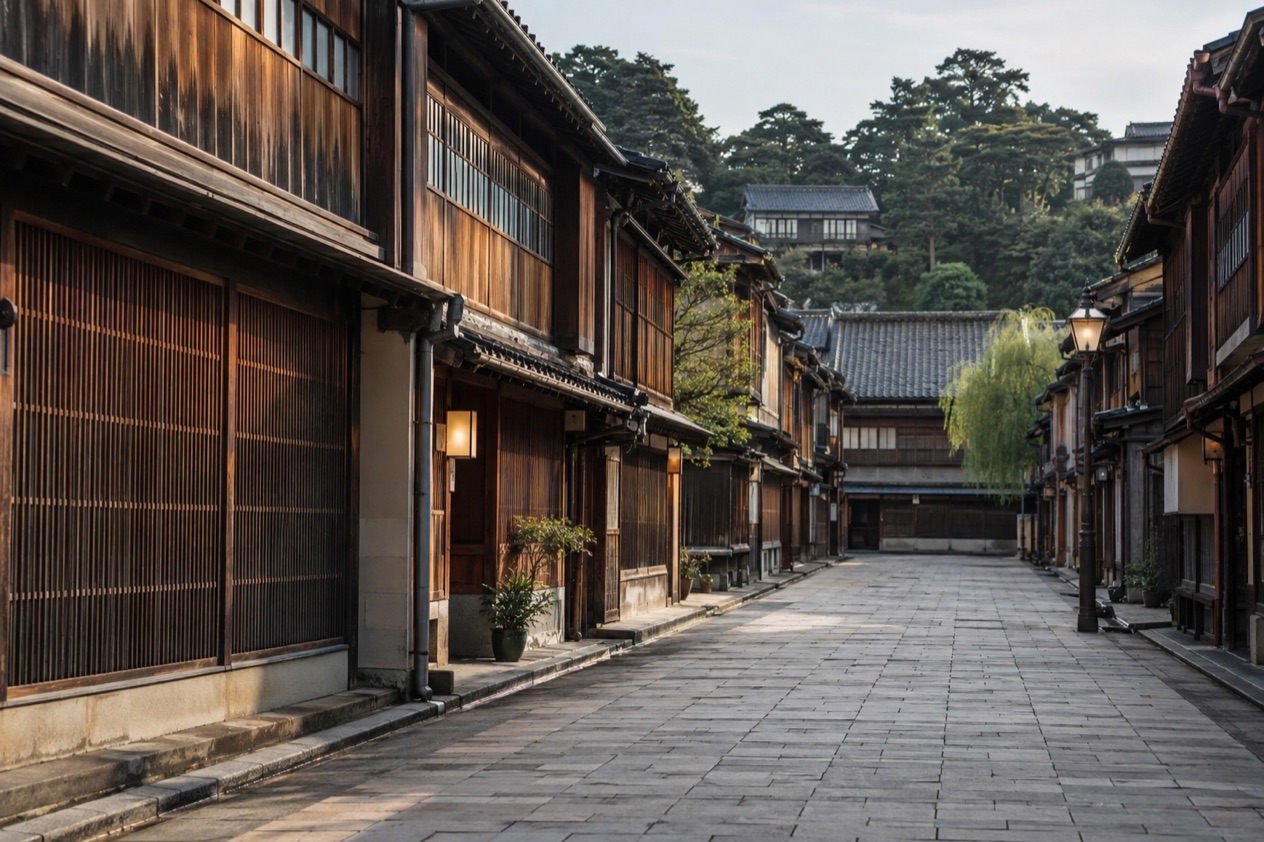
- The old teahouse and samurai districts, where lattice windows, narrow lanes and earthen walls show what the city looked like in the Edo period.
- The city’s crafts, from gold leaf to ceramics and dyed silk, which earned Kanazawa a place in the UNESCO Creative Cities Network as a City of Crafts and Folk Art.
- A market breakfast or lunch of Sea of Japan seafood, including seafood bowls, grilled fish and the local style of stew.
- An evening walk when the castle park and Kenrokuen are lit up, followed by a drink in a lantern-lit lane.
- A day trip into the Hokuriku region, to thatched mountain villages, hot spring towns or a coastal peninsula.
Sights and landmarks in Kanazawa
The landmarks of Kanazawa sit in clusters, which makes a day of sightseeing feel like three or four short chapters rather than a rush between monuments. Garden and castle share a boundary, the teahouse and samurai districts are made of lanes you wander without a plan, and the contemporary art museum gives the old city a modern counterpoint. Kanazawa was a seat of art and culture in the Edo period, and that shows in the details: the carved lattices, the gilded accents, the care given to a garden path.
Kenrokuen Garden
Kenrokuen is one of Japan’s most iconic landscape gardens and is counted among the Three Great Gardens of Japan, together with Kairaku-en and Koraku-en. Its name means Garden of Six Attributes, a nod to the six qualities that a perfect garden was once said to combine: spaciousness, serenity, artifice, antiquity, abundant water and broad views. It is a strolling garden, meant to be walked, with ponds, streams, teahouses, stone lanterns and carefully shaped pines that reveal new angles at every turn.
Japanese gardens are designed to seem larger than they are, using sudden changes in the width or direction of a path and layered perspectives. Kenrokuen is a very good place to notice that: a bend in the gravel brings a pond into view, a bridge frames a lantern, and a hedge hides what comes next. The garden was opened to the public in 1875, and free admission is offered here, so you can come back more than once and watch how the light changes the same pond.
Kanazawa Castle Park
Kanazawa Castle stands adjacent to Kenrokuen and is a large, partially restored flatland-style castle. What you find is a broad park of lawns, stone walls and reconstructed gates and turrets, with white plaster walls that look sharp against the sky. It is a place to read the layout of a castle town, to see how the walls and moats shaped the city around them, and to cross between the castle grounds and the garden without leaving the green.
The park is illuminated at night, which turns the pale walls into something close to a stage set. If you are deciding how to arrange a day, the castle park pairs naturally with the garden, as the two feel like neighboring halves of the same former estate. Bring a camera for the stone walls, whose carefully fitted blocks are as much a craft as the lacquerware shown in the city’s shops.
The 21st Century Museum of Contemporary Art
The 21st Century Museum of Contemporary Art, Kanazawa was established on October 9, 2004, and it turned the city’s centuries of craft toward the present. The building is a circular glass structure with no front or back, and people enter from every side. The circular museum brings contemporary art into the heart of the city.
The museum’s installations are the sort that make visitors of all ages stop and look twice, with light, water and mirrors used as materials. It suits travelers who enjoy a contrast to the temples and gardens, and it balances a day of Edo-period sights with something unmistakably current.
Teahouse and samurai districts
Kanazawa’s old districts are best met on foot, with no goal other than to follow a lane. In the teahouse quarters, wooden facades with fine lattice screens line narrow streets, and the interiors are the kind of rooms where tea, music and conversation were once the entertainment. In the samurai quarter, earthen walls and low gates enclose the houses of retainers, with a stream running alongside the lane.
Both areas hold small museums, craft shops and cafés set in old buildings, where you might sip matcha under a gold-leaf-topped sweet or browse lacquer, ceramics and dyed silk. Go in with the idea of lingering over small things, a doorway, a screen, a tray of sweets, and you will understand why art and culture lovers keep returning to Kanazawa.
Outdoor things to do in Kanazawa
Outdoor time in Kanazawa is mostly about gardens, castle grounds and the lanes of the old city, with the Sea of Japan close enough to shape the region’s food and mood. The city has a green core around the castle and garden, and the walks that link them with the districts nearby make a day of strolling in the open air.
A slow walk through Kenrokuen
Think of Kenrokuen as an outdoor room that is arranged to be read slowly. Start with the largest pond and look for the stone lanterns and the bridges placed so that each seems to frame a different view. Pines are held up by neat rope supports, and the paths narrow and widen to change your sense of distance, just as the garden’s designers intended.
Return to the same pond after a stop at one of the garden’s teahouses and you will see the same view with a different light on the water. Because free admission is offered, there is no pressure to see everything in one pass. It is a garden for wandering, pausing and wandering again, with benches and quiet corners that make a picnic of a few sweets feel like part of the plan.
The castle grounds after dark
Kanazawa Castle Park and Kenrokuen Garden are illuminated at night, as promoted by the Kanazawa Tourist Information Guide, and a special event with lights is also held at the castle park. Seen under lighting, the stone walls and turrets take on a different character, and the reflections add to the mood. It is the same ground you may have crossed in daylight, now with deeper shadows and a gentler pace.
Plan this for the end of a day of sightseeing, with dinner before or after. It is a way to see a place twice, once for its details and once for its outline, and it suits couples, photographers and anyone who prefers to spend an evening outdoors rather than at a table.
Wandering between districts
A good outdoor day in Kanazawa is a chain of small walks: from the garden down toward the old streets, along a stream beside a samurai wall, across a bridge into a teahouse lane. Each has its own texture, from gravel and earth to stone and wood, and each gives a different view of the city’s skyline of tiled roofs.
Along the way, you may pass shrines, small temples, shops selling gold-leaf crafts, and stalls with sweets and snacks. Leave the route open and give yourself time to turn into side lanes, since much of what makes Kanazawa memorable is found a street away from where you meant to go.
Day trips from Kanazawa
Beyond Kanazawa, the Hokuriku region includes mountain villages, hot spring towns and a long Sea of Japan coastline. Kanazawa sits on the Hokuriku Shinkansen, which links it with Tokyo, with stops at Nagano and Toyama. The nearest airport is Komatsu Airport, in the city of Komatsu, and the same rail corridor and local lines open up the places below.
Shirakawa-go and the mountain villages
Shirakawa-go is the name travelers most often give to the mountain villages of steep, thatched farmhouses built in the gassho style, whose roofs are shaped like hands pressed together in prayer. You walk between rice fields and wooden houses, look into a few that are open as small museums, and see how families once lived and worked under those deep roofs.
The setting shifts with the seasons, from green fields to snow-laden roofs, and each visit has a different feel. It suits travelers who like old architecture and rural scenery, and it is a good contrast to the city’s refined gardens. Bring good walking shoes, and keep the day loose enough to wander the lanes.
Noto Peninsula and its coast
The Noto Peninsula juts into the Sea of Japan and is known for coastal scenery, fishing villages, salt-making traditions, lacquerware and morning markets. A day here is about the coast and the crafts: stops at seaside lookouts, a market with seafood and pickles, and workshops where lacquer is layered and polished until it glows.
It suits travelers who like open views, local food and craft traditions, and who are willing to spend part of the day on the road. Because the peninsula is large, choose one or two areas rather than trying to see all of it, and let a long seafood lunch be the center of the day.
Kaga hot spring towns
South of the city, the Kaga area is a collection of hot spring towns with a long tradition of bathing, pottery and cuisine. Kutani ware, the bold, richly painted porcelain of this region, can be seen in small museums and kilns, and the towns have old bathhouses and ryokan, traditional inns where guests soak in an onsen, a natural hot spring bath.
A day here is a soak, a stroll, a lunch and a look at some ceramics. It is a good plan for travelers who want the experience of a hot spring town without changing hotels, and for those who like crafts they can hold.
Toyama and other nearby cities
Toyama is one of the Shinkansen stops between Kanazawa and Tokyo, and it adds a different city on the same coast, with its own seafood, glass art and waterfront. Because the rail link is direct, it works as an add-on for those who want a second city on the Sea of Japan without overnight bags.
For longer travel across Honshu, the JR Hokuriku Arch Pass offers unlimited travel between Tokyo, Kyoto and Osaka via Toyama and Kanazawa for seven consecutive days. That makes Kanazawa a link in a bigger loop through Japan, and a place to slow down between the larger cities.
What to eat in Kanazawa
Eating in Kanazawa means seafood from the Sea of Japan, vegetables from the surrounding land, and a refined style of cooking that grew up around the castle and its tea culture. The city is a long way from the beach in feeling, but fish is everywhere: raw, grilled, simmered or laid over rice. Add gold leaf, a regional specialty that finds its way onto sweets and even drinks, and you have a cuisine with a clear identity.
Market seafood and seafood bowls
A market in the city center is a good place to start, with stalls of fish, shellfish, pickles, vegetables and sweets. Counters serve kaisendon, a bowl of rice topped with raw seafood, and you can eat shrimp, scallops, crab or whatever the season has brought in. Winter is when snow crab becomes a highlight of the region, and sweet shrimp and yellowtail are part of the local repertoire too.
Walk the aisles before you decide, since there is as much pleasure in watching the sellers cut and wrap as in eating. Small grilled seafood skewers and fresh oysters are common snacks, and a cup of green tea or a local sweet makes a good second stop.
Kaga cuisine, jibuni and local comfort food
Kaga cuisine is the traditional cooking of this region, served in restaurants that range from formal kaiseki, a multi-course meal of small seasonal dishes, to simple lunch counters. A signature dish is jibuni, a stew of duck or chicken dusted in flour, simmered with vegetables and a rich, sweet-salty broth, and often served with wasabi on the side.
There is also Kanazawa curry, a thick, dark curry served over rice with a breaded cutlet and shredded cabbage, eaten with a fork. It is the kind of dish locals enjoy on a day when they want something hearty. Oden, the winter stew of fish cakes, daikon and eggs, also has a regional style here, with seafood among the ingredients.
Sweets, tea and gold leaf
A sweet shop or teahouse is as important a stop as any restaurant. Wagashi, traditional sweets made of bean paste, rice flour and seasonal shapes, are served with matcha, and some places decorate them with a thin layer of gold leaf, which is a local craft. Gold-leaf soft serve is a showpiece in the old districts, and it is as much a photograph as a snack.
The tea culture that grew up around the castle is still visible in these shops, where you sit, drink and look out at a small garden. If you enjoy sake, the region’s rice and water support local breweries, and a tasting of dry, clean sake pairs well with a plate of fish.
Things to do in Kanazawa at night
Evenings in Kanazawa are about light, lanes and a good meal rather than loud nightlife. The city is most atmospheric once the day crowds thin and lanterns come on in the old quarters. The Kanazawa Tourist Information Guide promotes the night illumination of the castle park and Kenrokuen, and travelers plan their dinner around it.
Lit-up garden and castle
The illumination of Kanazawa Castle Park and Kenrokuen Garden gives the city a nighttime highlight that does not involve a bar. The pale walls, tiled roofs and still water pick up the glow, and the reflections double the effect. Walking in the dark gives a different sense of the garden’s layout, since the lanterns and lit trees become the main shapes.
A special event with lights is also held at the castle park, though the exact timing is something to confirm through local sources. When a special illumination is scheduled, the castle park offers a scenic evening walk.
Izakaya, sake and lantern-lit lanes
An izakaya, a casual Japanese pub, is the main nighttime venue in Kanazawa, and it is where seafood, grilled skewers and small plates arrive with beer and sake. Counter seats let you watch the cook, and the menu often leans on the day’s catch. Order a few dishes to share and keep adding as the evening goes on.
In the teahouse districts, lanterns light the lattices and the streets look their best after dark. Some places serve drinks and light meals in old buildings, and others are small bars with a handful of seats. It is a pleasant way to end a day of walking, with a glass of local sake in hand.
Quieter evening options
For a calmer night, consider a long kaiseki dinner, a soak in a hotel bath, or a late stroll across the castle grounds. From outside, the museum’s glass building offers a modern contrast to the old districts.
A cup of tea in a café, a few sweets from a shop, and a walk back to your hotel under the lights make a fine end to the evening. Kanazawa is a city where the quiet details count, from the sound of footsteps on stone to the smell of grilled fish from a doorway.
Things to do in Kanazawa with kids
Children in Kanazawa find plenty to look at, touch and eat, starting with a garden full of ponds and bridges and a castle with stone walls to explore. The city does not have theme parks, but it has a mix of open grounds, hands-on crafts and an art museum that rewards curiosity. A day works best when you alternate a sight with a snack, and keep the plan flexible.
Gardens, castle grounds and open space
Kenrokuen’s ponds, koi, bridges and stone lanterns give children something to search for, and the paths twist enough to feel like an adventure. Free admission is offered, which makes it simple to come for a short visit and leave when attention fades. The neighboring castle park has wide lawns and stone walls that suit a run and a rest.
Turn the visit into a game by asking children to find the oldest-looking pine, count the bridges or spot a heron at the water’s edge.
Art, crafts and hands-on fun
The 21st Century Museum of Contemporary Art is built with open, circular spaces and installations that use light, water and mirrors, which tends to catch the attention of children as well as adults. It is a place where looking, moving and wondering are all part of the visit, and it works well as a rainy-day or rest-from-temples option.
Kanazawa is a UNESCO City of Crafts and Folk Art, and in the old districts, shops and workshops show gold leaf, ceramics and dyed textiles in the making. Seeing gold leaf applied to a small object can be a memorable moment for a young traveler, and sweets topped with a flake of gold turn a snack into a story.
Eating and pacing with children
Kanazawa’s food has plenty for younger eaters, from rice bowls and noodles to grilled skewers and fruit from market stalls. Kanazawa curry, with its breaded cutlet and cabbage, is an approachable dish, and sweets from the teahouse shops give a reason to stop and sit. Order a few plates to share and let children choose from what is on the counter.
Pace the day with a mix of indoor and outdoor stops, and use the districts for slow walks rather than long marches.
Good to know before you go
Kanazawa is reached from Tokyo Station in about 2 hours 30 minutes on the Hokuriku Shinkansen, which has served the city since March 14, 2015 and stops at Nagano and Toyama along the way. The nearest airport is Komatsu Airport, in the city of Komatsu. The Kanazawa Tourist Information Guide provides information on the city’s tourist spots, and the Sea of Japan coast shapes the region’s seasons, with a rainy season and typhoon season that travelers should keep in mind when planning outdoor days.
Sources
- Japan National Tourism Organization, Kanazawa (https://www.japan.travel/en/destinations/hokuriku-shinetsu/ishikawa/kanazawa-and-around/), checked October 11, 2026
- Kanazawa Tourist Information Guide (https://www.kanazawa-tourism.com/), checked October 11, 2026
- Wikipedia, Kanazawa, Ishikawa (https://en.wikipedia.org/wiki/Kanazawa,_Ishikawa), checked October 11, 2026
- Wikivoyage, Kanazawa (https://en.wikivoyage.org/wiki/Kanazawa), checked October 11, 2026
- Japan National Tourism Organization, Japanese gardens (https://www.japan.travel/en/see-and-do/japanese-garden/), checked October 11, 2026
- Wikipedia, Kenroku-en (https://en.wikipedia.org/wiki/Kenroku-en), checked October 11, 2026
- Wikipedia, Kanazawa Castle (https://en.wikipedia.org/wiki/Kanazawa_Castle), checked October 11, 2026
- Wikipedia, 21st Century Museum of Contemporary Art, Kanazawa (https://en.wikipedia.org/wiki/21st_Century_Museum_of_Contemporary_Art,_Kanazawa), checked October 11, 2026
To plan your stay
- Best Time to Visit Kanazawa: Cherry Blossoms, Autumn Color, Winter Snow and Festivals
- Where to Stay in Kanazawa: Station Area, Tea House Streets, Downtown and Ryokan Choices
- Kanazawa from Tokyo: Hokuriku Shinkansen, Komatsu Airport and a Day in the Gardens
- Know Before You Go to Kanazawa: Entry, Money, Getting Around and Local Etiquette