
Boots clump across a wooden entrance step, skis lean against the wall outside, and the smell of miso soup and grilled dumplings drifts out of a lodge as the snow keeps falling on the village. Hakuba sits at the foot of the Northern Alps, and the mountains fill almost every view from the street. It is a ski town first, a trekking base in the warmer months, and a place for travelers who like to spend their days on a mountainside.
Where is Hakuba and what is it like?
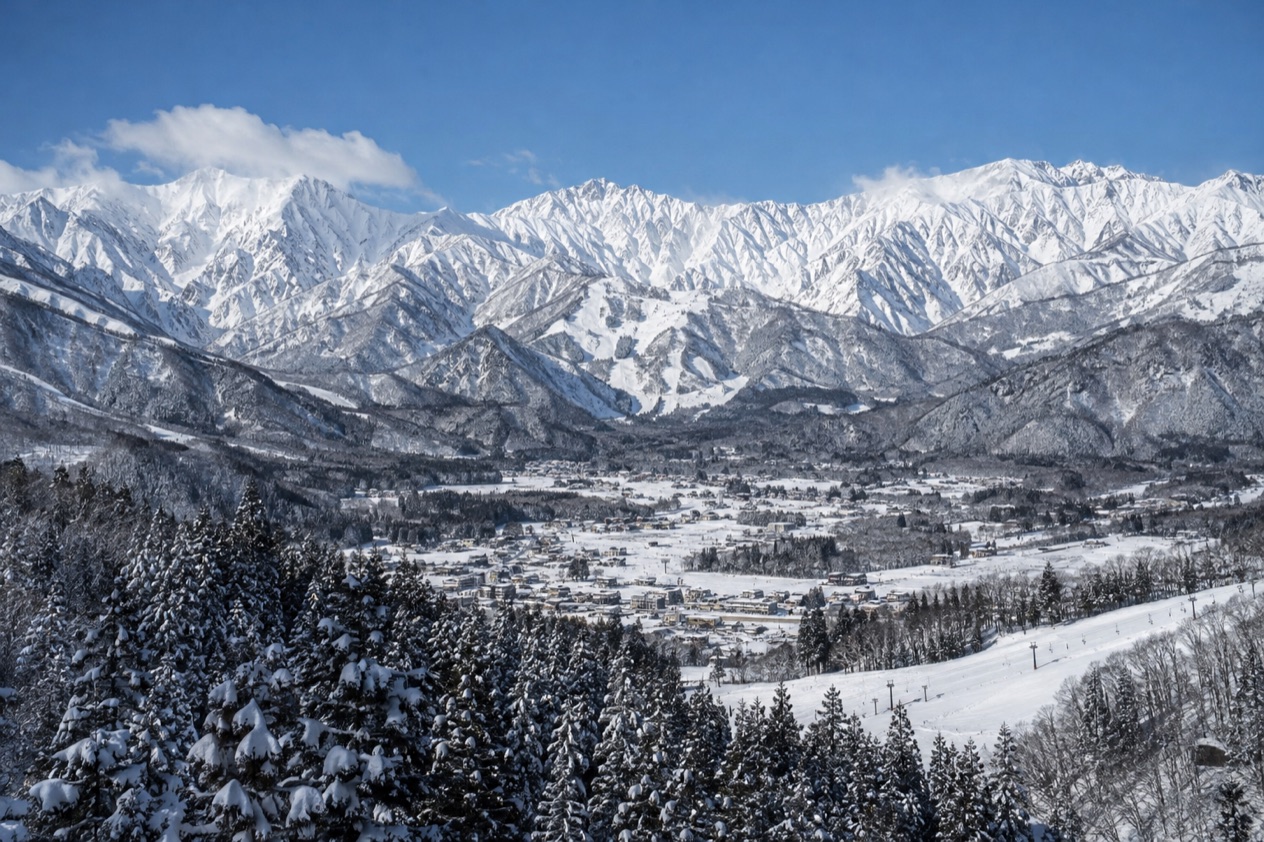
Hakuba is a village in northwestern Nagano Prefecture, in the Chubu region of Japan, at the base of the Northern Japan Alps. It lies in the eastern foothills of the Hida Mountains, and the high ridge behind it gives the whole valley its look: a wall of rock and snow above pastures, farmhouses and small lodges.
The name means white horse. It comes from the shape of a horse that appears in the snow on the mountainside in spring, as the slopes begin to melt and the dark rock shows through. Locals read the shape as a sign that the season is turning, and the name stuck to the village and the valley around it.
Hakuba is a ski resort village, and it describes itself that way. It is the central hub for 10 ski resorts, and together they offer more than 200 runs. Those resorts spread across three municipalities, Hakuba Village, Omachi City and Otari Village, so the valley feels less like one ski area than a neighborhood of mountains, each with its own base lodges and its own personality.
The pace follows the mountains. In winter the days start early with ski bags and shuttle stops, and evenings are for hot baths, noodles and izakaya (casual Japanese pubs) where groups trade stories about the slopes. In the warmer months the village turns toward hiking boots, lakes and farm roads, and the rhythm becomes slower and greener.
Hakuba suits people who come for the mountains and want them close at hand: skiers, snowboarders, hikers and anyone happy to spend a vacation outdoors. It is less suited to travelers who want a grid of museums, department stores and nightlife. Think of it as a mountain base, with all that implies: early nights, wood-paneled lodges and a lot of weather talk.
What is there to do in Hakuba?
The reasons to come are snow, summits, lakes and the memory of the Olympics. Hakuba was the main venue for the 1998 Winter Olympics, and it hosted the Alpine, ski jump and cross-country events. That history is part of the village identity, and it explains why a place this size has so many lifts and runs.
Skiing the Hakuba Valley
The valley is the heart of the trip. The area receives an average annual snowfall of 258 inches, and the resorts range across the mountainside so that a ski day can change character from one lift to the next. Among them is a long cruising run, the kind that lets you link turns for a good while without stopping, which is the pleasure of skiing a whole valley rather than a single hill.
An all-mountain day pass is offered across the valley, which suits people who want to sample more than one resort without committing to a single base. Hakuba Happo-one Snow Resort is one of the names you will meet first, and it also runs sightseeing lifts. When the season closes, the resort announces the end of ski season and of the sightseeing lift operations.
After skiing, the usual habit in Japanese mountain towns is a hot bath and a big dinner. Expect bowls of soba, a Nagano specialty, dumplings called oyaki and plenty of hot pot. Pairing a day on the slopes with an evening soak is the way most ski trips in Japan are shaped.
Trekking Mount Shirouma and Mount Goryu
When the snow goes, the mountains stay. Hakuba is the starting point for trekking Mount Shirouma and Mount Goryu, two of the One Hundred Mountains of Japan, a list that Japanese hikers treat as a kind of lifelong checklist. Walking here means leaving the village on foot or by lift and climbing into the same high country you saw from the ski runs.
These are mountain routes, so they ask for proper footwear, layers and attention to the weather, and they reward you with the wide view of the Alps that skiers glimpse from the top lifts. The village makes a handy base for them because you can sleep in a lodge, eat a hot breakfast and set out from the valley floor.
The three lakes and Lake Aoki-ko
A short list of lakes lies around Hakuba, and Lake Aoki-ko is the one with a rule worth knowing: engines and outboard motors are banned there, which makes it the quietest of the three. That means paddles, still water and the sound of birds rather than boat motors.
It is a good place for a slow morning when your legs need a rest from the slopes or the trails. You can walk along the shore, look at the mountains reflected in the water and let the day unfold without a plan. Cafes and small lodges in the valley fill the rest of the hours with coffee and baked goods.
What sets Hakuba apart from other mountain resorts in Japan is the scale of its ski terrain together with its trekking access. Many ski towns offer one or the other, while here the same village serves the cruising runs of winter and the high ridges of summer.
How many days do you need in Hakuba?
A long weekend gets you a taste, and a week lets you actually ski or hike the valley rather than just sample it. The ten resorts and the high peaks behind them reward time, because each area has its own lifts, its own runs and its own mood.
Spend a day learning its runs, a day pushing out to a second area, and a slower day around the village with a bath and a long lunch. The all-mountain day pass fits this kind of stay, since it lets you move between areas when you feel like it.
A trip in the warmer months works differently. A day can be a hike toward Mount Shirouma or Mount Goryu, another can be a quiet morning at Lake Aoki-ko, and a third can be wandering the farmland and village lanes. Trekking days are long and tiring, so leave a rest day between them.
Nagano Prefecture sits around you, and the city of Nagano is reached by bus from the station there. Travelers combine a ski week with time in a city or a hot spring town, but leave room in the plan for weather, because mountain days change quickly.
The slopes and jump hill sites that hosted the Games in 1998 are part of the landscape, and seeing them helps explain how the village grew into a resort.
Where to stay in Hakuba
Stay near the resort you plan to ski, because the valley is spread across three municipalities and the ten resorts each have their own base. Lodges, pensions, small hotels and guesthouses cluster near the lifts, and choosing by resort saves you from long transfers before first chair.
Staying in Hakuba Village puts you at the center of the valley, close to Happo-one and the places where visitors gather for dinner. Otari Village suits travelers who want a smaller, quieter base, and Omachi City is the choice for those who prefer a larger town with a different feel. All three belong to the valley, so a day of skiing is possible from any of them.
A traditional lodge, with tatami floors, futons and a shared bath, gives you the most local evening after a day outside. A modern hotel or apartment gives more independence, which suits groups who want to cook, dry gear and set their own schedule. Either way, wet boots and gloves are part of life here, and a place with a drying room is a real comfort.
For trekking, a lodge near the valley floor works well, since the mountain routes begin from the village. For lake time, look for a base within reach of Lake Aoki-ko, and for skiing look at the lifts first. Choosing by activity rather than by name will serve you better than choosing by prestige.
How do you get to Hakuba and get around?
You reach Hakuba by bus from Nagano Station, or by the Nagano Snow Shuttle, which runs daily from Narita Airport to Hakuba during the winter season. The last bus from Nagano Station to Hakuba departs at 20:30, so plan an evening arrival around it.
The Snow Shuttle is a winter service, which means it is built for ski travelers heading straight from the airport to the mountains.
Once you are in the valley, your options depend on where you stay and which resort you ski. People walk to the lifts from lodges close to a base, and buses and taxis fill in the gaps between areas. A rental car gives freedom for trekking trailheads and lakes, but winter driving in a snowy mountain valley is a real consideration.
Sightseeing lifts, such as those at Happo-one, carry visitors up the mountain without skis, and they close when the ski season ends. That makes them a pleasant way to get a view of the Alps if you are not skiing, though the season announcement is what governs them.
When is the best time to visit Hakuba?
The area gets an average annual snowfall that is large by any standard, and the ten resorts run their lifts for skiers and snowboarders. If you are coming to ski, this is the season, and the Snow Shuttle runs from Narita Airport to Hakuba during it.
Spring brings the white horse that gives the village its name, the shape of snow on the mountainside as the slopes thaw. It is the season when lifts begin to close, and Happo-one announces the end of its ski and sightseeing lift operations. Visit then if you want the changing mountain light and the feel of a village easing out of winter.
Warmer months belong to hikers and lake visitors. Mount Shirouma and Mount Goryu become the main draw, and the quiet water of Lake Aoki-ko suits slow days. Autumn brings changing leaves to the foothills, though no date is set here, so treat it as a chance rather than a promise. Rain and mountain weather can shift plans in any season, so keep your days flexible.
Good to know before you go
Hakuba is a mountain environment, so pack for weather that changes, and expect snow gear to be part of daily life in winter. Lodges often have drying space for boots and gloves, which is a small luxury after a wet day. Buses are the link to Nagano, with the last departure from Nagano Station at 20:30, so build your arrival around it.
Lifts and services follow the season, and they close when the resort announces the end of the ski year. If you are coming for a specific activity, such as a trek or the sightseeing lifts, plan around the time of year that suits it, and keep a spare day in the schedule in case the mountains have other ideas.
Sources
- Hakuba Valley (https://www.hakubavalley.com/en/), checked October 11, 2026
- Wikipedia, Hakuba, Nagano (https://en.wikipedia.org/wiki/Hakuba,_Nagano), checked October 11, 2026
- Wikivoyage, Hakuba (https://en.wikivoyage.org/wiki/Hakuba), checked October 11, 2026