
On an October evening in Hiroshima, the streetcars rattle along the river, the air has lost its summer weight, and people stroll the paths of Peace Memorial Park in a light sweater. Spring brings cherry blossoms to the riverbanks, summer brings a long, damp heat, and winter brings gray, chilly days with the occasional flurry. Hiroshima rewards a visit in several seasons, and each one changes what you do here.
When is the best time to visit Hiroshima?
The best months for travelers are late March through May and then October and November, when the days are mild enough to walk all day and the city’s memorials, riverside paths and ferry piers are pleasant to reach on foot. Summer is hot and humid, and winter is cold but manageable if you plan around indoor stops.
For sightseeing, spring and autumn are the natural pair. The days are bright, and a light jacket or a simple sweater is usually enough.
In autumn the temperatures ease after summer and suit long walks. The leaves around the region turn red, yellow and orange from mid-November to early December, so a late-November trip pairs cool air with color.
For food, the cold months have their own pull. Hiroshima’s version of okonomiyaki, the layered savory pancake cooked on a hot griddle, tastes best when the weather outside is gray and damp, and a counter seat in front of the grill is a good place to wait out a shower. Winter also suits the museums, which you can take at your own pace without worrying about the sun.
For nature, the prefecture’s Seto Inland Sea, wooded mountains and clear waters are at their friendliest when it is neither steamy nor icy. Miyajima Island, with its deer and the red torii gate standing in the sea, works in any season, but the walks around the island are more comfortable in spring and autumn.
For families and for anyone who dislikes heat, avoid the peak of summer, when highs reach the low 90s and the nights stay warm. Late spring is the sweet spot for children: warm, sunny, and not yet sticky. Travelers who prefer quiet and don’t mind a coat can take the cold months, when the city is calm and the light is clear.
Hiroshima weather by month
Hiroshima’s climate swings from chilly winters to hot, wet summers, with the mildest stretches in spring and autumn.
| Month | Average high (°F) | Average low (°F) | Precipitation (in) | Days with 1 mm or more of precipitation | Hours of sunshine | Daylight on the 15th |
|---|---|---|---|---|---|---|
| January | 49.8 | 35.6 | 1.82 | 5.5 | 139 | 10 h 05 min |
| February | 51.6 | 36.3 | 2.52 | 6.9 | 140 | 10 h 56 min |
| March | 58.1 | 41.2 | 4.66 | 9.0 | 177 | 11 h 55 min |
| April | 67.6 | 50.2 | 5.55 | 8.8 | 192 | 13 h 01 min |
| May | 75.9 | 59.2 | 6.69 | 8.6 | 211 | 13 h 56 min |
| June | 81.0 | 67.6 | 8.92 | 10.7 | 155 | 14 h 26 min |
| July | 87.6 | 75.4 | 11.02 | 10.6 | 173 | 14 h 15 min |
| August | 91.0 | 77.2 | 5.17 | 7.6 | 207 | 13 h 29 min |
| September | 84.4 | 70.0 | 6.41 | 8.5 | 167 | 12 h 26 min |
| October | 74.7 | 58.8 | 4.30 | 6.2 | 179 | 11 h 23 min |
| November | 63.9 | 48.0 | 2.73 | 6.1 | 153 | 10 h 24 min |
| December | 53.8 | 39.2 | 2.13 | 5.7 | 141 | 9 h 53 min |
The year runs in a clear arc. Rain in winter falls on only a handful of days, so a coat matters more than an umbrella.
June and July are the wettest months, when heavy rain falls on more than ten days each, and the air is warm and sticky. August is the hottest month but has fewer rainy days and more sun.
For packing, that means layers from December to March, a light jacket in April, May and October, and rain gear for June and July. Daylight matters too. In midwinter the sun sets early, so sightseeing days are short, while in June the light stretches long into the evening, which suits late walks along the river.
What is there to do in Hiroshima in each season?
Spring: cherry blossoms and long walks
Spring is the season for walking. The riverbanks and parks around the city center are natural places to see the trees, and Peace Memorial Park is a calm setting for it.
April and May bring warmer, sunnier days, with highs reaching the mid-70s by May. This is a good time to take the ferry out to Miyajima, see Itsukushima Shrine and its torii standing in the sea, and meet the island’s deer. The shrine was registered as a World Heritage Site in 1996.
Summer and the rainy season
June and July are the rainy months, with the heaviest rainfall of the year. This is the time for indoor stops: the Hiroshima Peace Memorial Museum, which tells its story through belongings left by victims, A-bombed artifacts and survivor testimonies, fits a rainy day well. Okonomiyaki counters and covered arcades are also good shelter.
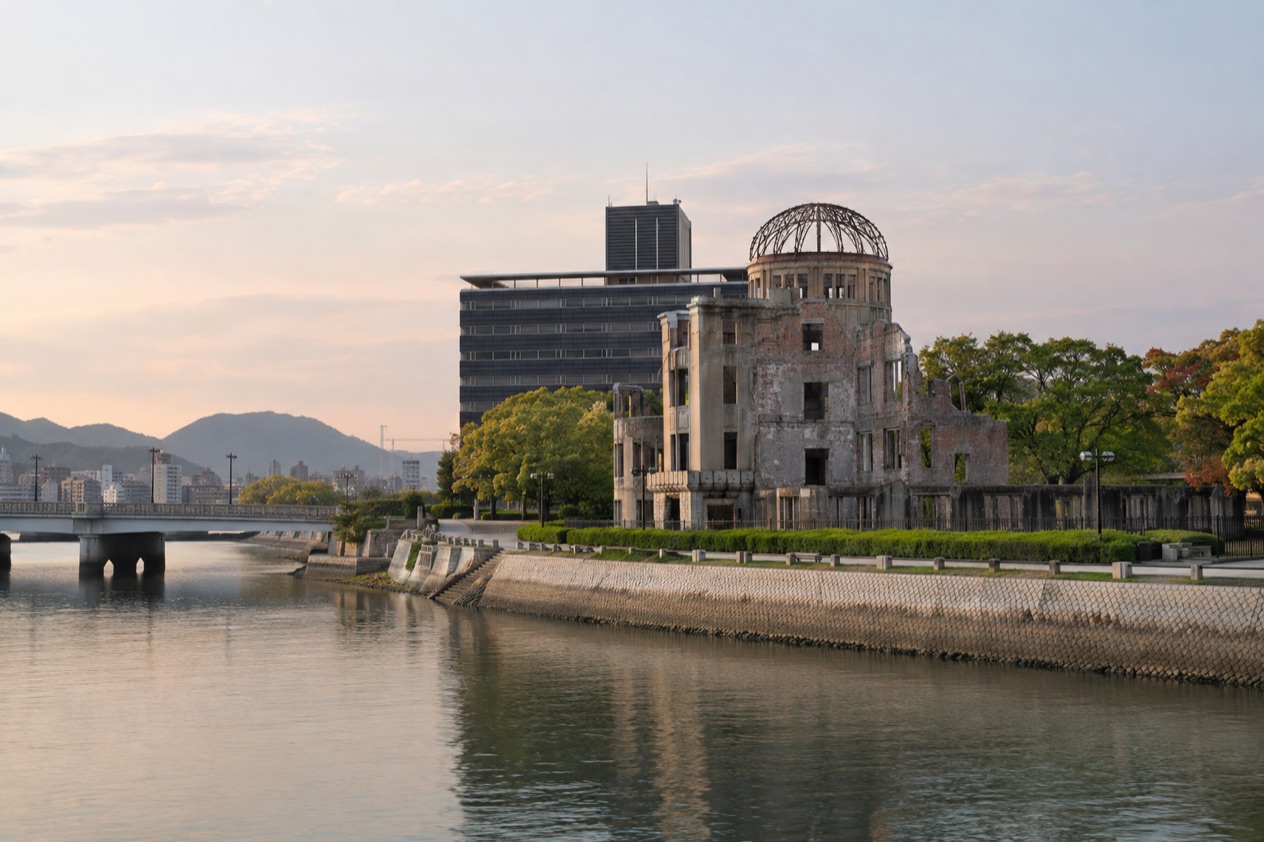
August is hot, with highs around 91°F, and brings more sun. The August 6 ceremony is the moment that defines the month in Hiroshima: thousands of people write peace messages on lanterns, which are lit at sunset and floated along the river in front of the Atomic Bomb Dome. The Dome can only be viewed from the outside.
Autumn and winter
Autumn brings moderate temperatures that suit walking. October and November have fewer rainy days than summer, and the leaves turn from mid-November to early December. It is a fine season for the ride on the Hiroden, the streetcar network nicknamed the Moving Streetcar Museum for its mix of trams from Japan and Europe.
Winter is cold, with a little snow or sleet, mostly in January and February. It is a season for museums, hot meals and quiet hours along the river. Dress in layers and keep walks short, because daylight is at its shortest.
When is Hiroshima least crowded?
The quietest stretch is winter, roughly January and February, when the weather is cold and few people are chasing a season. The days are short and the air is crisp, but the main sights remain open to visit and the pace is slow. Rain is light, with only five to seven rainy days a month, so a warm coat is the main requirement.
The busy moments follow Japan’s calendar. Golden Week at the turn of April into May, the Obon holidays in mid-August and the New Year break are periods when Japanese families travel, and the city around the station and the ferry piers can feel full. The cherry blossom season in late March and early April and the autumn leaf season from mid-November to early December also draw visitors who plan their trips around the color.
The August 6 ceremony is a solemn day, and the riverbank around the Atomic Bomb Dome gathers people for the lantern floating at sunset. Visitors who want to experience that moment should expect company. For quieter visits to the memorial sites, a gray winter morning gives you room to read and reflect. The rainy weeks of June and early July and the sticky heat of July are also less visited by travelers, and in those weeks the covered arcades and museums are comfortable choices.
Which months should you avoid in Hiroshima?
No month is off limits, but June, July and the depths of winter ask the most of you, depending on how you feel about rain, heat and cold.
June and July bring the rainy season, with the highest rainfall of the year and humidity above 70 percent in July. Showers can interrupt a day of walking, so plan indoor stops and keep rain gear handy. July’s highs climb toward 88°F and the nights stay warm, which makes midday sightseeing tiring.
August is the hottest month, with highs around 91°F and lows above 77°F, though it has more sun and fewer rainy days than July. Typhoon season runs through late summer and early autumn, which can bring heavy rain and disrupt plans, so keep your schedule flexible in September.
December through February are cold, with highs from the high 40s to low 50s, lows near freezing in January, and a dozen days of snow or sleet in January. The snow is slight, but the cold is real, and daylight is short, with only about ten hours at midwinter.
If blossoms or autumn color are your goal, timing matters. The first cherry bloom usually comes around March 25, and the leaves turn from mid-November to early December, but both vary from one year to the next, so treat those dates as a guide and not a promise.
Festivals and events in Hiroshima through the year
Winter and spring
New Year is the biggest holiday in Japan. Around January 1, families visit shrines for the first prayers of the year, a custom called hatsumode, and the streets are quiet as people stay home. Shrines in and around Hiroshima draw worshippers in the first days of January, and Itsukushima Shrine on Miyajima is among the places visitors can include.
Spring belongs to hanami, the custom of gathering under cherry trees to picnic and enjoy the blossoms. In Hiroshima the first bloom usually falls around the end of March. Groups sit on blankets along the rivers and in parks, and the city feels festive for a short while. Golden Week follows at the end of April, a string of public holidays when people travel.
Summer: peace and Obon
August 6 is the date that gives Hiroshima its place in the world’s calendar. At the Peace Memorial Ceremony, thousands of people write messages for peace on lanterns, which are lit at sunset and floated down the river passing in front of the Atomic Bomb Dome. It is a quiet, moving evening, and visitors are welcome to watch with respect.
Obon in mid-August is the season when Japanese families honor their ancestors, return to their hometowns and join summer dances. Many communities hold bon odori, circle dances held outdoors in summer evenings. Dress lightly, because August is the hottest month, with warm nights.
Autumn color
Autumn is the season of leaf viewing, called momiji-gari. From mid-November to early December, trees turn red, yellow and orange across the region. Miyajima’s hillsides are a favorite place to see the color, with the red torii and the shrine in the foreground, and the island is a lovely day trip in the cooler air.
The season is also a good time to eat. Autumn pairs mild days with hearty food, and Hiroshima okonomiyaki, with its layers of noodles, cabbage and egg, tastes especially good after a day of walking. Evenings are cool, so a light sweater is welcome.
Sources
- Japan Meteorological Agency (JMA), Normal values 1991-2020, monthly (https://www.data.jma.go.jp/stats/etrn/view/nml_sfc_ym.php?prec_no=67&block_no=47765), station Hiroshima, elevation 4 m, checked October 11, 2026
- Computed from the date and the latitude of the place (sunrise equation, solar elevation -0.833 degrees), October 11, 2026
- Japan National Tourism Organization, Hiroshima (https://www.japan.travel/en/destinations/chugoku/hiroshima/), checked October 11, 2026
- Visit Hiroshima, the official guide (https://visithiroshima.net/), checked October 11, 2026
- Hiroshima Peace Memorial Museum (https://hpmmuseum.jp/?lang=eng), checked October 11, 2026
- Wikipedia, Hiroden (https://en.wikipedia.org/wiki/Hiroden), checked October 11, 2026
- Japan National Tourism Organization, autumn in Japan (https://www.japan.travel/en/guide/autumn-guide/), checked October 11, 2026
- Japan National Tourism Organization, spring in Japan (https://www.japan.travel/en/guide/spring-guide/), checked October 11, 2026
- Japan Meteorological Agency, cherry blossom first-bloom dates 2021-2026 and 1991-2020 normal (https://www.data.jma.go.jp/sakura/data/sakura003_07.html), checked October 11, 2026
To plan your stay
- Things to Do in Hiroshima: Peace Memorial Park, Miyajima, Okonomiyaki and Day Trips
- Where to Stay in Hiroshima: Peace Park, Station Area, Castle District and Miyajima Island
- Hiroshima from Osaka: Shinkansen, Local Trains and a Day at the Peace Park
- Know Before You Go to Hiroshima: Entry, Money, Getting Around and Local Etiquette