
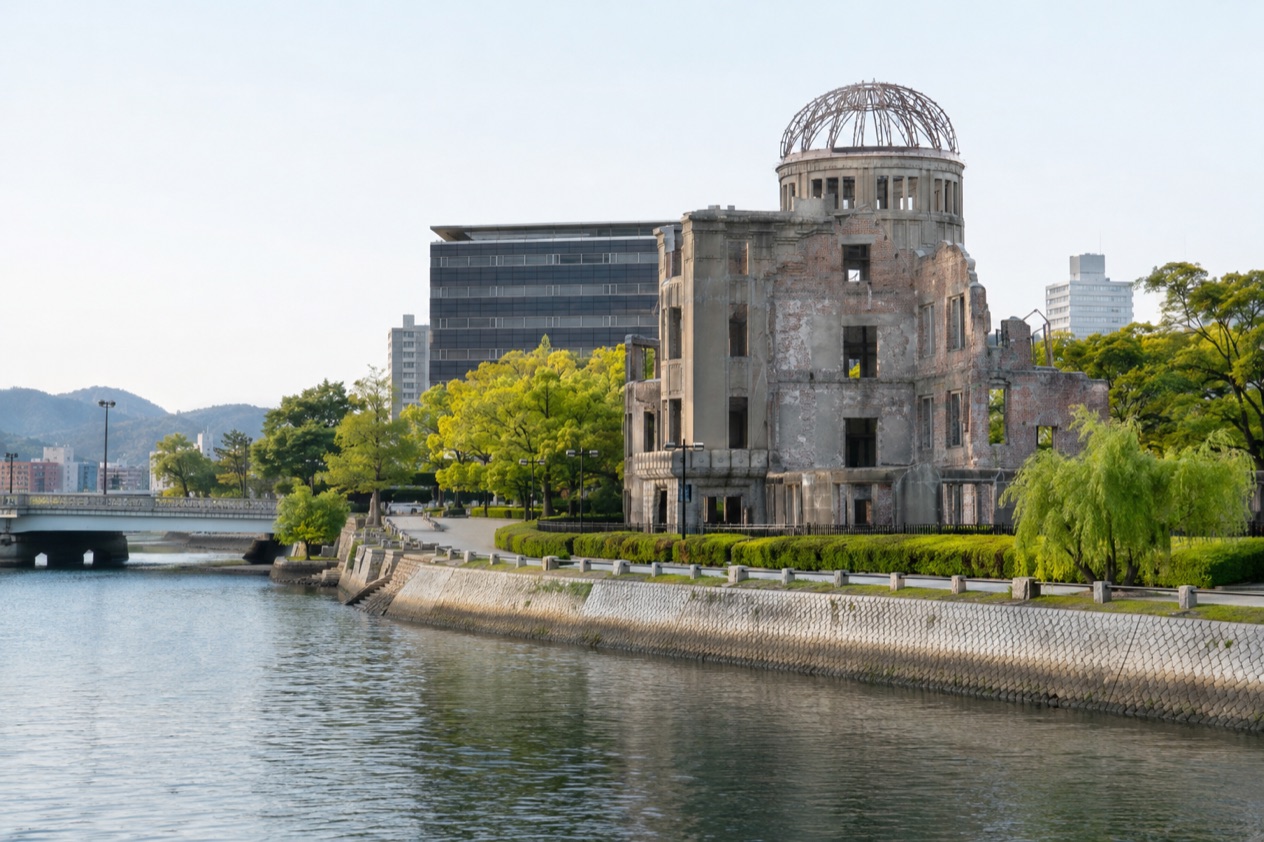
In May the trees along Hiroshima’s river banks are fully in leaf, and the water throws back a bright green light as streetcars rattle across the bridges. Okonomiyaki griddles hiss in the small shops, and families drift through Peace Memorial Park in shirtsleeves.
The month sits between the spring chill and the heavy air of summer. It suits travelers who want to walk the city’s memorials, ride out to Miyajima and eat well in warm, mostly bright weather.
What is the weather like in Hiroshima in May?
May in Hiroshima is warm and bright, with mild nights and enough sun to fill most days outdoors, though rain still turns up from time to time.
| Month | Average high (°F) | Average low (°F) | Precipitation (in) | Days with 1 mm or more of precipitation | Hours of sunshine | Daylight on the 15th |
|---|---|---|---|---|---|---|
| April | 67.6 | 50.2 | 5.55 | 8.8 | 192 | 13 h 01 min |
| May | 75.9 | 59.2 | 6.69 | 8.6 | 211 | 13 h 56 min |
| June | 81.0 | 67.6 | 8.92 | 10.7 | 155 | 14 h 26 min |
Afternoons are warm enough for short sleeves, and the walk between the memorial sites and the riverside feels pleasant rather than tiring. Nights stay mild, so you can stay out for an evening meal without a heavy coat. A light sweater or thin jacket covers the cooler moments, especially after dark.
Rain in May comes as passing wet spells rather than a season of gray. Pack a compact umbrella or a light rain shell, and treat a wet day as a chance to spend time inside the museum or a covered arcade. The air feels clearly more humid than in April, a hint of the muggier weeks that follow.
The light is generous this month. Days are long enough to fit a morning at the memorials, a ferry excursion and a late dinner without feeling rushed, and the sunshine total is the best of the three months in the table. Evenings stretch out gently, which is lovely along the rivers when the lights come on.
What to do in Hiroshima in May
May’s main event for travelers is Golden Week, the holiday stretch that runs from the end of April to the first days of May. Across Japan people travel, picnic and gather in parks, and Hiroshima’s wide boulevards and riverbanks are a natural setting for that mood. Flower displays are often part of the early-May scene in the city, and the new green on the trees makes every walk between sights a pleasure.
The rest of the month belongs to everyday Hiroshima: a city of wide boulevards and criss-crossing rivers on the Seto Inland Sea, with a calm, open feel. The weather suits long days on foot, so plan on stringing sights together outdoors and keeping the museum and shops for the hours when you want shade or a seat.
Peace Memorial Park and the Museum
The park lies in the center of Hiroshima, and the Atomic Bomb Dome stands within it beside the river. Visitors cannot go inside the dome, so you look at it from outside, and that is enough to understand it: a broken frame of steel and brick left as it was after August 6, 1945. Hiroshima has two World Heritage sites, the dome and the park around it, and May’s soft green leaves frame them gently.
The Peace Memorial Museum carries its message through belongings left by victims, artifacts from the blast and survivors’ testimonies. It is a heavy visit, so leave space around it in your day, a bench in the park or a slow walk by the river afterward. The museum is also somewhere to go if rain arrives.
| Site | Visitor | Admission |
|---|---|---|
| Hiroshima Peace Memorial Museum | Adult | ¥200 |
| Hiroshima Peace Memorial Museum | High school student | ¥100 |
Miyajima Island and Itsukushima Shrine
An excursion to Miyajima is part of almost every Hiroshima trip, and May’s long, bright days suit it. The island is known for the red torii gate of Itsukushima Shrine standing in the sea, and for its deer that wander among the visitors. The shrine was registered as a World Heritage site in 1996.
Wander the shrine’s pathways, then take your time on the island’s lanes and look out for the small shops selling momiji manju, maple-leaf-shaped cakes filled with sweet bean paste. Keep the day loose enough that you are not rushing the last stretch. If it rains, the shrine and the shops still make the trip worth it, though the views of the gate look their best under open sky.
Okonomiyaki and eating in Hiroshima
Hiroshima’s version of okonomiyaki is a local source of pride. Instead of mixing everything into one batter as in other cities, the cooks stack the layers on a hot griddle: a thin crepe, a mound of cabbage, pork, noodles and egg, finished with a sweet-savory sauce. Watching it come together across the counter is half the fun.
Add a cold beer or a pot of tea and you have the city’s everyday table. Bakeries and sweet shops add cakes and snacks to carry for a riverside picnic when the days are mild.
Rivers, castle grounds and quiet corners
With so many rivers running through the center, Hiroshima is a city to enjoy at street level. Follow the water under the trees, cross a few of the bridges and stop on the banks. The streetcars passing over them are part of the scene, and riding one is a way to see the city without planning a route.
If you have time beyond the main sights, look at the other places the prefecture offers, including shrines, museums and wooded hills. Okunoshima, known for its wild rabbits, is one such outing. Visitors there must not chase or pick up the rabbits and should provide appropriate food in a safe place.
A two-day itinerary for Hiroshima in May
Day 1 is for the city center. Start in the morning at Peace Memorial Park, walking past the Atomic Bomb Dome and along the river before the museum, where the exhibits ask for unhurried attention. May’s mild morning air makes the park pleasant, and the museum gives you something to do indoors if a shower passes.
Stop at midday for okonomiyaki in one of the city’s small counters, then spend the afternoon on foot along the rivers and across the bridges, with breaks at a café under the trees. Finish with an evening meal and a stroll when the light turns soft. Long May daylight means you do not have to hurry.
Day 2 is for Miyajima. Go in the morning to the island, see Itsukushima Shrine and the red torii gate in the sea, and wander among the deer. Eat something local at midday, perhaps momiji manju as a snack, and use the afternoon to walk the lanes and look at the shrine from different angles.
Return to the city for the evening and eat again at a local counter or a casual izakaya, a pub-style place with small plates. If rain spoils the island, swap in shopping in the covered arcades, a long meal or a second look at the memorial sites on the Day 1 route you did not finish.
Is Hiroshima busy in May?
The start of May is busy with holiday travel, and the rest of the month settles into a steadier rhythm. Golden Week runs from the end of April until May 5, and it holds several public holidays in a row. During those days Japan itself is on the move, so expect Hiroshima’s main sights to feel more lively than on an ordinary weekday.
After the holiday run ends, the pace changes. The city goes back to its everyday routine, with commuters, students and office workers filling the streetcars and the shops opening every day as usual in urban areas. Travelers who time the trip for later in the month find the sights feel more like part of the daily life of the city.
Rural areas are different, as shops there often close earlier. If you take an outing into the countryside of the prefecture, plan your meals and errands for daylight hours. In the city itself, there is no need to adjust your day.
May is also a comfortable month for walking, so you will often see people out and about by the rivers and in the park. The warm weather brings out picnic blankets and cameras. That is part of the season’s mood, and it gives the city a friendly, open feel.
What to pack for Hiroshima in May
Pack for warm days, mild nights and the occasional shower, with layers that let you adjust as the day moves along.
- Short sleeves and light trousers, because afternoons are warm enough for them.
- A light jacket or sweater for cooler evenings by the river.
- A compact umbrella or rain shell for the showers that come through.
- Comfortable walking shoes for the park, the streets and Miyajima’s lanes.
- Sunglasses and a hat, since the month brings plenty of sun.
Good to know before you go
May’s calendar matters more than its weather. Golden Week brings public holidays at the start of the month, and if a national holiday falls on a Sunday, the next working day becomes a holiday as well. A day between two holidays also becomes one, so some offices and services may close. Shops in urban areas are generally open every day, which keeps city life running.
June brings more rain than May, so a trip planned for the end of the month may feel the shift. Keep your plans flexible and have an indoor option for each day. The museum admission amounts are in the table in the section on what to do.
Hiroshima in May vs April and June
Going four weeks earlier brings cooler weather, with highs well below May’s and nights that need a proper jacket. Rain is similar in the number of wet days, but the air feels crisper and sunshine is a bit lower. April also overlaps with the start of Golden Week, so the end of the month carries holiday energy.
Going four weeks later brings a clear step toward summer. June is warmer, more humid and has more days with rain, while the sunshine drops noticeably. Daylight is at its longest, which suits long days, but the damp weather means plans need an indoor backup.
Choose April if you prefer cooler walking weather and do not mind a jacket. Choose May if you want warmth, plenty of sun and a long day for the park, the museum and Miyajima in one trip. Choose June only if you can accept more rain and humidity in exchange for the longest days.
Is May a good time to visit Hiroshima?
Yes, May is a good time to visit Hiroshima, especially for travelers who want warm, bright days for walking and a city that is easy to enjoy outdoors. It suits first-time visitors, food lovers and anyone planning a ferry excursion to Miyajima. People who dislike humidity or who want strong cool-weather conditions may prefer a different month.
On arrival, start with Peace Memorial Park and the museum, since they set the tone for the rest of the stay. The long daylight gives you room to do all of it without hurrying.
What makes May in Hiroshima special is the mix of its green rivers, its mild air and its serious, thoughtful sights. The city feels open and relaxed, and a plate of okonomiyaki after a day outside is a fitting way to close it.
Sources
- Japan Meteorological Agency (JMA), Normal values 1991-2020, monthly (https://www.data.jma.go.jp/stats/etrn/view/nml_sfc_ym.php?prec_no=67&block_no=47765), station Hiroshima, elevation 4 m, checked October 11, 2026
- Computed from the date and the latitude of the place (sunrise equation, solar elevation -0.833 degrees), October 11, 2026
- Japan National Tourism Organization, shop and attraction hours, national holidays (https://www.japan.travel/en/plan/business-hours-and-holidays/), checked October 11, 2026
- Wikipedia, Golden Week (Japan) (https://en.wikipedia.org/wiki/Golden_Week_(Japan)), checked October 11, 2026
- Wikipedia, Public holidays in Japan (https://en.wikipedia.org/wiki/Public_holidays_in_Japan), checked October 11, 2026
- Japan National Tourism Organization, flowers by season: cherry blossom, plum, wisteria, hydrangea, where and when (https://www.japan.travel/en/see-and-do/flowers/), checked October 11, 2026
- Wikipedia, Wisteria (https://en.wikipedia.org/wiki/Wisteria), checked October 11, 2026
- Japan Meteorological Agency, sakura2020.pdf (https://www.data.jma.go.jp/sakura/data/sakura2020.pdf), checked October 11, 2026
- Japan National Tourism Organization, spring in Japan (https://www.japan.travel/en/guide/spring-guide/), checked October 11, 2026
- Wikipedia, Kanda Matsuri (https://en.wikipedia.org/wiki/Kanda_Matsuri), checked October 11, 2026
- Wikipedia, Sanja Matsuri (https://en.wikipedia.org/wiki/Sanja_Matsuri), checked October 11, 2026
- Japan National Tourism Organization, festivals and events (https://www.japan.travel/en/see-and-do/festivals-and-events/), checked October 11, 2026
- Wikipedia, Gion Matsuri (https://en.wikipedia.org/wiki/Gion_Matsuri), checked October 11, 2026
- Wikivoyage, Hiroshima (https://en.wikivoyage.org/wiki/Hiroshima), checked October 11, 2026
- Japan National Tourism Organization, Hiroshima (https://www.japan.travel/en/destinations/chugoku/hiroshima/), checked October 11, 2026
- Visit Hiroshima, the official guide (https://visithiroshima.net/), checked October 11, 2026
- Hiroshima Peace Memorial Museum (https://hpmmuseum.jp/?lang=eng), checked October 11, 2026
- Wikipedia, Hiroshima Peace Memorial Park (https://en.wikipedia.org/wiki/Hiroshima_Peace_Memorial_Park), checked October 11, 2026
- Wikipedia, Hiroshima Peace Memorial (Genbaku Dome) (https://en.wikipedia.org/wiki/Hiroshima_Peace_Memorial_(Genbaku_Dome)), checked October 11, 2026
To plan your stay
- Things to Do in Hiroshima: Peace Memorial Park, Miyajima, Okonomiyaki and Day Trips
- Where to Stay in Hiroshima: Peace Park, Station Area, Castle District and Miyajima Island
- Hiroshima from Osaka: Shinkansen, Local Trains and a Day at the Peace Park
- Know Before You Go to Hiroshima: Entry, Money, Getting Around and Local Etiquette