
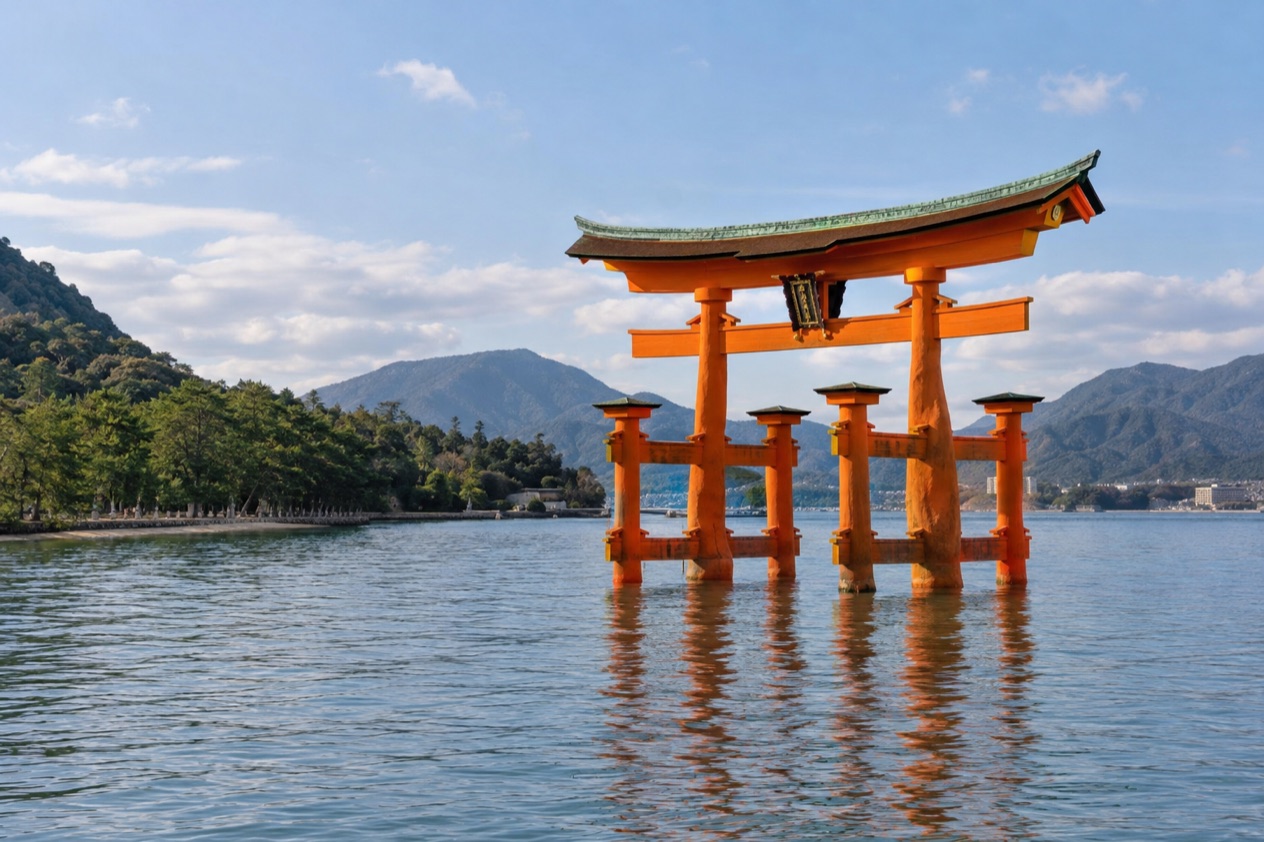
The ferry slides away from the mainland, and a red gate appears to stand in the water, with a green mountain rising behind it. On the pier, deer wander between visitors as if the island were theirs, and the smell of grilled oysters and sweet maple-leaf cakes drifts from the lanes. Miyajima is a small island of shrine, forest and slow walks, and it suits anyone who likes to spend a day, or a night, somewhere that feels set apart.
Where is Miyajima and what is it like?
Miyajima is an island just off the coast of Hiroshima, in Hiroshima Prefecture, and it belongs administratively to the city of Hatsukaichi. Its real name is Itsukushima, and Miyajima is the nickname that stuck, meaning Shrine Island. The name tells you most of what you need to know about the place.
The island is a mix of three things. There is a Shinto shrine built out over the shallows, a small waterfront town of lanes, souvenir shops and grill stalls, and a wooded mountain that fills the rest of the land. You can move between all three in a single day, which gives the visit a rhythm of sea, street and forest that few places this size can match.
The pace is gentle by design. There are no big avenues here, and the town is shaped around the ferry pier and the path to the shrine. Mornings and evenings feel different from the middle of the day, when ferries bring in groups, and the lanes fill with people eating from paper trays.
Who loves it? Travelers who like shrines, sea views, hiking paths and food eaten with their fingers while walking. It is a good match for couples, for families curious about Japan, and for anyone who wants a counterweight to a big-city itinerary. Who may not? Anyone who wants nightlife, big shopping or a long list of museums will find the island small, and anyone nervous around animals should know that the deer are bold.
Part of the charm is the setting itself. The mainland shore, with its ferry terminal at Miyajimaguchi, sits only a short crossing away, and yet once you step off the boat the island feels like another world. Hiroshima harbor connects by a separate express ferry, so the island and the city are tied together on the water.
What is there to do in Miyajima?
The things to do on Miyajima come down to a few big reasons: the shrine on the water, the climb or ride up Mount Misen, the deer and the lanes, and the food. Few of the neighboring places on the Hiroshima coast combine a sacred site, a mountain and a seaside food street so close together, and that is what sets the island apart.
Itsukushima Shrine and its gate in the water
Itsukushima Shrine is a Shinto shrine on the island, and it is the reason people come. Its halls and corridors stand on the edge of the sea, and the great torii (the gate that marks the entrance to sacred ground) rises from the water in front of it. At high tide, the buildings and the gate seem to float, and at low tide the sand around the gate becomes a place where people walk and look back at the shrine.
The walk through the shrine follows covered corridors with the sea beside you, so the experience is as much about water and light as about architecture. Lanterns line the paths, and the vermilion lacquer stands out against the green hills behind. Photographers and quiet visitors both find things to look at, from the roofs to the reflections.
| Site | Open |
|---|---|
| Itsukushima Shrine, March to October | 06:30 to 18:00 |
| Itsukushima Shrine, November | 06:30 to 17:30 |
| Itsukushima Shrine, December | 06:30 to 17:00 |
| Itsukushima Shrine, January to February | 06:30 to 17:30 |
Mount Misen and the ropeway
Mount Misen is the high point of the island, at 1,755 feet, and its forested slopes stand directly behind the shrine. The Miyajima Ropeway carries visitors up the mountain and leaves a 30-minute hike to the summit. From the top, the view takes in the water around the island and the hills on the mainland shore.
The mountain is a quiet counterpoint to the town below. Trees close in around the path, and the sounds of the pier fade. Some travelers prefer to hike for the whole ascent rather than ride, and others take the ropeway and spend their energy at the summit. Either way, it gives the island a second character beyond the shrine, and it makes the day feel full.
The deer and the lanes of the town
Deer wander through the town and around the shrine, and they are part of the picture from the moment you land. They are curious about food, and they will root around bags and backpacks, even while you are wearing them. It makes for funny moments and sometimes a startled shriek, so keep snacks and paper maps out of reach.
The lanes near the pier are where you eat and shop. Grilled oysters, eel over rice, fried momiji manju (maple-leaf cakes filled with sweet bean paste) and big wooden rice paddles, a local souvenir, are the things people look for. Walk the street slowly, stop wherever a smell pulls you in, and eat standing up like everyone else.
Temples, forest paths and quieter corners
Beyond the shrine, the island has Buddhist temples, a pagoda on a rise, and a valley of maple trees known as Momijidani. Daisho-in, a temple on the slopes of the mountain, rewards visitors who like stairs, statues and a mix of incense and pine. Walking from one site to another lets you see the island changing from sea to woods.
These places are a good answer to a crowded afternoon at the pier. A path under the trees or a small shrine hall off the main route gives you room to breathe, and the sound of water returns. If you have time, leave the main street and follow a path uphill, and you will find another side of the island.
How many days do you need in Miyajima?
People arrive by ferry from the mainland, walk the shrine, eat in the lanes and ride up the mountain, which fits comfortably into a day.
With a day, the order of the visit matters less than the pace. Start at the shrine, spend a long lunch on the street, then go to the mountain while you have energy. Leave a gap in the afternoon for the temples and the maple valley, and watch the tide change around the gate before you head to the pier.
With a night on the island, the day divides into two. You can see the shrine and the town while the ferries are busy, then go to your room, bathe and eat dinner in the ryokan style, with a set meal brought to the room.
In the morning, the island feels like a different place, and you can walk the paths before the first boats arrive. That change of mood is the main reason to stay.
With more time, add the mainland. The ferry from Miyajimaguchi takes about ten minutes, so the island fits easily into a stay based in Hiroshima, and the express ferry connects the island with Hiroshima harbor. Two or three days in the area lets you pair Miyajima with the city’s museums and food, and a slow day on the island can balance a heavier day in town.
Where to stay in Miyajima
There are three practical choices: on the island itself, on the mainland near the ferry at Miyajimaguchi, or in Hiroshima. Each gives a different kind of visit, and the right one depends on how you like to travel.
Staying on the island is for travelers who want the atmosphere. Traditional inns, ryokan, are the form travelers associate with the island, with tatami rooms, futons, a bath, and a meal served in the room or in a dining hall.
Shoes come off at the entrance, and many guests change into a yukata, a light cotton robe, for the evening. You see the island at times when the day crowds are not around, and the mood is slower.
The mainland shore at Miyajimaguchi suits travelers who want to be close to the ferry without sleeping on the water. You are across the strait from the island, and the boat connects you in about ten minutes. It works as a practical base for those who do not want to carry bags across the water, or who want a different kind of room.
Hiroshima is the choice for travelers who want a city around them, with restaurants, shops and the evening life that the island lacks. From there, Miyajima becomes a day outing, reached by the express ferry from Hiroshima harbor or by the crossing from Miyajimaguchi. It makes sense for those who want to see the city’s sights too, and who like to return to a larger place at night.
Whichever area you choose, think about what you want from the island. If you want to see the gate at different moments, to walk the paths in the morning and to eat a slow dinner, stay on Miyajima. If you want choice and convenience, stay in Hiroshima and treat the island as one excellent day out.
How do you get to Miyajima and get around?
You reach Miyajima by boat, since it is an island. Frequent ferries run from Miyajimaguchi on the mainland, operated by JR West (the JR Miyajima ferry) and by Miyajima Matsudai Tourist Ship, and the crossing takes about ten minutes. Both services connect the same mainland landing with the island pier.
There is also an hourly express passenger ferry between Itsukushima and Hiroshima harbor. It offers a different way to arrive, by water directly from the city, and it makes the trip part of the experience rather than a transfer. Travelers who like boats can use one route in and the other back.
On the island, the main way to get around is on foot. The pier, the lanes and the shrine are close together, and the paths into the hills begin in the town. Wear shoes that suit stairs and uneven stone, and keep your hands free for the camera and for the food you will pick up along the way.
For the mountain, the Miyajima Ropeway takes visitors most of the way up, leaving a 30-minute hike to the top of Mount Misen. The alternative is to walk the whole ascent from the town. Whichever you choose, the mountain is the one place on the island where you gain real height, and the view repays the effort.
Keep an eye on your bags while you walk, because the deer will root around backpacks for food, even when worn. A zipped pocket and a closed bag save you a surprise. The animals are part of the island, and learning to move around them is part of the day.
When is the best time to visit Miyajima?
Spring and autumn are the seasons travelers aim for, because the shrine and the mountain look their best among fresh green or turning maple leaves. Autumn stands out on this island, since the maple valley of Momijidani, and the maple-leaf cakes sold in town, make the season feel at home here. Spring brings softer light and flowering trees in the hills.
Summer on the island is a season of heat and sea light, and it brings the festivals that make the shrine feel alive. The shrine’s boat festival, held in summer, is the best known, with ceremonial boats crossing the water. Expect heat and humidity on the paths, and plan the mountain for a cooler part of the day. A rainy spell is part of the early summer, and showers can come and go.
Winter is quieter in mood, with clear air, bare branches on the mountain and a sharper light on the water. It is also the season for oysters, which fill the grill stalls along the lanes.
Crowds depend on the day and the hour more than on the month. Weekends and holiday weeks bring more people to the pier, and the middle of the day is busiest in any season. If you can, arrive early or stay late, when the island feels calmer and the light on the shrine changes.
Good to know before you go
Pack for walking, with comfortable shoes and a layer for the sea breeze, and carry your food and valuables in closed bags because of the deer. Allow time for the ferry on both ends, since the crossing is part of the day, and leave the last hour before dark for the walk back to the pier. Keep in mind that the shrine hours change with the season, and that the gate and its surroundings look different at each state of the tide.
Sources
- Wikipedia, Itsukushima (https://en.wikipedia.org/wiki/Itsukushima), checked October 11, 2026
- Wikivoyage, Miyajima (https://en.wikivoyage.org/wiki/Miyajima), checked October 11, 2026
- Wikipedia, Mount Misen (https://en.wikipedia.org/wiki/Mount_Misen), checked October 11, 2026