
In July, Hiroshima’s tram wires hum over wide boulevards while the river channels run slow and green beside the park. Shop doorways fill with iced tea and shaved ice, and the grills in the okonomiyaki restaurants add their own heat to a humid evening. This is Hiroshima in the middle of summer, a month for memorial sights in the morning, long lunches indoors and a slow walk by the water after dark.
What is the weather like in Hiroshima in July?
July in Hiroshima is hot, humid and wetter than most of the summer, with a sticky warmth that stays on after dark. The Seto Inland Sea setting and the rain give the month a heavy, steamy feel.
| Month | Average high (°F) | Average low (°F) | Precipitation (in) | Days with 1 mm or more of precipitation | Hours of sunshine | Daylight on the 15th |
|---|---|---|---|---|---|---|
| June | 81.0 | 67.6 | 8.92 | 10.7 | 155 | 14 h 26 min |
| July | 87.6 | 75.4 | 11.02 | 10.6 | 173 | 14 h 15 min |
| August | 91.0 | 77.2 | 5.17 | 7.6 | 207 | 13 h 29 min |
The rain tends to come in heavy falls rather than a light drizzle, so an umbrella or a light rain jacket earns its place in the bag. Between those wet spells the sun does show up for a good part of the month, and the humidity makes the afternoons feel hotter than the thermometer says.
Nights barely cool off. Expect to sightsee in short sleeves and breathable fabrics, then slip into a restaurant or a museum for air conditioning when the heat builds. Evenings are warm enough to sit outside, and with daylight running past seven o’clock in the evening, there is a long stretch of light for walking the riverbanks after dinner.
The city sits on the coast of the Seto Inland Sea, and the sea air adds to the damp feel that settles over the boulevards and the rivers.
What to do in Hiroshima in July
The heart of a July visit is the memorial district, and the month sits just before the date the city observes every year. Hiroshima became the site of the world’s first atomic bomb attack on August 6, 1945, and the weeks before that anniversary give the park and its monuments a particular weight. Visitors walk there in silence and read slowly, and the humid air only adds to the feeling of a place taken seriously.
Food is the other pleasure of the month. Hiroshima-style okonomiyaki is built in layers on the griddle, with a thin pancake, cabbage, noodles, egg and a sweet-savory sauce, and eating it at the counter while the cook works is part of the experience.
Other tastes of the city include momiji manju, the maple-leaf cakes with sweet fillings, and anything made with the citrus of the Seto Inland Sea. On a hot day, shaved ice with fruit syrup does more than any cold drink.
Peace Memorial Park and the Atomic Bomb Dome
Hiroshima Peace Memorial Park lies in the center of the city and holds many monuments, among them the Children’s Peace Monument and the Hiroshima National Peace Memorial Hall for the Atomic Bomb Victims. Paper cranes folded by children hang in glass cases near the Children’s Peace Monument, bright against the green of the lawns. The rivers on either side give the walk a sense of space that suits a humid day.
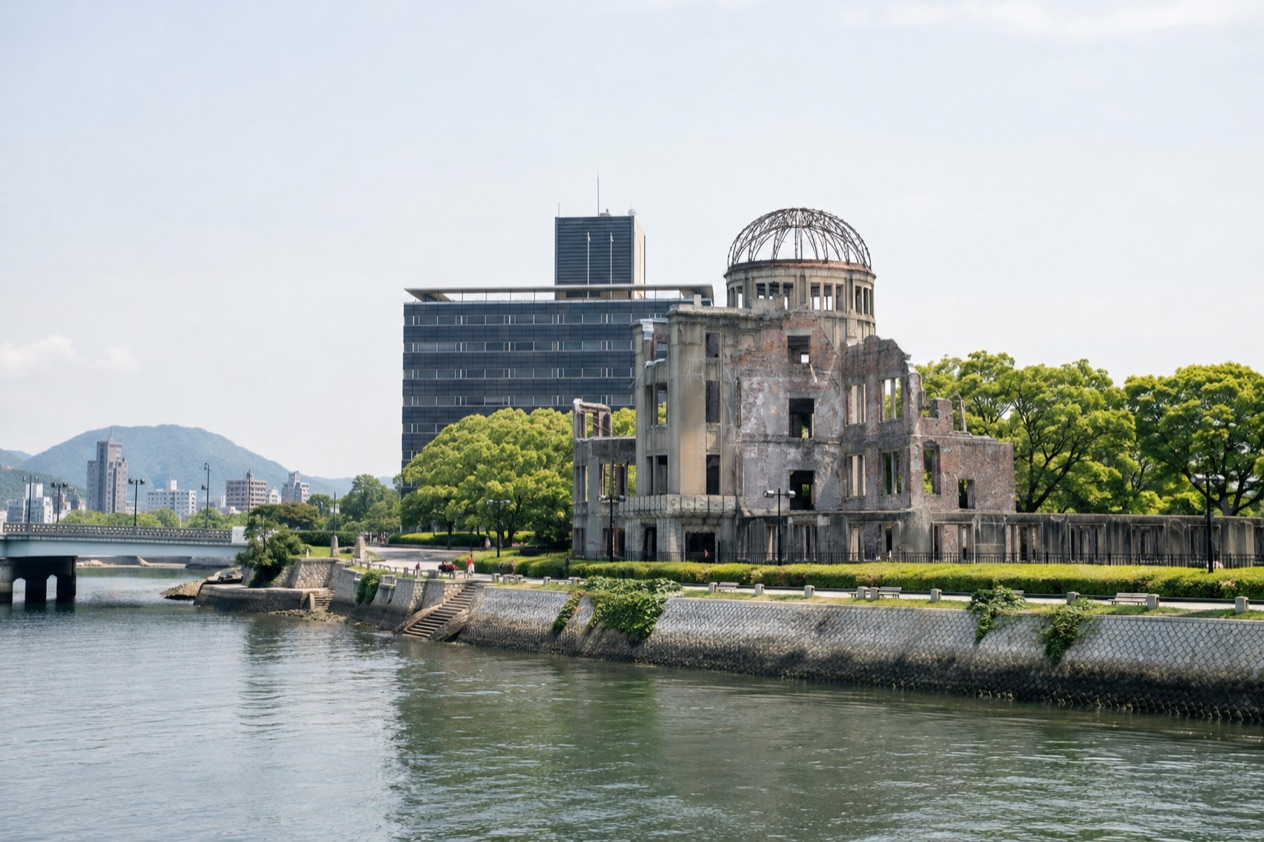
At the edge of the park stands the Atomic Bomb Dome, also called the Genbaku Dome, the only structure still standing near the bomb’s hypocenter. Visitors cannot go inside, so you view it from the outside, from the riverbank. Plan the park for a slow hour or two, with a bottle of water in hand, and take the shade of the trees whenever the sun gets strong.
The Hiroshima Peace Memorial Museum
The museum gives a hot afternoon a purpose. Through belongings left by victims, A-bombed artifacts and survivor testimonies, it conveys the horrors of nuclear weapons and carries the message of “No More Hiroshimas.” The exhibits ask for time, and the cool indoors make that easier in July.
It stands in the park, at 1-2 Nakajima-cho in Naka-ku. Many visitors come away wanting a quiet place to sit, and the riverside paths and benches outside serve that purpose.
| Site | Admission |
|---|---|
| Hiroshima Peace Memorial Museum | ¥200 adults (groups of 30 or more adults: ¥160 per person); ¥100 high school students (groups of 20 or more high school students: free) |
Itsukushima Shrine and Okunoshima
Beyond the city lie two outings that belong to the Hiroshima area. Itsukushima Shrine was registered as a World Heritage Site in 1996, and a visit there adds a day of shrine architecture and sea views to the memorial sights. In July, plan around the heat, with water, a hat and a pause in a shaded spot.
Okunoshima is known for its wild rabbits. Visitors must not chase or pick up the rabbits and should provide appropriate food in a safe place. It is an outing for people who like animals and a change of pace after the memorial district.
Back in town, the Hiroden trams, as the Hiroshima Electric Railway is commonly known, are worth riding for their own sake. The company’s rolling stock includes trams from across Japan and Europe, which earned it the nickname “The Moving Streetcar Museum.” A ride on a rainy afternoon turns the weather into part of the day.
A two-day itinerary for Hiroshima in July
Day 1 belongs to the memorial district. Start in Peace Memorial Park with the Atomic Bomb Dome from the riverbank, then follow the paths past the Children’s Peace Monument and the National Peace Memorial Hall. Keep the museum for the hottest part of the day, when the cool rooms are a relief and the exhibits deserve a long, unhurried visit.
In the late afternoon, ride a Hiroden tram through the city and let the humidity lift a little before dinner. Dinner is okonomiyaki at a counter, where the cook shapes it in front of you. With daylight lasting well into the evening, a walk along the rivers after the meal is a gentle way to close the day.
Day 2 takes you out of the center. Visit Itsukushima Shrine, the World Heritage Site, and carry water, a hat and a light rain jacket, since the weather can change. If animals appeal more than shrines, Okunoshima and its wild rabbits make a different kind of day, with the rules on feeding and handling in mind.
Rain card: if a heavy shower sets in, go back to the museum or the National Peace Memorial Hall, or spend an hour on the trams. Lunch in a covered shopping arcade or a small restaurant keeps you dry, and a sweet stop for momiji manju fills a gap before the evening.
Is Hiroshima busy in July?
July is a hot, humid summer month in Hiroshima, and the heat shapes the pace of the city more than any crowd. People move between air-conditioned places and the shade of the riverbanks, and the days run slower.
The month comes just before August 6, the date the city marks every year, and that anniversary colors the weeks around it. In July the city is already turned toward it, and the memorial district takes on a reflective mood.
For a visitor, the practical effect is on the rhythm of the day. Plan outdoor stretches around the park and the rivers for when the sun is gentler, and keep the museum for the hotter hours. The long summer daylight leaves room for an evening walk, and tables at an okonomiyaki counter are the place to cool down over a cold drink and a hot griddle.
What to pack for Hiroshima in July
A July suitcase for Hiroshima is built around heat, humidity and sudden heavy rain, with plenty of walking in the memorial district.
- Light, breathable clothes, because the days are hot and humid and the nights stay warm.
- A compact umbrella or light rain jacket, since July brings heavy falls of rain.
- Comfortable walking shoes for the park, the riverbanks and the shrine outing.
- A hat and sunglasses for the stretches in the open air.
- A refillable water bottle for long walks in the humidity.
- A small towel or handkerchief for the sticky afternoons.
Good to know before you go
Honshu and Kyushu have very humid, hot and sultry summers, and Hiroshima in July fits that description. The month is also wetter than August, so a flexible plan with indoor options is useful.
The Atomic Bomb Dome cannot be entered and is seen from the outside, and on Okunoshima the rabbits are not to be chased or picked up. Itsukushima Shrine and the Peace Memorial museum are the stops that most need a calm, unhurried mood.
Hiroshima in July vs June and August
Moving the trip four weeks earlier brings a slightly cooler city, with lower highs and nights that are less sticky. June is a little wetter in the number of rain days, and the daylight is longer still. It suits visitors who prefer milder warmth and are ready to carry an umbrella.
Moving four weeks later brings the hottest air of the three months, the strongest sunshine and noticeably less rain. August also holds the anniversary of August 6, which the city observes every year. Travelers who want to be in Hiroshima for that date should plan for August, with the heat that comes with it.
July stands between the two: hot, humid and with the heaviest rainfall of the three months. It suits travelers who want the memorial district in a reflective mood before the anniversary, and who do not mind planning around showers.
Is July a good time to visit Hiroshima?
Yes, for travelers who can handle heat and humidity and who want the memorial district before the August anniversary. July suits those who like a slow pace, indoor stops and long evenings by the rivers. It is a harder month for anyone who dislikes damp warmth or heavy rain.
On arrival, start with Peace Memorial Park and the view of the Atomic Bomb Dome, then keep the museum for the hotter hours. A tram ride and an okonomiyaki dinner give the first day its shape, and an outing to Itsukushima Shrine or Okunoshima follows once the weather allows.
What is special about July in Hiroshima is the contrast between the heavy, humid air and the careful attention people give to the park, the Dome and the museum. The city is already turning toward August 6, and a walk along the green rivers, with the paper cranes behind glass, stays with you.
Sources
- Japan Meteorological Agency (JMA), Normal values 1991-2020, monthly (https://www.data.jma.go.jp/stats/etrn/view/nml_sfc_ym.php?prec_no=67&block_no=47765), station Hiroshima, elevation 4 m, checked October 11, 2026
- Computed from the date and the latitude of the place (sunrise equation, solar elevation -0.833 degrees), October 11, 2026
- Japan National Tourism Organization, weather and seasons in Japan (https://www.japan.travel/en/plan/weather/), checked October 11, 2026
- Wikipedia, Climate of Japan (https://en.wikipedia.org/wiki/Climate_of_Japan), checked October 11, 2026
- Japan National Tourism Organization, summer in Japan (https://www.japan.travel/en/guide/summer-guide/), checked October 11, 2026
- Japan National Tourism Organization, festivals and events (https://www.japan.travel/en/see-and-do/festivals-and-events/), checked October 11, 2026
- Wikipedia, Hanabi (https://en.wikipedia.org/wiki/Hanabi), checked October 11, 2026
- Wikipedia, Gion Matsuri (https://en.wikipedia.org/wiki/Gion_Matsuri), checked October 11, 2026
- Japan National Tourism Organization, Mount Fuji guide (https://www.japan.travel/en/fuji-guide/), checked October 11, 2026
- Official website for Mt. Fuji climbing, about the climb (https://www.fujisan-climb.jp/en/about/), checked October 11, 2026
- Wikipedia, Tanabata (https://en.wikipedia.org/wiki/Tanabata), checked October 11, 2026
- Visit Hiroshima, the official guide (https://visithiroshima.net/), checked October 11, 2026
- Hiroshima Peace Memorial Museum (https://hpmmuseum.jp/?lang=eng), checked October 11, 2026
- Wikipedia, Hiroden (https://en.wikipedia.org/wiki/Hiroden), checked October 11, 2026
- Wikipedia, Hiroshima (https://en.wikipedia.org/wiki/Hiroshima), checked October 11, 2026
- Wikivoyage, Hiroshima (https://en.wikivoyage.org/wiki/Hiroshima), checked October 11, 2026
To plan your stay
- Things to Do in Hiroshima: Peace Memorial Park, Miyajima, Okonomiyaki and Day Trips
- Where to Stay in Hiroshima: Peace Park, Station Area, Castle District and Miyajima Island
- Hiroshima from Osaka: Shinkansen, Local Trains and a Day at the Peace Park
- Know Before You Go to Hiroshima: Entry, Money, Getting Around and Local Etiquette