
On the tarmac in Anchorage, the floatplanes bob on Lake Hood just beyond the runways, and the whole state seems to be telling you that flying is how Alaska works. Most visitors from the Lower 48 land at one of a few big airports and then, if they are heading to a smaller town, hop onto a commuter plane or a floatplane. The short answer: pick Anchorage, Fairbanks or Juneau as your gateway, check which airline serves it, and have your ID ready.
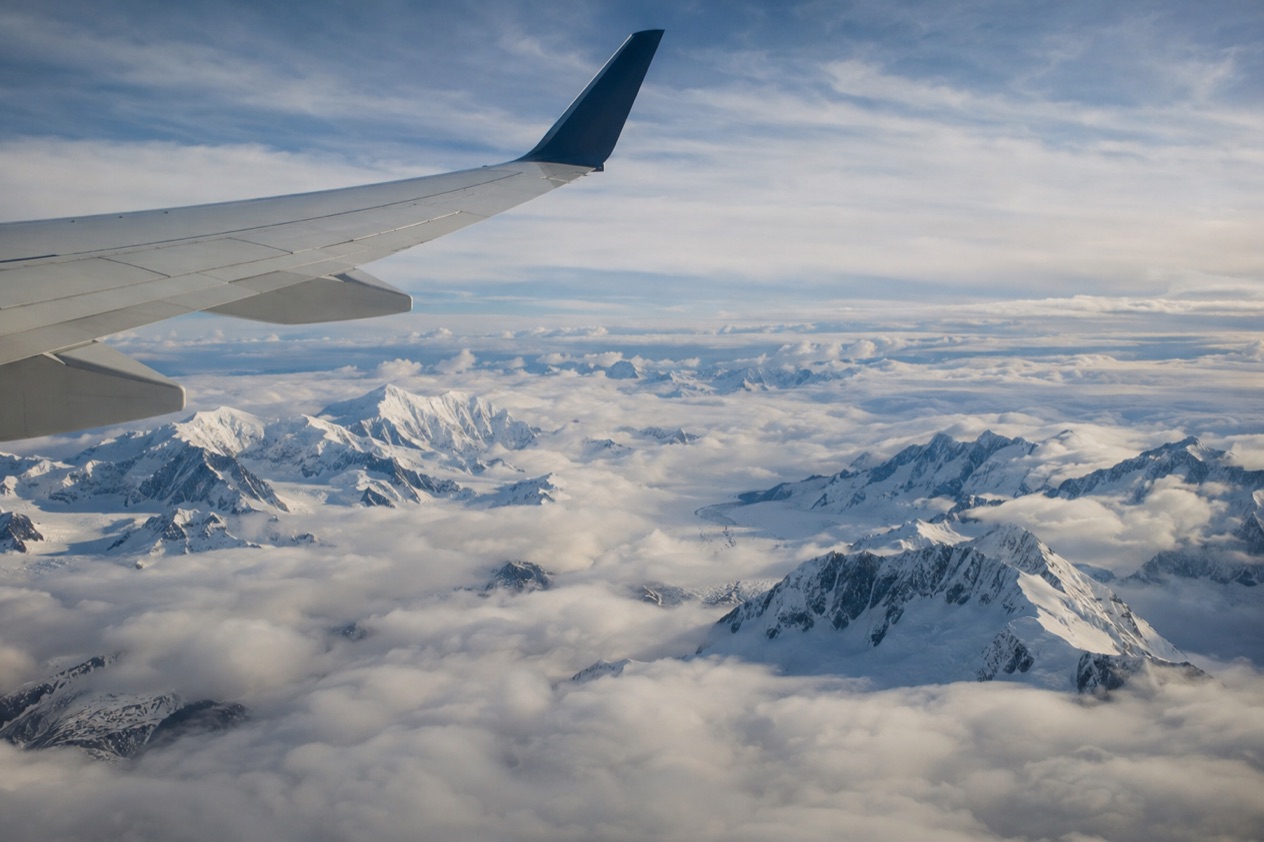
Which airports do you fly into in Alaska?
Most travelers arrive through Ted Stevens Anchorage International Airport, with Fairbanks International Airport and Juneau International Airport serving as the other main gateways. Each one opens a different part of the state, and each has its own character once you step off the plane.
Anchorage: Ted Stevens Anchorage International
Anchorage is the state’s largest door. The airport sits five miles southwest of downtown, at 5000 W. International Airport Rd., so you are in the city quickly after landing. It has two terminals: the South Terminal, with 24 gates, handles domestic flights, and the North Terminal, with 8 gates, is the international one, serving Condor arrivals, seasonal international charters and military flights.
The South Terminal is where you will most likely land, since it serves Air Canada, Alaska Airlines, American Airlines, Delta Air Lines, Sun Country Airlines and United Airlines, plus Condor and Discover Airlines departures. Next door, Lake Hood Seaplane Base is the busiest seaplane base in the world, a fitting neighbor in a state where small planes are everyday transport. The airport is also a major cargo hub, and FedEx Express runs its largest facility here.
Fairbanks International Airport
Fairbanks International sits three miles southwest of the center of the city. It is a compact airport: one terminal with eight gates, two of them for commuter carriers and six for larger airlines. That mix tells you what Fairbanks is, a gateway to the Interior and to the small villages beyond. Its main runway is long enough for big jets, and the airport also has a gravel and ski strip and a water strip.
The airport is open 24 hours a day. Screening checkpoints open two hours before the first flight each day, holidays included, and the airport recommends arriving at least two hours before departure. Terminals are meant for ticketed travelers, so unless you are helping an unaccompanied minor, a passenger with a disability or someone else who needs assistance, say your goodbyes outside.
Juneau International Airport
Juneau is the gateway to the Inside Passage side of the state. Its single runway, 8,857 feet long, and a separate seaplane landing area handle a busy stream of traffic, and most of it is small air taxi flying rather than scheduled jets. That is a good clue to how Southeast Alaska works, since the towns around Juneau are linked by air and water. If you have time, the EVAR / Airport Dike Trail by the airport is open, a place to stretch your legs and watch the planes come and go.
| Airport | Location | Terminal setup |
|---|---|---|
| Anchorage (Ted Stevens) | 5 miles southwest of downtown | South Terminal, 24 gates; North Terminal, 8 gates |
| Fairbanks International | 3 miles southwest of the city center | One terminal, 8 gates |
| Juneau International | Single runway, 8,857 feet, plus seaplane area | Scheduled and air taxi service |
Which airlines fly to Alaska from the Lower 48?
Alaska Airlines is the carrier most tied to the state, and several other major U.S. airlines also serve Anchorage. The best-known name flies from far beyond the state, with a network reaching more than 100 destinations across the contiguous United States, North America, Asia, Oceania and Europe.
Alaska Airlines
Alaska Airlines is headquartered in SeaTac, Washington, and its primary hub is Seattle–Tacoma International Airport. It also has hubs in Anchorage, Los Angeles, Portland (Oregon), San Diego and San Francisco, which means many West Coast cities connect to Alaska on a single carrier. The airline began life as McGee Airways, whose first service ran between Anchorage and Bristol Bay, so the Alaska link goes back to its roots.
It is a member of the Oneworld alliance, and its frequent-flyer program is called Atmos Rewards. Within the state, it flies from Juneau year-round to Anchorage, Ketchikan, Petersburg, Seattle/Tacoma, Sitka and Yakutat, and seasonally to Gustavus. That makes it useful for linking Southeast towns without leaving one airline.
Other airlines at Anchorage and Juneau
At Anchorage’s South Terminal you will also find American Airlines, Delta Air Lines, United Airlines, Sun Country Airlines and Air Canada. Condor and Discover Airlines depart from the same terminal, and Condor arrivals use the North Terminal. If you are comparing options, look at which airline serves your home airport, since that often decides the matter before price does.
Delta provides seasonal service from Juneau to Seattle/Tacoma, so it is an option there in its season. Fairbanks once had weekly summer flights to Frankfurt on Condor, which made it the smallest U.S. city with regularly scheduled nonstop international flights at that time. Alaska’s size means you should think about how much you want to spend before you go, so compare fares across these carriers.
| Airport | Airline | Service |
|---|---|---|
| Anchorage | Alaska, American, Delta, United, Sun Country, Air Canada | South Terminal |
| Anchorage | Condor, Discover Airlines | Departures from South Terminal |
| Juneau | Alaska Airlines | Year-round to Anchorage, Ketchikan, Petersburg, Seattle/Tacoma, Sitka, Yakutat; seasonal to Gustavus |
| Juneau | Delta Air Lines | Seasonal to Seattle/Tacoma |
How do you get to the smaller towns?
You reach the smaller towns by changing to a commuter airline or an air taxi at a hub such as Fairbanks or Juneau. In Alaska, the little plane is not a novelty, it is the bus.
From Juneau: Alaska Seaplanes
Alaska Seaplanes flies from Juneau International to Angoon, Elfin Cove, Excursion Inlet, Gustavus, Haines, Hoonah, Kake, Klawock, Pelican, Petersburg, Sitka, Skagway and Tenakee Springs. Read that list as a map of the Inside Passage: small communities tucked along channels and inlets, many of them linked mostly by air and water. Gustavus is also on Alaska Airlines’ seasonal schedule.
Air taxis dominate Juneau’s traffic. Of the airport’s aircraft operations in 2017, 79 percent were air taxi flights, which shows how much of the region moves by small plane.
From Fairbanks: Warbelow’s Air Ventures
Warbelow’s Air Ventures serves Beaver, Central, Circle, Manley Hot Springs, Minto, Rampart and Stevens Village from Fairbanks. These are Interior villages, far from the main highways, and the flight is how people and supplies reach them. The commuter gates at Fairbanks are set aside for this kind of carrier. Air North also operates seasonal charter flights from Fairbanks to Dawson City, Canada, which is the one route here that crosses the border.
From Anchorage: floatplanes at Lake Hood
Beside Anchorage’s main runways, Lake Hood Seaplane Base is where many bush trips begin. Floatplanes lift off the water here, and the sight alone is worth a pause if you have time between flights.
What do you need before you board?
Adults need a REAL ID-compliant license or another acceptable ID, such as a passport, to fly within the United States, and that includes flights to Alaska. REAL ID enforcement began May 7, 2025, so the old license that got you through the checkpoint years ago may not work now.
REAL ID and other acceptable ID
A driver’s license or ID with a star (or flag), or one that says Enhanced, indicates REAL ID readiness. A passport is an acceptable alternative and can be used in place of a REAL ID license to board domestic flights. The REAL ID Act, passed by Congress in 2005, sets minimum security standards for how licenses are issued and produced.
If you show up without an acceptable ID, you can still be screened by paying a $45 fee under the TSA ConfirmID program. If your identity cannot be verified, you will not be allowed into the screening checkpoint, so check your license before you leave home.
Who has to show ID, and what is accepted
Passengers 18 and older must show valid identification at the checkpoint. A temporary driver’s license is not acceptable. TSA currently accepts an expired ID up to two years after its expiration, and the list of acceptable IDs can change without notice.
Children under 18 do not need ID when traveling within the United States. Unaccompanied minors who are eligible for TSA PreCheck must show an acceptable ID to get expedited screening. Variations on name suffixes are accepted on boarding passes and ID, and suffixes are not required on boarding passes.
At the checkpoint
TSA allows up to 12 ounces of hand sanitizer through security at Fairbanks. Federal law requires masks on all airport property at Fairbanks for everyone over the age of 2, and travelers there are encouraged to test for COVID-19 within 72 hours of departure from their starting point.
Good to know before you go
Alaska is huge, so give your budget some thought before booking, because a flight to a small town adds to the cost of reaching the state itself. Keep your ID and boarding pass handy at each connection, since a trip that starts in Seattle or Anchorage can easily include a second or third flight.
Sources
- Ted Stevens Anchorage International Airport (https://www.ancairport.com/), checked October 11, 2026
- Fairbanks International Airport (https://www.dot.alaska.gov/faiiap/), checked October 11, 2026
- Juneau International Airport (https://juneau.org/airport), checked October 11, 2026
- Wikipedia, Alaska Airlines (https://en.wikipedia.org/wiki/Alaska_Airlines), checked October 11, 2026
- Transportation Security Administration, REAL ID (https://www.tsa.gov/real-id), checked October 11, 2026
- Transportation Security Administration, acceptable identification (https://www.tsa.gov/travel/security-screening/identification), checked October 11, 2026
- Alaska.org, first trip (https://www.alaska.org/expert-advice/first-trip-to-alaska), checked October 11, 2026