
At dusk in Tortuguero, the engines of the small boats go quiet, and the canals fill with the calls of herons, the rustle of monkeys in the canopy and the hum of frogs. A sandy lane runs through the village, a few open-air kitchens serve rice and beans cooked in coconut milk, and the Caribbean rolls in beyond the last houses. This is a jungle village you reach by water or air, made for travelers who want wildlife, patience and a slow rhythm.
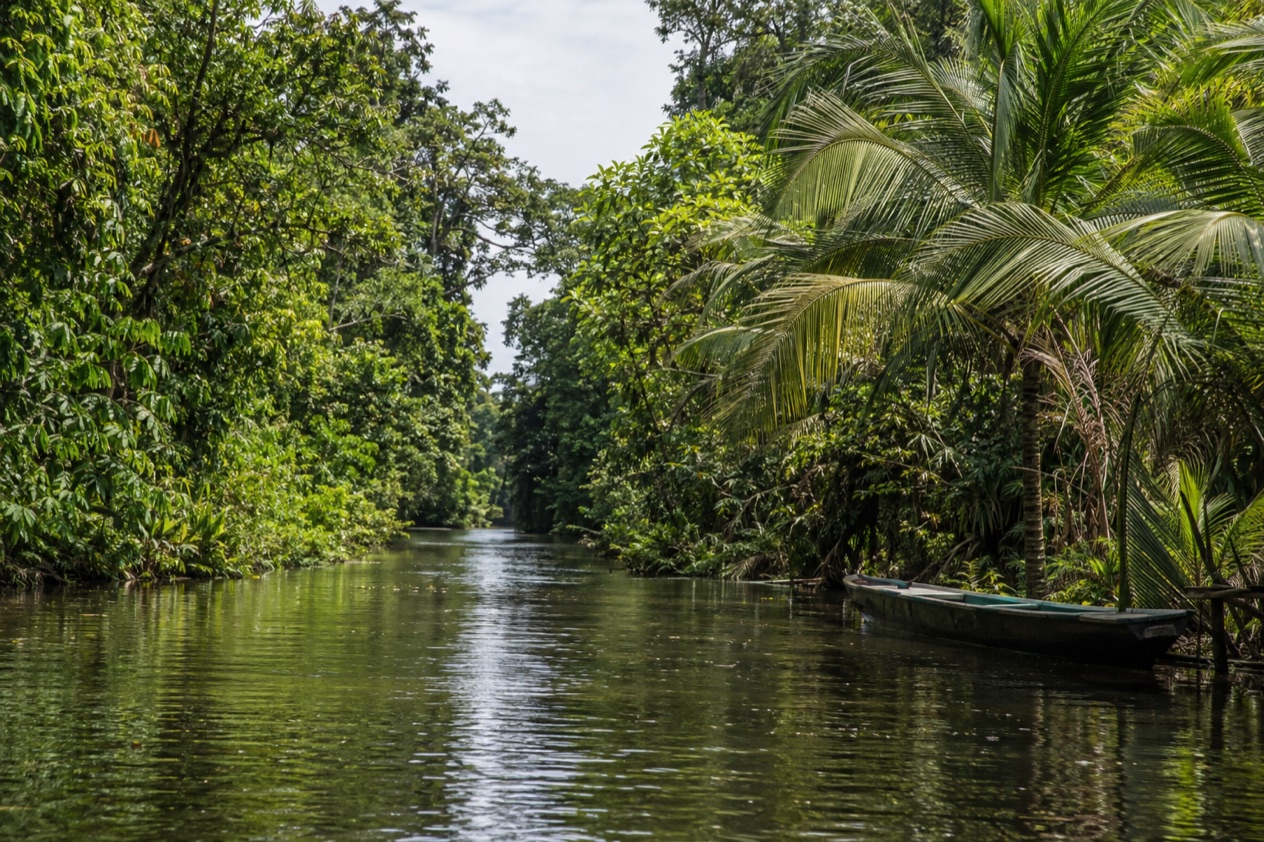
Where is Tortuguero and what is it like?
Tortuguero sits on the northern Caribbean coast of Costa Rica, a small village wedged between the sea and a web of canals and rainforest, and it can be reached only by boat or small plane. No road comes in. That single fact shapes everything: there are no cars on the streets, no traffic noise, and the arrival itself, by water through green channels, is part of the trip.
The village is a narrow strip of land between the lagoon side and the ocean side. On one side, boats tie up at docks and lodges hide behind walls of palms and heliconia.
On the other, a wide dark beach stretches away, lined with coconut trees and washed by heavy surf. In between runs the main path, with small sodas (family-run restaurants), souvenir stands selling carved wood and turtle-themed crafts, a church and a soccer field where kids play in the late afternoon.
The pace is slow and tied to the animals and the rain. Mornings start early, because that is when birds and monkeys are most active along the water. Afternoons tend to be quiet, with hammocks, books and the sound of rain on tin roofs. Evenings are short, and many travelers are in bed early after a night walk or an early boat ride.
Tortuguero suits naturalists, photographers, families with curious older children and anyone who likes the idea of falling asleep to frogs and waking to howler monkeys. It is less suited to those who want nightlife, shopping or a beach for easy ocean swimming, because the sea here is rough. Rip currents are very dangerous along this coast, and most beaches do not have lifeguards or warnings about unsafe conditions, so the beach is for walking and looking, not for casual dips.
The protected land around the village, Tortuguero National Park, covers a stretch of Caribbean coast, lagoons and rainforest. It is known for the green sea turtles that nest on its beach and for the wildlife seen from boats on the canals. Rain falls here all year, because the Caribbean side does not follow the dry and green seasons of the Pacific, so a rain jacket belongs in every bag.
What is there to do in Tortuguero?
The big reasons to come are the nesting turtles, the canal boat tours, the national park and the village itself. What sets Tortuguero apart from other Costa Rican destinations is that almost everything revolves around water and wildlife, with no zip lines, no big resorts and no road trips to fit in.
Turtle nesting on the beach
Green sea turtles come ashore to nest on these beaches mainly from about July to October, and leatherbacks nest earlier in the year. Watching a heavy female haul herself up the sand in the dark, dig a nest with her back flippers and lay her eggs is among the most memorable wildlife moments in the country.
Night walks to see the turtles are done with a licensed guide, and guides lead small groups along the beach in near darkness, usually with red light or none at all so the animals are not disturbed. Seeing a turtle is a chance, not a promise, since some nights are quiet. Wear dark clothes, bring a rain layer and expect to walk on soft sand for a while.
Boat tours on the canals
Visitors explore the canals by boat to look for caimans, monkeys, herons and kingfishers, and most stay at lodges that offer guided tours. The boats are small and often quiet, and the guides have sharp eyes for a sloth tucked into a cecropia tree or a basilisk lizard on a branch over the water.
Early morning is the favorite hour, when the water is still and birds are active. Paddling trips in kayaks or canoes are another way to move slowly and hear the forest. Rain can come at any time, so a poncho is a better friend than an umbrella, and binoculars make a real difference.
The national park and the village
Beyond the boats and the beach, the park protects lagoons and rainforest, and walking its trails with a guide shows you what the canals only hint at: leaf-cutter ants on the march, strangler figs, poison dart frogs and the sound of birds overhead. The park is the reason the village exists as it does.
In the village, an easy stroll takes you past the church, the docks, the craft stands and small museums or visitor centers about turtle conservation. Sit down for a plate of rice and beans with fish or chicken, or a coconut-flavored dish typical of the Caribbean coast, and watch the evening settle over the canal.
How many days do you need in Tortuguero?
Two nights is the sweet spot for most travelers, and a third night rewards those who want a slower pace. Because getting here by boat or small plane takes real time, a single night feels rushed, and the first and last days are partly spent in transit.
With two nights you can fit a canal boat tour, a walk through the village, a guided hike in the park and, in turtle season, a night walk on the beach. The rhythm is simple: early boat ride, breakfast, a lazy midday, an afternoon walk, dinner and then the turtles if the season allows. That is enough to feel the place without feeling hurried.
A third or fourth night lets you add a kayak or canoe outing, a second boat trip at a different hour and long unscheduled stretches on a lodge porch with binoculars. Wildlife sightings improve with repetition, because the same canal looks different at dawn, midday and late afternoon, and the rain changes what comes out.
If you have more time, Tortuguero pairs naturally with other parts of the country. Many visitors combine it with the Central Valley and San Jose on the way in and out, or with volcano and cloud forest regions elsewhere. Keep in mind that this is a place where you slow down, so a long list of stops before and after can crowd out the quiet that makes it special.
Where to stay in Tortuguero
Most visitors stay at lodges set in the forest along the canals, and these lodges offer guided tours as part of the stay. They are often reached by a short boat ride, surrounded by gardens and jungle, and built around porches, hammocks and dining rooms where meals are served at set times. This is the choice for travelers who want wildlife at the doorstep and the convenience of having tours organized.
The second option is the village itself, where smaller guesthouses and simple hotels sit within walking distance of the docks, the beach and the sodas. Staying in the village suits travelers who like to wander in the evening, eat at local restaurants and be close to the sea. You hear the surf at night and the forest in the morning, and you can set your own pace.
A few places sit between the two, on the sandy strip close to the ocean, with a beach feel and some quiet. The trade-off is simple. Lodges on the canals give a stronger sense of jungle, while village and beachside stays give more freedom and a feel for daily life. Since the village is small, nothing is far, and no choice puts you out of reach of the turtles or the boats.
Rooms tend to be simple and breezy, with fans, screens and mosquito nets in many places. Humidity is constant, so clothes dry slowly and a small stash of zip bags helps protect electronics and documents. In turtle season and in the busiest travel weeks, rooms fill sooner, so planning ahead is wise.
How do you get to Tortuguero and get around?
Tortuguero can be reached only by boat or small plane, since no roads lead in. Most international visitors fly into Juan Santamaria International (SJO), near San Jose in the Central Valley, and continue from there. Daniel Oduber Quiros International (LIR) at Liberia, in the northwest, is the closest airport for the Guanacaste beaches and lies far from this coast.
From the Central Valley, the usual way is an overland leg followed by a boat ride along rivers and canals, often arranged as a package with a lodge. The alternative is a short flight on a small plane that lands on a simple airstrip near the village. The boat is slower and gives you a first look at the wildlife. The plane saves time and gives a view of the green sprawl from above.
Once in Tortuguero, getting around is simple. The village is walkable, with sandy and sometimes muddy paths, so shoes that can get wet are a good idea. There are no cars and no buses. Everything beyond the village happens by boat, whether on a lodge tour, a water taxi or a paddle in a kayak.
Since a rental car is of no use here, many travelers leave theirs in a parking area before the boat leg or skip renting altogether and use shuttles and transfers. Pack light, because luggage is carried on small boats and across docks, and a soft bag is easier to handle than a hard suitcase.
When is the best time to visit Tortuguero?
The turtle season is the big draw, and for green turtles it runs mainly from about July to October, while leatherbacks nest earlier in the year. If seeing nesting turtles is the point of your trip, those months are the ones to aim for. They are also among the wettest: July sees rain on almost every day, with about 16 inches over the month, and October is close behind, with rain on most days and heavy downpours now and then.
The Caribbean side gets rain all year and follows a different pattern from the Pacific side and the Central Valley, which are drier from about December to April. April in Tortuguero is the lighter month, with rain on about a dozen days and the warmest feel in the air, while January is wetter, with rain on more than half the days and a total around seven inches. Nobody should plan on a dry stay in any month.
Temperatures hardly change through the year, with afternoon highs in the low 80s and nights in the low to mid 70s. The sea is warm in every season, warmest in October.
Because the weather is steady and wet, the choice of month comes down to wildlife: turtles in the second half of the year, and quieter, lighter-rain stretches earlier on. Either way, bring a rain jacket, quick-dry clothes and a plan for gray, drizzly mornings.
Good to know before you go
The U.S. State Department rates Costa Rica Level 2, ‘Exercise increased caution,’ due to crime; it says petty crime is common throughout Costa Rica and that violent crime also affects tourists, including armed robbery, homicide and sexual assault.
The Costa Rican currency is the colon, but U.S. dollars are widely accepted in tourist areas, and many hotels, tours and restaurants quote prices in dollars, with change often handed back in colones. A valid passport for the duration of your stay is required, and travelers must have a return ticket or proof of onward travel to another country.
Authorities may allow visitors to stay up to 180 days without a visa, though this is not guaranteed. On the beach, treat the surf with respect and do not count on a lifeguard.
Sources
- Open-Meteo / ECMWF ERA5, normals 1991-2020 computed for the grid cell at 10.543N 83.502W, checked October 8, 2026
- Open-Meteo Marine API, average 2015-2024, checked October 8, 2026
- U.S. Department of State, Costa Rica Travel Information, Safety and security (https://travel.state.gov/content/travel/en/international-travel/International-Travel-Country-Information-Pages/CostaRica.html), checked October 8, 2026
- U.S. Department of State, Costa Rica Travel Advisory, issued April 1, 2026 (https://travel.state.gov/content/travel/en/traveladvisories/traveladvisories/costa-rica-travel-advisory.html), read via the State Department open data API on October 8, 2026
- U.S. Department of State, Costa Rica Travel Information, Entry and exit requirements (https://travel.state.gov/content/travel/en/international-travel/International-Travel-Country-Information-Pages/CostaRica.html), checked October 8, 2026
All our pages
When to go
- Best Time to Visit Tortuguero: Turtle Season, Weather by Month and Canal Tours
- Tortuguero in January: Canal Boat Trips, Rain Showers and Rainforest Wildlife
- Tortuguero in February: Canal Wildlife, Rain Showers and Caribbean Food
- Tortuguero in March: Weather, Canal Wildlife and What to Do
- Tortuguero in April: Weather, Canal Trips, Turtle Season and a Two-Day Plan
- Tortuguero in May: Green-Season Rain, Warm Sea and Canal Days
- Tortuguero in June: Rainy Weather, Canal Tours, the Beach and a Two-Day Plan
- Tortuguero in July: Green Turtle Nesting, Rain and Canal Trips
- Tortuguero in August: Nesting Turtles, Daily Rain and Canal Mornings
- Tortuguero in September: Rain, Canal Boats, Independence Day Lanterns and Turtle Beaches
- Tortuguero in October: Nesting Turtles, Rainy Weather and Canal Days
- Tortuguero in November: Rain, Canal Boat Tours, Sea Turtles and Two Days on the Caribbean Coast
- Tortuguero in December: Canal Boat Mornings, Rainy Weather and Holiday Season
Things to do
- Things to Do in Tortuguero: Canal Boats, Turtle Nesting, Rainforest Walks and Caribbean Food
- Tortuguero National Park: Turtle Nesting, Canal Boat Tours, Hours and How to Get There