
On the evening of September 14, children in Tortuguero walk the sandy lanes with paper lanterns, their little flames bobbing between wooden houses while the rainforest hums behind the village. The canals are brimming, the howler monkeys start up before dawn, and the days run on the slow rhythm of rain and boat engines. September here is green, wet and warm, a good month for travelers who want the jungle at full volume.
What is the weather like in Tortuguero in September?
Come September, Tortuguero brings heat, heavy moisture and rain, plus downpours possible at any time of day and water in the sea just as warm as the air. Plan on wet days sprinkled with sun, not a dry spell with the odd shower.
| Month | Average high (°F) | Average low (°F) | Rain days | Sea (°F) |
|---|---|---|---|---|
| August | 83.0 | 73.8 | 27.6 | 85.6 |
| September | 83.5 | 74.0 | 25.6 | 87.1 |
| October | 82.7 | 73.7 | 26.8 | 86.5 |
Mornings start soft and steamy, with mist lifting off the canals and the light turning from gray to gold. Mornings can be rewarding on the water, but downpours are possible at any time of day. Afternoons can bring a downpour that drums on lodge roofs for an hour or settles into a gray, drizzly evening.
Rain here falls on the Caribbean side, where the mountains catch the clouds blowing in off the sea. Nights stay warm enough to sit on a porch in short sleeves, and the air never really cools, so clothes dry slowly. About twelve hours of daylight means darkness falls early in the evening, and the lodges’ lamplit dining rooms become the center of the night.
Wear light, quick-drying layers and carry a real rain jacket, because umbrellas lose to wind on a moving boat. Bring your own rain protection and trail footwear, including shoes you do not mind soaking.
Can you swim in Tortuguero in September?
The Caribbean shore at Tortuguero may tempt you with warm water for a lengthy swim, yet it is no spot for a quick splash. Rip currents pose a real threat, and several U.S. tourists drown each year, while lifeguards are absent from most beaches here and no signs warn people about unsafe conditions.
The long dark-sand beach is wild and open, with surf that usually arrives in heavy, uneven sets and a steep drop close to the shore. It is lovely to walk, especially after rain when the sand is firm and the sea is the color of slate, and it is a fine place to watch driftwood and frigatebirds. Most visitors treat it as a beach for strolling and looking, not for wading in.
If you want to get wet, ask your lodge whether it has a pool, and follow all local warnings. Snorkeling and surfing are not what people come here for. Children and nervous swimmers will be happiest splashing in a pool and saving the sea for looking.
What to do in Tortuguero in September
September is the month of Independence Day, and the village dresses up for it with flags, school bands and the lantern parade, which gives a small jungle town an unexpected festive edge. Around that, the days are about water: canals, rain on leaves, river birds and the night beach. Rain is part of the program, so the best days are built around the dry-ish windows and the lodge’s porch.
Canal boat tours at first light
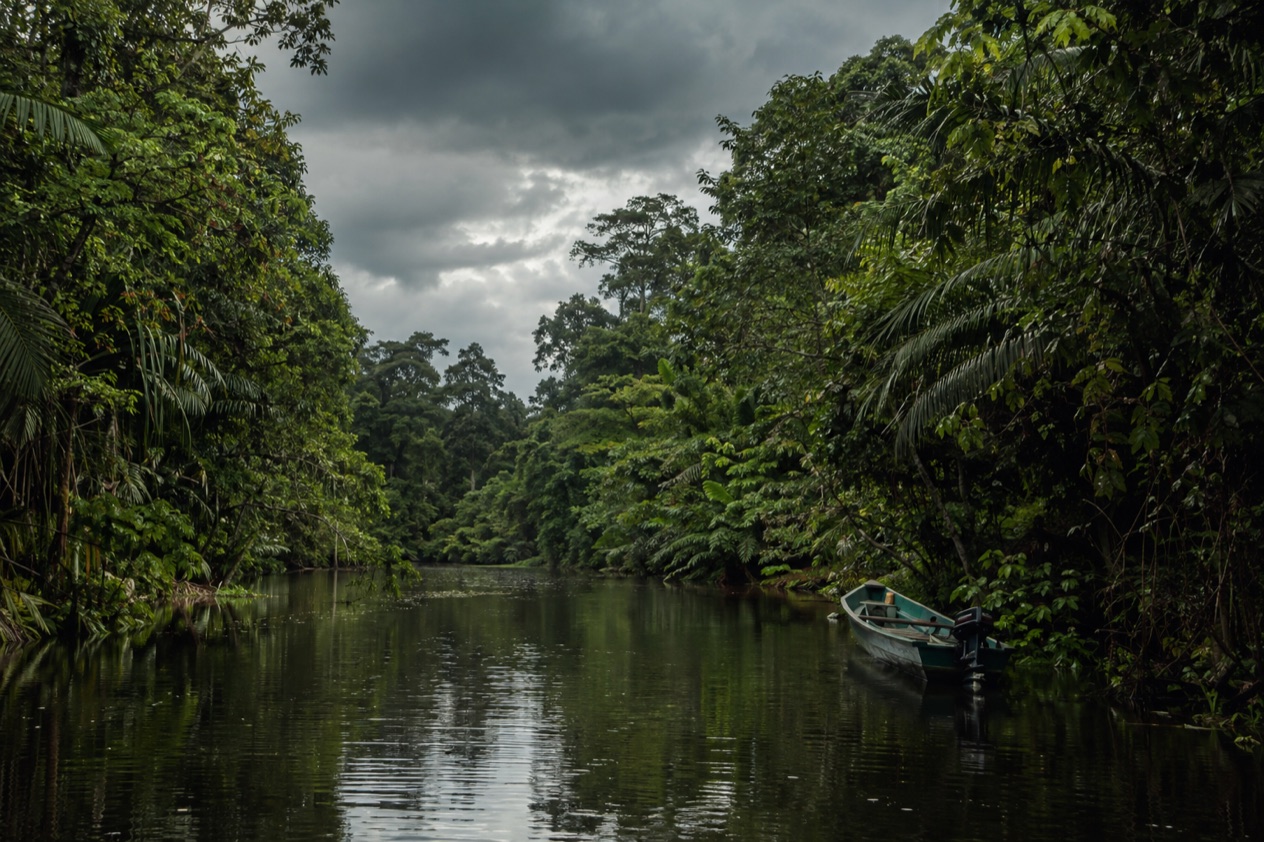
Most visitors arrive for the canals, where lodge guides pilot small boats through narrow channels past caimans resting on banks, herons standing in the shallows and kingfishers darting beneath overhanging branches. Monkeys cross the canopy, and with some luck you may spot a sloth hanging in a cecropia tree. Animals are chances, not promises, and a good guide is the way you see them.
Go in the early morning, when the light is soft and the boats ride quietly. In a rainy month the canals sit high and the forest smells of wet earth, and a light drizzle often makes the birds more visible, not less. A cheap poncho and a waterproof bag for your camera matter more than any lens.
The village and the beach walk
Colorful wooden houses line this narrow village, along with little sodas dishing up rice, beans and fried plantain, plus shops where hammocks and carved wooden turtles are sold. It is a good late-afternoon walk, with children on bikes, music from a doorway and the sea thundering a few steps away. Between showers, the beach is the place for driftwood, hermit crabs and long, empty horizons.
On the Caribbean side, the local kitchen leans on coconut, fish and rice cooked in coconut milk, and a rondon (a slow stew of fish and root vegetables) suits a rainy evening. Ask at a family-run soda for what came off the boat that day.
Night walks and turtles
Tortuguero is famous for its sea turtles, which come ashore to nest at night on this stretch of beach. Whether you see one depends on the night, the tide and the weather, so treat it as a chance, and ask your lodge what the current situation is and how nighttime visits are arranged.
Night walks in the forest around the lodges are a separate pleasure. Guides with flashlights find red-eyed tree frogs, sleeping birds and big insects, and the wet weather brings out frogs in force. The sound alone, a wall of chirps and trills after dark, is worth the muddy boots.
Independence Day and the faroles
On the evening of September 14, children carry paper lanterns, called faroles, through town in the Desfile de Faroles. Rain can dampen the evening, but families often march anyway, and the lanterns glow in the wet streets. The next day, September 15, brings school bands and flags, with drums and brass echoing off the wooden houses.
It is a modest, local celebration, not a spectacle for visitors, and the pleasure is in standing at the edge and watching a village mark a national day. Stay respectful, keep your camera lowered near children, and be ready for the street to be full of walking families.
On gray days when the boats are slow, spend a morning at the lodge, in a hammock with the canal in view. A dock makes a fine spot for watching birds, and with Costa Rican coffee in hand plus rain drumming on a tin roof, you are still having the experience, so those afternoon hours count for something.
A two-day itinerary for Tortuguero in September
On Day 1 you arrive by boat or small plane, because no roads reach the place. Arrive, settle at your lodge and eat a warm lunch, and use the early afternoon for a first canal outing while the day’s rain pattern becomes clear. Come back before dusk to dry off, then join the night walk through the forest around the lodge, where frogs and insects take over after dark.
If the rain is heavy, switch the order: stay on the porch in the afternoon, then walk into the village between showers for a coconut-rice dinner at a small soda. Evenings are early in September, so plan to be back on lodge grounds soon after dark.
Day 2 starts at first light with a guided boat tour, the best time for herons, kingfishers, caimans and monkeys. Breakfast at the lodge follows, and the late morning is for the village, with its wooden houses, craft shops and the long beach just beyond. Look for driftwood, watch the surf from a safe distance and stay out of the water.
After lunch, rest during the heaviest rain, then use the evening for either a second night walk or a turtle outing if your lodge offers one that night. If the weather turns on both days, your rain card is the lodge itself: birdwatching from a dock, a slow coffee, a game of cards and a book. Leave for the boat or plane when the lodge tells you.
Is Tortuguero busy in September?
Tortuguero is generally quiet in September, since it is deep in the rainy season and the big holiday weeks fall elsewhere in the year. Most travelers here are staying at lodges on package-style stays, so the village itself feels relaxed and the canals are rarely crowded.
The celebrations take place on September 14 and 15, with the lantern parade on the first evening and school bands and flags the next day. Rooms at lodges can tighten around those days, so book early if your dates touch the holiday. For the rest of the month, reserve your lodge and transport ahead rather than relying on a fixed lead time.
Since boats and small planes are how all visitors get here, booking a spot counts every bit as much as booking a bed. Reserve your transport and your lodge together, and keep your dates flexible if the weather looks rough. Restaurants in the village are small and informal, and dinner tables are rarely a problem, though lodges serve set meals and want to know your plans in advance.
September rule for a month like this is simple: book the lodge first, the transport second, and the activities with the lodge on arrival. Ask your lodge which guided tours are included and whether any park reservation must be made separately.
What to pack for Tortuguero in September
Pack for heat and rain together, with clothes that dry fast and a bag that keeps electronics dry. Keep it light, since small planes and boats have limited space.
- A real rain jacket, because showers are frequent and boats are open to the weather.
- Quick-drying shirts and pants, since nothing dries quickly in this humidity.
- Waterproof dry bags for phones, cameras and passports.
- Sunscreen and a hat, for the bright hours on the water between showers.
- Insect repellent, for the evenings and the forest walks.
- Binoculars, for birds and monkeys high in the canopy.
- A small flashlight or headlamp, for walking back from dinner after dark.
Good to know before you go
The U.S. State Department rates Costa Rica Level 2, ‘Exercise increased caution,’ due to crime; it says petty crime is common throughout Costa Rica and that violent crime also affects tourists, including armed robbery, homicide and sexual assault.
The Atlantic hurricane season, which covers the Caribbean Sea, runs from June 1 to November 30, and its peak falls on September 10. That does not mean a storm every week, but it does mean weather can change quickly and plans for boats and small planes should stay flexible. Reaching Tortuguero requires a boat ride or a small plane, and when a storm hits, a transfer can easily be delayed.
Pack your patience along with your rain jacket, leave a cushion in your schedule on the day you leave, and confirm your transfer with your lodge before you go. September 15 is a holiday, so some local businesses may be slower that day, while the lodges keep running.
Tortuguero in September vs August and October
Moving a month earlier, to August, brings a little more rain and a slightly cooler sea, with the same lush, wet forest and the same quiet village. The Independence Day lanterns are missing, since they belong to September, and August has none of the festival color. If you want the village to yourself and the rain does not bother you, August is a fair swap.
Moving a month later, to October, brings similar rain and warm water, with the Atlantic hurricane season still running and the peak behind you. The lantern parade and school bands are gone, so the town feels calmer. October suits travelers who want the same green, wet Tortuguero without the holiday weekend around the middle of September.
Choose September if you want the sea at its warmest of the three and a chance to see a local celebration, with a bit less rain than either neighbor. Shift a month earlier or later if your dates are fixed or if you want to avoid the holiday weekend and its fuller lodges. The experience in the canals is much the same all three months.
Is September a good time to visit Tortuguero?
If you love rainforest, birds and quiet, and you accept that rain is part of the deal, then September is truly a great time to visit Tortuguero. It rewards people who like early mornings on the water, warm nights and a village that feels lived-in, not staged.
It is a poorer choice for anyone who needs a dry, predictable vacation, who wants a swim in the ocean or who hates humidity. Families with young children can enjoy the lodges, the boats and the animals, but they will want a flexible schedule and a good rain jacket for everyone.
On arrival, settle into your lodge, ask the guides how the weather looks for the next two days and book your first boat outing for the earliest slot. Then keep your evenings free for a night walk and the village. What stays with you from September here is the sound: rain on broad leaves, frogs after dark, a band warming up on the fifteenth and a canal engine cutting off so the guide can point to a sleeping bird.
Sources
- Open-Meteo / ECMWF ERA5, normals 1991-2020 computed for the grid cell at 10.543N 83.502W, checked October 8, 2026
- Open-Meteo Marine API, average 2015-2024, checked October 8, 2026
- sunrise-sunset.org, sunrise and sunset calculated for the 15th of the month, checked October 8, 2026
- U.S. Department of State, Costa Rica Travel Information, Safety and security (https://travel.state.gov/content/travel/en/international-travel/International-Travel-Country-Information-Pages/CostaRica.html), checked October 8, 2026
- NOAA National Hurricane Center, Climatology (https://www.nhc.noaa.gov/climo/), checked October 8, 2026
- U.S. Department of State, Costa Rica Travel Advisory, issued April 1, 2026 (https://travel.state.gov/content/travel/en/traveladvisories/traveladvisories/costa-rica-travel-advisory.html), read via the State Department open data API on October 8, 2026
- U.S. Department of State, Costa Rica Travel Information, Entry and exit requirements (https://travel.state.gov/content/travel/en/international-travel/International-Travel-Country-Information-Pages/CostaRica.html), checked October 8, 2026
To plan your stay
- Things to Do in Tortuguero: Canal Boats, Turtle Nesting, Rainforest Walks and Caribbean Food
- Where to Stay in Tortuguero: Village, Beachfront and Canal Lodges
- Tortuguero National Park: Turtle Nesting, Canal Boat Tours, Hours and How to Get There
- Best Time to Visit Tortuguero: Turtle Season, Weather by Month and Canal Tours