
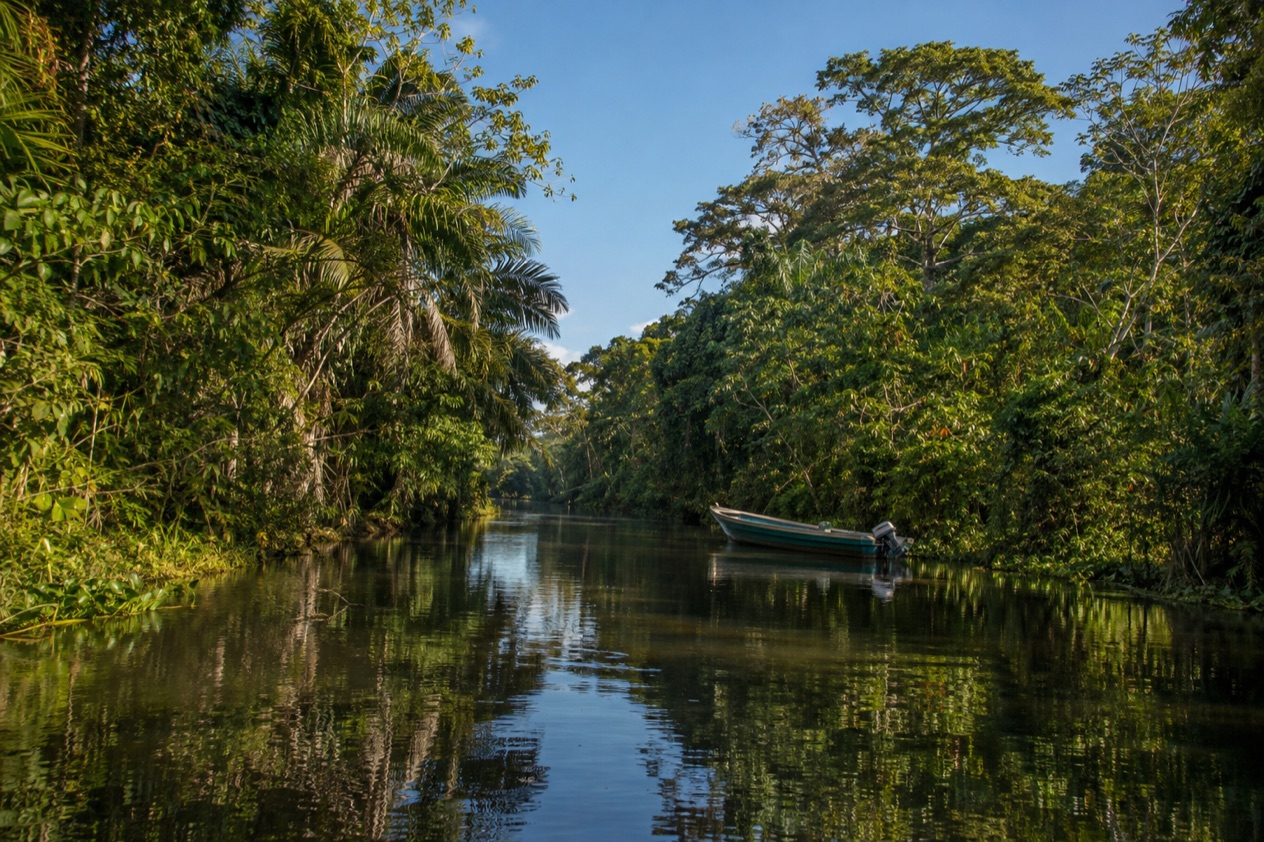
At first light in February, the canals around Tortuguero are glassy and gray-green, and the only sounds are howler monkeys roaring from the treetops and the soft putter of an electric boat engine. Herons stand motionless on the banks, and the village wakes slowly to the smell of coconut bread. The rains ease a little this month, which makes it a good time for slow boat rides, rainforest walks and long lunches of Caribbean rice and beans in this roadless corner of the country.
What is the weather like in Tortuguero in February?
February in Tortuguero is warm, humid and showery: pleasant enough to be outside all day, but never reliably dry. The village sits on the Caribbean side, where rain falls all year, and this month it is a little less frequent than in January.
| Month | Average high (°F) | Average low (°F) | Rain days | Sea (°F) |
|---|---|---|---|---|
| January | 80.0 | 71.2 | 16.0 | 82.3 |
| February | 80.9 | 71.5 | 11.8 | 81.9 |
| March | 81.9 | 72.4 | 11.1 | 83.0 |
Mornings are the soft hours, mild and often misty, with the forest dripping and the wildlife more active than at any other time. By midday the air turns sticky, and a boat ride with a breeze on the water feels better than a walk on a sandy path.
Rain here does not follow the tidy afternoon pattern of the Pacific side. It can arrive as a quick shower at any hour, or settle in as a gray, drizzly morning that lifts by lunch.
Evenings stay warm enough for short sleeves, and the nights are mild rather than cool. Lightweight clothes that dry quickly matter more than a jacket, and a real rain poncho earns its place in the bag. Daylight is steady, so the light is bright and soft through the canopy, and the forest is always a little damp underfoot.
Can you swim in Tortuguero in February?
The water is warm, but rip currents are extremely hazardous and most beaches in Costa Rica have no lifeguards or warnings about unsafe conditions. The Caribbean here is lukewarm, close to bathwater, yet the shore is long, wild and exposed, with surf that often arrives in heavy sets and a steep sandy drop.
Several U.S. tourists drown each year nationwide because of rip currents, which are extremely hazardous, and on most beaches there are no lifeguards and no warnings about unsafe conditions. Rip currents are extremely hazardous, and most beaches in Costa Rica have no lifeguards or warnings about unsafe conditions, so watching the waves from shore is the safer approach.
What suits the village better is the freshwater side of the day: paddling a kayak along a quiet canal, or sitting by a lodge pool with the rain forest around you. The best fit for parents of young kids and for swimmers who feel uneasy is that setting, while a dawn stroll on the sand offers the ocean minus the danger.
What to do in Tortuguero in February
February is a month for the canals and the forest rather than for any big festival. The Envision Festival, a music, art and yoga gathering that usually happens in late February, takes place in Uvita on the Pacific coast, a very different trip from the Caribbean canals. In Tortuguero itself, the draw is wildlife, water and the unhurried rhythm of a village with no cars.
The turtle nesting that made the village famous belongs mostly to other months, so February is about everything else living here. February has fewer rainy days than January, but wildlife is a chance, never a promise. Remember that wildlife is a chance, never a promise: you may see monkeys, sloths, caimans and a parade of birds, or you may see mostly rain on leaves.
Canal boat tours and kayaking
The canals are the main road of Tortuguero, and a guided boat ride at dawn is the classic way to start the day. Small boats slide under hanging vines past herons, kingfishers, basilisk lizards sunning on branches, and sometimes a sleepy sloth in a cecropia tree. Spider monkeys and howlers often feed along the banks, and caimans lie half hidden at the edges.
Kayaks let you do the same at a slower, quieter pace, and guides help you read the shapes in the leaves. Early morning is best, before the heat and before the boats multiply, and it suits anyone who enjoys watching more than moving. If you own binoculars, pack them, and stash your camera inside a dry bag.
Walking the village and the national park trails
The village is a few sandy lanes between painted wooden houses, small sodas, craft stands and lodges, with the sea on one side and the canal on the other. A stroll takes you out to the long, windswept beach for a walk with the surf at your side.
Beyond the village, the national park offers forest trails where guides point out poison dart frogs, leaf-cutter ants, toucans and the occasional green macaw. The ground is wet and muddy after rain, so rubber boots are worth having. Most visitors rely on a guided walk to spot the animals, and since the park’s rules and entry arrangements can shift, look at the park’s official page before you plan.
Eating Caribbean in Tortuguero
Food here belongs to the Caribbean coast rather than the central highlands. Rice and beans cooked in coconut milk is the base of many meals, often served with fried or grilled fish, plantains and a tangle of coleslaw. Look for rondón, a slow-simmered stew of fish or meat with root vegetables and coconut milk, and for patacones, crisp fried green plantain.
Small family restaurants in the village serve this kind of cooking, and many lodges offer buffet dinners with a mix of local and international dishes. Fresh juices, coconut bread and coffee fit the damp mornings, and a plate of something hot tastes especially good when the rain is drumming on the roof.
Evenings in the village are quiet. People gather on porches, music drifts from a bar or two, and the darkness beyond the lights is full of frogs and insects. If you want a night walk, ask your lodge about guided options rather than wandering on your own.
A two-day itinerary for Tortuguero in February
Day 1. Start before breakfast on the water, since mornings are mild and the animals are most active. A guided canal boat ride takes in the first herons, monkeys and perhaps a caiman. Back at the lodge, eat a late breakfast and rest through the sticky midday hours, when the air is heavy and the forest goes quiet.
In the afternoon, walk through the village to the sea turtle museum and the beach, where you can watch the surf without going in. About eleven hours and fifty minutes of daylight on a mid-February day leaves a comfortable evening for supper at a small local restaurant, with rice and beans, fish and a fresh juice.
Day 2. Go out early again, this time by kayak or on a guided forest walk in the national park. Rubber boots help on muddy trails, and your guide will find the frogs, birds and insects you would pass by alone. After lunch, take it easy with a swim in the lodge pool, or browse the craft stands along the village lanes.
If the weather turns, the rain card is simple: wait out the shower under a veranda with a coffee and coconut bread, visit the turtle museum, or spend an hour with a book and the sound of rain on the leaves. Showers can be quick, or they can settle in as a gray, drizzly morning that lifts by lunch.
Is Tortuguero busy in February?
February is a moderately busy month in Tortuguero, with a steady flow of visitors rather than a rush, since it falls in the drier part of the year for much of the country and many travelers are escaping northern winters.
The village is small and there are only so many lodge rooms, so the best places can fill when a holiday week or a school break lines up. Day-trippers and organized groups tend to pass through in the morning, and by late afternoon the lanes quiet down again. Restaurants are small, so a table at a favorite place may need a little planning on a busy night.
Everyone arrives by boat or small plane, so transport is part of the plan as well as the room. As a habit, book lodging and the way in early for any trip that falls on a long weekend or holiday week, and a little later for quiet weeks in between. Rental cars do not matter here, since there are no roads in, but they matter for the drive to the boat departure point if you are coming from the highlands.
Guided tours of the canals and forest are the activities most likely to be shared with others. Smaller groups feel better for wildlife, so ask your lodge about early departures. For anything involving the national park, rely on the park’s official page for the current rules rather than assuming a fixed arrangement.
What to pack for Tortuguero in February
Pack for warm, wet days on the water and in the forest, and for the kind of showers that arrive without much warning.
- A lightweight rain jacket or poncho, since showers can come at any hour.
- Quick-drying shirts and pants, because nothing dries fast in the humidity.
- Rubber boots or sturdy shoes for muddy forest trails.
- Insect repellent and sunscreen for the canals and the beach.
- Binoculars and a dry bag for the camera on boat rides.
- Sandals and a swimsuit for the lodge pool.
Good to know before you go
The U.S. State Department rates Costa Rica Level 2, ‘Exercise increased caution,’ due to crime; it says petty crime is common throughout Costa Rica and that violent crime also affects tourists, including armed robbery, homicide and sexual assault.
Tortuguero has no roads in, so every trip begins with a boat or a small plane. Rain falls all year on the Caribbean side, so build in a little slack for weather.
Book lodging and the journey in first, since the rest of the plan fits easily around them. Along this coast, rip currents pose a genuine hazard, and lifeguards are absent from most beaches, so give the surf the respect it deserves.
Tortuguero in February vs January and March
Moving the trip four weeks earlier brings more rain, with showers on most days and more gray mornings, though the forest is at its greenest and the canals are full. The sea is a touch warmer than in February, and the village can feel busier around the New Year holiday week.
Four weeks later, March is a little drier and a touch warmer, and the sea is at its warmest of the three. The days feel more settled for boat rides and forest walks, and turtle nesting season moves closer, which draws more visitors as the months go on. Rooms can tighten as spring break approaches.
Travelers who want the lushest forest and do not mind showers might pick January. Those who want a middle path, with fewer rainy days than January and a less crowded village than the busiest weeks, should stay with February. Anyone who wants the warmest sea of the three might shift to March.
Is February a good time to visit Tortuguero?
Yes, February is a good time for travelers who love wildlife, water and quiet, and who accept that rain is part of the Caribbean coast. It suits birders, kayakers, photographers and families who like slow days on the canals.
It is less right for anyone who wants guaranteed sunshine or a swimming beach. If beach days and ocean swims are the point of the trip, another coast will serve better, and anyone coming mainly for turtle nesting should look at the later months of the year.
On arrival, settle in and book your first dawn boat ride, since the early hours are when the canals are most alive. Then let the rest of the days follow the weather, with forest walks when the sky is bright and long lunches when it rains.
What is special about February here is the balance: fewer showers than in January, a green and dripping forest, warm water in the canals and a village that still feels like the end of the road. Mornings of mist, howler monkeys and coconut bread are what most people remember.
Sources
- Open-Meteo / ECMWF ERA5, normals 1991-2020 computed for the grid cell at 10.543N 83.502W, checked October 8, 2026
- Open-Meteo Marine API, average 2015-2024, checked October 8, 2026
- sunrise-sunset.org, sunrise and sunset calculated for the 15th of the month, checked October 8, 2026
- U.S. Department of State, Costa Rica Travel Information, Safety and security (https://travel.state.gov/content/travel/en/international-travel/International-Travel-Country-Information-Pages/CostaRica.html), checked October 8, 2026
- U.S. Department of State, Costa Rica Travel Advisory, issued April 1, 2026 (https://travel.state.gov/content/travel/en/traveladvisories/traveladvisories/costa-rica-travel-advisory.html), read via the State Department open data API on October 8, 2026
To plan your stay
- Things to Do in Tortuguero: Canal Boats, Turtle Nesting, Rainforest Walks and Caribbean Food
- Where to Stay in Tortuguero: Village, Beachfront and Canal Lodges
- Tortuguero National Park: Turtle Nesting, Canal Boat Tours, Hours and How to Get There
- Best Time to Visit Tortuguero: Turtle Season, Weather by Month and Canal Tours