
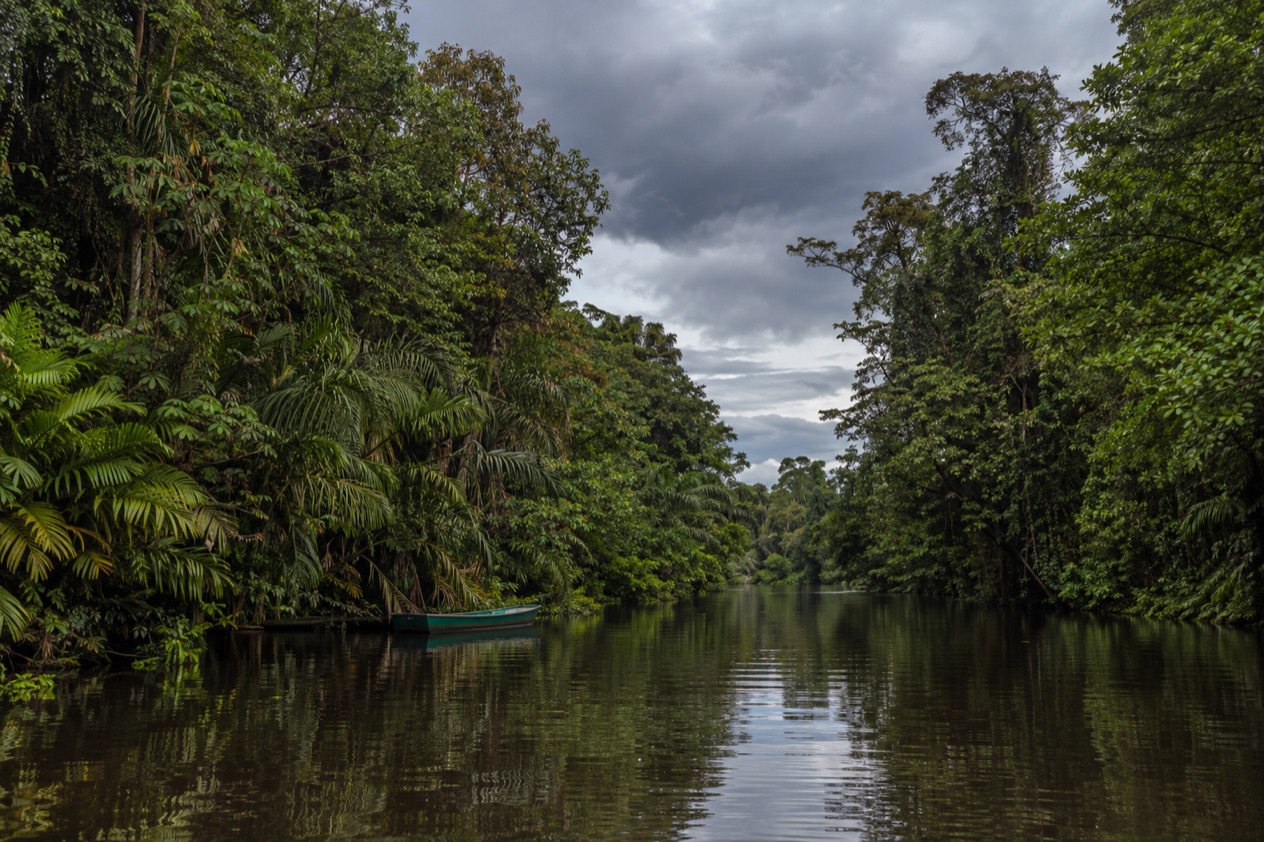
At dawn in August, the canals of Tortuguero sit under a low white mist, and the only sounds are a boat motor idling somewhere upstream and howler monkeys answering each other across the trees. Later the rain comes, warm and heavy, drumming on tin roofs while the village carries on beneath it. This is the green, wet, wildlife-heavy side of Costa Rica’s Caribbean coast, and August is a month when sea turtles come ashore to nest at night.
What is the weather like in Tortuguero in August?
Tortuguero in August brings heat, moisture and plenty of rain, and while a shower can fall on nearly any day, it seldom keeps coming all day long. Nestled in one of the nation’s wettest corners, the village lies on the Caribbean side, where the Pacific coast’s dry-winter, green-summer rhythm does not apply.
| Month | Average high (°F) | Average low (°F) | Rain days | Sea (°F) |
|---|---|---|---|---|
| July | 82.1 | 73.8 | 28.6 | 85.0 |
| August | 83.0 | 73.8 | 27.6 | 85.6 |
| September | 83.5 | 74.0 | 25.6 | 87.1 |
Mornings are often the best window. The air is already warm and sticky by sunrise, but showers tend to hold off for a while, and the canals are glassy, which suits boats, birds and photography. Rain can arrive at any hour, from a quick shower that passes while you sit under a café roof to a long, steady downpour that fills the afternoon. A true deluge is the exception, though it does happen.
Evenings stay warm enough that nobody needs a sweater, and the nights feel soft and damp rather than cool. Clothes dry slowly, so lightweight fabrics and a rain jacket matter more than anything heavy.
The light under the cloud is often silvery and flat, but when the sun breaks through, the forest turns a deep, saturated green. Skies clear for a while more often than the month’s rain count suggests, so plan around the showers instead of fearing them.
Can you swim in Tortuguero in August?
August brings water that feels welcoming and warm, yet Tortuguero’s beach is no spot for a relaxed dip. The Caribbean here is bathtub-warm in August, yet rip currents are dangerous and most beaches have no lifeguards or warnings about unsafe conditions.
In Costa Rica, rip currents pose a serious threat every year, taking the lives of several visitors from the United States, while most beaches have no lifeguards on duty and nothing posted to warn people about dangerous conditions. Tortuguero’s beach is a good example of the kind of open, unguarded shore that warning applies to. Most visitors come to walk on the sand, watch the waves and look for turtle tracks, and they treat the water as something to look at, or at most to wade into ankle-deep.
Families with young children and nervous swimmers will be happier at a hotel pool, where the afternoon rain is part of the fun. If you want to cool off, bring a swimsuit for the pool and treat the ocean as scenery. Snorkeling and surfing are not what this stretch of coast is known for. What you come for here is the forest and the wildlife.
What to do in Tortuguero in August
The big draw of August is the sea turtle nesting season. Green turtles come ashore on the dark beach to lay their eggs, usually from July into October, and in the right weeks you may see a female crawl up the sand, dig and lay while a guide’s red light barely glows.
It is a chance, never a promise. Some nights bring several turtles, others bring none, and the rain and the tides decide a good deal.
Everything else is built around the water: boats that slide through the canals, kayaks that go into the narrow side channels, and rainforest walks that smell of wet earth. Tortuguero has no roads in, so every excursion starts from a dock or the beach path, and the whole village runs to the rhythm of the weather and the boat schedule.
Turtle nights on the beach
Night walks on the beach are the heart of a Tortuguero August, and the way most visitors see turtles is with a local guide who knows the sand and the rules of the nesting beach. Before the tour, ask the guide to explain the current nesting-beach rules, and follow them throughout the walk. The guide decides when a turtle is ready to be watched, and the moment can be quick or long.
The night suits adults and older children who can stay patient and quiet on a damp beach. Bring a rain jacket and shoes you don’t mind getting sandy, and keep your phone away. The wait is part of the experience, and sometimes the reward is simply the sound of the surf and a sky of clouds opening up over the water.
Canal mornings by boat or kayak
The canals are the second great show. A boat ride at first light moves slowly along the green banks, and the guide picks out what a casual eye would miss: a green heron frozen on a root, a kingfisher on a low branch, a caiman half-hidden in the mud, a sloth that looks like a clump of leaves. Howler monkeys, spider monkeys and toucans are all possible, though never guaranteed.
A paddle in a kayak is quieter and closer to the water, and in August the rain is part of the scene, with drops dimpling the surface and leaves dripping. Mornings are the best time, because wildlife is more active and the air is cooler. If a downpour starts, follow the guide’s instructions.
Village, museum and beach walk
The village itself is small and easy to cover on foot, with a sandy main path, little sodas, souvenir shops and colorful wooden houses. On a rainy afternoon it is a good place to slow down: browse the craft stalls, have a coffee and watch the street, then walk out to the long beach between showers to look for turtle tracks and driftwood.
There is also a museum on turtle conservation and local natural history, a pleasant indoor stop that explains what you are likely to see at night. Stay a few extra minutes on the beach at dusk, when the light turns pink and gray and the surf sounds louder than it did by day.
Food here is Caribbean, not the typical Costa Rican plate. Hunt down rice and beans cooked gently in coconut milk, along with rondón (a stew of seafood and root vegetables made low and slow), fried fish, plantains and coconut sweets. Fresh fruit juice and strong coffee go well with the damp weather, and lunch in a small family kitchen is often the highlight of the day.
Two dates fall in the month. On August 2, hundreds of thousands of Costa Ricans walk on pilgrimage to the Basilica of Our Lady of the Angels in Cartago, a national moment of devotion that you will hear about even far from the highlands. August 15 is Mother’s Day, a national holiday, when families gather and many Costa Ricans travel, so expect a family feel in the village that day.
A two-day itinerary for Tortuguero in August
You start Day 1 by arriving on a boat or a small plane, because roads do not exist here. Arrive in the morning if you can, drop your bags and walk the village path while the air is still manageable. Have a late lunch at a family-run soda, with coconut rice and fish, then take a kayak or small boat into the side canals in the early afternoon.
With about twelve and a half hours of daylight, the light fades by early evening, so dinner is early and simple. After dinner, join a guided night walk on the beach for the nesting turtles. Go with rain gear and low expectations, and treat any turtle you see as a gift. If the walk is rained out, turn in early, since Day 2 starts before dawn.
For the rain card, the museum, a long coffee, a hotel pool or a simple card game under a porch roof fill the wet hours well. Midday storms are normal and seldom last all day. Spend the late afternoon on craft shops and a last walk on the beach, then have an early dinner of fresh fish before your boat or flight out.
Is Tortuguero busy in August?
Tortuguero is moderately busy in August, with a steady flow of visitors but not the crush of the dry-season holidays. Travelers come for the turtle nesting, families come during the summer break, and Costa Ricans travel around the national holiday on August 15, so a few weeks feel busier than others.
The village is small, with a limited number of lodges and boats, so rooms and the best guides can fill even when the paths do not look crowded. The rain keeps some travelers away, which helps with the quiet side of the month, especially on weekdays and outside the holiday weekend. Restaurants are small, so make dinner plans on arrival.
As a habit, book rooms early for the weeks around Mother’s Day and for any dates that fall on a weekend, and later for the quiet midweek stretches. Because getting here depends on a boat or a small plane, secure your transport together with your room. Arrange turtle walks and boat trips before arrival.
What to pack for Tortuguero in August
Pack for heat, humidity and rain, and keep everything easy to dry. Light layers beat anything bulky, and you’ll want to protect gear from water in the boat and on the beach.
- A light, packable rain jacket, because showers arrive often and without much warning.
- Quick-dry shirts and pants that keep the sun and the insects off your skin.
- Waterproof sandals or shoes that can take mud and wet sand on the beach and the village paths.
- A dry bag or plastic cover for your camera and phone on boat rides.
- Insect repellent and sunscreen, since mosquitoes and strong sun both show up.
- A small flashlight with a red setting for the walk back from the night beach.
Good to know before you go
The U.S. State Department rates Costa Rica Level 2, ‘Exercise increased caution,’ due to crime; it says petty crime is common throughout Costa Rica and that violent crime also affects tourists, including armed robbery, homicide and sexual assault.
The Atlantic hurricane season runs from June 1 to November 30, and most activity falls between mid-August and mid-October, so August sits at the start of the busiest stretch. Getting to Tortuguero happens solely by boat or small plane, so rough weather may throw off your plans. Keep a little flexibility on the days you travel in and out, and keep an eye on forecasts before you go.
Mother’s Day on August 15 is a national holiday. Cash is useful in a village this small, and the wet weather is a good reason to keep your papers and money in a waterproof pouch.
Tortuguero in August vs July and September
July is a touch wetter and a little cooler on the coast, and the turtle season is already under way, so it feels much like August. The sea is slightly less warm, and the crowds are similar, with a few more families in the first weeks of summer vacation. If you want nearly the same trip with a bit more rain risk, July is a close match.
September is somewhat drier and hotter, with a warmer sea and fewer rain days, and it sits close to the peak of the hurricane season. Turtle nesting continues into the autumn, but the village often grows quieter as vacation season fades, which is good for room availability. The forest stays lush and the canals stay full of life.
If turtles are the priority, both neighbors work, and August is a sound middle choice. Travelers who dislike rain should lean toward September, and those who want the liveliest summer travel feel should choose July or early August.
Is August a good time to visit Tortuguero?
Yes, August is a good time for travelers who come for wildlife and don’t mind rain. It rewards patient people who enjoy early mornings, wet forests and quiet evenings, and it suits couples, nature lovers, photographers and families with older children.
It is a poorer fit for anyone who wants a beach holiday, sunbathing or guaranteed dry days. Travelers who dislike humidity or struggle with unpredictable plans should choose another month. On arrival, settle your night turtle walk and your dawn boat ride with your lodge first, since those are the two experiences the month is built around. What makes August special here is the sight of a green turtle hauling herself up a dark beach under a wet, drifting sky, then the mist lifting off the canals a few hours later.
Sources
- Open-Meteo / ECMWF ERA5, normals 1991-2020 computed for the grid cell at 10.543N 83.502W, checked October 8, 2026
- Open-Meteo Marine API, average 2015-2024, checked October 8, 2026
- sunrise-sunset.org, sunrise and sunset calculated for the 15th of the month, checked October 8, 2026
- U.S. Department of State, Costa Rica Travel Information, Safety and security (https://travel.state.gov/content/travel/en/international-travel/International-Travel-Country-Information-Pages/CostaRica.html), checked October 8, 2026
- NOAA National Hurricane Center, Climatology (https://www.nhc.noaa.gov/climo/), checked October 8, 2026
- U.S. Department of State, Costa Rica Travel Advisory, issued April 1, 2026 (https://travel.state.gov/content/travel/en/traveladvisories/traveladvisories/costa-rica-travel-advisory.html), read via the State Department open data API on October 8, 2026
To plan your stay
- Things to Do in Tortuguero: Canal Boats, Turtle Nesting, Rainforest Walks and Caribbean Food
- Where to Stay in Tortuguero: Village, Beachfront and Canal Lodges
- Tortuguero National Park: Turtle Nesting, Canal Boat Tours, Hours and How to Get There
- Best Time to Visit Tortuguero: Turtle Season, Weather by Month and Canal Tours