
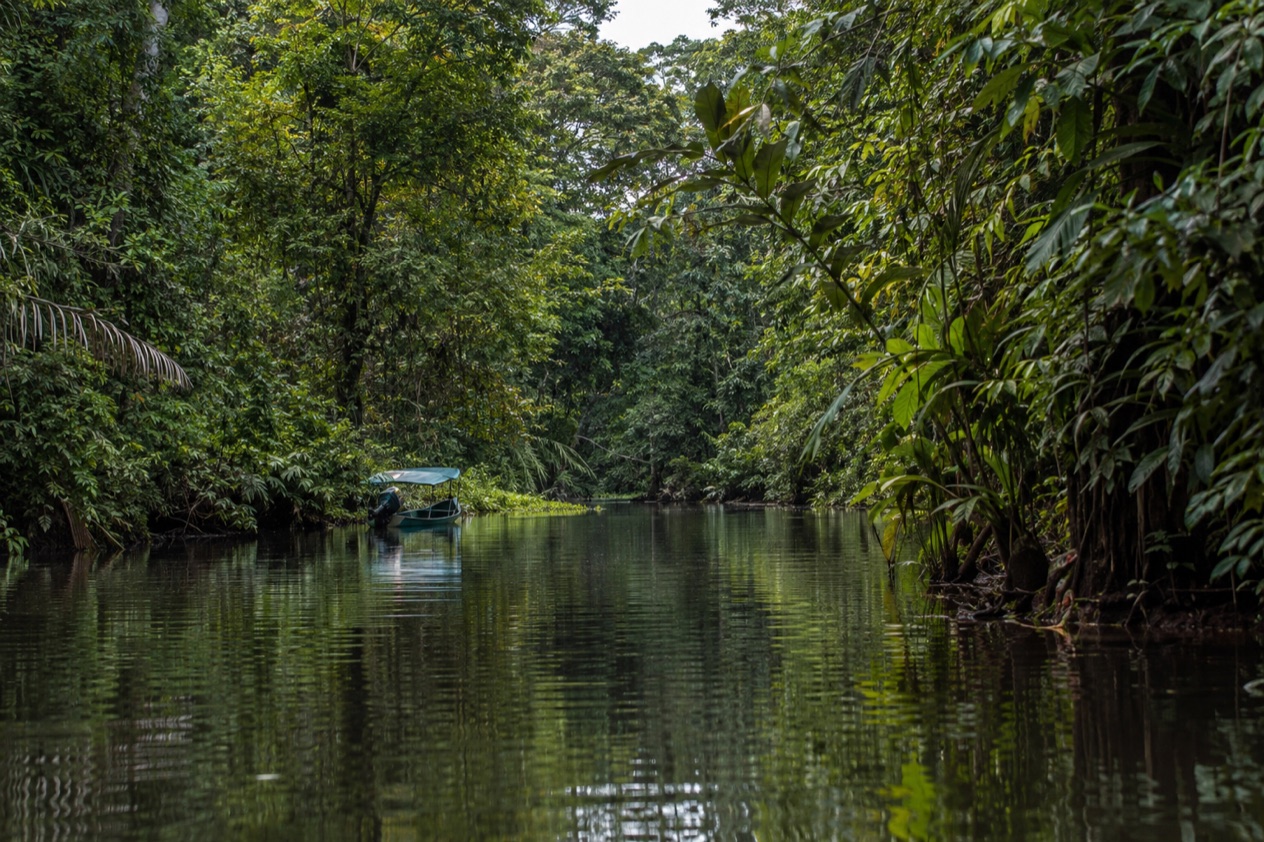
At dawn in Tortuguero the canals are the color of tea and perfectly still, and the first sound is a howler monkey clearing its throat somewhere in the trees. A few hours later, in the village, bicycles rattle along the sandy lane, a cook is frying plantains in a roadside kitchen, and a boat engine hums away toward the park. Where you sleep decides which of those mornings you get, so the choice between the village, the beach and the jungle lodges is the first one to make.
What is the best area to stay in Tortuguero?
For a first visit, the best base is a lodge on the canals close to the village, because it gives you the jungle at the door and the village a short boat ride or walk away. Travelers who care most about the sea and the turtle beach do better on the beachfront strip, budget travelers and anyone who likes to see local life belong in the village, and families usually want a lodge with its own grounds and guided activities included. Nightlife is the one thing Tortuguero does not offer in quantity, so the village is the only answer there, and even then it means a drink and some music, not a night out.
The reason the areas differ so much is geography. On the northern Caribbean coast sits Tortuguero, a tiny village ringed by rainforest and canals, accessible solely by small plane or boat. There are no roads in.
The village sits on a narrow strip of land between the sea and the lagoon, the park lies to the north, and almost everything else is reached by water. Your lodging therefore sets your pace, your meals and the way you move around.
First-time visitors tend to be happiest with a package that bundles the stay, the meals and the guided canal tours. Most travelers here do stay at lodges that offer guided tours, and the arrangement removes a lot of small decisions in a place where you cannot simply hail a taxi.
You wake early, board a boat, return for breakfast, rest through the humid middle of the day and go out again. It is a rhythm that suits the wildlife, which is most active in the cooler early hours.
Beach lovers should adjust their expectations. The Caribbean here is for walking the long dark sand and listening to the surf, and the sea is wild.
Several U.S. tourists drown each year because of dangerous rip currents, and at most beaches there are no lifeguards or warnings about unsafe conditions. A beachfront room is wonderful for the sound of the waves and the walk at dawn, but it is not a swimming vacation.
Budget travelers will find the village the most flexible choice. Guesthouses and simple rooms sit along the lanes, small restaurants serve rice, beans and fresh fish, and you can arrange canal trips and the night turtle walk through local operators instead of one lodge. Families with older children who enjoy a little independence also like the village, while those with small children often prefer a lodge where the grounds are self-contained and meals arrive on schedule.
Timing matters too. The main nesting season for green sea turtles on shore runs from roughly July through October, while leatherbacks lay their eggs at another point earlier in the year.
If the nesting season is the reason for your trip, a place close to the beach and the village makes the evening walk simpler, though the walk itself is done with a licensed guide whichever area you choose. Rain is part of life here in every month, and in the wetter months it falls on most days, so the quality of a covered terrace or a dry common room counts for more than a pool.
The best areas to stay in Tortuguero
Tortuguero village
The village is the only place in the area that feels like a community. A single main lane of sand and concrete runs past a church, a small soccer field, souvenir stands, bakeries, simple sodas (family-run lunch counters) and a few bars with music in the evening.
Children cycle home from school, and locals stop to talk at the corner. Staying here means you eat where the villagers eat and you can walk to dinner without needing a boat.
Lodging in the village runs from guesthouses and family-run rooms to small hotels and apartments with a kitchen. Few have the sprawling jungle grounds of the canal lodges, but you are close to the dock, the shops and the beach path. Guided tours are booked through operators in town, so you can mix a boat trip one day with a quiet day on foot the next.
It suits independent travelers, budget visitors and anyone who prefers a few days of unhurried wandering to a scheduled program. The trade-off is noise. Music from a bar or a rooster at first light can reach a room, so ask where it sits relative to the main lane. Tip: take a walk after the afternoon rain, when the lane smells of wet earth and the village comes back outside.
The beachfront strip
The beach is wide, dark and often windswept, with driftwood piled along the high-tide line and surf that you hear all night. Mornings are the best time here, when you can walk the sand with a coffee and watch frigatebirds and vultures working the shore.
The kind of lodging is mostly mid-range and boutique-style rooms in gardens, plus a few all-inclusive properties with a dining room, a pool and a daily schedule of tours. If turtle nesting is your goal, this is a convenient base, since the nesting beach is the sea itself, though the night walk is with a licensed guide only.
It suits couples and travelers who want the sound of the sea and a sense of space. Do not plan to swim in the surf. Rip currents are a real hazard along this coast, and most beaches have no lifeguards, so use the pool or the lagoon-side shade instead. Tip: ask the lodge how the beach path is after heavy rain, because sand can turn soft and muddy.
Canal lodges near the village
A group of lodges lines the canals within reach of the village, each tucked behind a screen of palms and heliconias with its own dock. This is the classic Tortuguero stay. You eat in an open-air dining room above the water, hear frogs and insects through the evening, and set off by boat in the morning, often with a naturalist guide who points out caimans, monkeys, herons and kingfishers along the banks.
Most travelers stay at lodges that offer guided tours. Rooms range from simple cabins to larger suites. Ask each lodge how guests reach the village.
They suit first-time visitors, families and anyone who wants wildlife without logistics. The trade-off is that you depend on the lodge for meals and movement, and evenings are quiet by design. Tip: when you compare properties, look at how much of the daily program is guided and how large the groups are, since a smaller boat makes it easier to spot birds and hear the guide.
Remote canal and lagoon lodges
Farther from the village, a few lodges sit on quieter stretches of water, where the forest closes in and the only traffic is a passing paddler or a kayak. Nights are very dark, mornings start with birdsong, and the sense of being somewhere remote is real.
The lodging here is typically boutique or eco-style, with a small number of rooms and a set dining schedule. Getting around means the lodge boat, and a visit to the village is something you plan rather than something you do on a whim. The trip in from San Jose takes most of a day, with a road leg to a boat dock and then a boat ride along the canals, so a stay this far out feels like a true retreat.
It suits nature lovers, photographers and couples who want silence, and it suits people who are comfortable with a fixed routine. It is less convenient for anyone who wants to wander into town for dinner. Tip: ask whether the property includes the village visit and the turtle walk or charges them separately, as this changes how the stay feels.
Tortuguero areas compared
| Area | Best for | Feel | Getting around |
|---|---|---|---|
| Tortuguero village | Budget travelers, independent visitors, local life | Lively for a small place, with sandy lanes, bakeries and evening music | On foot, with tours booked in town |
| Beachfront strip | Couples, sea lovers, turtle season | Open, breezy and loud with surf | Beach path or short boat transfer |
| Canal lodges near the village | First visits, families, wildlife | Green, sheltered and scheduled | Lodge boat, sometimes a trail to the village |
| Remote canal and lagoon lodges | Nature lovers, photographers, quiet | Secluded, dark at night, very still | Lodge boat only |
The biggest trade-off is between the beach and the village. On the beachfront you have the sound of the sea and long dawn walks, but you give up easy evenings among local people. In the village you have the opposite. The shore is a short walk away, yet the room is surrounded by daily life, with the noise that comes with it. Many travelers solve this by splitting a longer stay between two areas.
Quiet against company is the second axis. The remote lodges give you the deepest stillness and the best chance of hearing the forest wake up, but you eat when the kitchen serves and you move when the boat leaves. Those who like to choose their own restaurant, stop for a cold drink or change plans at lunch will feel the difference quickly. The village is the only area where spontaneity is easy.
Then there is the matter of structure. An all-inclusive canal lodge asks very little of you, which is a relief after a long travel day, and it keeps the cost of extras predictable. A village guesthouse leaves you free but means you plan the tours, the meals and the turtle walk yourself. Neither is better. It depends on whether you want a program or a place to improvise.
Nightlife deserves a plain word. Tortuguero does not have a club scene. The liveliest evening is a few bars in the village with music, a beer and a table outside, and by late evening the lanes are quiet again.
If that is enough, stay in the village. If you want silence, pick a lodge on the water. If you want village life without relying on a boat in the evening, stay in the village.
How to choose your hotel in Tortuguero
Decide first whether you want an all-inclusive stay or a room you build around. In a place reachable only by boat or small plane, the all-inclusive package carries real weight: meals, guided canal tours and often the transfers from the dock come together, and you are not hunting for a restaurant after a long day on the water. The flexible option, a guesthouse or small hotel, costs you some convenience but gives you freedom to eat in the village and pick your own guides.
Next, beachfront or lagoon side. A beachfront room offers wind, sea sound and a walk on the sand, while a canal-side room offers birdsong, calm water and a dock at your door. Neither is quiet in the way a city hotel is quiet. The sea is loud, and the forest at night is louder than most people expect. If you are a light sleeper, ask about the room’s position and bring earplugs.
Rain shapes the choice more than most visitors think. The Caribbean side has its own calendar, and rain falls in every month of the year.
In July and October it falls on nearly every day, usually in showers or longer gray spells, while January and April are somewhat lighter. So a lodge with a covered dining room, a roofed boat and a good common space is worth more than a sunny pool. Walkways and paths should be covered or at least raised.
If the turtles are why you are coming, plan around the nesting season. The main shore arrivals are green sea turtles, seen mostly between about July and October, while leatherbacks lay their eggs earlier in the year. Night walks on the beach are done only with a licensed guide, so ask whether your lodge arranges the walk or whether you book it in the village. Wildlife is never guaranteed, and the walk is a chance, not a promise.
Holiday weeks and the height of the turtle season call for early planning. Tortuguero has a limited number of rooms and most lodges are small, so a holiday week or the height of the turtle season can fill the better places. Settle on when you will go before picking where you will stay, and stay loose about the days you come and go, because getting there from San Jose eats up the better part of a day and the timing of boats and flights decides when you actually show up.
Families should look at the practical details. A lodge with level paths, handrails on the dock, life jackets in the boat and a pool is easier than a rustic room reached by a muddy trail.
Boat boarding involves steps and sometimes a gap, which can be difficult for guests with limited mobility or small children, so ask the lodge directly how it handles this. Keep children within arm’s reach on the beach and near the water.
Before you book, run through a short list:
- Ask where the room sits relative to the main lane, the bar, the generator or the kitchen, because noise carries.
- Ask whether guided tours and the turtle walk are included or charged separately.
- Ask how the transfer works from the boat dock or the small airstrip, and whether it is part of the stay.
- Ask whether the beach in front of the lodge has a current warning, and whether the staff will advise you on the day’s conditions.
- Ask about covered walkways and common areas for rainy days.
Last, think about how many nights to stay. Because the journey takes most of a day each way, a single night feels rushed. Two or three nights allow at least one early canal trip, a visit to the village and the park, and a slow morning on the lodge deck. A longer stay lets you try two areas, for instance a canal lodge first and then a village guesthouse.
Good to know before you go
The U.S. State Department rates Costa Rica Level 2, ‘Exercise increased caution,’ due to crime; it says petty crime is common throughout Costa Rica and that violent crime also affects tourists, including armed robbery, homicide and sexual assault.
There are no roads into Tortuguero. Most travelers come from San Jose by a road leg of about 3 to 4 hours to a boat dock, followed by a boat ride of about 1 to 2 hours along the canals, while others fly in on a small plane.
Confirm directly with the property whether pickup from the dock or airstrip is included. Keep your belongings in a dry bag for the boat, and carry small bills for the village shops and snacks.
Sources
- Open-Meteo / ECMWF ERA5, normals 1991-2020 computed for the grid cell at 10.543N 83.502W, checked October 8, 2026
- U.S. Department of State, Costa Rica Travel Information, Safety and security (https://travel.state.gov/content/travel/en/international-travel/International-Travel-Country-Information-Pages/CostaRica.html), checked October 8, 2026
- U.S. Department of State, Costa Rica Travel Advisory, issued April 1, 2026 (https://travel.state.gov/content/travel/en/traveladvisories/traveladvisories/costa-rica-travel-advisory.html), read via the State Department open data API on October 8, 2026
To plan your stay
- Best Time to Visit Tortuguero: Turtle Season, Weather by Month and Canal Tours
- Things to Do in Tortuguero: Canal Boats, Turtle Nesting, Rainforest Walks and Caribbean Food
- Tortuguero in January: Canal Boat Trips, Rain Showers and Rainforest Wildlife
- Tortuguero National Park: Turtle Nesting, Canal Boat Tours, Hours and How to Get There