
Early in the morning in downtown San Jose, the coffee sellers at the Central Market are already pouring, and the smell of fried plantains and fresh bread drifts into the covered aisles. Outside, the pedestrian streets fill with office workers, schoolchildren in uniform and vendors unfolding their stands under a soft, spring-like sky. San Jose is a compact mountain capital with a few fine buildings, good coffee and easy roads to volcanoes, and it suits travelers who like a city for a day or two before they head out.
Where is San Jose and what is it like?
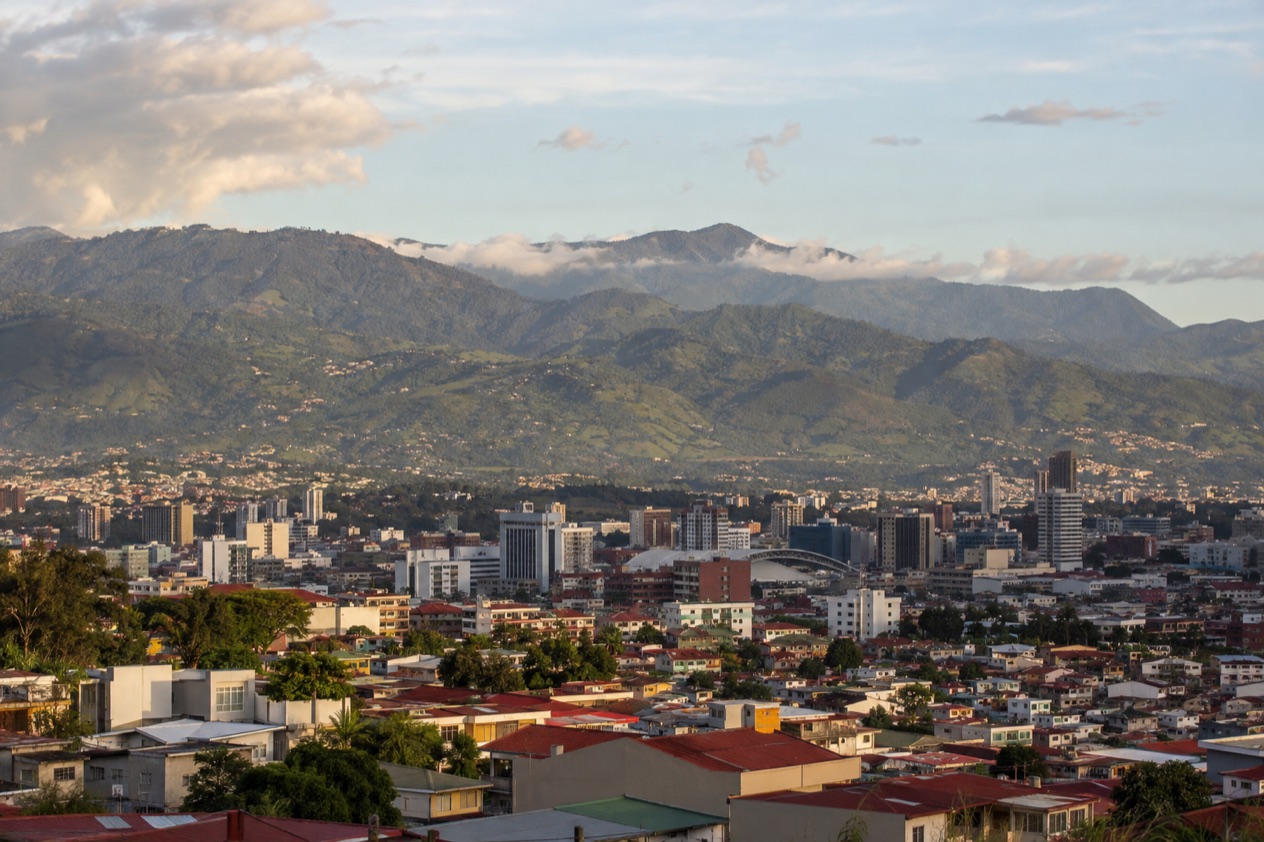
San Jose is the capital of Costa Rica, set in the Central Valley, a high basin ringed by green mountains and volcanoes, roughly in the middle of the country between the Pacific and the Caribbean. It sits at about 3,800 feet, which is why the air feels mild and fresh instead of tropical and sticky. Juan Santamaria International (SJO) lies near San Jose in the Central Valley, while Cartago, Alajuela, Heredia and the slopes of Poas and Irazu are all within the surrounding region.
This is a working city rather than a beach resort. Traffic honks along the main avenues, small sodas (family lunch counters) serve a plate of rice, beans and meat to people on their break, and neighborhoods change character every few blocks. A grid of older streets in the center holds the theaters, museums and markets, while the residential districts spread up the hillsides in every direction.
The pace is brisk on weekdays and gentler on weekends, when families stroll the pedestrian avenues and the parks. Visitors who love cities, history and food tend to like it. Travelers expecting white sand, jungle or a postcard colonial plaza may find it plain, and the capital is not where most people picture a Costa Rica vacation.
What San Jose does very well is serve as a launch pad. The mountains are close, the weather in the valley is easy on the body, and a short stay here lets you adjust to the time, the food and the rhythm of the country before heading to the coast or the cloud forest. A short stay here can ease the transition between a flight and the rest of the country.
What is there to do in San Jose?
The big reasons to come are a small group of museums and landmarks in the center, a market that tastes like the country, and the volcanoes and farms an easy drive away. Together they give you a first, honest picture of Costa Rica away from the beach.
The National Theater and the Gold Museum
The National Theater opened in 1897 and remains one of the city’s best-known buildings, with a grand neoclassical front, painted ceilings and a marble-and-gilt interior that feels startlingly European in a Central American capital. Many visitors come simply to look around and stop for coffee in the café attached to the building.
A short walk away, the Pre-Columbian Gold Museum lies under the Plaza de la Cultura. Its cases hold the delicate gold work of the peoples who lived here before the Spanish: tiny frogs, eagles and figures worn as ornaments. Pair the two in a single morning, then wander the plaza, where pigeons, street musicians and families fill the benches. Both suit rainy days well, since you spend most of the time indoors.
The Central Market and a first casado
The Central Market is a covered maze of food stalls, coffee sellers, souvenir shops and small lunch counters, and it is the classic place to taste the country for the first time. You sit at a narrow counter and order a casado, the everyday plate of rice, black beans, a protein, salad and plantains, followed by fresh fruit or a cold drink.
Beyond lunch, the market is a good place to buy bags of local coffee, spices and small gifts, and to watch daily city life at close range. It is crowded and a little chaotic, which is part of its charm. Go with an appetite and a light bag, and keep your phone and wallet close, as in any busy market.
Poas and Irazu, the volcano day trips
Poas rises above the Central Valley within a couple of hours’ drive of the city and is known for a large active crater holding a turquoise acid lake. The summit stands at 8,885 feet, and it is often clearer in the morning before the clouds roll in, so an early start gives you the best chance of a view. Nothing is promised, and cloud sometimes covers the crater completely.
Irazu is the tallest active volcano in the country, at about 11,260 feet. Its crater area above Cartago can be cold and windy, with a green crater lake on clear days, so bring a warm layer even if the valley felt springlike when you left. The two volcanoes make separate outings.
Coffee farms and the basilica at Cartago
The hillsides around the capital are coffee country, and farms here let you see the trees, the drying patios and the roasting, then taste the result. It is an easy, relaxed half-day that suits people who prefer something gentler than a volcano rim, and it pairs well with a lunch in a village on the way.
The town of Cartago, reached by road from the capital, is known for its basilica, a place of pilgrimage with a striking interior and a steady stream of visitors and worshippers. Many travelers combine it with Irazu in one long day, since the volcano road climbs from the town. Dress modestly, move quietly and treat it as a living church, not just a sight.
What sets San Jose apart from its neighbors is that it gives you all of this in one place: museums, food and mountains, within a short drive of a bed in a mild climate.
How many days do you need in San Jose?
One full day and two nights is enough for most travelers, and a long weekend is plenty if you want the volcanoes and farms too. Many people use the capital for the first and last night of a trip, which suits it well.
With a single day, spend the morning in the center. Start with coffee near the National Theater, walk to the Gold Museum under the Plaza de la Cultura, then have lunch at the Central Market. In the afternoon you can wander the pedestrian streets, browse the craft stands and sit in a park watching the city go by. It is a gentle, walkable day that fits easily around a flight.
A second day opens the mountains. Poas works best as a morning outing, when the summit is more likely to be clear, and a coffee farm on the way back makes a natural afternoon stop. If you prefer cooler, windswept scenery, swap in Irazu and the town of Cartago with its basilica, which makes a full day on its own.
With three or four days you can do both volcanoes on separate days, add a slow neighborhood evening in the city, and still have time to rest. The restaurants, bars and small galleries of the residential districts reward an unhurried dinner, and a free afternoon lets you simply sit with a cup of coffee, which is the local way.
Beyond that, the capital is better as a base than a destination. Longer trips usually move on to the beaches or the cloud forests, and you return to the city for the last night before a flight, with the airport only a short ride away.
Where to stay in San Jose
The best area depends on how you plan to spend your time. The historic center and the nearby neighborhoods, such as Barrio Amon with its old mansions turned guesthouses, put you within walking distance of the theater, the museums and the market. They suit travelers who want to see the city on foot and do not mind street noise and a busy, urban feel.
Barrio Escalante, a short ride from the middle, is the neighborhood for restaurants, cafés and craft beer, with tree-lined streets and a lively evening scene. It works well for food lovers who want to eat well within a quick taxi ride of the sights, and for those who like a more local, residential setting.
Escazu, in the hills on the western edge of the valley, is a leafy suburb with shopping, restaurants and a quieter, more comfortable atmosphere. It suits travelers who prefer calm evenings and a hotel with more space, and who are happy to take a taxi or drive into the center for the day.
Near the airport, the town of Alajuela and the hotels around it are handy for early flights and late arrivals. They are practical for a single night before or after a trip, and the countryside around them feels greener and calmer than the city.
How do you get to San Jose and get around?
Most visitors arrive by air at Juan Santamaria International (SJO), which lies near San Jose in the Central Valley, so you are in the city soon after landing. The other international airport, Daniel Oduber Quiros (LIR) at Liberia in the northwest, is the closest to the Guanacaste beaches, and is not the one for San Jose.
Most visitors arrive at Juan Santamaria International (SJO), near San Jose in the Central Valley. Because the capital sits so close to where you land, it works well for a first night, letting you rest before a longer trip to the coast or the mountains.
In the center, walking is the best way to get around. The sights near the National Theater, the Plaza de la Cultura and the Central Market are close together, and several streets are pedestrian only. Walk in daylight, keep your belongings close and stay aware of your surroundings, as in any capital.
The volcanoes, coffee farms and Cartago are all reached by road, so many visitors arrange a ride or a day outing from the city. Plan on a slower trip than the map suggests when the roads climb into the mountains and traffic builds around the valley.
When is the best time to visit San Jose?
The best months are December through April, the dry season of the Central Valley. January is a good example: only a handful of rainy days, mild afternoons in the mid-70s and cool, fresh mornings that make long walks and mountain views easy. April is warmer, in the upper 70s by day, with a bit more rain creeping in, but still pleasant for sightseeing.
From about May to November the valley turns green and rainy, and the rain usually falls in the afternoon. July brings showers on most days, though mornings are often bright enough for a market or a museum. October is deep in the green season, with rain on nearly every day and some heavy downpours, so the volcano summits are more often wrapped in cloud and a rain jacket becomes part of your daily kit.
Temperatures hardly change through the year in the valley, so the choice is mainly about rain and crowds. The dry months bring more visitors, especially around Christmas and when Holy Week falls in the spring, when hotels and tours fill up and travelers book early. In the green months the city is quieter, rooms are easier to find, and the hillsides are at their lushest, as long as you plan the day around the afternoon rain.
Good to know before you go
The U.S. State Department rates Costa Rica Level 2, ‘Exercise increased caution,’ due to crime; it says petty crime is common throughout Costa Rica and that violent crime also affects tourists, including armed robbery, homicide and sexual assault.
The Costa Rican currency is the colon, but U.S. dollars are widely accepted in tourist areas, and many hotels, tours and restaurants quote prices in dollars. Change often comes back in colones, so keep a few small bills handy for markets and sodas.
Petty crime is common in busy places, so carry only what you need and keep your phone out of sight on crowded streets. The city’s altitude keeps days mild but evenings cool, so a light layer is useful, and a rain jacket is a good idea in the green season.
Sources
- Open-Meteo / ECMWF ERA5, normals 1991-2020 computed for the grid cell at 9.9281N 84.0907W, checked October 8, 2026
- Costa Rica Tourism Board (ICT), Poas Volcano National Park (https://visitcostarica.com/where-to-go/protected-areas/poas-volcano-national-park), checked October 8, 2026
- Costa Rica Tourism Board (ICT), Irazu Volcano National Park (https://visitcostarica.com/where-to-go/protected-areas/irazu-volcano-national-park), checked October 8, 2026
- U.S. Department of State, Costa Rica Travel Advisory, issued April 1, 2026 (https://travel.state.gov/content/travel/en/traveladvisories/traveladvisories/costa-rica-travel-advisory.html), read via the State Department open data API on October 8, 2026
- U.S. Department of State, Costa Rica Travel Information, Entry and exit requirements (https://travel.state.gov/content/travel/en/international-travel/International-Travel-Country-Information-Pages/CostaRica.html), checked October 8, 2026
All our pages
When to go
- Best Time to Visit San Jose: Dry Season, Green Season, Weather by Month and Festivals
- San Jose in January: Dry-Season Weather, Theaters and Museums, and Day Trips
- San Jose in February: Dry-Season Weather, Coffee Farms, Volcano Day Trips and a Two-Day Plan
- San Jose in March: Weather, Oxcart Parade and What to Do
- San Jose in April: Weather, Holy Week, Juan Santamaria Day and What to Do
- San Jose in May: Green-Season Rains, Coffee Farms and Volcano Day Trips
- San Jose in June: Green-Season Showers, Central Market and Coffee Country
- San Jose in July: Green-Season Weather, Museums, Coffee and a Two-Day Plan
- San Jose in August: Rain, the Cartago Pilgrimage, Volcano Day Trips and Mother's Day
- San Jose in September: Independence Day Lanterns, Green-Season Weather and What to Do
- San Jose in October: Rainy-Season Weather, Theaters and Museums, and Easy Day Trips
- San Jose in November: Rainy-Season Weather, Coffee Country and What to Do
- San Jose in December: Festival de la Luz, Weather and What to Do
Things to do
- Things to Do in San Jose: National Theater, Gold Museum, Poas Volcano and Casados
- Day Trips from San Jose: Poas, Irazu, Cartago and Coffee Country
- 3 Days in San Jose: Theater and Market, Poas and Irazu Day Trips, Where to Stay