
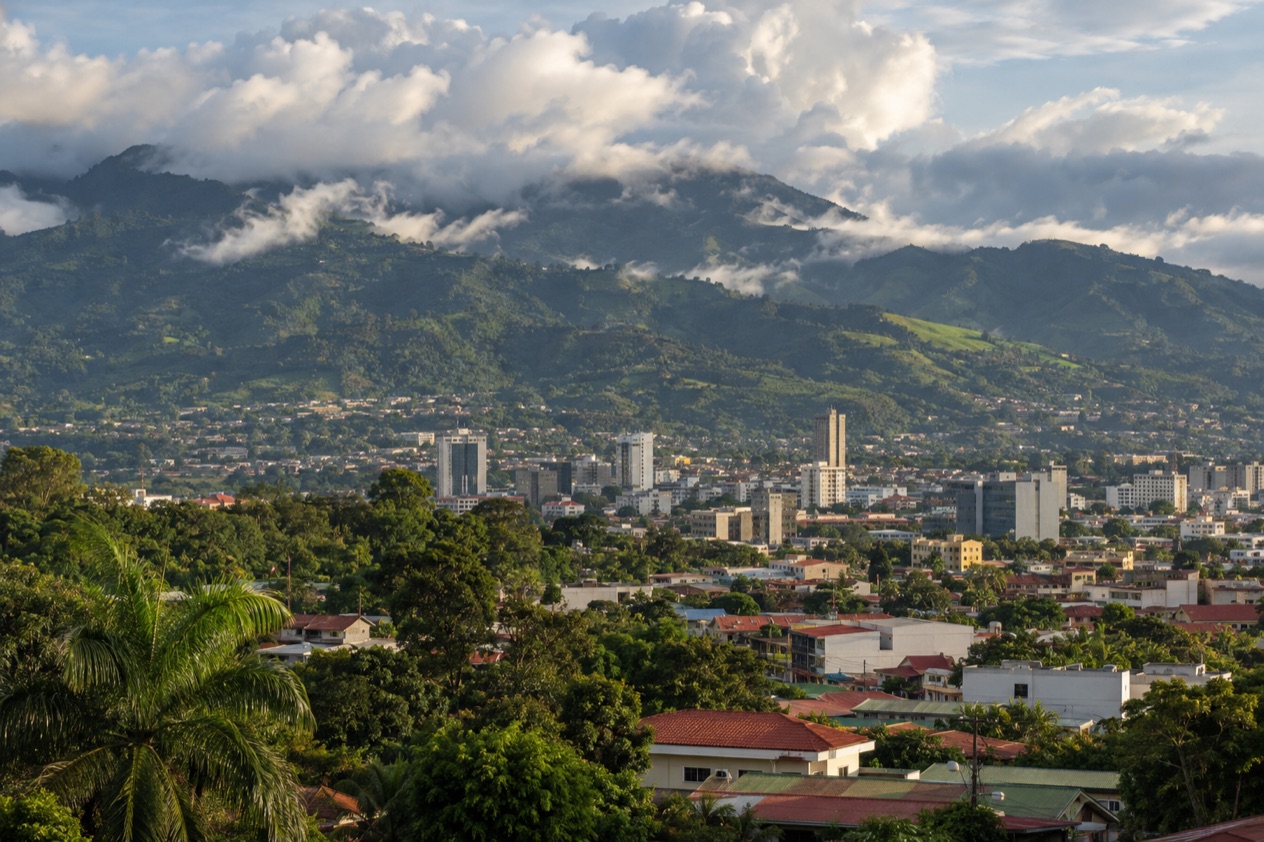
On a November morning in San Jose, the sky over the Central Valley is often a clean, washed blue, and the first smell on the street is roasted coffee drifting from a corner soda where office workers stand over their gallo pinto. By early afternoon the clouds build over the mountains, and the city settles into its rhythm of markets, museums and long lunches. This is the green end of the rainy season in Costa Rica’s capital, a month for travelers who want volcano and coffee-farm day trips with a calmer city around them.
What is the weather like in San Jose in November?
November in San Jose is mild and still quite wet, with spring-like temperatures all day and rain on most afternoons.
| Month | Average high (°F) | Average low (°F) | Rain days |
|---|---|---|---|
| October | 74.4 | 63.8 | 26.8 |
| November | 73.8 | 63.5 | 20.8 |
| December | 74.6 | 62.6 | 11.8 |
The day’s finest hours come early. The air is fresh, the light is clear, and the mountains around the valley often stand out sharply before clouds gather. If you want a view, a walk in a park or an early start for a volcano, plan it before lunch.
In the afternoon, rain tends to show up, at times a thunderous, heavy burst that goes on for an hour or two, at other times a gray drizzle that lingers toward evening. Not every day is wet, and the month is easing off from the peak of the season, but you should still plan around showers. The capital sits high, so the rain never feels tropical-hot. It feels cool and damp.
When the sun goes down, a light sweater or a rain jacket will keep you comfortable, and shorts are not needed at night. Daylight lasts nearly twelve hours, so dinner often happens after dark and the city does not shut down early. San Jose is inland and high, so there is no sea here. Beach plans belong to day trips or a later leg of your trip.
What to do in San Jose in November
The big date of the month is November 2, All Souls’ Day (Dia de los Difuntos), a national holiday. Some families visit cemeteries to leave flowers, and the city may feel quieter than usual. It is a quiet, respectful occasion rather than a street party.
Nature’s calendar helps too. Toward the end of the year, the coffee harvest begins in the highlands around the capital, so the farms outside the city start to feel alive, with pickers on the slopes and the smell of fruit and drying beans. Coffee is the flavor of the month, from a cup in the central market to a tasting on a hillside plantation.
Coffee farms and the harvest
The coffee farms in the hills around San Jose are an easy day trip by road, and November is when the harvest starts to stir. On a farm visit you walk between rows of glossy-leaved bushes, learn how the red cherries become green beans, and finish with a tasting where you can pick out the chocolate and citrus notes in the cup.
Set out early, while the light is fine and the rain remains hours off. A visit works for nearly everyone, including travelers who do not care much about coffee but like green hillsides and a slow pace.
Bring a light rain jacket and shoes that can handle mud on the paths. If you want to bring coffee home, buy it straight from the farm shop, where it is roasted close to where it grew.
Poas and Irazu volcanoes
Poas and Irazu are the classic day trips from the capital. Both are reached by road, and both reward an early start, because the crater views depend on cloud, and cloud thickens as the day goes on. Come the rainy season, mist frequently shrouds those peaks before noon, which means a clear view is a possibility, not a guarantee.
On the way up, the road climbs through dairy pastures, strawberry stands and cloud forest, and the air turns noticeably colder. Wear layers, because the summit feels far from the mild valley below. Before you leave, check the park’s official page, since entry and park rules may change.
If the crater is hidden, the drive is still pleasant, with roadside stands selling strawberries with cream, fresh cheese and hot drinks. Many people pair a volcano with a coffee farm on the same day, a good plan because the farm gives you something to do when the clouds win.
Cartago and its basilica
Cartago, the old colonial capital, is a short trip from San Jose by road and is known for its basilica, an important pilgrimage church for Costa Ricans. The building is grand, with a striking dome and a quiet interior where visitors light candles and sit in the pews.
It suits a gray or showery day well, since most of the visit is indoors, and it combines easily with Irazu, which lies in the same direction. Dress modestly, keep your voice low, and expect a calm, devotional mood rather than a tourist show.
In the city itself
San Jose rewards a few hours on foot. At the Central Market, a winding collection of soda counters, spice stands, coffee vendors and food stalls offers casado, the country’s midday meal, a plate of beans, rice, plantain, salad and either meat or fish. Try a cup of agua dulce or fresh fruit juice, and look for tres leches cake for dessert.
The city’s museums, theaters and plazas are an easy answer to a wet afternoon. When rain arrives and hours need filling, people love the gold and jade museums along with the National Theater, whose hall and café are richly decorated. Look for the small cafés downtown, where baristas pour coffee through a cloth filter called a chorreador, a gentle way to taste local beans.
In the evening, the neighborhoods with restaurants and bars come alive, and a cool night is good for a long meal.
A two-day itinerary for San Jose in November
Day 1 is for the city. Start at the Central Market in the morning for coffee and a breakfast of gallo pinto, rice and beans fried with onion and herbs, with eggs and fresh cheese. Walk to the National Theater, then to the museums of gold and jade while the sky is still blue. Have a casado at a soda around midday.
When the afternoon clouds build, stay indoors with a second museum or a long coffee break in a café. By evening the rain often thins out, and sunset comes a little before dinner, so you can head to a restaurant in one of the livelier districts and take a taxi back.
Day 2 is for the mountains. Leave early for Poas or Irazu so you reach the crater before the clouds close in. After the volcano, stop for strawberries and cream at a roadside stand, then continue to a coffee farm for a late lunch and a tasting during the harvest season.
If the volcano is socked in or the rain starts early, make the day Cartago and its basilica, then a farm visit. Return to San Jose by late afternoon, and finish with a quiet dinner and an early night.
Is San Jose busy in November?
No, November is one of the calmer months in San Jose, with fewer visitors than in the dry season that follows.
Most travelers pass through the capital in a day or two on the way to the coast or the cloud forest, so the city never feels crowded, and in November the flow is lighter still. The holiday on November 2 is a local event, so expect some closures and quieter streets that day.
The weeks before the December holidays are when demand starts to rise, so if your trip runs close to the end of the month, book earlier than you would for early November. Check current entry and reservation rules on SINAC’s official page before you go.
What to pack for San Jose in November
Bring layers you can put on or take off while traveling up and down the mountains, since days stay mild, evenings turn cool and rain tends to fall in the afternoon.
- A light, packable rain jacket, because showers arrive most afternoons
- For chilly nights and the peaks of volcanoes, bring a sweater or a fleece.
- Shoes with grip for wet sidewalks and muddy farm paths
- A small umbrella for walking between museums and cafés
- Long pants and short sleeves for easy layering
- A dry bag or plastic cover to protect your camera and phone
Good to know before you go
The U.S. State Department rates Costa Rica Level 2, ‘Exercise increased caution,’ due to crime; it says petty crime is common throughout Costa Rica and that violent crime also affects tourists, including armed robbery, homicide and sexual assault.
By November, San Jose is wrapping up its rainy season, so schedule outdoor activities for the morning and save museums and cafés as backups for the afternoon. The national holiday on November 2 closes many shops and offices, so shop and run errands before or after it. Because most trips use the capital as a base, the airport is close and day trips to the volcanoes, coffee farms and Cartago all leave from the city by road.
San Jose in November vs October and December
Moving the trip a month earlier puts you in the wettest stretch of the year, with rain on nearly every day and heavier downpours. Temperatures hardly change, but the skies are grayer and the volcano views are less likely. Travelers who do not mind getting wet will find the city very quiet, and the hills are at their greenest.
A month later, December is clearly drier, with far fewer rainy days and clearer mornings, and the coffee harvest is in full swing. The trade-off is that the holiday season brings more visitors, so rooms and tours fill earlier and the pace picks up.
Choose October if you want the emptiest city and do not mind rain. Choose November for a balance of green scenery, fewer crowds and a bit more sunshine. Choose December if a drier forecast matters more than quiet streets.
Is November a good time to visit San Jose?
Sure, November suits visitors who enjoy lush scenery, coffee and an easygoing city, and who don’t mind rain in the afternoon.
It suits people who plan their days around the morning, enjoy museums and markets, and want volcano and coffee-farm trips without the heaviest crowds. It is less suited to travelers who need guaranteed sunshine for photos and long outdoor days, who may prefer a drier month later in the season.
On arrival, take a first walk through the center and have a casado at a soda, then book your volcano morning for the earliest slot you can manage. What makes November special here is the moment the highlands turn toward harvest, when the hills are lush from the rains and the first coffee of the new crop begins to appear in the cups.
Sources
- Open-Meteo / ECMWF ERA5, normals 1991-2020 computed for the grid cell at 9.9281N 84.0907W, checked October 8, 2026
- sunrise-sunset.org, sunrise and sunset calculated for the 15th of the month, checked October 8, 2026
- U.S. Department of State, Costa Rica Travel Advisory, issued April 1, 2026 (https://travel.state.gov/content/travel/en/traveladvisories/traveladvisories/costa-rica-travel-advisory.html), read via the State Department open data API on October 8, 2026