
On the second Sunday of March, painted oxcarts roll through Escazu, just outside San Jose, their wheels clacking and their drivers walking beside the oxen in wide hats. Down in the capital, the Central Market is loud with lunch orders and the smell of fresh coffee. The mountain air of the Central Valley is mild and bright, which makes March a good month for wandering the city on foot.
What is the weather like in San Jose in March?
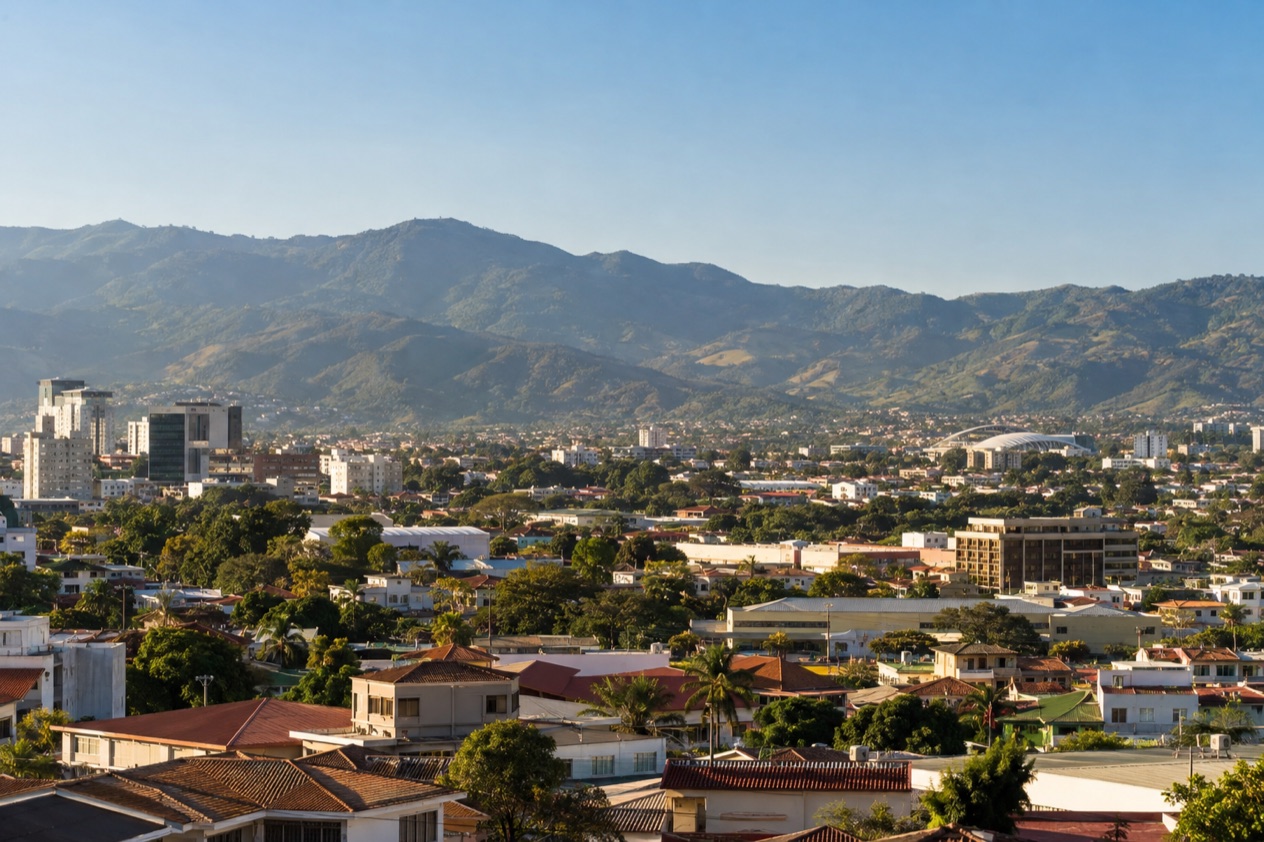
March in San Jose is warm, bright and mostly dry, with spring-like days at the mountain altitude of the Central Valley and cool nights.
| Month | Average high (°F) | Average low (°F) | Rain days |
|---|---|---|---|
| February | 77.9 | 61.9 | 5.6 |
| March | 79.5 | 62.8 | 6.0 |
| April | 79.6 | 64.0 | 10.2 |
Mornings start fresh and clear, cool enough that a light layer feels right over breakfast. Around noon the sunshine beats down and the streets turn mild enough for short sleeves, yet the elevation stops the air from ever turning thick. Afternoons are the time for shade, a cold drink and a slow stroll through the parks.
Some days bring rain, but it is uncommon for an inch or more to fall at once. Showers become more frequent as April approaches.
Evenings cool off pleasantly. A light jacket or a sweater is enough for dinner outside, and you will sleep well without air conditioning. Days run a little over twelve hours, so there is still light for an early evening walk before dinner.
What to do in San Jose in March
The big date of the month is the Dia del Boyero, a parade of painted oxcarts in Escazu held on the second Sunday of March. It honors the oxcart drivers who once hauled coffee over the mountains to the coast, and the carts, with their sunburst wheels and bright geometric patterns, are a symbol of Costa Rica. Families line the route, the oxen plod along in pairs, and the whole thing feels more like a village celebration than a show for tourists.
Beyond the parade, March suits a city that is best explored on foot and in the morning. Pair the Central Market with the National Theatre and one of the capital’s major collections, such as the Pre-Columbian Gold Museum or the Jade Museum. Many visitors treat San Jose as a stop of a day or two before heading out, and the weather this month makes that easy.
The Central Market and a first taste of Costa Rica
If casados and fresh fruit are new to you, make your way to the Central Market, a covered maze of lunch counters, souvenir shops, coffee sellers and food stalls. A casado is the everyday plate: rice, beans, a portion of meat, fish or chicken, plantains and a little salad, all on one dish. Take a seat at a counter and order whatever the person next to you is eating.
The Central Market is a covered maze of food stalls, coffee sellers, souvenir shops and small lunch counters. Walk the narrow aisles slowly, since each turn brings another coffee roaster, a stack of tropical fruit or a shop of wooden crafts. Cool mornings in March make the covered lanes comfortable, and the afternoon showers, if one comes, are a good excuse to stay inside with a coffee.
It suits anyone who likes to eat where locals eat, and it is an easy place to pick up small gifts such as coffee beans. Keep your bag in front of you in the crowded aisles, since petty theft is a real concern in busy parts of the city.
Escazu and the oxcart tradition
Escazu sits in the hills just outside the capital, and it is where the Dia del Boyero parade takes place. The town has long been tied to the oxcart culture that built Costa Rica’s coffee trade, when drivers hauled sacks of beans down to the coast on carts decorated one by one. On parade day, expect painted wheels, ribbons and a festive crowd.
Arrive early on that Sunday to find a spot along the route and to get a table for lunch afterward. Outside the parade, Escazu is a pleasant place for a relaxed meal and a walk through its quieter streets, and the mild March air makes the hillside setting a good reason to linger.
Together, the market and the parade pair everyday San Jose with a vivid Costa Rican tradition. If the weather turns, switch to a museum or a café and come back out when the sun returns.
A two-day itinerary for San Jose in March
Day 1 begins in the cool, clear morning, the best time to be on foot in the city center. Start with coffee and a pastry at a local café, then walk through the central plazas and past the old theaters while the light is soft. Keep the pace easy, since the sun climbs quickly and warms the streets by midday.
Head to the Central Market for a late lunch, when the counters are busy and the casados are coming out hot. In the afternoon, with the sun at its strongest, stay in the shade or step into a museum. Finish with an early dinner at a neighborhood restaurant and an evening stroll while the air is cool, getting back before nightfall.
Day 2 is for the hills. If the second Sunday of March falls on this day, spend the morning at the oxcart parade in Escazu, watching the painted carts pass and then eating lunch in town. On any other day, stay in San Jose to visit the National Theatre and a downtown museum.
Come back to the city in the late afternoon and use the light for a last wander, perhaps picking up coffee to take home. If a shower rolls in, shift to a covered café or a gallery and wait it out. Dinner can be a relaxed one, with a final plate of gallo pinto, the rice-and-beans mix Costa Ricans eat at breakfast and beyond.
Is San Jose busy in March?
San Jose is moderately busy in March, with a steady flow of travelers passing through on their way to beaches and volcanoes, but it rarely feels crowded.
The majority of travelers touch down at the airfield beside the city and then depart after a day or two, which means the capital gets a steady stream of comers and goers instead of a crowd that sticks around. The dry-leaning weather of the season keeps the broader country popular, which means hotels and rental cars can tighten up when holiday weeks fall. Holy Week and Easter move every year, and when they land in or near March, expect busier days and fuller rooms.
The Dia del Boyero fills Escazu on its Sunday, so restaurants nearby fill up too. If you plan to be there, reserve a table for lunch and book a room early. On ordinary weekdays, the market and museums have room to move, and you can usually find a table at a good restaurant without a long wait.
As a habit, book rooms and a rental car early if your dates touch a holiday week or the parade weekend, and a little later for the quiet ones. Since many travelers use San Jose as a base for a night or two, ask about early breakfasts and airport transfers when you book.
What to pack for San Jose in March
Pack for warm days, cool evenings and the odd short shower, and keep the bag light since you will spend much of your time walking.
- A light sweater or jacket, because evenings and early mornings are cool at this altitude.
- Breathable short sleeves for the sunny middle of the day.
- A compact rain jacket or umbrella for the occasional afternoon shower.
- Comfortable walking shoes for cobbled streets and market aisles.
- Sunscreen and a hat, since the mountain sun is strong even when the air feels mild.
- A small cross-body bag that closes, for crowded markets.
Good to know before you go
The U.S. State Department rates Costa Rica Level 2, ‘Exercise increased caution,’ due to crime; it says petty crime is common throughout Costa Rica and that violent crime also affects tourists, including armed robbery, homicide and sexual assault.
March is a comfortable month for getting around the capital, with mild days that make walking easy. If you want to see the oxcart parade, plan around the second Sunday and secure your lodging and lunch ahead of time. Keep valuables out of sight in the busy market and on crowded streets, since petty crime is common in the city.
San Jose in March vs February and April
If you shift your trip back four weeks, you land in February, a bit cooler and just about as dry. The days feel much the same, with fresh mornings and bright afternoons, but you miss the Dia del Boyero parade, which belongs to March. The difference is small, so February suits anyone whose dates are fixed.
Moving four weeks later lands in April, when the rain days nearly double and showers become a regular part of the afternoon. It is a bit warmer at night, and the green begins to deepen as the wetter season approaches. You can still enjoy the city, but you will plan indoor stops more often.
Choose March if you want the oxcart parade, the driest-feeling days of the three and a comfortable window for outdoor walks. Choose February if your schedule leans that way and you can do without the parade. Pick April only if you do not mind carrying a rain jacket and keeping afternoons flexible.
Is March a good time to visit San Jose?
San Jose is a fine place to visit in March, above all for travelers who enjoy gentle weather, simple strolls and a touch of local tradition.
It will suit food lovers who want to graze through the Central Market, families who enjoy a parade, and anyone using the capital as a base before heading to the coasts or mountains. Those who want a steamy beach-style city or a guaranteed dry day every day may prefer another place, since showers do happen and the altitude keeps things cool at night.
On arrival, start with the market and a casado, then let the afternoon go slowly. Keep a flexible plan for the weekend of the parade and book your room early if your dates include it. What makes March in San Jose special is the painted oxcarts of Escazu rolling along under clear mountain skies, a tradition that brings the old coffee road back to life for a day.
Sources
- Open-Meteo / ECMWF ERA5, normals 1991-2020 computed for the grid cell at 9.9281N 84.0907W, checked October 8, 2026
- sunrise-sunset.org, sunrise and sunset calculated for the 15th of the month, checked October 8, 2026
- U.S. Department of State, Costa Rica Travel Advisory, issued April 1, 2026 (https://travel.state.gov/content/travel/en/traveladvisories/traveladvisories/costa-rica-travel-advisory.html), read via the State Department open data API on October 8, 2026