
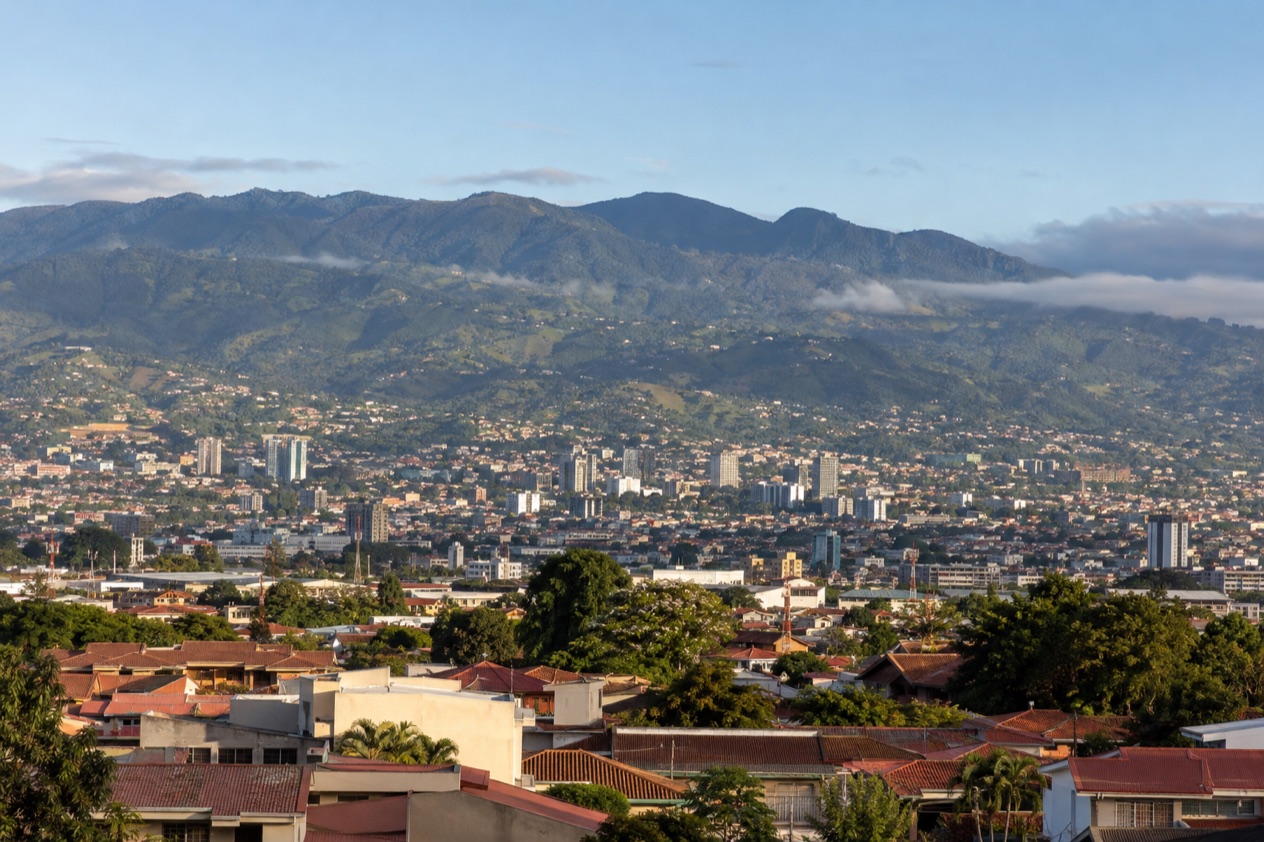
Before the sun has cleared the mountains around the Central Valley, vans are already idling outside San Jose hotels and the smell of fresh coffee drifts from every corner bakery. By seven the city is behind you and the road climbs into cloud forest, past coffee rows, strawberry stands and roadside stalls selling hot corn tortillas. San Jose sits at the center of a region where volcano craters, a colonial basilica and working coffee farms all lie within a morning’s drive.
What are the best day trips from San Jose?
The best day trips from San Jose are the ones close enough to go and return in a single day: two volcanoes, a pilgrimage town and the coffee farms of the highlands. Farther destinations on the coasts and in the cloud forests can be done in a day too, but they are long drives and are better treated as overnight stops. Here are the trips worth planning around.
- Poas Volcano, for a huge active crater with a turquoise acid lake, best in the early morning before the clouds close in.
- Irazu Volcano, the tallest volcano in the country, with a cold, windy summit and a chance at a green crater lake.
- Cartago and its basilica, for a look at the religious heart of the country and an easy pairing with Irazu.
- A coffee farm in the Central Valley, for a tour and a cup brewed in a chorreador.
- Jaco, the closest beach town, for a surf-and-sand day on the Pacific side.
- La Fortuna, for the Arenal area, a long drive that rewards an early start.
- Manuel Antonio, for rainforest and beaches, better with a night on the coast.
- Monteverde, for cloud forest, a long day best stretched into an overnight.
The first four are the classic day trips from San Jose. Jaco can work as a long day trip, while La Fortuna, Manuel Antonio and Monteverde are better suited to an overnight stay.
The best day trips from San Jose
Poas Volcano
A couple of hours behind the wheel from the capital, Poas lifts itself over the Central Valley, and of all the craters, this is the one that stays with visitors the most. The main crater is a vast bowl, and at the bottom sits a turquoise lake of acid water, with steam drifting off its surface. The crater viewpoints make Poas a memorable stop for families.
Go early. In the morning, the view from the top tends to be better, ahead of the clouds that drift in and cover the crater, though even at that hour you might see nothing at all. It is cool at this altitude, so bring a jacket and a rain layer. Many tours pair Poas with a coffee farm or a strawberry stop on the way down, which makes for a full, easy morning that suits almost everyone.
Because park regulations can change, check the park’s official website prior to leaving. If you are going on your own rather than with a tour, confirm the entry arrangements in advance.
Irazu Volcano and Cartago
Costa Rica has no active volcano higher than Irazu, and up in the crater area above Cartago, conditions can turn cold and windy even if San Jose stays mild. On a clear day you may see a green crater lake, and the Sapper formation is described as the highest point from which both coasts can be seen. The landscape up top is stark, almost lunar, with several natural viewpoints, trails, restrooms, a ranger station and a cafeteria to warm up in.
Combine it with Cartago on the way back. The town is home to its famous basilica, the destination of a great pilgrimage each year, and the surrounding streets are good for a simple lunch. Together the volcano and the town make a satisfying half day to a full day, and a good choice if you prefer a mix of nature and culture.
Dress in layers and expect clouds to arrive by midday. Start in the morning for the best odds of a view.
Coffee farms in the Central Valley
Costa Rica grows its coffee in the Central Valley and other highland areas, and a farm tour is one of the most pleasant ways to spend a few hours near the capital. You walk between the bushes, learn how the cherries are picked and dried, and finish with a cup brewed in a chorreador, the cloth filter hung on a wooden stand that Costa Ricans still use at home.
A farm visit suits almost anyone, including travelers who dislike long drives, since the farms sit close to the city and many tours are built as a half day. It pairs naturally with Poas, and the coffee shops and small roadside restaurants in the hills are good for a late breakfast. Buy a bag at the farm shop if you want something to take home.
Jaco and the Pacific coast
Jaco is the nearest beach town, roughly an hour and a half to two hours by road from the airport area, longer in traffic or rain. The reward is a long stretch of dark sand, surf lessons, casual seafood restaurants and a lively evening scene. It is a good choice if you want a day by the ocean without giving up a night’s sleep.
Ask a surf school or your hotel about the day’s conditions, follow any flags you see, and keep children within arm’s reach. Allow extra time for traffic or rain on the drive back toward the capital.
La Fortuna and Arenal
La Fortuna is about three hours from San Jose, which makes a day trip possible but long. The town sits at the foot of Arenal, a classic cone of a volcano, and the area is known for hot springs, waterfalls and walks through the rainforest. La Fortuna is possible as a day trip, but the long drive leaves limited time at the destination.
Most travelers who want more than a quick look choose to spend a night, which allows a more relaxed pace and an evening soak. If you stay for the day only, pick one main activity and build the rest around it. To hike in national parks, you should register with the park, have an entry permit and use a certified tour operator.
Day trips from San Jose compared
| Trip | Time each way | Best for | How to go |
|---|---|---|---|
| Poas Volcano | A couple of hours | Crater views, early risers | Tour or rental car |
| Irazu and Cartago | Within a day trip by road | Tallest volcano, basilica | Tour or rental car |
| Coffee farm | Short drive in the Central Valley | Easy half day, families | Tour or taxi |
| Jaco | About 1.5 to 2 hours | Beach, surf, seafood | Rental car or shuttle |
| La Fortuna | About 3 hours | Arenal, hot springs, waterfalls | Tour or rental car |
| Manuel Antonio | About 3 to 3.5 hours | Rainforest and beaches | Overnight is easier |
| Monteverde | About 3.5 to 4.5 hours | Cloud forest | Overnight is easier |
Choose by how much time you have and how you feel about driving. The volcanoes, Cartago and the coffee farms fit comfortably in a day with time to spare, and they suit a first or last day in the country.
Jaco works if the beach is the point, and La Fortuna if you are willing to trade sleep for scenery. Manuel Antonio and Monteverde are best treated as overnight stays, since a long drive each way would eat most of the day. Drive times run longer in traffic or rain, and October is a rainy month, so build in extra time.
Tour or on your own?
A tour makes the most sense for the volcanoes, the farther destinations and anything that involves a guide or a boat. The driver handles the mountain roads, the group arrives at the right time, and a guide can point out wildlife and explain what you are looking at. Guided walks are the way most visitors see animals, and for national park hiking, using a certified tour operator is part of the requirements, along with registering with the park and holding an entry permit.
A rental car or a hired driver suits the near trips, where the route is simple and you want to choose your own stops, such as a roadside coffee shop or a viewpoint. The roads to the mountains can be slow and winding, and the drive often takes longer than you expect, especially in rain or in the capital’s rush hour. If you dislike driving in the mountains, a private driver is a calm middle ground between a group tour and a rental car.
They are slower, and getting from a town to a volcano rim still requires another ride, so they work best for Cartago itself rather than for the summits.
Before you book, check what the tour includes, where it picks up, how long you will be at each stop and whether the park entry is part of the price. Ask whether the itinerary changes if clouds cover the crater, and look at the time you will be back in San Jose, especially if you have a flight the next morning. A small group often feels more flexible than a large one.
Good to know before you go
The U.S. State Department rates Costa Rica Level 2, ‘Exercise increased caution,’ due to crime; it says petty crime is common throughout Costa Rica and that violent crime also affects tourists, including armed robbery, homicide and sexual assault.
San Jose sits at about 3,800 feet, with mild, spring-like air, but the volcano summits are far colder, so bring layers and a rain jacket. In October, the green season is in full swing and rain falls on most days, which means you will usually get the best views in the morning.
Keep an eye on belongings in crowded places and at parking areas, since petty crime is common throughout the country. Check the park’s official page for the current rules before heading to a volcano, as they change.
Sources
- Costa Rica Tourism Board (ICT), Poas Volcano National Park (https://visitcostarica.com/where-to-go/protected-areas/poas-volcano-national-park), checked October 8, 2026
- Costa Rica Tourism Board (ICT), Irazu Volcano National Park (https://visitcostarica.com/where-to-go/protected-areas/irazu-volcano-national-park), checked October 8, 2026
- Open-Meteo / ECMWF ERA5, normals 1991-2020 computed for the grid cell at 9.9281N 84.0907W, checked October 8, 2026
- U.S. Department of State, Costa Rica Travel Information, Safety and security (https://travel.state.gov/content/travel/en/international-travel/International-Travel-Country-Information-Pages/CostaRica.html), checked October 8, 2026
- U.S. Department of State, Costa Rica Travel Advisory, issued April 1, 2026 (https://travel.state.gov/content/travel/en/traveladvisories/traveladvisories/costa-rica-travel-advisory.html), read via the State Department open data API on October 8, 2026
To plan your stay
- Best Time to Visit San Jose: Dry Season, Green Season, Weather by Month and Festivals
- Where to Stay in San Jose: Best Areas, Barrio Escalante, Escazu and Airport Options
- San Jose Airport to City: Taxis, Shuttles, Rental Cars and Drive Times
- San Jose in January: Dry-Season Weather, Theaters and Museums, and Day Trips