
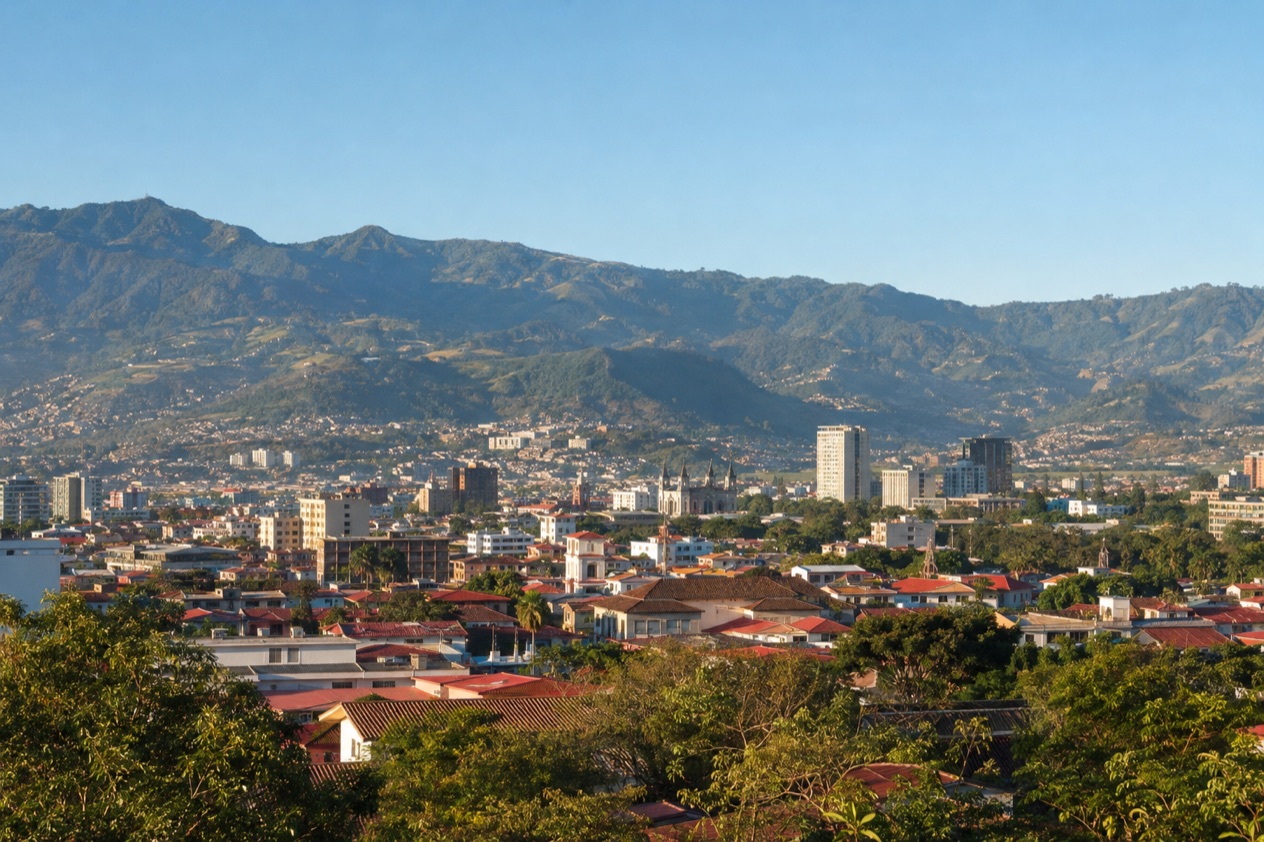
On a January morning in San Jose, the air in the Central Valley is cool and clear, vendors on the pedestrian streets sell mangoes and fresh coffee, and the mountains around the city stand sharp against a blue sky. The rains have mostly let go, and the city feels bright and unhurried. It is a month for walking the center, visiting its museums and using the capital as a comfortable base before heading to the coasts and volcanoes.
What is the weather like in San Jose in January?
January in San Jose is mild, sunny and mostly dry, with spring-like days and cool nights.
| Month | Average high (°F) | Average low (°F) | Rain days |
|---|---|---|---|
| December | 74.6 | 62.6 | 11.8 |
| January | 75.9 | 61.7 | 7.1 |
| February | 77.9 | 61.9 | 5.6 |
Because the city rests at a high spot in the Central Valley, daytime weather comes across as mild instead of warm. Mornings are fresh and bright, good for walking the center before the sun climbs, and afternoons are warm enough for a T-shirt in the sun and a light layer in the shade. Rain still turns up on some days, but it is a passing visit and rarely an all-day affair, and a heavy downpour is the exception.
Evenings cool off quickly. Plan on a sweater or a light jacket for dinner, especially on a terrace. The days are a little over eleven and a half hours long, so the light fades in the early evening and sightseeing is best done by day.
San Jose is inland, so there is no sea here. Beach days belong to the coasts, which are a few hours away by road. In the city, the dry, clear weather simply makes it easy to be outdoors: plazas, markets, parks and the view of the surrounding mountains.
What to do in San Jose in January
January begins with New Year’s Day, a national holiday. After that the city returns to its usual rhythm. Costa Rican schools are on their long summer break from December into early February, which means families are out and about, and the parks and plazas fill with strollers and picnics on the weekends.
The dry, bright weather suits a city on foot. The center is best taken slowly, with stops for coffee at a small café, a plate of casado (the classic lunch of rice, beans, salad and a choice of meat or fish) at a family-run soda, and a wander through the covered central market for fruit, cheese and local crafts. Gallo pinto, the rice and beans mixed together, is the breakfast of the country and the thing to order first.
The National Theater and the Plaza de la Cultura
The National Theater, opened in 1897, is one of the best-known buildings in the city. Inside you find an ornate hall of marble, painted ceilings and gilded details, and the building feels like a small piece of old Europe set down in the middle of Central America. A visit suits anyone who likes architecture, and the stairs and foyers are a pleasure to see even without a performance.
It stands beside the Plaza de la Cultura, an open square where street performers, pigeons and office workers on lunch break share the benches. January’s clear mornings are the best time to cross the square, since the light on the theater’s facade is crisp and the plaza is not yet crowded. A café next door makes a good pause before moving on.
The Pre-Columbian Gold Museum
Beneath the Plaza de la Cultura, the Pre-Columbian Gold Museum displays gold pieces made by the people who inhabited this land prior to the Spanish conquest. Small figures of animals, pendants and ceremonial pieces fill the cases, and the craftsmanship is fine enough to hold you in front of a single object for a while. It is a calm, cool refuge from the sun and a natural stop on a rainy afternoon.
The museum pairs well with the theater, since both are on the Plaza de la Cultura. Visit them in either order, and leave time to browse the small shop or sit in the plaza afterward. It suits adults and curious older children best.
| Site | Where | Good for |
|---|---|---|
| National Theater | Beside the Plaza de la Cultura | Architecture and a quiet morning |
| Pre-Columbian Gold Museum | Under the Plaza de la Cultura | A cool indoor hour or a rainy afternoon |
Day trips from the capital
These destinations are better treated as onward stops or overnight stays than as day trips from San Jose. La Fortuna, with its volcano and hot springs, is about three hours away, and Manuel Antonio is three to three and a half hours by road.
Monteverde, up in the cloud forest, takes three and a half to four and a half hours, and Jaco on the Pacific is the shortest run at an hour and a half to two hours. Puerto Viejo on the Caribbean side is four to five hours away. Times stretch in traffic or rain.
With the beaches busy during the school break, a day or two in the capital before heading out is a gentle way to start. Pick one direction rather than several, because the roads are slow and the distances add up.
In mid-January, the Fiestas Civicas of Santa Cruz in Guanacaste fill that town with bull-riding, parades and street food. It is a long way from the capital, so it suits travelers already heading to the northwest coast rather than a quick outing.
A two-day itinerary for San Jose in January
Day 1 starts early, while the air is cool and the light is clean. Walk the pedestrian streets of the center and have a coffee and gallo pinto at a small café. By mid-morning, cross to the Plaza de la Cultura and tour the National Theater, then spend the rest of the morning in the Pre-Columbian Gold Museum below the square.
Lunch is a casado at a simple soda near the market, then an afternoon stroll through the covered central market for fruit, coffee beans and crafts. Finish your wandering before dusk and have dinner at a restaurant in the center or a nearby neighborhood.
Day 2 is for the green edges of the city. Pick a farm or lookout with a café, and let lunch be whatever the menu offers there.
Back in the city by mid-afternoon, browse a neighborhood of galleries, bookshops and cafés, then enjoy an early dinner. If the weather turns, the rain card is easy: stay indoors with a second hour in the museum shop, a long lunch, or a coffee tasting at a café that roasts its own beans.
Is San Jose busy in January?
San Jose is moderately busy in January, though the real crowds head for the beaches rather than the capital.
Schools are on their long summer break from December into early February, so Costa Rican families travel, and the coasts feel it most. The capital sees a steady stream of visitors landing at the airport and moving on within a day or two, which keeps hotels and restaurants active but not packed. The center itself is easy to walk, and museum lines are usually short.
The first days of the month and the weekends are the busiest, with holiday travelers in town, while the middle of the week is calmer. Book rooms early for the holiday weeks and the first days of January, and later for the quieter stretch after. Rental cars and popular restaurant tables go faster at the start of the month, so reserve those early if you are arriving then.
Check each site’s official page for its reservation requirements and rules before setting out. Beach towns on both coasts fill up during the school break, so lock in lodging there first and fit the capital around it.
What to pack for San Jose in January
Pack for mild days and cool evenings, with a small allowance for a passing shower. Layers do most of the work.
- A light jacket or sweater, for evenings that cool off fast
- A compact rain jacket, for the occasional shower
- Comfortable walking shoes, for the center’s sidewalks and plazas
- Sunscreen and a hat, since the sun is strong at this altitude
- Light shirts, for warm afternoons
- Your passport, readable electronically and valid for your whole stay, plus proof of onward travel
Good to know before you go
The U.S. State Department rates Costa Rica Level 2, ‘Exercise increased caution,’ due to crime; it says petty crime is common throughout Costa Rica and that violent crime also affects tourists, including armed robbery, homicide and sexual assault.
January is a busy month for Costa Rican travel because of the school break, so book coastal rooms and rental cars first and leave the capital for last. New Year’s Day is a national holiday, and many businesses close that day. From the airport area, the road to the coasts and mountains can be slow, so allow generous time on arrival and departure days.
Entry is simple on paper: a passport valid for your whole stay is required, and you must hold a return ticket or proof of onward travel to another country. Authorities may allow a stay of up to 180 days without a visa, though this is not guaranteed.
San Jose in January vs December and February
Moving the trip a month earlier brings more rain. December is wetter and greener, with showers on many more days, and the holidays add their own crowds and closures. January is clearer and calmer by comparison, with the festive rush behind you but the school break still keeping the beaches lively.
A month later, February is the driest of the three and a touch warmer in the afternoons, with sunny stretches even more reliable. The school break ends in early February, so family crowds thin out at the coasts, and rooms can be easier to find. The Santa Cruz festival in Guanacaste belongs to mid-January, so travelers who want it should not wait.
Choose January if you want the dry season well under way and a lively atmosphere. Shift to February if you prefer a quieter feel and the sunniest days, and to December only if you want the festive season and do not mind more showers.
Is January a good time to visit San Jose?
Yes, January is a very good time for San Jose, especially for travelers who want mild weather, clear mornings and an easy base for the rest of the country.
It suits anyone who likes to explore on foot, visit museums and theaters, and eat well in small local places. It also suits travelers heading to the coast or the volcanoes, since the dry season makes the roads and the outings more predictable. Those who want empty beaches or a very quiet trip should look to a later month, since the school break fills the coasts.
On arrival, settle in, take a slow walk through the center, and let the first evening be a simple dinner and an early night, since the next day’s outings go better with a rested start. The sunlit mornings, the gold in the museum and the cool, clean air of the valley are what make January in San Jose a pleasure.
Sources
- Open-Meteo / ECMWF ERA5, normals 1991-2020 computed for the grid cell at 9.9281N 84.0907W, checked October 8, 2026
- sunrise-sunset.org, sunrise and sunset calculated for the 15th of the month, checked October 8, 2026
- U.S. Department of State, Costa Rica Travel Advisory, issued April 1, 2026 (https://travel.state.gov/content/travel/en/traveladvisories/traveladvisories/costa-rica-travel-advisory.html), read via the State Department open data API on October 8, 2026
- U.S. Department of State, Costa Rica Travel Information, Entry and exit requirements (https://travel.state.gov/content/travel/en/international-travel/International-Travel-Country-Information-Pages/CostaRica.html), checked October 8, 2026