
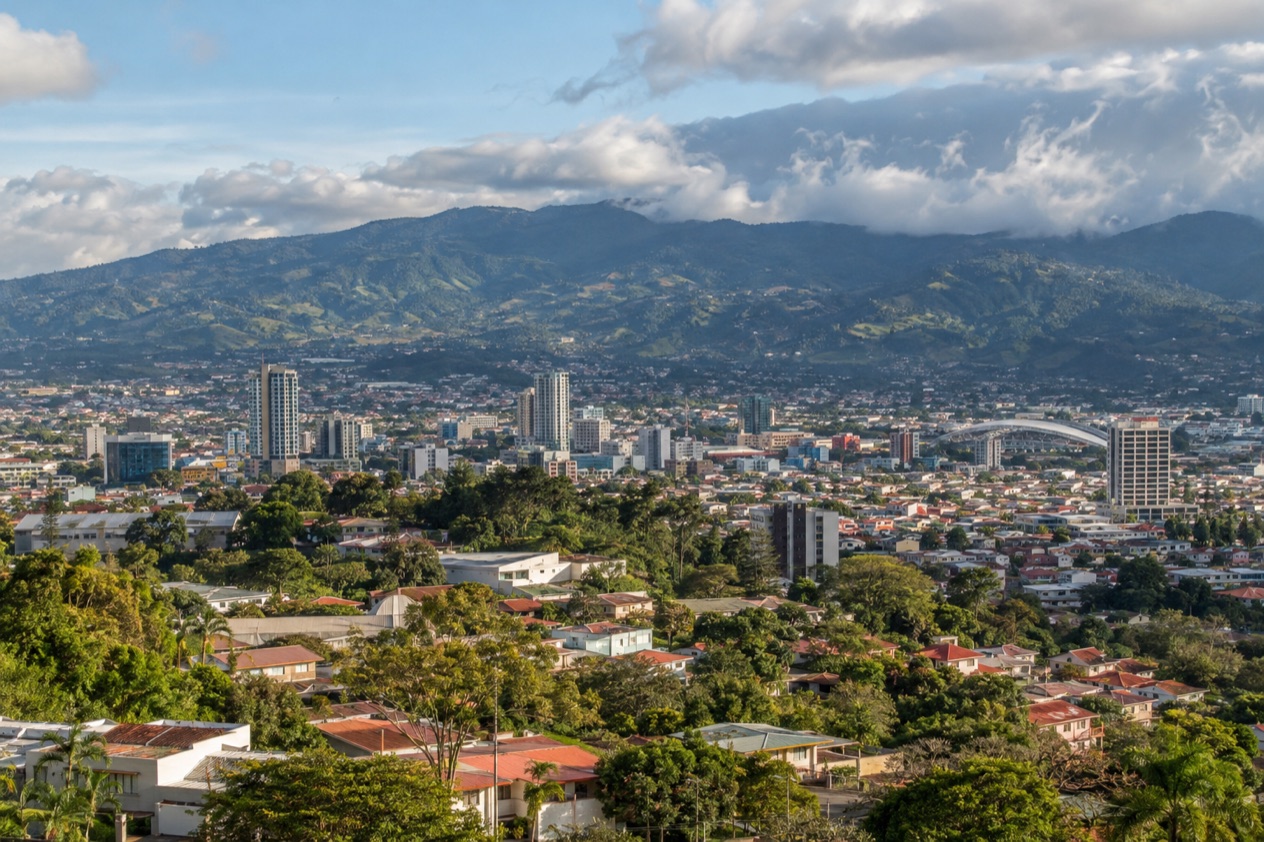
In July, near noon, San Jose’s sky shifts to a slate hue, sellers along the walking streets draw plastic covers across their stands, and as the earliest raindrops strike the ground, office staff slip into a soda for rice and beans. An hour later the clouds break, the mountains around the valley come back into view, and the whole city smells of wet earth and fresh coffee. July is the green season in the capital: lush, cool, a little unpredictable, and a good month for museums, markets and coffee country.
What is the weather like in San Jose in July?
San Jose in July feels mild and damp, with temperatures more like spring and rain most days, typically arriving as a heavy afternoon shower instead of a full day of gray.
| Month | Average high (°F) | Average low (°F) | Rain days |
|---|---|---|---|
| June | 75.6 | 64.7 | 25.3 |
| July | 75.3 | 64.4 | 22.6 |
| August | 75.4 | 64.2 | 23.9 |
San Jose rests deep in the Central Valley at roughly 3,800 feet above sea level, and because of that height, the air stays pleasant from morning until night. Mornings are often the best hours, bright and fresh, with blue patches and sharp light on the hills. Clouds tend to build after lunch, and the rain, when it comes, can be heavy and loud for an hour or two before easing off.
Evenings are cool enough that you will want a light layer for dinner outside, and nights feel crisp compared with the coast. A few days now and then are gray from start to finish, so it helps to hold one museum or café afternoon in reserve. Days are close to twelve hours long and nearly even from week to week, so the light does not shift much across the month.
The sea is not part of a San Jose stay, since the Pacific and the Caribbean both lie well outside the city. Wherever you swim, look for flags and ask locally how the water is that day.
What to do in San Jose in July
July suits the indoor and half-indoor side of the capital. The National Theater, opened in 1897 and one of the city’s best-known buildings, is a pleasure on a showery day, with its painted ceilings and gilded details.
The square above ground is the city’s living room. Street musicians, pigeons, school groups and shoe-shiners share it, and when the rain stops the benches fill again within minutes. The pedestrian avenues around it are best in the morning, before the afternoon clouds, when shop shutters roll up and the bakeries put out their first trays.
Two calendar items shape the month. The Costa Rican schools take a two-week mid-year break in July, so you will see families on the streets, in the parks and at the museums, and weekend programs often feel livelier. July 25 is the Annexation of the Partido de Nicoya, a national holiday that marks Guanacaste joining Costa Rica, which means some businesses close and many residents head out of town.
Central Market and the sodas
The Mercado Central is a maze of narrow, covered lanes, and it is a natural July stop because the roof keeps the rain off. Small counters sell coffee beans, spices, leather goods and herbal remedies, while family-run sodas serve the everyday food of the country at plain stools and counters.
Order a casado, the plate of rice, beans, salad, plantain and a choice of meat or fish, or try gallo pinto, the rice and bean mix that anchors a Costa Rican breakfast. On a cool wet day, a bowl of sopa negra, a black bean soup often served with an egg, is the right thing. Go around the busy lunch hour if you want a seat, and keep an eye on your bag in the crowded lanes.
Coffee country above the city
The hills around the Central Valley are coffee country, and the green season is when the plantations look their lushest. A farm visit may include coffee bushes, processing areas and a tasting, but the format and shelter vary.
Mornings are the better bet, since the afternoon cloud often settles over the slopes. A cup of freshly roasted local coffee in a cool, damp hillside setting is one of the real pleasures of July here. Ask about a farm’s schedule before you set out, as visiting arrangements vary.
Volcano day trips
Poas and Irazu are the volcanoes that visitors most often pair with a stay in the capital. During the green season, clouds frequently cover the peaks by noon, so starting early improves your odds of seeing the view, but a guarantee is impossible. Check each park’s current access status and official SINAC reservation requirements before you plan your day.
Dress for cool, damp air on the heights and carry a rain layer even if the valley looks bright when you leave. Most visitors combine a volcano morning with a coffee farm or a roadside strawberry and cheese stop on the way down, then spend the afternoon back in town.
Beyond the center, the neighborhoods are worth an evening. Barrio Escalante is known for its restaurants and craft beer bars, and Barrio Amón for its old houses turned into small hotels and galleries. The big green space of La Sabana is where families gather on weekends, which fits a school-break month well.
A two-day itinerary for San Jose in July
Day 1 stays in the center and follows the rain. Begin the day with gallo pinto and coffee for breakfast, then head to the National Theater before the morning light fades. Continue to the Plaza de la Cultura and drop into the Pre-Columbian Gold Museum beneath it, which is a good place to be when the first clouds roll in.
Have lunch at a soda in the Mercado Central, then explore its lanes through the early afternoon downpour. Daylight lasts about twelve and a half hours in mid-July, which leaves a long evening for a stroll through Barrio Amón once the streets dry. Finish with dinner in one of its restored houses.
Day 2 heads out of town early. Take a morning volcano or coffee farm trip, leaving at first light so you reach the heights before the cloud thickens. Back in the valley by early afternoon, spend a slow hour or two in a café in Barrio Escalante or walk the paths of La Sabana if the sky is clear.
If the weather turns, swap the park for the National Museum in its old fortress building, or settle into a long lunch and a cup of local coffee. Evening belongs to Escalante’s restaurants and craft beer bars, where you can eat well and watch the rain from a covered terrace.
Is San Jose busy in July?
San Jose is moderately busy in July, with a bump in domestic travel during the mid-year school break and the long weekend around July 25.
The capital is mostly a gateway, so most foreign visitors pass through on the way to the coasts and cloud forests. That keeps the museums and the market calm for much of the month, apart from school groups and local families in the break weeks. Weekends can feel livelier, especially around La Sabana and the central plazas.
For rooms, book early if your dates cover the holiday weeks or the July 25 weekend, when Costa Ricans travel too. For the quieter stretches, booking ahead is still sensible. Rental cars follow the same pattern, so ask early if your trip includes the break. Popular restaurants in Escalante and Amón can be busy on weekend evenings, so reserve ahead.
The things that benefit most from planning are the day trips, because guided volcano and coffee tours leave in the morning and operators fill their seats in the break weeks. Park rules and any visit arrangements change, so look at the park’s official page before building the day around a summit.
What to pack for San Jose in July
Pack for mild days, cool evenings and a sky that changes by the hour. Layers and rain gear matter more than anything else.
- A light rain jacket, since afternoon downpours are the pattern here.
- A compact umbrella for walking between the museums and the market.
- Shoes with good grip, because wet tiles and cobbles get slick.
- A sweater or fleece for evenings and for the cool heights of the volcanoes.
- Sunscreen and a hat, as the morning sun at this altitude can be strong.
- A small day bag with a zip, for the crowded market lanes.
Good to know before you go
The U.S. State Department rates Costa Rica Level 2, ‘Exercise increased caution,’ due to crime; it says petty crime is common throughout Costa Rica and that violent crime also affects tourists, including armed robbery, homicide and sexual assault.
July brings the green season, so schedule your open-air activities for the morning hours and leave the afternoon open. Before departure, check Costa Rica’s current passport, permitted-stay and proof-of-exit requirements, then allow time in the capital for the theater, the gold museum and the market.
On July 25 some businesses close for the Annexation of the Partido de Nicoya, and buses and roads out of the city are busier around that long weekend. If you are heading to the coast or the mountains, book the first nights and your transport ahead, and leave the rest of the trip loose enough to adapt to the weather.
San Jose in July vs June and August
Moving earlier to June brings the wettest of the three months, with the rain falling on nearly every day and the greenest, muddiest countryside. The school break has not started yet, so the museums and parks are quieter and rooms are easier to find. Choose June if you like a lighter crowd and do not mind a rain jacket as a permanent companion.
August is much like July in temperature, with the same cool evenings and afternoon showers, though the rain days run a little higher. The mid-year school break is over, so family traffic eases, and the capital goes back to its usual rhythm of gateway visitors. You lose the July 25 holiday, which matters only if you want to see how the country spends a long weekend.
Pick July if you want the holiday atmosphere and the livelier weekends in the parks. Shift to June or August if you prefer a calmer city and do not need to travel in the school break. The weather barely changes across the three months, so the real difference is how many other people are around.
Is July a good time to visit San Jose?
Yes, July is a good time for travelers who enjoy museums, markets, coffee and green hills, and who can take a shower in stride. Pleasant temperatures and short outdoor windows in the morning make the city comfortable for walking, and the rain gives the valley a freshness you will not find in the dry months.
It suits first-time visitors using the capital as a base for volcano and coffee trips, families who want to travel during the school break, and anyone who likes cafés and covered markets. It is less ideal for those who want guaranteed clear views of the volcano summits or long, dry afternoons outside, who may prefer the drier months.
On arrival, start with the morning plan, since the clearest hours are the early ones. Walk to the National Theater and the Gold Museum first, then keep the market and the cafés for after the first rain. July in San Jose is a month of wet streets shining under a returning sun, and a cup of coffee tastes best at that moment.
Sources
- Open-Meteo / ECMWF ERA5, normals 1991-2020 computed for the grid cell at 9.9281N 84.0907W, checked October 8, 2026
- sunrise-sunset.org, sunrise and sunset calculated for the 15th of the month, checked October 8, 2026
- U.S. Department of State, Costa Rica Travel Advisory, issued April 1, 2026 (https://travel.state.gov/content/travel/en/traveladvisories/traveladvisories/costa-rica-travel-advisory.html), read via the State Department open data API on October 8, 2026