
Early in the morning in Dewey, the harbor is already awake: fishing boats rock at their moorings, a rooster crows somewhere behind the drawbridge canal, and a golf cart rattles past with a cooler and two snorkel masks in the back. Culebra is a small island with one town, no large resorts and a pace set by the sea. It suits travelers who would rather spend a week on a beach, a bike and a boat than in a lobby.
Where is Culebra and what is it like?
Culebra sits off the northeast coast of the main island of Puerto Rico, east of Ceiba and Fajardo, west of Saint Thomas in the U.S. Virgin Islands and northeast of Vieques. It is a small, dry island with a single town, Dewey, and a calm Caribbean-side feel that has more in common with the Virgin Islands than with San Juan.
The island is about seven miles long and five wide, and it has no rivers or streams. Its fresh water travels by undersea pipeline from the main island by way of Vieques, which tells you something about how the place lives: simply, and with an eye on every resource. Hills of dry forest and scrub fold down to bays, and the sheltered harbor of Ensenada Honda has long been considered one of the safest hurricane harbors in the Caribbean.
Dewey is a few streets of small guesthouses, open-air restaurants, dive shops, a bakery and a bar or two, with sailboats moored in the canal. Feral chickens wander through most of the island, crossing roads and pecking around café tables, and nobody seems to mind. Evenings are quiet: dinner, a drink on a terrace, a walk along the water, and an early night before the next beach.
Culebra rewards people who like snorkeling, hiking short trails, reading in a hammock and doing little in particular. It is less suited to anyone who wants nightlife, shopping, big-hotel services or a packed schedule. Much of the island is protected wildlife refuge, which is exactly why the beaches look the way they do.
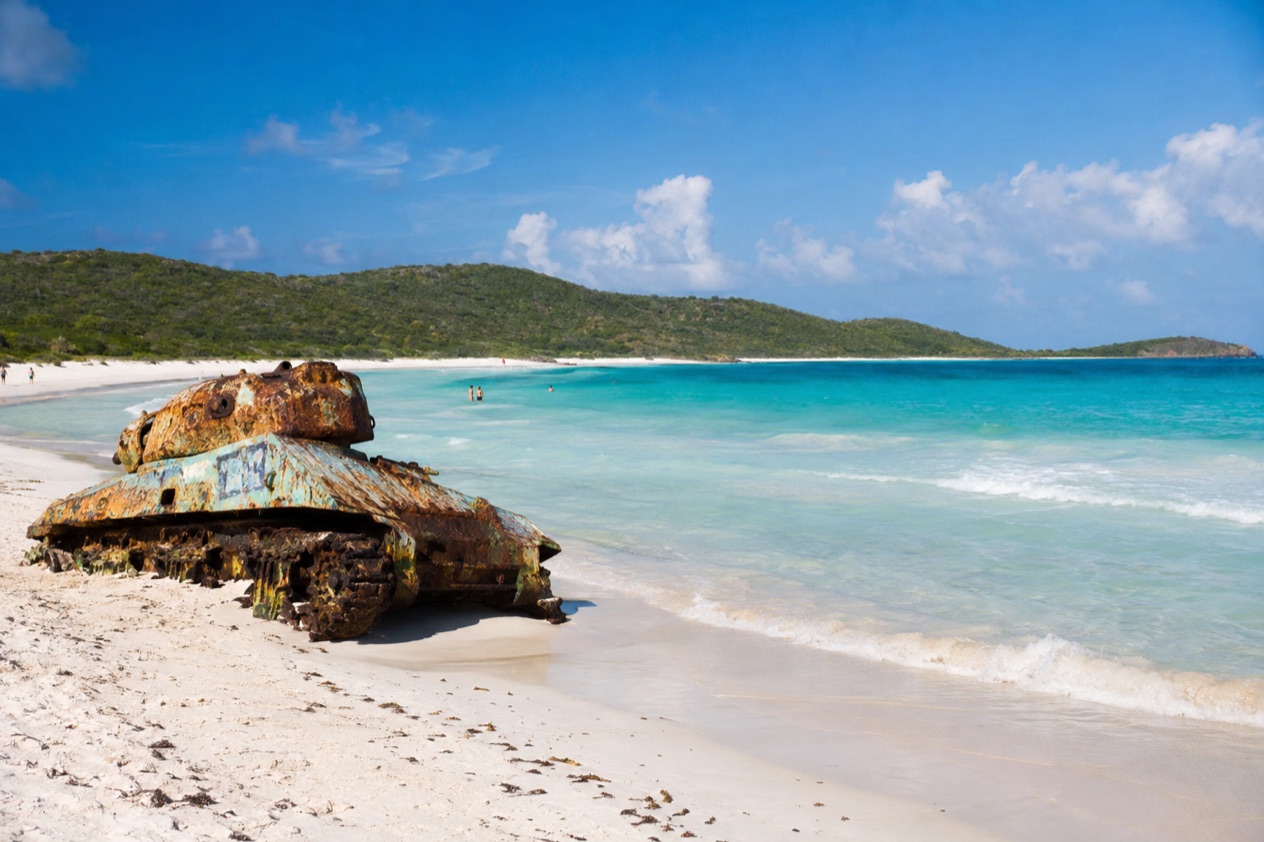
Its history shows in small ways. The Flamenco Peninsula and some of the islets were used for military training until the 1970s, and the rusted tanks on the sand are a leftover from that time. Portions of the land were later transferred to the Commonwealth and to the U.S. Fish and Wildlife Service, and the refuge that protects so much of the coast today dates back to 1909.
What is there to do in Culebra?
Most days on Culebra are built around beaches and snorkeling, with a little hiking and a lot of lingering. What sets the island apart from its neighbors is how undeveloped it still is: you reach nearly everything by golf cart or bike, and the beaches are rarely lined with anything but sea grape and palms.
Flamenco Beach
Flamenco is a wide horseshoe of pale sand and clear, shallow water inside the wildlife refuge, and it is the beach most people picture when they think of Culebra. Two old Sherman tanks, painted over in graffiti and eaten by rust, sit on the sand, and they make an odd, memorable backdrop for photos. What to eat, and shade under the trees is easy to find.
Go early or late in the day if you want space, since the middle of the day is when the beach fills. Conditions change from day to day, so look for any flag or sign before swimming and follow it. Public areas and trails in the refuge are open daily from morning to early evening.
Snorkeling at Tamarindo and Carlos Rosario
Tamarindo, on the west side, is where green sea turtles are often seen grazing over the seagrass, and drifting above them is one of the best things you can do on the island. You may see them or you may not, but the clear water and the fish are reliable enough to make the trip worthwhile.
Carlos Rosario is a short walk from Flamenco and has a coral reef close to shore, so it pairs naturally with a Flamenco morning. Bring your own mask or rent one in Dewey, and wear sunscreen and a shirt, because the hours in the water pass quickly. Currents and surf vary, so go in where you feel comfortable and keep an eye on the conditions.
Zoni Beach and the quiet side
Zoni lies at the eastern end of the island and is a long, quiet beach that sees far fewer visitors than Flamenco. It is a good place for a picnic, a long walk along the sand and a view across to the neighboring islands. Sea turtles of several kinds nest on Culebra beaches, so you may find marked-off areas, and the right thing to do is simply keep your distance.
Bring water and snacks, since there is little here beyond the beach itself. The reward is the feeling of having a stretch of coast almost to yourself, with the sound of wind in the sea grape and little else.
Wildlife and the refuge
The refuge protects dry forest, mangroves, lagoons and open grassland, and the surrounding cays are home to huge numbers of seabirds. On the Flamenco Peninsula, tens of thousands of pairs of sooty terns nest, and the bird is the refuge’s ambassador. The trails are short and the walking is easy, but the sun is strong and shade is limited, so go in the morning with water.
Boat trips from Dewey head out to the small cays, including Culebrita, where Tortuga Beach is protected as part of the refuge. A day on the water usually combines a beach landing with a snorkeling stop, and it is a good way to see how the island looks from the sea.
How many days do you need in Culebra?
A long weekend is enough to see the essentials, and three or four nights is the sweet spot for most travelers. A single day trip from the main island works if you are short on time, but the crossing and the return take a chunk of the day, and you leave just as the island starts to slow you down.
With two or three days you can do Flamenco, a snorkeling morning at Carlos Rosario or Tamarindo, and an evening in Dewey watching boats come in. The island is small enough that nothing feels far, and the real limit is how much sun and salt water you want in a day.
With four or five days there is room for Zoni, a boat trip to Culebrita and the other cays, a hike through the refuge, and a slow day when you do nothing at all. That last one tends to be the one people remember. A week lets you settle into a rhythm: coffee in town, a beach by mid-morning, a long lunch, a nap and a quiet dinner.
If you have extra time on the main island, Ceiba is the gateway, and nearby you can find mangroves, beaches and the old naval base area. Vieques lies to the southeast of Ceiba and makes a natural pairing for a longer island-hopping trip.
Where to stay in Culebra
Dewey is the practical base for most visitors. It has the restaurants, the grocery stores, the dive shops and the ferry dock, and from here you can walk to dinner and rent a golf cart for beach days. Rooms are mostly small guesthouses, inns and rental houses rather than big hotels, and the feel is relaxed and informal.
Staying near Dewey suits travelers who want to eat out, meet other visitors and have easy access to boat trips. It is also the most convenient choice if you arrive without a vehicle, because you can reach the harbor on foot and arrange everything from there.
Outside town, rental houses and villas spread along the hills and bays, with views over the water and more quiet. They suit families, groups and anyone who wants a kitchen and a porch, though you will need your own transport to get to restaurants and the ferry.
Near Flamenco, accommodation is limited, and the best reason to stay close is to have the beach in the early morning, before the day visitors arrive. Because the island is small and the choice of beds is limited, rooms can fill up in busy weeks, so it pays to arrange your stay early.
How do you get to Culebra and get around?
You reach Culebra by public ferry from Ceiba or by a short flight, and the ferries leave from Ceiba, not from Fajardo. Ceiba is about an hour by car from San Juan, and its small airport, José Aponte de la Torre, has commercial flights, mostly domestic, on three airlines.
The island is about seventeen miles east of the main island, so the crossing is short, but sea conditions and schedules can change, so keep your plans flexible on the days you travel. If you are flying, the hop is brief and gives a fine view of the reefs and cays, and it is a popular choice for travelers with limited time.
Once on the island, visitors get around on rented golf carts and bikes, and many people simply walk around Dewey. A cart is the easiest way to reach Flamenco, Tamarindo and Zoni, and it turns the short drives into part of the fun. Take care on the hills, watch for chickens in the road, and expect a few rough patches.
, which is useful if you prefer not to drive. Because the island is small, nothing is far, and the ferry dock sits right in town, so a bag and a light plan are all you need.
When is the best time to visit Culebra?
The drier months from about December to April are the most comfortable for beach days, with trade winds that take the edge off the heat. These months are also when visitors come in greater numbers, so the beaches and the harbor feel busier, and it helps to arrange transport and a bed ahead of time.
May and June bring warmer, more humid days and the start of the wetter season, with the sea still warm and inviting. Sea turtles nest on the beaches in spring and summer, and the island has a slower, more local feel outside the winter high season. Sargassum seaweed can reach some east and south coasts in certain springs and summers, so it is a chance rather than a certainty.
The Atlantic hurricane season runs from June 1 to November 30, with the peak around September 10 and most activity from mid-August to mid-October. Anyone traveling then should follow the National Hurricane Center and local official alerts, and stay flexible about ferries and flights.
In mid-July, Culebra celebrates the Virgen del Carmen, patron saint of fishermen, with a procession of boats in the harbor of Dewey. It is one of the most atmospheric moments of the year, and a good reason to time a visit for midsummer if you like local traditions.
Good to know before you go
Culebra uses the U.S. dollar, and U.S. citizens need no passport and no visa to visit. The island is small and quiet, with limited services, so bring what you need for the day, including sunscreen, water and cash for small kiosks, and top up supplies in Dewey before heading to remote beaches. Fresh water is a precious resource here, so use it with care.
Keep a respectful distance from nesting turtles and birds, stay on marked trails in the refuge, and follow any flags, signs or lifeguards at the beaches. Conditions change from day to day, and the sun is strong, so plan your outings with shade and water in mind.
Sources
- U.S. Fish and Wildlife Service, Culebra National Wildlife Refuge (https://www.fws.gov/refuge/culebra), checked October 8, 2026
- Wikipedia, Culebra (https://en.wikipedia.org/wiki/Culebra,_Puerto_Rico), checked October 8, 2026
- Wikipedia, Ceiba (https://en.wikipedia.org/wiki/Ceiba,_Puerto_Rico), checked October 8, 2026
- Wikipedia, Cayo Icacos (https://en.wikipedia.org/wiki/Cayo_Icacos), checked October 8, 2026
- NOAA National Hurricane Center, Climatology (https://www.nhc.noaa.gov/climo/), checked October 8, 2026
All our pages
When to go
- Best Time to Visit Culebra: Weather by Month, Beaches, Crowds and Festivals
- Culebra in January: Weather, Flamenco Beach, Snorkeling and a Two-Day Plan
- Culebra in February: Weather, Beaches, Snorkeling and a Two-Day Plan
- Culebra in March: Weather, Flamenco and Tamarindo Beaches, and a Two-Day Plan
- Culebra in April: Weather, Beaches, Snorkeling and a Two-Day Plan
- Culebra in May: Weather, Swimming, Beaches and What to Do
- Culebra in June: Weather, Swimming, Beaches and a Two-Day Plan
- Culebra in July: Weather, Swimming, Virgen del Carmen and a Two-Day Plan
- Culebra in August: Weather, Beaches, Snorkeling and a Two-Day Plan
- Culebra in September: Weather, Warm Sea, Quiet Beaches and What to Do
- Culebra in October: Weather, Warm Sea, Beaches and a Two-Day Plan
- Culebra in November: Weather, Flamenco Beach, Snorkeling and a Two-Day Plan
- Culebra in December: Weather, Swimming, Beaches and a Two-Day Plan
Things to do
- Things to Do in Culebra: Flamenco Beach, Snorkeling with Sea Turtles, Wildlife Refuge and Island Life
- 3 Days in Culebra: Flamenco Beach, Snorkeling Coves and a Slow Harbor Town