
In April, the first golf carts of the morning rattle down from the hills toward Flamenco Beach while the harbor at Dewey is still quiet, with a few fishing boats rocking at their moorings and roosters calling from the yards. The light is clear, the trade winds keep the air moving, and the water has that glassy turquoise that makes people forget their return flight. Culebra in April is a small island for beach days, snorkeling and slow evenings, in a month that sits between the drier winter and the wetter months ahead.
What is the weather like in Culebra in April?
April in Culebra is warm, bright and mostly dry, with a pleasant breeze and only a few short showers. It is the kind of weather that lets you plan a full beach day without checking the sky every hour.
| Month | Average high (°F) | Average low (°F) | Rain days | Sea (°F) |
|---|---|---|---|---|
| March | 77.9 | 75.8 | 2.1 | 80.4 |
| April | 78.9 | 76.7 | 3.9 | 81.6 |
| May | 80.4 | 78.0 | 8.0 | 83.7 |
Mornings start soft and already warm, and the afternoons are hot in the sun but rarely heavy, thanks to the trade winds that blow across the island. Under a tree or on a porch in Dewey, the breeze does a lot of the cooling. Days are long, with the sun up for more than twelve hours, so there is room for a swim before breakfast and another before dinner.
Rain, when it comes, is usually a brief passing shower that drifts across from the east and moves on. A few of these may fall during the month, and the total is small, so a wet afternoon is more of an interruption than a ruined day. Many travelers simply wait it out under an awning with a cold drink and then head back to the beach.
Evenings stay mild enough for dinner outside in a T-shirt, and nights barely cool down at all. Pack light cotton, a hat and plenty of sunscreen, since the April sun at this latitude is strong even when a cloud deck sits overhead. A light rain shell takes almost no space and handles the odd shower.
Can you swim in Culebra in April?
In April the water feels warm enough for long, comfortable swims, and most folks remain in it just as long as they please. It is a gentle, Caribbean-style warmth that needs no wetsuit and no adjustment period.
Conditions vary from day to day and beach to beach, especially on the Atlantic-facing shores. Inside the wildlife refuge, Flamenco Beach forms a broad horseshoe of pale sand, and its edges typically hold clear, shallow water, which makes it the obvious choice for families and for anyone who enjoys wading in slowly. When a flag, a sign, or a lifeguard gives you guidance, follow it, and look over the water before you step in.
If snorkeling tops your list, green sea turtles commonly graze on seagrass at Tamarindo Beach along the west side, and at Carlos Rosario Beach a coral reef sits close to shore, just a short walk from Flamenco. Bring your own mask and fins if you have them, and a thin rash guard for the sun on your back. Zoni Beach, at the far eastern end, is longer and quieter, and suits swimmers who want space more than facilities.
What to do in Culebra in April
April has no big festival on the island. The Virgen del Carmen boat procession comes later, around mid-July, so what you find now is Culebra in its everyday rhythm: fishermen at the dock, kids on bikes, a few small restaurants in Dewey setting out tables, and visitors drifting between beaches. That calm is the point of the month, and the days are built around the water.
Food is simple and good. Expect fresh fish, often grilled or fried whole, along with rice and beans, tostones (twice-fried green plantain) and cold local beer. Many places in Dewey are small and casual, and a plate of seafood at a harbor-side table as the light drops is the most typical Culebra dinner there is.
Flamenco Beach and the old tanks
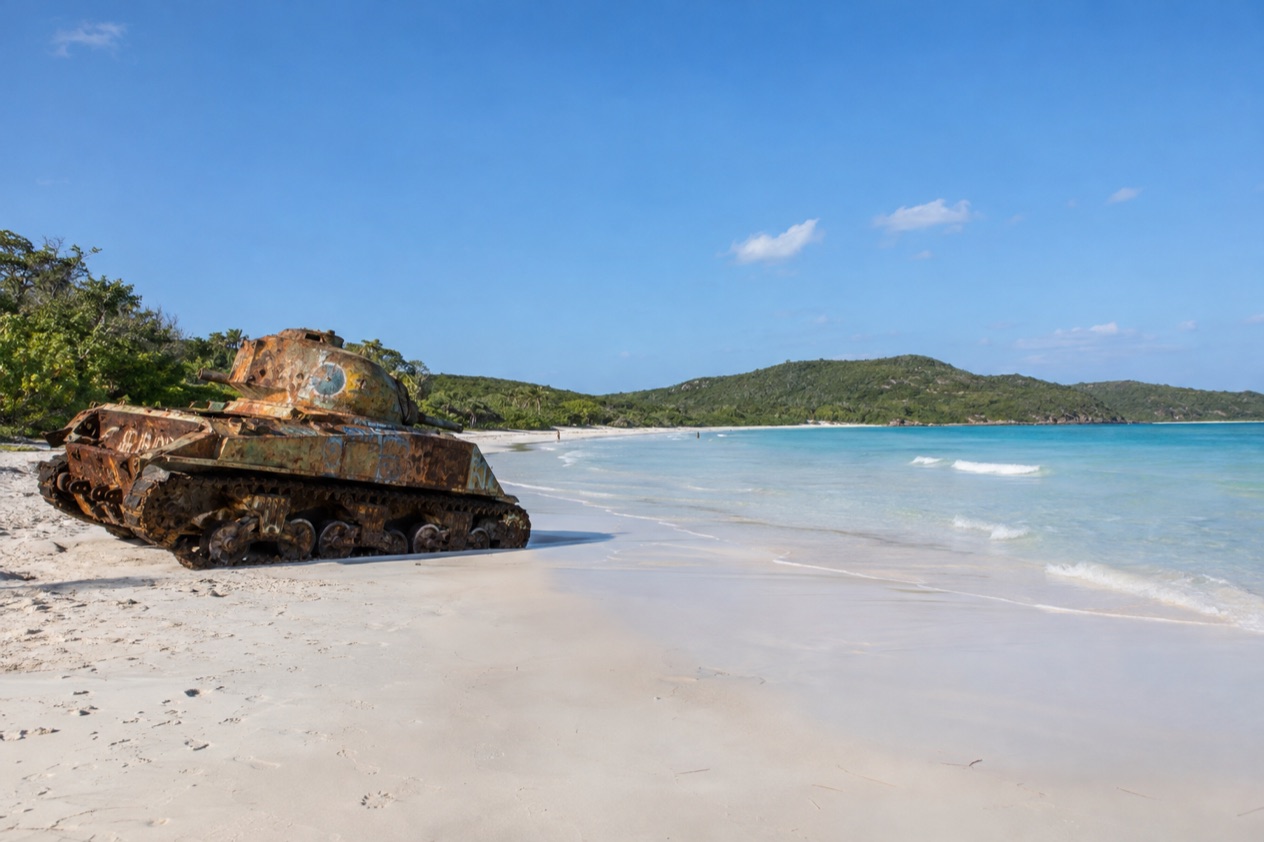
Flamenco, a long stretch of pale sand and clear, shallow water, is the island’s signature beach and lies within the Culebra National Wildlife Refuge. At one end of the sand, the rusted military tanks, now covered in graffiti and worn smooth by salt air, draw visitors eager to snap a photo. You reach the beach on a golf cart or bike from Dewey, and the ride itself, over a hill with views down to the bay, is part of the pleasure.
Go early, when the sand is empty and the water is still, then return in the late afternoon when the light turns gold and the day trippers have left. Between those hours, shade is limited, so bring an umbrella or find a spot beneath the trees at the edge. It suits families, couples and anyone who wants a classic beach day with a bit of history on the sand.
Snorkeling at Tamarindo and Carlos Rosario
On the west side, Tamarindo is the spot for swimming above seagrass and seeking green sea turtles, which frequently graze in that area. Move slowly, keep a respectful distance and let the animals go about their grazing. Seeing one is a chance, never a promise.
Close to the beach at Carlos Rosario, a short stroll from Flamenco, a coral reef lies near shore, letting you spot fish minutes after entering the water. It is a good second stop after a morning on the big beach. Calm mornings give better visibility, and a snorkel vest helps less confident swimmers relax and enjoy the view below.
Zoni Beach and the quiet east
On the island’s eastern side, Zoni Beach stretches wide and stays peaceful, drawing far fewer visitors than Flamenco. It is a place for walking the sand, reading under a tree and watching the waves roll in from the Atlantic side. There is a sense of the island’s edge here, with open horizon and few people.
Plan it as a half-day with a packed lunch and plenty of water, since services are thin. It suits travelers who prefer solitude to snorkeling, and it pairs well with a late-morning drive across the island. Swim with care and watch conditions, because this side can be livelier than the sheltered western bays.
Back in Dewey, the harbor is the social center. Walk the waterfront, watch the little ferries and boats come and go, and stop for a coffee or an ice-cold drink. It is an easy way to fill a slow hour between a beach morning and an evening meal.
A two-day itinerary for Culebra in April
Begin Day 1 early at Flamenco Beach, taking a golf cart or bike from Dewey. Swim, walk the length of the horseshoe and take your photos of the tanks before the crowds arrive. By late morning, walk over to Carlos Rosario for an hour of snorkeling along the reef, then return to the shade for lunch.
In the afternoon, when the sun is at its harshest, rest in Dewey with a long lunch and a stroll around the harbor. Return to the water if the heat eases, and aim to be somewhere with a view for sunset, since the days run for more than twelve hours and the evening light is long. Dinner is fresh fish at a casual place near the water.
Day 2 heads west to Tamarindo Beach in the morning for snorkeling with the turtles, when the water is usually clearest. Take your time and let the seagrass flats work their calm. After lunch, drive to Zoni Beach at the eastern end for a quiet afternoon of walking and swimming away from everyone.
If a shower arrives, wait under cover in Dewey with a coffee or a late lunch and return to the beach only if conditions improve. On a grayer day, spend the time on the harbor front, browse the small shops and let the evening arrive slowly.
Is Culebra busy in April?
Culebra is moderately busy in April, with a steady flow of visitors that rises around school breaks and holiday weeks and eases between them. It never feels like a crowded resort, because the island has no large hotels and only so many rooms.
The busiest moments tend to cluster around spring break and Holy Week, which moves every year, when families and groups fill small guesthouses and rental places. Flamenco Beach gets the most visitors, especially at midday and on weekends, while Zoni and the western bays stay calmer.
Culebra has no large resorts, and visitors commonly get around by rented golf carts and bikes. Reserve ahead for the holiday weeks, then wait a bit longer for the month’s calmer stretches. Restaurant tables in Dewey are casual, but popular spots fill at dinner on busy nights, so arriving a bit early helps.
Getting to the island is part of the planning. The public ferry leaves from Ceiba, and a short flight is the other option, and both are easier to arrange early when travel is busy. Plan your arrival with some margin and your first beach day will go smoothly.
What to pack for Culebra in April
Pack for sun, salt and short showers, with light clothes you can wear all day and dry quickly. Keep the bag small, since you will be moving by golf cart and bike.
- Swimsuits (two, so one is always dry) for the long beach days.
- Mask, snorkel and fins, or at least a mask, for the reef and the turtles.
- Pack sunscreen plus a wide-brimmed hat, since even under cloud cover the sun burns strong.
- A light rain shell for the quick passing showers.
- Water shoes or sandals for rocky entries and hot sand.
- A dry bag for phone and wallet on boats and beaches.
Good to know before you go
April falls outside the official Atlantic hurricane season, which runs from June 1 to November 30, so the main weather question is the occasional shower. Culebra is small and has one town, Dewey, so plan your days around it. Getting around means renting bikes or golf carts, and since Culebra has just a small supply of each, it pays to book them when you book your room.
The island has no large resorts, and services are simple. Carry what you need to the beach, including water and snacks, especially for the quieter eastern side. U.S. citizens visiting here need no visa or passport, and the currency you will use is the U.S. dollar.
Culebra in April vs March and May
Moving the trip to March gives you slightly cooler air, a little less rain and a sea that is still warm but a touch fresher. It is also closer to the winter high season and to spring break crowds, so rooms and rentals can be tighter. For travelers who want the driest feel and do not mind a slightly cooler swim, March is a good choice.
May is hotter, with a warmer sea and noticeably more rain, which tends to arrive as afternoon showers. The island is typically quieter as the spring rush fades, and the water is most inviting for long swims. It suits travelers who like heat and do not mind a few wet afternoons, and it sits closer to the start of the hurricane season.
April sits between the two, with warm water, mostly sunny days and only a few showers. Choose April if you want the balance, March if you want the driest stretch, and May if you want the warmest sea and fewer visitors.
Is April a good time to visit Culebra?
Absolutely, April suits beach fans, snorkelers and anyone craving a laid-back, sunny island week with little rain. The sea is warm, the days are long and the breeze makes the heat easy to enjoy.
It suits couples, families and friends who plan to spend most of the day on the sand or in the water. For travelers seeking nightlife, big festivals or a packed list of indoor attractions, it works less well, because Culebra is quiet by nature. If you are very sensitive to heat, an earlier month may feel gentler.
On arrival, sort out your golf cart and head straight for the water, starting with Flamenco in the early light. What makes April special here is the combination of clear, warm sea, turtles grazing over the seagrass at Tamarindo and long evenings on the harbor at Dewey.
Sources
- Open-Meteo / ECMWF ERA5, 1991-2020 normals calculated on the grid cell 18.3N 65.28W, checked October 8, 2026
- Open-Meteo Marine API, average 2015-2024, checked October 8, 2026
- sunrise-sunset.org, sunrise and sunset calculated for the 15th of the month, checked October 8, 2026
- NOAA National Hurricane Center, Climatology (https://www.nhc.noaa.gov/climo/), checked October 8, 2026
To plan your stay
- Things to Do in Culebra: Flamenco Beach, Snorkeling with Sea Turtles, Wildlife Refuge and Island Life
- Culebra from San Juan: Road to Ceiba, Ferry or Flight, and a Day on the Island
- Know Before You Go to Culebra: Getting There, Water, Beaches and Island Customs
- 3 Days in Culebra: Flamenco Beach, Snorkeling Coves and a Slow Harbor Town