
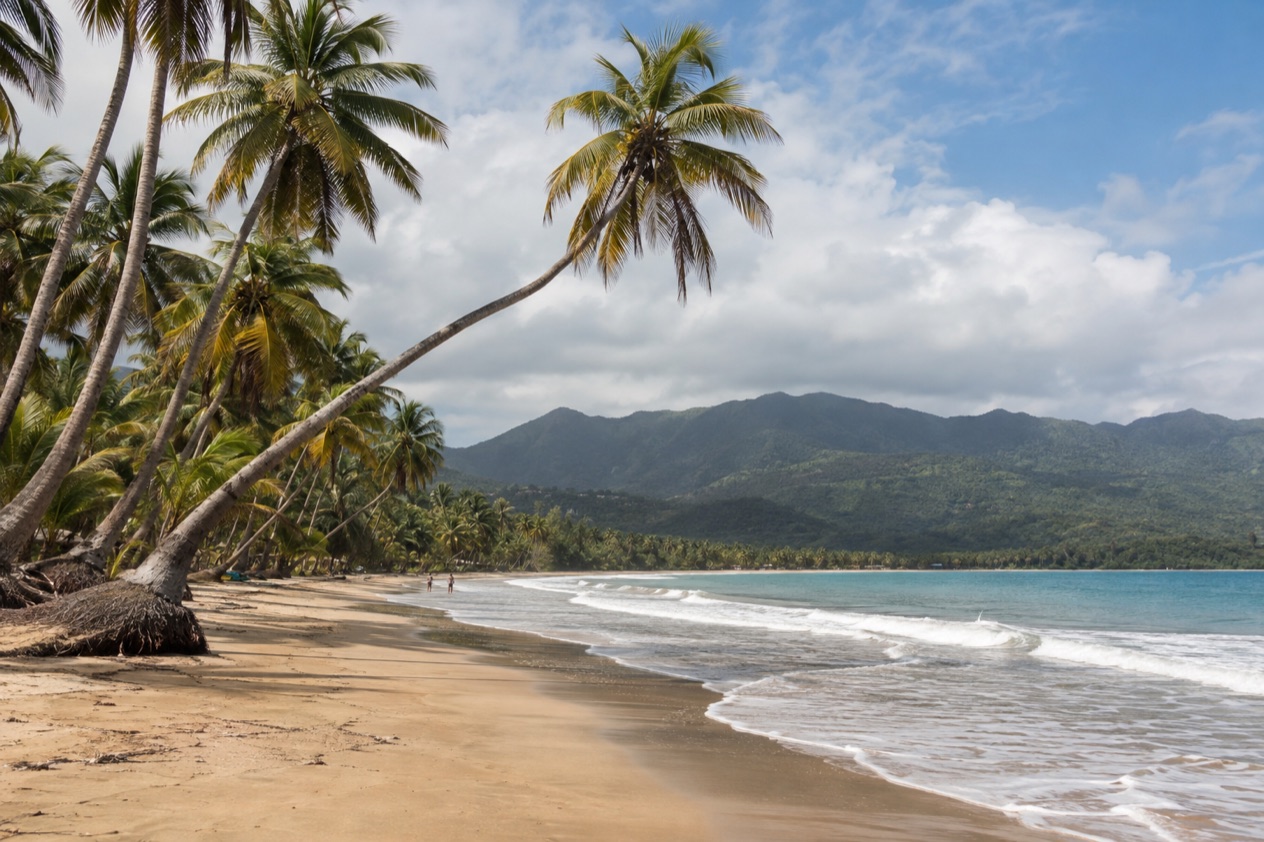
Early in the morning in Luquillo, the coconut palms along the beach rustle in the trade wind, a few surfers and walkers share the sand, and the green wall of the rainforest sits right behind the town, often with a cloud caught on its top. By lunchtime the smell of frying dough drifts from the roadside food stands. This is a small beach town on the northeast coast, a few miles from El Yunque, and it suits travelers who want sand, rainforest and local food in the same day.
Where is Luquillo and what is it like?
Luquillo sits on the northeast coast of Puerto Rico, east of Rio Grande and northwest of Fajardo, with the Atlantic on one side and the slopes of El Yunque National Forest on the other. It is a laid-back beach town where the main event is a long palm-lined shore, and the rainforest is close enough to see from the sand.
The town has long been called La Capital del Sol, and people also call it La Riviera de Puerto Rico. A third nickname, Los Come Cocos (the coconut eaters), says a lot about the place.
Coconuts are part of the local identity, and you will see them sold cold from stands, with a machete doing the opening. The municipality was founded in 1797, and its center still feels like a modest Puerto Rican town with a plaza, a church and everyday errands going on, rather than a resort built for visitors.
The coastline here is long, and the municipality counts many separate beaches along it. That gives the stay a gentle rhythm: a morning at the main public beach, a drive along the coast to look for a quieter stretch, an afternoon eating by the road. PR-3 runs through town and ties everything together, so the place feels strung along a single road, with the beach on one side and the hills on the other.
Luquillo also marks the start of the Northeast Ecological Corridor Nature Reserve, a protected stretch of coast that continues toward Seven Seas Beach in Fajardo. It is wilder country than the town itself, with forest, coast and nesting beaches. Leatherback turtles can sometimes be encountered in the area at certain times of the year, which is a chance and never a promise.
Luquillo suits beachgoers, families, food lovers and anyone who wants a base between San Juan and the east end of the island. It is less of a fit if you want nightlife, big resorts or museums. The evenings are quiet, the pace is slow, and getting around without a car takes planning.
What is there to do in Luquillo?
Most visitors come to Luquillo for the beach, the rainforest next door and the food stands, and each of the three can fill a day. What sets the town apart from its neighbors is that you can combine all of them without a long drive. Fajardo is more about boats and islands, and Rio Grande is more about resorts, while Luquillo keeps a simple local feel.
Luquillo Beach and the palm-lined shore
Luquillo Beach, officially La Monserrate Beach, runs for about a mile under rows of coconut palms. It has a cafeteria and showers, which makes it an easy place to spend a whole day with a cooler-free picnic mindset: you can rinse off, eat and go back to the water. The palms give some shade, and the sand is wide enough that families spread out comfortably.
Go early if you like the beach quiet, when the light is soft and the water is often at its smoothest. Conditions change from day to day on this Atlantic shore, and where a flag, a sign or a lifeguard is present you follow it. On weekends and holidays, local families arrive with chairs, music and food, and the beach takes on the air of a neighborhood party.
There are 14 beaches in the municipality, and not all of them are for swimming. La Pared, whose name means The Wall, is considered a dangerous beach, and it is better admired than entered. Surfers know it, but a visitor without experience should treat it as a place to look at from the shore.
El Yunque from Luquillo
El Yunque is the only tropical rainforest in the U.S. National Forest system, and from Luquillo it is a short climb into a different world. The air cools, the road winds under tree ferns and giant leaves, and clouds drift through the canopy.
El Portal is the main visitor center, with a restaurant, a movie shown in Spanish and English, and live Puerto Rican parrots to see. A fully accessible trail makes the visit easy for people who do not hike.
Ranger walks and talks are offered every day, and the Jr Ranger program is always available, which makes the forest a good choice for children. Tickets for El Portal are released 30 days ahead at 9 a.m. Eastern, so plan the visitor-center stop before the rest of the trip. Fee free days include Martin Luther King Jr. Day, Presidents’ Day, Memorial Day and Veterans Day, among others.
| Site | Hours | Closed |
|---|---|---|
| El Portal visitor center | Tickets valid 8am to 4pm on the selected date, with coming and going allowed | Thanksgiving Day, Christmas Day, New Year’s Day and Three Kings Day (closes at 2:00pm on Christmas Eve) |
La Mina Trail is closed for repairs, so do not plan a visit to La Mina Falls. There are no trash cans at La Mina Trail, and it is not a picnic area, so carry out your trash and do not take food there. The falls drop into a cold pool. La Mina Trail is closed for repairs, so it is worth confirming its status before building a day around it.
Kiosks, coconuts and the Luquillo table
Food is the third reason to come. The town is known for its strip of roadside kiosks, where you eat fried snacks like alcapurrias (fritters of grated root vegetables with a savory filling), empanadillas, fresh seafood and cold coconut water. Order a few things, share them, and eat standing or at a plastic table with the sound of traffic and music around you.
The coconut is the local symbol, so try it in more than one form: the water, the soft flesh scraped from the shell, or a sweet such as tembleque, a coconut pudding set with cornstarch and dusted with cinnamon. The Coconut Festival in September celebrates it with food and local crafts. After a morning on the sand, this is the meal that most people remember.
How many days do you need in Luquillo?
A long weekend is enough for Luquillo, and one night is the minimum if you want more than a drive-through. Two or three days give you a beach day, a rainforest day and time to eat without hurrying, which is the right balance for a town of this size.
With a single day, start at El Yunque while the forest is cooler and less crowded, then come down to the coast for lunch at the kiosks and a late afternoon on Luquillo Beach. It is a full day, and you will fall asleep early. With two days, you can split it more kindly: the beach and the food on one day, the forest and a slow evening on the next.
A third day lets you explore the Northeast Ecological Corridor side of the coast, where the shore is wilder and the pace slower. It also leaves room for a rainy-day plan. When showers settle over the hills, the El Portal visitor center is a good indoor stop, with its movie, its exhibits and its parrots, and the restaurant keeps you comfortable while the weather passes.
With more time, use Luquillo as a base for the east. Fajardo is close by and is the usual starting point for coastal outings, and the Northeast Ecological Corridor runs down toward Seven Seas Beach.
Rio Grande to the west offers more of the rainforest edge, and San Juan is an easy day trip in the other direction for Old San Juan’s forts and streets. Ferries to Culebra and Vieques leave from Ceiba, so those islands call for their own plan.
Timing your stay with an event adds something special. The patron saint festival in March brings parades, games, artisans and live music to town, and the Leatherback Turtle Festival in April celebrates the animals that nest on nearby shores. If your dates match, it is worth planning the stay around them.
Where to stay in Luquillo
Because there is no public transportation in Luquillo, choose lodging near the beach, the kiosks or the plaza you expect to visit most. This is the right area for families, couples and first-time visitors who want everything close and do not want to drive every time they are hungry. PR-3 runs through it, so some places hear the traffic, and a quick look at a map helps.
Another option is to stay in the hills toward El Yunque, where guesthouses and rental homes look out at the forest. Mornings here are cool and green, with birdsong and the occasional cloud passing by. It suits hikers, birders and travelers who want quiet over convenience, and it works best if you have a car, because the beach and the restaurants are a drive away.
Along the coast, you can also stay in the nearby towns. Rio Grande, to the west, has a stretch of resort-style lodging, and Fajardo, to the east, is a busier base with a marina and more services. These are better for travelers who want a pool, a full-service hotel or an early start on a boat day. Luquillo itself gives you the small-town feel with a shorter list of choices.
Because there is no public transportation in Luquillo, think about how you will move before you choose. A place within walking distance of the beach and the food stands saves you from relying on rideshares or taxis for every meal. If you plan to see both the forest and the coast, the location matters less than having your own way to get around.
Book early for the March patron saint festival and for school-vacation weeks and long weekends, when families from around the island come for the beach. Outside those times, rooms are usually easier to find and the town is calmer.
How do you get to Luquillo and get around?
Most visitors reach Luquillo by road from San Juan, flying into the main airport there. Flights from the mainland are domestic, and from the airport you head east along the coast toward Rio Grande and then Luquillo. PR-3 is the main road through the town, and it is the line you follow once you arrive.
Once you are in town, the walking is easy if you stay near the beach. There is no public transportation in Luquillo, so residents and visitors rely on rideshares or taxis. Beyond that, you will want wheels. There is no public transportation in Luquillo, so residents and visitors rely on rideshares or taxis.
That makes a day in El Yunque the main thing to plan. The forest sits up the hill from town, and a trip there is simplest with your own car or a ride arranged ahead. If you plan to visit El Portal, its tickets are tied to a date and valid from 8am to 4pm.
Parking for La Mina Trail is available in two adjacent paved lots and in designated areas along the road, but the trail is closed for repairs. Roads in the forest wind, and the weather changes quickly, so allow yourself time and do not rush a drive between the coast and the mountains.
If you are staying in town and do not want to drive, a taxi or rideshare for a single outing is a reasonable approach. Travelers who plan to move between Luquillo, Fajardo and the coast will find a car makes the stay much freer.
When is the best time to visit Luquillo?
The best months are December through April, the drier season in Puerto Rico, when the days are warm, the trade winds keep the air moving and the forest is a little easier to enjoy. March is a favorite for visitors who want a festival, since the patron saint celebrations fill the town with parades, rides, regional food and live music. April brings the Leatherback Turtle Festival.
From about May to November it is wetter, and it stays hot and humid all year. Showers in the hills are common, especially in the afternoon, and the rainforest earns its name. Mornings are generally the best time for the beach and for El Yunque, and an afternoon downpour is a good excuse for a long lunch at a kiosk or a stop at the visitor center.
The Atlantic hurricane season runs from June 1 to November 30, with the peak on September 10 and most activity between mid-August and mid-October. Outside the official hurricane season, from December to May, there is less to plan around. During the season, follow the National Hurricane Center and local official alerts, and keep flexible bookings.
The Coconut Festival falls in September, which is a good reason to come if you accept the weather risk of that month. The sea along the Atlantic coast is warm all year, but conditions vary a lot from beach to beach and day to day. In some springs and summers, sargassum seaweed can reach the east coast, and it sometimes affects the sand and the water.
Weekends and holidays are the busiest times at the beach, when local families arrive in numbers. If you prefer a quiet shore, aim for a weekday. Holy Week moves every year, and it brings many islanders to the coast, so it is the time to book early and expect crowds.
Good to know before you go
Puerto Rico is a U.S. territory, so U.S. citizens need no passport and no visa, and the currency is the U.S. dollar. Spanish and English are both official, and a few words of Spanish are always welcome at a kiosk or a shop. The Atlantic hurricane season lasts from June 1 to November 30, so travel in those months with flexible plans.
Take sunscreen, a hat and a light rain jacket, since a sunny morning can turn into a shower over the hills. At the beach, follow any flag or lifeguard sign, and treat La Pared as a place to look at, not to swim. In the rainforest, carry out your trash and leave food behind.
Sources
- Wikipedia, Luquillo (https://en.wikipedia.org/wiki/Luquillo,_Puerto_Rico), checked October 8, 2026
- Recreation.gov, El Yunque National Forest tickets (https://www.recreation.gov/ticket/facility/10089811), checked October 8, 2026
- USDA Forest Service, El Yunque National Forest, La Mina Trail (https://www.fs.usda.gov/r08/elyunque/recreation/trails/la-mina-trail), checked October 8, 2026
- NOAA National Hurricane Center, Climatology (https://www.nhc.noaa.gov/climo/), checked October 8, 2026
All our pages
When to go
- Best Time to Visit Luquillo: Weather by Month, Beach Seasons and Local Festivals
- Luquillo in January: Beaches, Kiosks, Three Kings Day and El Yunque
- Luquillo in February: Beach Weather, El Yunque and a Two-Day Plan
- Luquillo in March: Beaches, El Yunque Rainforest and a Two-Day Plan
- Luquillo in April: Leatherback Turtle Festival, Beaches, Weather and El Yunque
- Luquillo in May: Beach Days, El Yunque Showers and Where to Eat
- Luquillo in June: Beach Days, Noche de San Juan, El Yunque and Kiosk Lunches
- Luquillo in July: Beach Days, El Yunque Rainforest and Kiosk Food
- Luquillo in August: Weather, Beach Days, El Yunque and a Two-Day Plan
- Luquillo in September: Weather, Beaches, El Yunque and What to Do
- Luquillo in October: Beaches, El Yunque Day Trips and Rainy-Season Weather
- Luquillo in November: Warm Sea, Kiosks by the Beach and Rainforest Mornings
- Luquillo in December: Christmas Season, Beach Weather, El Yunque and Kiosk Food
Things to do
- Things to Do in Luquillo: Beach Kioskos, El Yunque Trails and Day Trips
- Luquillo Beach: Coconut Palms, El Yunque Nearby and Festivals