
At first light in Dewey, nothing stirs in the harbor but the slap of halyards on masts and the earliest golf carts clattering off toward the road to Flamenco. The sun is already strong, the water is the color of sea glass, and chickens wander the streets as if they own them. August on Culebra is a hot, slow, salty month for people who want beaches, snorkeling and an island that still feels small.
What is the weather like in Culebra in August?
August in Culebra is hot and humid, with warm nights, a steady trade breeze and showers that pass quickly more often than they settle in.
| Month | Average high (°F) | Average low (°F) | Rain days | Sea (°F) |
|---|---|---|---|---|
| July | 82.3 | 79.6 | 8.9 | 85.2 |
| August | 82.8 | 79.9 | 10.7 | 85.6 |
| September | 82.9 | 79.9 | 12.2 | 86.7 |
The days barely cool off at night. Even before sunrise the air feels soft and warm, so you sleep with a fan or air conditioning and wake up sticky. Mornings are the best hours for a walk, a bike ride or a long stretch on the sand, when the light is clean and the breeze does most of the work.
Rain usually arrives as a short shower, often in the afternoon, then moves on and leaves the pavement steaming. Plenty of days pass with only a passing cloud, but some are gray and damp, and a stronger tropical wave can bring a longer spell. Heavy downpours are the exception, not the rule, yet it pays to keep afternoons flexible.
Dress for heat: light cotton, a hat, and shoes that can get wet. In mid-month you get nearly thirteen hours of daylight, so the day stretches long, but the noon sun beats down hard and the shadow cast by a sea grape or a beach umbrella turns priceless. The sea stays warm enough that cooling off is a pleasure rather than a shock.
Can you swim in Culebra in August?
Yes, the sea is very warm in August.
Flamenco has clear, shallow water near shore. Flamenco, a wide horseshoe of pale sand, is the classic place for a long swim, and the water near the shore is often mild.
Conditions on the water change day to day and differ between beaches, so look before you wade in. Should a flag, a sign, or an on-duty lifeguard catch your eye, follow their instructions.
Snorkelers have good options. At Tamarindo Beach, which lies on the west side, green sea turtles often feed on seagrass, and from Flamenco a brief stroll brings you to Carlos Rosario, whose coral reef lies close to shore.
If you have room in your bag, pack your own mask and fins along with a thin shirt or rash guard, because the sun beating down on your back packs more punch than the water’s temperature would lead you to expect. Children and nervous swimmers do best at the shallow, sandy edges, always with an adult close by.
What to do in Culebra in August
August is a beach month on Culebra, built around early swims, shaded lunches and slow afternoons. Every year around mid-July, Dewey’s harbor hosts a grand boat parade honoring the Virgen del Carmen, the fishermen’s patron saint, so by the time August comes, Culebra is back to its usual rhythm. What you find now is a small harbor town in summer mode.
Food fits the heat. Look for fresh fish with rice and beans, ceviche-style plates, grilled lobster when it is offered, and kiosks near the beach selling cold coconut water, piraguas (shaved ice with fruit syrup) and fried snacks like alcapurrias, fritters of green banana and taro. Finishing a hot afternoon with a chilled island beer or a rum cocktail beneath a tree in Dewey is a wonderful idea.
Flamenco Beach and the tanks
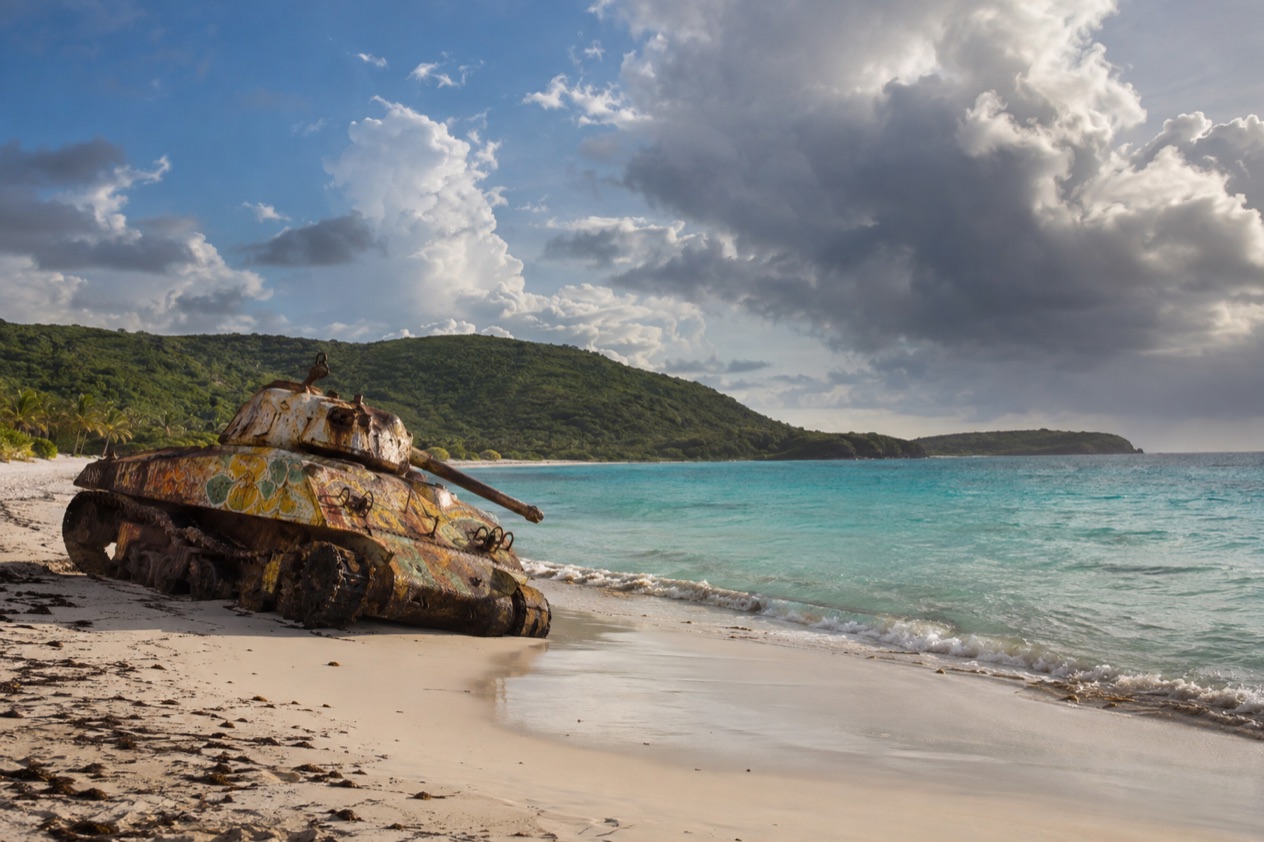
Flamenco, a broad stretch of pale sand and transparent, shallow water that looks almost too ideal to be true, lies inside the Culebra National Wildlife Refuge. Those corroded army tanks abandoned along the beach make for an odd attraction, their graffiti-painted hulls resting next to palm trees and people in the water, and everybody wants to snap a picture of them. Early morning is the quietest time, before families and day-trippers fill the shore.
Visitors reach it by golf cart or bike. Bring water, shade and snacks. It suits almost everyone, from toddlers who want to splash to adults who want a book and a chair. Stay until the late afternoon light turns the sand gold if the weather holds.
Snorkeling at Carlos Rosario and Tamarindo
A short walk from Flamenco, the coral reef at Carlos Rosario Beach lies close to shore just past the sand, and a few strokes take you out to look down at fish threading through the coral. Tamarindo, on the west side, gives snorkelers a calmer, quieter place to stop, and green sea turtles are frequently seen feeding over the seagrass. Catching sight of one is never guaranteed, just a possibility, so drift without splashing and stay far enough away to show respect.
Go in the morning, when the light penetrates the water best and the sun is still bearable. Wear a shirt over your swimsuit, because backs burn fast when you float face down. These two beaches suit confident swimmers and curious older kids most, and visibility can vary after rain or choppy days.
Zoni Beach and the quiet east
A long, quiet beach on the island’s eastern end, Zoni draws far fewer visitors than Flamenco. Picnic here, then a slow stroll by the water, and you get that sense of a coastline almost all your own. The road out gives you views of dry scrub, scattered houses and open sea.
Bring everything you need, including water, since there is little around. Go early or late in the day to avoid the strongest sun. It suits couples, readers and anyone tired of crowds, and it makes a good contrast with a busier Flamenco day. Watch the water carefully before swimming, because exposed beaches can have stronger waves and currents.
Dewey itself deserves a stroll. Walk the waterfront by the canal, watch boats come and go, and stop in small shops and cafés. In the evening, locals sit outside, music drifts from a bar, and the heat loosens its hold. If rain interrupts, a long lunch in a covered restaurant is the island’s own answer.
A two-day itinerary for Culebra in August
Day 1 is for the famous beach. Begin your day in Dewey with a simple bite and coffee, then make for Flamenco before the sand warms and the water loses its glassy calm. Take a dip, stroll the whole curve of that horseshoe, and snap pictures of the tanks while the crowds are still away. By late morning the sun is fierce, so move under a tree or an umbrella.
For midday, have lunch at a kiosk near the beach or back in town, with fish and a cold drink. Later in the day, head to Carlos Rosario and snorkel above the reef, while the light remains decent.
Return to Dewey for a shower and a dinner by the water. Sunset comes in the evening after a long day of light, so there is time for a slow walk along the canal.
Rain card: if a shower turns into a gray afternoon, linger over a long lunch in town, browse the small shops and wait for the clouds to break. Showers here tend to move quickly.
Day 2 heads to the quieter sides. Go to Tamarindo first thing for snorkeling, when turtles may be feeding over the seagrass and the water is clearest. After that, make the drive across to Zoni for a long walk and a picnic on the empty sand, keeping to the shade whenever you can.
Return to Dewey in the late afternoon for a rest, then spend the evening at a harborside restaurant or bar, where fishermen and visitors share the same warm air. If the weather turns, spend the time in town with a long meal and a slow walk once the shower has passed.
Is Culebra busy in August?
Culebra is moderately busy in August, because summer vacation brings families and weekend visitors, but it never feels like a big resort town.
Weekends fill up first, especially the ferry from Ceiba and the beaches closest to Dewey, with Flamenco drawing the most day-trippers. Midweek is calmer, and the east side near Zoni stays quiet most days. Restaurants in town can be full on Friday and Saturday evenings, so go early or be ready to wait.
Plan transport to the island before anything else, because that is what fixes the rest of the trip.
What to pack for Culebra in August
Pack light, quick-drying clothes and plan for sun, sweat and salt water.
- Swimsuits, two if possible, because nothing dries fast in the humidity.
- Mask and snorkel, for the reefs and the turtles at Tamarindo and Carlos Rosario.
- Sunscreen and a wide-brimmed hat, since the midday sun is strong.
- Water shoes, useful for rocky entries and hot sand.
- For brief afternoon downpours, bring either a small dry bag or a light rain jacket.
- Insect repellent for the evenings near the water.
- A refillable water bottle, because beach days are long and hot.
Good to know before you go
August falls inside the Atlantic hurricane season, which runs from June 1 to November 30, with the busiest stretch from mid-August to mid-October. When your departure nears, monitor the National Hurricane Center plus notices from local officials, and stay flexible with your plans.
Reaching Culebra involves a public ferry ride from Ceiba or a quick flight, and after you arrive, you can move around easily by renting a bike or a golf cart. For U.S. citizens, neither a passport nor a visa is required, and everything is priced in U.S. dollars.
Culebra in August vs July and September
If you come in July instead, you get a bit less rain, and the water feels a little cooler, yet it is still quite warm. Around the middle of July, the harbor of Dewey typically hosts the big Virgen del Carmen boat procession, which is a fine reason to pick July if local traditions appeal to you. Summer vacation crowds are also in full swing.
Moving later to September means more rainy days and the warmest sea of the three, with the peak of hurricane season arriving around the tenth. Beaches are often quieter as families return to school, which suits flexible travelers who do not mind watching the forecast and could face disruptions to ferries or flights. Choose July for the festival and a slightly drier feel, August for a balance of warm water and summer energy, and September if you want fewer people and can accept more weather risk.
Is August a good time to visit Culebra?
Yes, August is a good time for beach lovers, snorkelers and travelers who enjoy heat, as long as they stay flexible about weather.
It suits people who want warm water, long days and an island with a small-town feel. It is less ideal for anyone who dislikes humidity, wants a cool escape, or cannot adjust plans if a storm threatens the Atlantic. Families with older children and snorkeling fans will probably enjoy it most.
On arrival, settle your lodging and golf cart, then head to a beach in the morning while the sun is gentle and the water is clear. What is special about August is the sea itself, as warm as it gets, with turtles grazing at Tamarindo and the pale curve of Flamenco waiting at dawn.
Sources
- Open-Meteo / ECMWF ERA5, 1991-2020 normals calculated on the grid cell 18.3N 65.28W, checked October 8, 2026
- Open-Meteo Marine API, average 2015-2024, checked October 8, 2026
- sunrise-sunset.org, sunrise and sunset calculated for the 15th of the month, checked October 8, 2026
- NOAA National Hurricane Center, Climatology (https://www.nhc.noaa.gov/climo/), checked October 8, 2026
To plan your stay
- Things to Do in Culebra: Flamenco Beach, Snorkeling with Sea Turtles, Wildlife Refuge and Island Life
- Culebra from San Juan: Road to Ceiba, Ferry or Flight, and a Day on the Island
- Know Before You Go to Culebra: Getting There, Water, Beaches and Island Customs
- 3 Days in Culebra: Flamenco Beach, Snorkeling Coves and a Slow Harbor Town