
Early on a February morning in Dewey, the only sounds are roosters, a halyard tapping a mast and the first golf cart rolling down toward the canal. Fishing boats rest on their moorings and the light turns the harbor a pale gold. February brings gentle sun to Culebra, a small island with one town, wide beaches and very few cars, and the days pass slowly with warm sand, quiet water and long afternoons outside.
What is the weather like in Culebra in February?
February is warm, sunny and mostly dry on Culebra, with the trade winds keeping the heat comfortable all day.
| Month | Average high (°F) | Average low (°F) | Rain days | Sea (°F) |
|---|---|---|---|---|
| January | 78.3 | 76.2 | 3.2 | 80.8 |
| February | 77.9 | 75.8 | 1.9 | 80.1 |
| March | 77.9 | 75.8 | 2.1 | 80.4 |
Mornings start soft and bright, warm enough for a T-shirt and a swim before breakfast. By midday the sun is strong, and on a cart ride across the island you feel the breeze more than the heat. Evenings stay mild, so dinner on a terrace in Dewey needs nothing more than a light layer, if that.
Rain is rare and usually brief. When a shower does pass, it tends to blow through as a short passing cloud and the sun is back soon after. It is among the drier months of the year, though a gray, breezy day can still happen, so keep a plan B for the afternoon.
The days are long enough to do a lot: about eleven and a half hours of daylight in mid-February. Light is clear and the water takes on that bright turquoise that makes Culebra famous, which is best seen before the late-day sun drops behind the hills.
Can you swim in Culebra in February?
Yes, the sea is warm enough for long swims and unhurried snorkeling, and most people go in without a wetsuit or a second thought.
Expect the water and weather to shift each day and at every beach. Conditions vary from beach to beach, and winter trade winds and swells can bring chop or waves to exposed shores.
Flamenco Beach has a broad horseshoe of pale sand and clear, shallow water. Should a flag, a sign or a lifeguard come into view, follow its guidance.
Snorkelers have two good choices. Green sea turtles are frequently spotted grazing on the seagrass at Tamarindo Beach on the west side, so stay back and allow them to enjoy their meal. A coral reef lies near the shore at Carlos Rosario Beach, only a brief stroll away from Flamenco. Bring your own mask, fins and sunscreen, and a rash guard if you plan to float for an hour or more.
What to do in Culebra in February
February is about beaches, snorkeling and a boat excursion to Culebrita. With no big resorts on Culebra, people explore by way of rented bikes and golf carts, which leaves the sun and the sea to dictate how the days flow. There is no big festival this month. Culebra’s biggest event, the Virgen del Carmen boat procession in the harbor, arrives around mid-July, which means that in February you embrace the island just as it is during a plain, charming week: fishermen at the dock, music floating from open bars and long lunches beside the canal.
The dry weather suits the outdoors, and the water is warm enough to be the main event. Plan beach time for the morning, when the light is clearest and the sand is quiet, and keep the hottest part of the afternoon for shade, a cold drink or a nap.
Flamenco Beach and its tanks
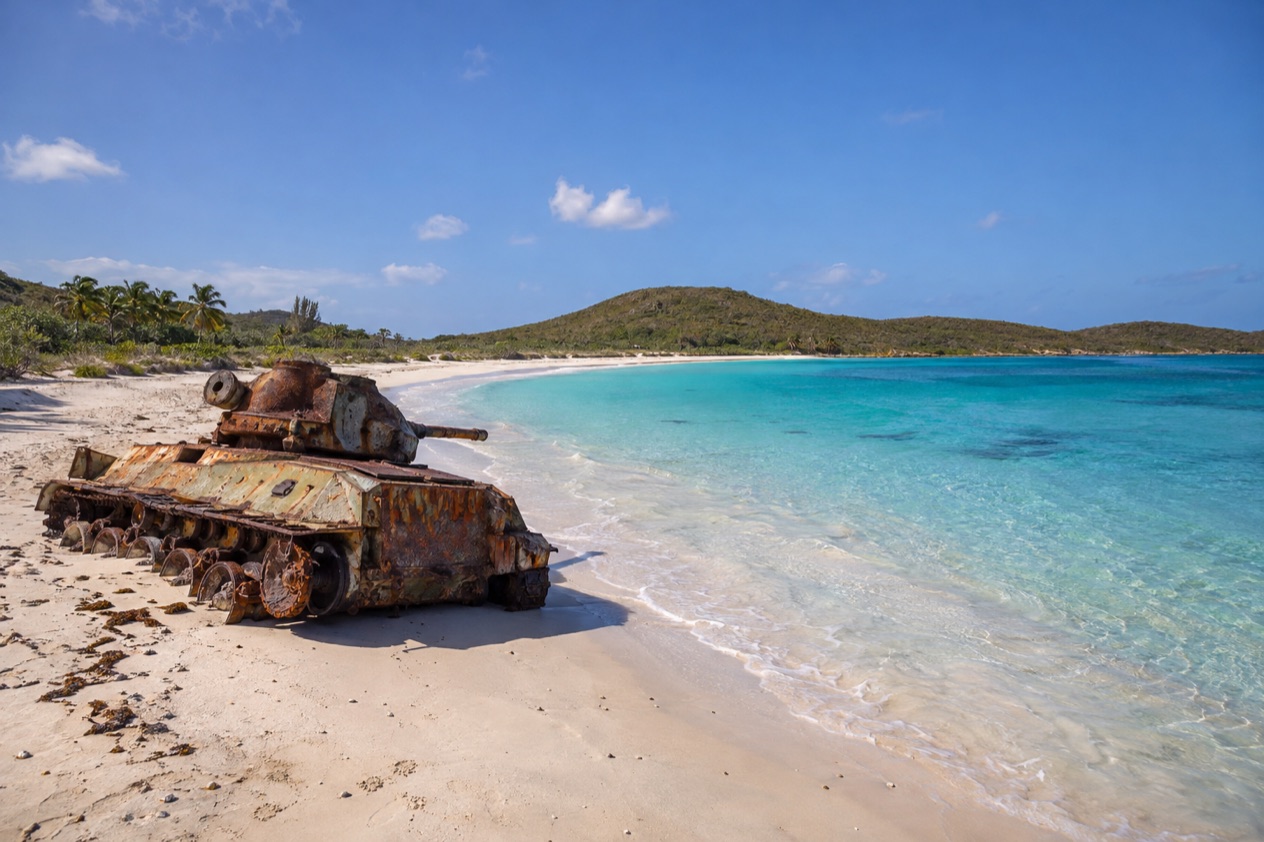
Flamenco lies within the Culebra National Wildlife Refuge, and the picture that stays with most visitors is its broad sweep of light-colored sand and clear, shallow water. The rusted military tanks left on the beach are painted with graffiti and make an odd, memorable photo against the turquoise sea. You can wander from one to the other in a few minutes, and the light is best early or late.
Go in the morning for space and calm, and bring shade, water and snacks, since this is the busiest beach on the island. Carlos Rosario is a short walk from Flamenco Beach, with a coral reef close to shore. It suits swimmers who like to look under the surface.
Tamarindo, Zoni and the quieter shores
Tamarindo Beach, on the west side, is for snorkeling more than sunbathing. Green sea turtles are often seen feeding over the seagrass at Tamarindo Beach, but sightings are never guaranteed. Go early, move gently and keep clear of the animals, which are protected.
At the opposite end of the island, Zoni Beach is long, quiet and far less visited than Flamenco. It is a good place for a walk along the sand, a picnic and a long stretch of doing nothing. Bring everything you need, because there is little around, and check the water before you swim, as the exposed eastern shore can have more surf.
Dewey and the harbor
Dewey is the island’s only town, and it is made for strolling. The small drawbridge canal, painted houses and waterfront restaurants make it an easy place to spend an evening. Expect fresh fish, rice and beans, tostones and cold beer, with pinchos (grilled skewers) and mofongo on many menus.
Mornings are good for coffee and a pastry by the water, and sunset is the time to sit by the harbor and watch boats come in. The mood is relaxed and local, with more cart traffic than car traffic and plenty of greetings along the way.
A two-day itinerary for Culebra in February
Day 1 is for the famous beach. Pick up your golf cart early and be at Flamenco shortly after the morning light turns warm, when the sand is quiet and the water clear.
Swim, walk to the tanks and then follow the short path to Carlos Rosario for a first snorkel over the reef. By midday the sun is strong, so move to a shaded spot for lunch, whether a casual kiosk or a simple plate of fish and rice.
In the afternoon, drift back to town and rest. Stroll the canal in the softer light, then settle on a waterfront terrace for dinner as the sky changes color. If a passing shower arrives, duck into a café or bar and adjust the afternoon as needed.
Day 2 heads to the quieter edges. Drive west to Tamarindo early for a snorkel among the seagrass, where turtles are often seen. Take a picnic east to Zoni for the afternoon, a long beach with few people, and walk its sand until the light starts to lower. Return to Dewey for a last dinner by the harbor.
If the weather turns gray, shift the day toward town: a slow lunch, a browse of the small shops and a long coffee by the water. Beaches usually reward patience, and the sun tends to come back.
Is Culebra busy in February?
February is a lively but not overwhelming month, part of the dry winter season when many visitors escape the cold, so weekends and holiday weeks can feel full.
Culebra is small, with no large resorts, so rooms, rental carts and restaurant tables are limited and fill quickly. Flamenco gets the biggest crowds, especially on sunny weekends, while Zoni and Tamarindo stay far calmer. Weekdays and early mornings are the easiest times for the main beach.
Dinner reservations help on busy nights. You can get to the island by public ferry from Ceiba or on a short flight.
What to pack for Culebra in February
Pack light, breathable clothes and plan around the sun and the sea.
- Swimsuits and a rash guard, for long hours in the water
- Mask and snorkel, for the reefs and turtle spots
- Sunscreen and a hat, since the sun is strong even on breezy days
- Bring water shoes to handle stony entries and sand that gets hot
- A light rain jacket, for the short passing showers
- A dry bag, to protect phones and cameras on the cart and the boat
Good to know before you go
February falls outside the official hurricane season, which runs from June 1 to November 30, so the main planning questions are about logistics. Getting to the island by ferry or flight and securing a cart or bike are the first things to arrange, and lodging is worth locking in early. Once there, the island is easy to navigate, and distances are short.
Culebra in February vs January and March
Moving a month earlier brings slightly more rain and a touch warmer sea, along with the busier post-holiday winter crowds. January also overlaps with the island’s peak visitor stretch, so rooms can be tighter.
A month later, March is similar in weather, with the same warm sea and a bit more rain, though still mostly dry. Spring break and Easter-season travel can raise demand, and the exact timing of Holy Week changes every year.
If you want the driest feel and a balanced pace, February is a strong middle choice. Travelers who want the quietest beaches might lean toward the shoulder edges of the season, while those chasing the warmest water will find little difference among the three months.
Is February a good time to visit Culebra?
Yes, February suits beach lovers, snorkelers and anyone who wants sunny, easygoing days with little rain and a warm sea.
It is less ideal for travelers who want a big festival, since the major celebration comes in July, or for those who want an empty island, since this is a popular winter month. If your priority is surf or nightlife, other places on the main island may suit you better.
On arrival, secure your golf cart, then head to the beach while the morning is still cool. That first swim at Flamenco sets the tone. What makes February special here is the combination: clear light, a gentle sea and turtles grazing over the seagrass at Tamarindo, all on an island small enough to cross before lunch.
Sources
- Open-Meteo / ECMWF ERA5, 1991-2020 normals calculated on the grid cell 18.3N 65.28W, checked October 8, 2026
- Open-Meteo Marine API, average 2015-2024, checked October 8, 2026
- sunrise-sunset.org, sunrise and sunset calculated for the 15th of the month, checked October 8, 2026
- NOAA National Hurricane Center, Climatology (https://www.nhc.noaa.gov/climo/), checked October 8, 2026
To plan your stay
- Things to Do in Culebra: Flamenco Beach, Snorkeling with Sea Turtles, Wildlife Refuge and Island Life
- Culebra from San Juan: Road to Ceiba, Ferry or Flight, and a Day on the Island
- Know Before You Go to Culebra: Getting There, Water, Beaches and Island Customs
- 3 Days in Culebra: Flamenco Beach, Snorkeling Coves and a Slow Harbor Town