
On a March morning in Dewey, just after dawn, the sole noises come from halyards slapping masts and roosters crowing off past the canal. Golf carts roll out one by one toward the beaches while the light turns the harbor a soft gold. March in Culebra is dry, warm and unhurried, a good month for snorkeling, long beach days and a island that still feels like a village.
What is the weather like in Culebra in March?
March is warm, sunny and mostly dry, with the kind of steady trade-wind weather that makes beach days easy. The air stays almost the same as in February, and the first hints of the wetter spring show up only in April.
| Month | Average high (°F) | Average low (°F) | Rain days | Sea (°F) |
|---|---|---|---|---|
| February | 77.9 | 75.8 | 1.9 | 80.1 |
| March | 77.9 | 75.8 | 2.1 | 80.4 |
| April | 78.9 | 76.7 | 3.9 | 81.6 |
Mornings begin soft and a little breezy, and by late morning the sun is strong enough that you will want shade, a hat and a second coat of sunscreen. Afternoons feel hot in the sun but the breeze keeps them comfortable. Nights barely cool off, so evenings on a harbor terrace in a T-shirt are the norm.
Rain is uncommon in March, but a shower can still interrupt outdoor plans. It rarely turns a whole day gray, and most March days are dry from first light to sunset. Days are a little over twelve hours long, which gives you a full day on the sand and still leaves time to get back before dark.
Can you swim in Culebra in March?
The sea averages in the low 80s, warm enough that many swimmers will be comfortable without a wetsuit.
On the island chain’s more protected flank lies Culebra, where March frequently brings mild surf to the beaches tucked within its sheltered bays, yet day-to-day and beach-to-beach those conditions shift. Flamenco, with its wide horseshoe of pale sand, can pick up some surf when the swell runs, so watch the water before you let children go in. At Tamarindo, a west-side snorkeling beach, green sea turtles frequently feed on the seagrass, and a short walk from Flamenco brings you to Carlos Rosario, where a coral reef sits close to shore.
Pack your own snorkel and mask, a rash guard for extended time in the water, plus lots of sunscreen. If a flag, sign, or lifeguard is there, do what it says. Keep a respectful distance from turtles and never stand on coral.
What to do in Culebra in March
March has no big festival on the island, and that is part of its charm. The days are built around beaches, snorkeling, boat trips to Culebrita and slow meals in Dewey. The big local celebration, the Virgen del Carmen boat procession for the fishermen’s patron saint, comes in mid-July, so in March you get the harbor without the party.
The dry weather suits the island’s beaches and the little trails that lead to them. Everything on Culebra is close together, which means you can mix a snorkel, a walk and a long lunch in a single day without feeling rushed.
Flamenco Beach and its tanks
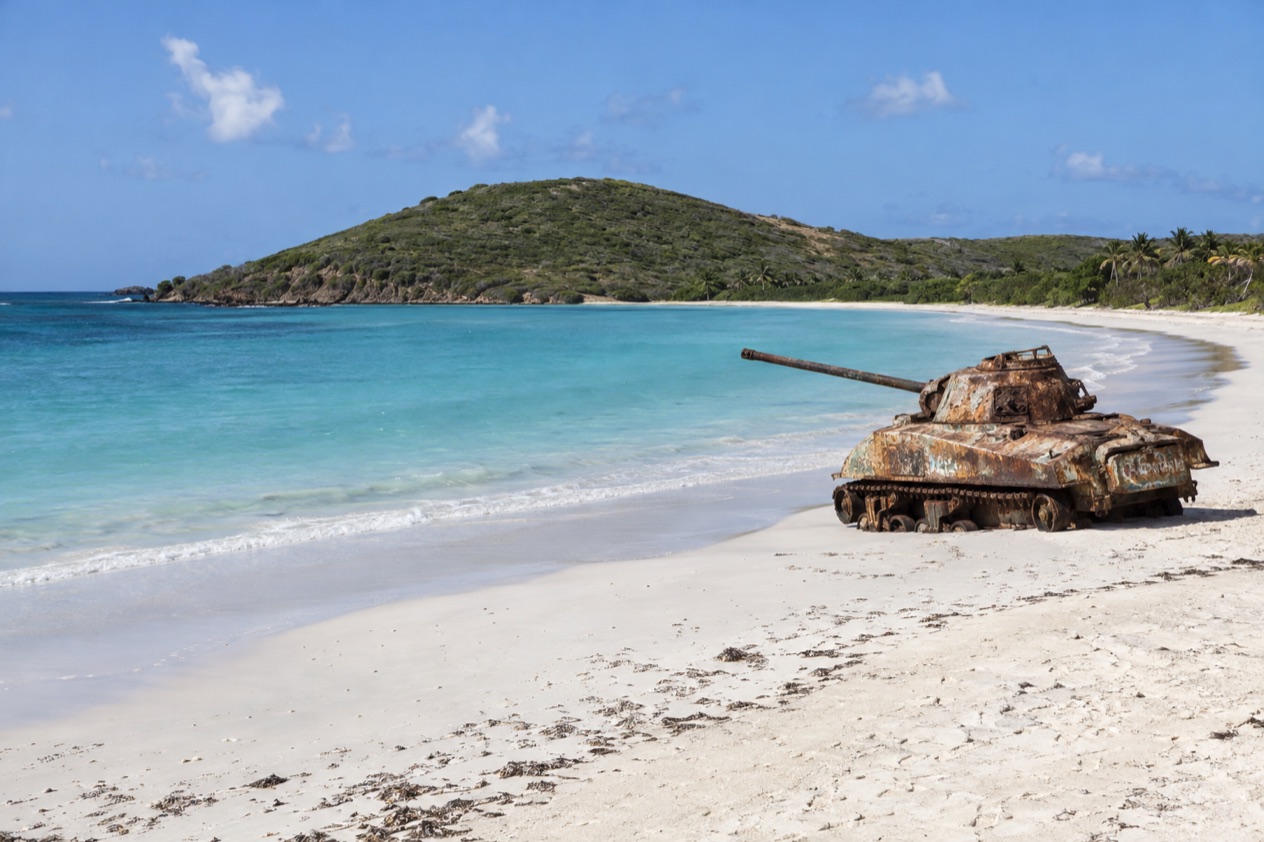
Culebra itself is captured in Flamenco, a wide horseshoe of light-colored sand and transparent shallows located inside the Culebra National Wildlife Refuge. Graffiti covers the rusted military tanks that sit on the sand, and against the turquoise water they make odd, memorable photographs.
It is best early, when the sand is nearly empty and the light is soft, or late in the afternoon when the heat eases. Midday brings the most people and the strongest sun, so bring an umbrella or find a tree. From the parking area a few simple food stands serve fried snacks and cold drinks, and the beach suits families, couples and anyone who just wants to lie down with a book.
Walk to the far ends of the bay if the middle feels busy. You will often find quieter patches of sand and clearer views of the water.
Snorkeling at Tamarindo and Carlos Rosario
Tamarindo Beach is where you go to swim with green sea turtles, which are often seen feeding over the seagrass close to shore. Slip in slowly, float quietly and let the turtles come up for air near you. Sightings are a chance, not a promise, but March visibility is often good.
If you want reef, head to Carlos Rosario Beach, which sits a short walk from Flamenco and offers coral near the sand plus little tropical fish swimming through it. Pair the two on different mornings and you have seen the best of Culebra’s underwater side. Both are snorkeling beaches, but check conditions before entering the water.
Zoni Beach and the quiet east
Zoni, a long and quiet beach on the island’s eastern end, draws far fewer visitors than Flamenco. Its length gives you room to walk, and the open view across the water toward other islands makes it a good place for a sunrise or a picnic.
The water here can be livelier because it faces open sea, so treat it as a place to wade and walk rather than assume it is calm. It suits anyone who wants solitude and does not mind a drive on the island’s bumpy roads.
Back in Dewey, the town is a handful of streets around a canal, with small bars, casual seafood kitchens and bakeries that open early. When the afternoon turns hot, count on cold drinks, fresh fish, rice and beans, and tostones, then grab a piragua, a treat of shaved ice topped with fruit syrup. Evenings are lazy, with music from a bar or two and a harbor full of boats.
A two-day itinerary for Culebra in March
Day 1 starts with the island’s best-known beach. Pick up a pastry in Dewey and drive the golf cart to Flamenco early, before the crowds and the sun are at their strongest. Swim, walk the length of the bay and photograph the tanks while the light is soft.
Have lunch at one of the casual stands near the beach, then walk over to Carlos Rosario for a reef snorkel in the early afternoon while the sun is high and the water is clear. Head back to town by late afternoon, rest, then take a table by the canal for dinner and watch the boats settle in for the night.
Day 2 heads west and east. Go to Tamarindo in the morning for turtles over the seagrass, and bring a mask and fins. Stop afterward for a long lunch in town at a seafood kitchen.
In the afternoon, drive out to Zoni for a quiet walk, then return in time for sunset over the harbor. If a shower passes, wait it out under a café awning or spend an hour wandering Dewey’s shops and galleries, and if the weather stays gray, a slow indoor meal is the best card to play.
Is Culebra busy in March?
March is one of the busier months on the island, since the dry weather and spring break travel bring families and small groups, but Culebra never feels crowded in the way big resort towns do.
With no large resorts, the number of beds is small, so rooms and guesthouses fill quickly, and the best ones go early. Weekdays are noticeably calmer than weekends, and the weeks around school breaks are the busiest.
Restaurants are small, so tables at dinner can fill, especially on Friday and Saturday. Arriving early or having a plan B keeps the evening easy. Flamenco is the busiest beach, particularly at midday, while Zoni and the quieter corners of the island stay peaceful even on full days.
Visitors can reach Culebra by public ferry from Ceiba. A short flight is the other way in.
What to pack for Culebra in March
Pack light, breathable clothes and gear for sun and salt water, since most of your days will be spent outdoors.
- Sunscreen and a wide-brimmed hat, because the midday sun is strong
- Mask and snorkel, for the turtles and the reef
- For spending extended time in the sea, pack a rash guard.
- For hot sand and rocky entries, water shoes.
- A light rain layer, for brief passing showers
- A small dry bag, to protect phone and cash on the beach
Good to know before you go
March is outside the official hurricane season, which runs from June 1 to November 30. Getting around means golf carts and bikes, and the ferry from Ceiba or a short flight are the ways to reach the island, so book those first. Dewey has the island’s shops, food and services, and a lot of beach days begin and end there, so plan your supplies before heading out to quieter beaches.
Culebra in March vs February and April
February is almost identical in air and sea temperature, with slightly cooler water and a touch less rain. The feel is the same, the crowds can be a little lighter, and it is a fine choice if March dates are full.
April brings a bit more warmth, a warmer sea and more frequent showers, though most days are still bright. Once the holiday weeks pass, the island often quiets down, and rooms are easier to find. Sargassum seaweed can reach east and south coasts in some springs, so it is a possibility to keep in mind as the season moves on.
Choose March if you want the driest stretch with the warm sea and do not mind planning ahead. Move to February for a calmer feel, or to April for a slightly warmer sea and an easier time finding a room.
Is March a good time to visit Culebra?
For beach fans, snorkelers and anyone craving sunshine and scant rain on a tiny island, March is indeed a wonderful time.
It suits couples, families with older children and travelers who like to spend whole days in the water. It is less ideal if you want nightlife, big events or a spontaneous trip with no advance booking, since rooms and carts need planning.
On arrival, drop your bags, pick up your golf cart and head straight to a beach before the sun climbs. Save Flamenco for the early hours and let the afternoon belong to a snorkel mask. What stays in memory from March is the quiet water at Tamarindo, a turtle rising for air beside you and the harbor turning gold at the end of a dry, bright day.
Sources
- Open-Meteo / ECMWF ERA5, 1991-2020 normals calculated on the grid cell 18.3N 65.28W, checked October 8, 2026
- Open-Meteo Marine API, average 2015-2024, checked October 8, 2026
- sunrise-sunset.org, sunrise and sunset calculated for the 15th of the month, checked October 8, 2026
- NOAA National Hurricane Center, Climatology (https://www.nhc.noaa.gov/climo/), checked October 8, 2026
To plan your stay
- Things to Do in Culebra: Flamenco Beach, Snorkeling with Sea Turtles, Wildlife Refuge and Island Life
- Culebra from San Juan: Road to Ceiba, Ferry or Flight, and a Day on the Island
- Know Before You Go to Culebra: Getting There, Water, Beaches and Island Customs
- 3 Days in Culebra: Flamenco Beach, Snorkeling Coves and a Slow Harbor Town