
On a September morning in Dewey, the harbor is slow and bright, fishing boats rock at their moorings and the first golf carts rattle past the canal toward the beaches. Roosters call from yards, the bakery counter has a short line, and nobody seems to be in a hurry. Culebra in September is a warm, unhurried island with a sea like bathwater and long stretches of sand to yourself, for travelers who like quiet more than a crowded schedule.
What is the weather like in Culebra in September?
September in Culebra is hot, humid and often showery, with a very warm sea and little relief at night. The sun is strong in the morning, clouds build over the hills by midday, and the rain tends to arrive as short downpours rather than all-day gray.
| Month | Average high (°F) | Average low (°F) | Rain days | Sea (°F) |
|---|---|---|---|---|
| August | 82.8 | 79.9 | 10.7 | 85.6 |
| September | 82.9 | 79.9 | 12.2 | 86.7 |
| October | 82.4 | 79.4 | 12.8 | 86.6 |
September is rainy, so keep your beach plans flexible. By early afternoon it feels heavy, and a shower often rolls through, passes in a short spell and leaves steam rising from the road. Most days include some sun, but it is wise to treat the afternoon as flexible.
Nights barely cool off, so dinner outside in a T-shirt is the norm and a light layer is only for the air-conditioning. The island is small and low, so rain can fall anywhere, though the green hills near the center catch more cloud. Bring a thin rain jacket and quick-drying clothes, since things dry in the breeze but never feel crisp.
September also sits at the heart of the Atlantic hurricane season, so plan with that in mind. When your departure nears, it pays to watch the National Hurricane Center and any warnings from local officials, because forecasts can change quickly.
Can you swim in Culebra in September?
Yes, the sea is very warm in September, warm enough for a long, unhurried swim at any time of day. It feels more like a pool than a refreshing plunge, so you will not need a wetsuit, and snorkeling for an hour is easy on the body.
Off Puerto Rico’s northeast coast lies Culebra, where conditions shift from day to day and beach to beach. Flamenco Beach is a broad crescent of light sand and clear, shallow water, and it remains a favorite spot for paddling and drifting.
A coral reef that snorkelers will adore sits just offshore from Carlos Rosario Beach, a brief walk from here. On the west side, Tamarindo Beach is a spot where green sea turtles frequently graze on seagrass, so bring along a mask and snorkel.
Surf can pick up when a distant storm sends swell, and the currents are not always visible from the sand. If a lifeguard, sign, or flag is there, do what it says, and watch the kids in the water. Bring your own mask if you want to snorkel.
What to do in Culebra in September
September is the quiet end of summer here, and the island’s pleasures are simple ones: swimming, snorkeling, walking empty beaches and eating by the canal. September has no big festival to call its own because the Virgen del Carmen procession, the large boat celebration in Dewey’s harbor, happens around mid-July. Instead you get the everyday rhythm of a fishing town, with the harbor at dawn and music drifting from small bars at night.
Getting around is part of the charm. Visitors rent golf carts and bikes, and the roads between Dewey and the beaches are short enough to go slowly with the windows open, so to speak. Culebra holds a single town, a peaceful harbor, and nothing in the way of big resorts, and that is precisely what lets a day here drift along unplanned.
Flamenco Beach and its rusted tanks
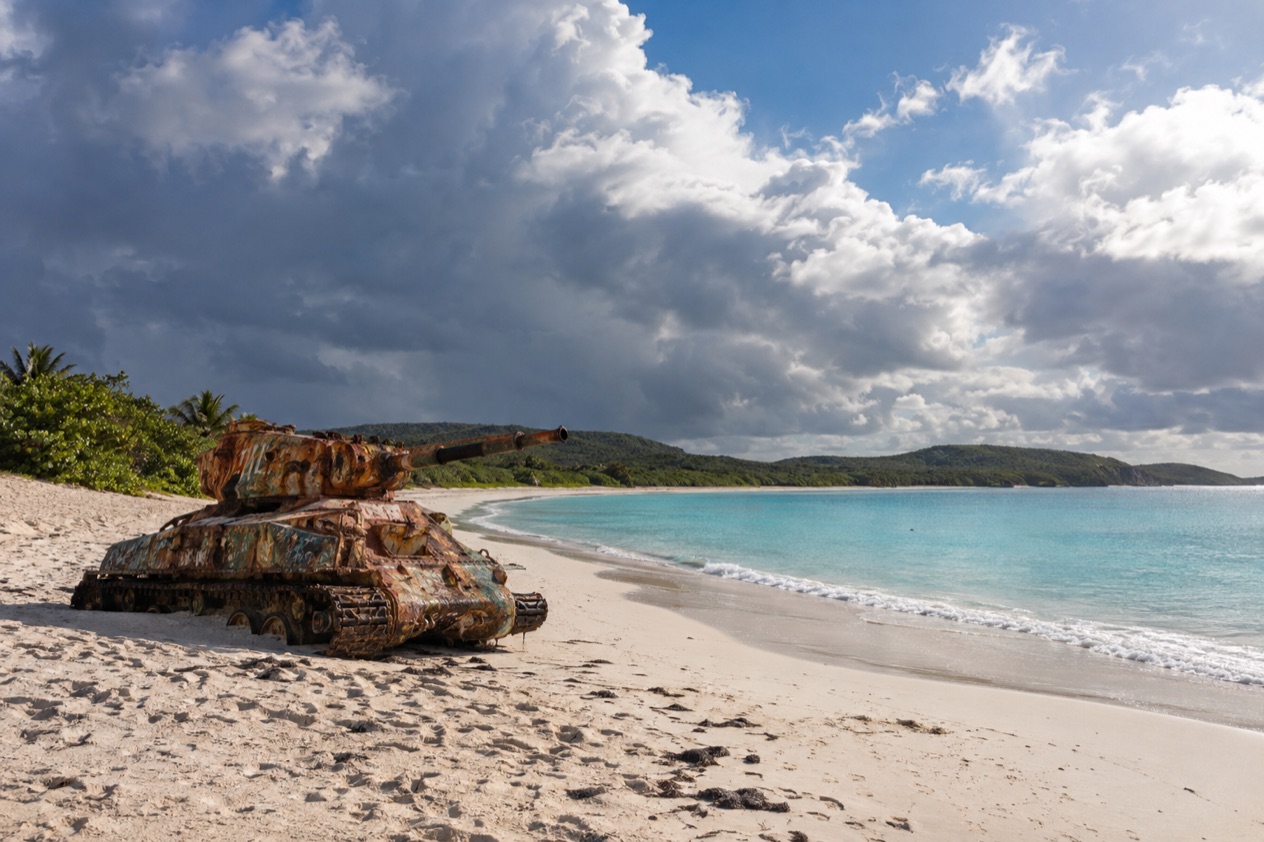
Flamenco Beach, the island’s best-known stretch of sand, lies inside the Culebra National Wildlife Refuge. The pale curve of the bay is wide enough to find space even on a busy day, and in September it is often calmer than in winter. A morning walk often uses the rusted military tanks on the sand as a favorite backdrop, and they give the scene a strange, photogenic touch.
Go early, before the sun climbs and the showers drift in, and stay for a swim in the shallow clear water. Pack food and water, since the beach has kiosks but you will want shade and a plan for the afternoon. It suits families, couples and anyone who likes a classic beach day with an easy pace.
Snorkeling at Carlos Rosario and Tamarindo
Just a short walk from Flamenco, Carlos Rosario Beach has a coral reef close to shore, and with only a few strokes you can be floating over fish. The water in September is warm and often clear on calm mornings, and the reef holds schools of small colorful fish that reward a slow, quiet swim.
On the west side, Tamarindo Beach offers a different sort of excursion. Over the seagrass, green sea turtles can frequently be watched as they feed, and you might catch sight of one coming up for air. Keep a respectful distance, do not touch the animals and enjoy the view from the surface. At both beaches, enter the water only when conditions suit your swimming ability, and wear a rash guard against the strong sun.
Zoni Beach and the quiet east
At the island’s eastern end, Zoni Beach runs long and quiet, and it draws much smaller crowds than Flamenco. It is the place to bring a book, a towel and a thermos of something cold and spend a few hours listening to the surf. In September you may have long stretches of sand to yourself.
Getting there by car is half the fun, thanks to scenery that takes in green hills and little coves. Go in the morning, when the light is soft, and leave before the afternoon showers if the sky turns dark. It suits travelers who prefer solitude and walking to organized activities.
Back in Dewey, evenings belong to the canal, where small restaurants and bars serve grilled fish, rice and beans, and cold drinks. Expect a relaxed mood, a few boaters and locals, and plenty of conversation. If the weather turns, a long lunch under cover is a fair way to spend an hour.
A two-day itinerary for Culebra in September
Day 1 starts early in Dewey with coffee and a pastry by the harbor, then a golf cart ride to Flamenco Beach before the heat builds. Swim, walk past the tanks and settle under shade for a picnic lunch. When the afternoon clouds gather, walk over to Carlos Rosario for a snorkel, since the reef is close to shore and the showers often pass quickly.
Return to town in late afternoon for a shower and a rest. With roughly twelve hours of daylight, the sun sets late enough to allow a walk beside the canal prior to your meal at a restaurant on the harbor. Order fresh fish and finish with a cold drink as the lights come on.
Day 2 heads west to Tamarindo Beach in the morning for a slow snorkel over the seagrass. Snorkel slowly, then dry off with a drink from a small shop on the way back. Midday is the time for lunch in Dewey and a pause in the shade while the heat peaks.
Later in the day, head east to Zoni Beach, where you can take a long, peaceful stroll and enjoy one final swim, then depart before dark. When showers arrive, stretch out a long midday meal in town, wander the little canal-side shops or just take in the harbor from a sheltered porch. Dinner is an easy affair, with the day’s catch and a stroll back to your room.
Is Culebra busy in September?
No, September is one of the quieter times on the island, with fewer day-trippers and plenty of room on the beaches. The summer rush has passed, schools are back in session and many mainland travelers stay away because of the hurricane season. Flamenco still draws a crowd on weekends, but you can find space easily, and the rest of the island is calm.
September’s quiet gives the island a slower feel than busy holiday weeks. Still, Culebra is small and its rentals are limited, so it is a good habit to book your room and your cart early, especially for a weekend. Ferries and flights from the main island are the part of the trip most worth settling first, since they connect everything else.
A flexible plan suits Culebra’s slow September pace. Weekdays feel especially quiet, and you may share a beach with only a handful of people. For travelers who like a sleepy island, that is the whole appeal.
What to pack for Culebra in September
Pack light, breathable clothes for steady heat and humidity, plus a few things for sun, sea and sudden showers.
- A thin rain jacket, for the short afternoon downpours.
- At Tamarindo you will want your own snorkel and mask for the turtles, and the same gear for the reef at Carlos Rosario.
- Pack sunscreen and a hat, because the sun stays powerful even when the morning is overcast.
- Bring water shoes for the hot sand and the rocky places where you get in.
- A dry bag, to keep phones and cash safe from rain and spray.
- Insect repellent, for evenings near the canal.
Good to know before you go
September falls in the heart of the Atlantic hurricane season, which runs from June 1 to November 30, so follow the National Hurricane Center and local official alerts as your trip approaches. Culebra is reachable by public ferry out of Ceiba, or you can take a short flight, and once you are there, people explore on bikes and golf carts rented locally. Book your transport and your cart first, since the island is small and supply is limited.
Culebra in September vs August and October
Moving the trip to August brings a slightly cooler sea and a few fewer rainy days, but more visitors and a livelier mood on the beaches, as summer vacations stretch on. It is a better choice for travelers who want more company, open restaurants and a busier harbor.
October is similar in temperature, with a sea just as warm and a touch more rain. It stays within the hurricane season, so the same habit of watching forecasts applies, and the island remains quiet. Some small places begin to close for a break, so options can thin out a little.
Choose September if you want empty sand and a calm pace, and choose August if you prefer a livelier island. October suits anyone who wants the same slow mood with a little more flexibility on dates.
Is September a good time to visit Culebra?
Yes, September is a good time for travelers who want warm water, quiet beaches and a slow island pace, and who do not mind a few showers. It suits snorkelers, couples, readers and anyone who likes to walk a long beach without a crowd. It is less suited to people who need a lively nightlife or a fixed outdoor schedule, since weather can shift the plan.
Once you get there, sort out your golf cart and snorkel equipment before anything else, then make for the beach while the morning light holds. Keep an eye on the forecast, follow any flags and signs, and let the afternoon showers shape a long lunch in Dewey. What stays with you from September here is the water, as warm as it gets all year, and the sight of a turtle drifting over the seagrass at Tamarindo while the harbor sleeps.
Sources
- Open-Meteo / ECMWF ERA5, normals 1991-2020 computed for the grid cell at 18.3N 65.28W, checked October 8, 2026
- Open-Meteo Marine API, average 2015-2024, checked October 8, 2026
- sunrise-sunset.org, sunrise and sunset calculated for the 15th of the month, checked October 8, 2026
- NOAA National Hurricane Center, Climatology (https://www.nhc.noaa.gov/climo/), checked October 8, 2026
To plan your stay
- Things to Do in Culebra: Flamenco Beach, Snorkeling with Sea Turtles, Wildlife Refuge and Island Life
- Culebra from San Juan: Road to Ceiba, Ferry or Flight, and a Day on the Island
- Know Before You Go to Culebra: Getting There, Water, Beaches and Island Customs
- 3 Days in Culebra: Flamenco Beach, Snorkeling Coves and a Slow Harbor Town