
On a Sunday afternoon, families fill the Plaza de Armas while a mariachi tunes up near the cathedral and the smell of grilled corn drifts across the square. Guadalajara is a big, easygoing city that most visitors find welcoming and very walkable in its old core. The honest question is how to enjoy it with good judgment, and the answer depends on where you stay, how you move at night and what you know before you land.
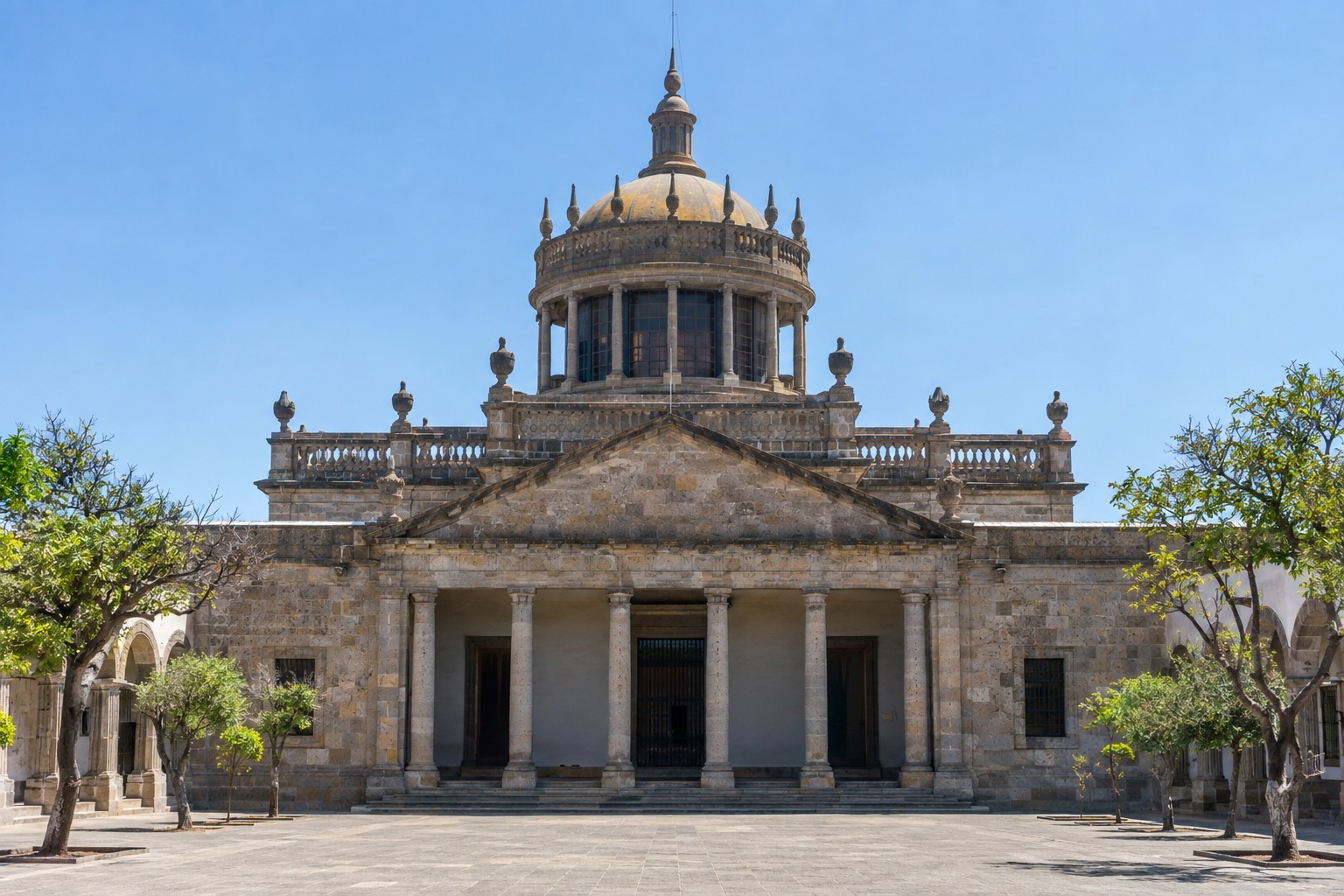
Is Guadalajara safe to visit?
Guadalajara can be visited, but it asks for more attention than a typical resort town, and no one can promise a trip will go smoothly. The advisory applies to the state of Jalisco as a whole, so it shapes how you plan rather than whether you go: stay in the busier, well-trafficked parts of the city, keep your valuables out of sight and arrange your rides ahead of time.
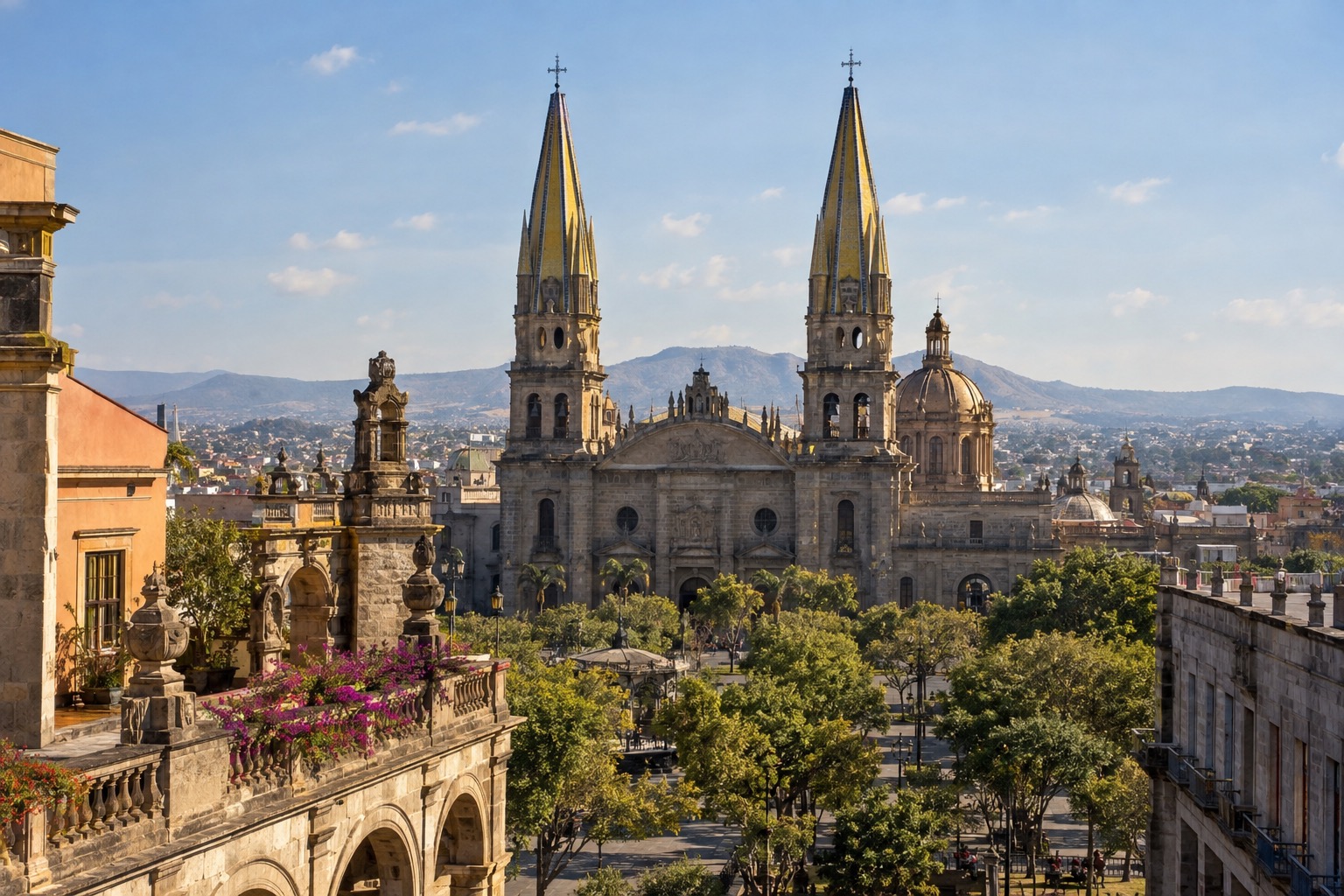
Most of the city’s appeal sits in places where there are people around for much of the day: the cathedral and its plazas, the craft streets of Tlaquepaque, the restaurants of Colonia Americana. Treat those areas as a daytime pleasure and think a little more carefully about how you get home after dark.
Safety by area in Guadalajara
Historic center
All day long, locals and visitors keep the streets surrounding the cathedral and the Plaza de Armas busy, with colonial facades, pedestrian streets and a hum that ranges from moderate to loud. That constant foot traffic is the main comfort here. Many sights sit within walking distance, which is why budget travelers, culture lovers and short stays like it.
For lodging, you will find restored colonial boutique hotels, hostels and guesthouses, and no big resorts. The light rail, buses and taxis all serve the area. When nighttime street noise bothers you, request a room that faces an interior courtyard, which also helps you avoid the busiest sidewalks late in the evening.
Colonia Americana
Around Avenida Chapultepec the mood is bohemian: street art, cafés, bars and restaurants in converted early-20th-century houses. Evenings are busy and lively, while the residential side streets are much quieter. It suits young travelers, couples, nightlife seekers and food lovers.
Walking between bars and restaurants along the avenue is easy, but the quiet side streets deserve more caution when you head back late. Taxis, ride-hailing and buses connect to the rest of the city. A room set a block or two back from the avenue also means you avoid the bar scene’s late-night commotion.
Providencia and Zona Minerva
Providencia is upscale and residential, with tree-lined streets, shopping plazas and a calm, local feel. Main avenues carry moderate traffic and the side streets are generally calm. Families, long stays and business visitors who prefer a residential base over nightlife tend to choose it. Apartments, guesthouses and extended-stay suites are the usual lodging.
Zona Minerva is more corporate: wide avenues, modern buildings, hotels aimed at business travelers and far fewer people on foot. Plan to use a taxi or car, and avoid the Minerva roundabout on weekday rush hours when you can. Both districts sit a short ride from the historic center.
Tlaquepaque
The center of Tlaquepaque is a cobblestone arts district with galleries, mariachi music, artisans and street vendors, and it is very walkable. Couples, shoppers and families who like strolling often prefer it to the big-city core. Surrounding areas are quieter and residential.
A weekday or an early weekend morning means fewer crowds in the craft shops and restaurants. Public buses, cabs, and app-based rides connect it to central Guadalajara, so you never have to cover long distances on foot when you head back after dark.
Common scams and how to avoid them
The usual traps are small and easy to sidestep once you know them. Sellers in busy plazas and in the large Mercado San Juan de Dios can be insistent, and a polite no, said once and kept moving, ends most exchanges. Look at prices before you touch anything.
Taxis hailed on the street may not use a set fare, so agree on the price before you get in or use a ride-hailing app that shows it up front. At ATMs, choose machines inside banks or shopping plazas rather than on the street, and be wary of exchanging cash at airport counters, where rates tend to be poor. Pesos from an ATM are usually the simpler route.
Getting around safely
In the historic center and Tlaquepaque you can mostly walk, with the light rail and buses filling in the gaps. For longer hops, taxis and ride-hailing are the practical choice in nearly every district, and after dark they are the sensible way home rather than a long walk through quiet streets.
Buses run along avenues such as Providencia and Terranova and are a fine daytime option. In the sprawling business and residential areas, driving is the best way to get around, and it helps if a rental there includes parking, because commercial blocks can have few street spaces. Heavy traffic builds at rush hour, so leave extra time. The trip from the airport into town takes a taxi or car a little under an hour at most, depending on traffic.
Beach, water and weather safety
With no coastline here, the weather matters more than the water. Summer brings the rainy season: July afternoons often turn stormy, with rain on most days, so streets can flood quickly and a sudden downpour is part of the rhythm. Carry a light rain jacket and give yourself extra time to get anywhere.
Winter is the opposite. January is dry with sunny, mild afternoons and cool nights, so a sweater is useful after dark. The sun is strong in the middle of the day in any season, so a hat and sunscreen are worth packing for the long plaza walks.
Good to know before you go
The U.S. State Department rates the state of Jalisco at Level 3, Reconsider Travel.
Carry small amounts of pesos, keep your phone and wallet out of view in crowds and keep a copy of your passport apart from the original. Stay aware of your surroundings in markets and at night, and let your hotel call or arrange your ride when you can. Museums are inexpensive, and the Museo Regional lists a lower rate for Mexican nationals and foreign residents.
| Site | Open | Admission |
|---|---|---|
| Museo Regional de Guadalajara | Tuesday to Sunday, 9 a.m. to 4 p.m. | 210 pesos general; 105 pesos for Mexican nationals and foreign residents |
Sources
- UNESCO World Heritage Centre, Hospicio Cabanas Guadalajara (whc.unesco.org/en/list/815), checked September 29, 2026
- INAH, Museo Regional de Guadalajara (inah.gob.mx/museos/museo-regional-de-guadalajara), checked September 29, 2026
- US Department of State, Mexico Travel Advisory (travel.state.gov), advisory of May 29, 2026, checked September 29, 2026 (date issued May 29, 2026)
- Servicio Meteorologico Nacional (CONAGUA), normales climatologicas 1991-2020, estacion 14065 (Guadalajara (Obs), Guadalajara), checked September 29, 2026
- sunrise-sunset.org, sunrise and sunset on the 15th of the month, checked September 8, 2026
To plan your stay
- Best Time to Visit Guadalajara: Weather by Month, Rainy Season, Crowds and Festivals
- Things to Do in Guadalajara: Historic Center, Tequila, Tlaquepaque and Tapatío Food
- Where to Stay in Guadalajara: Historic Center, Colonia Americana, Providencia and Tlaquepaque
- Guadalajara Airport to City: Taxi Times, Neighborhoods and Tlaquepaque