
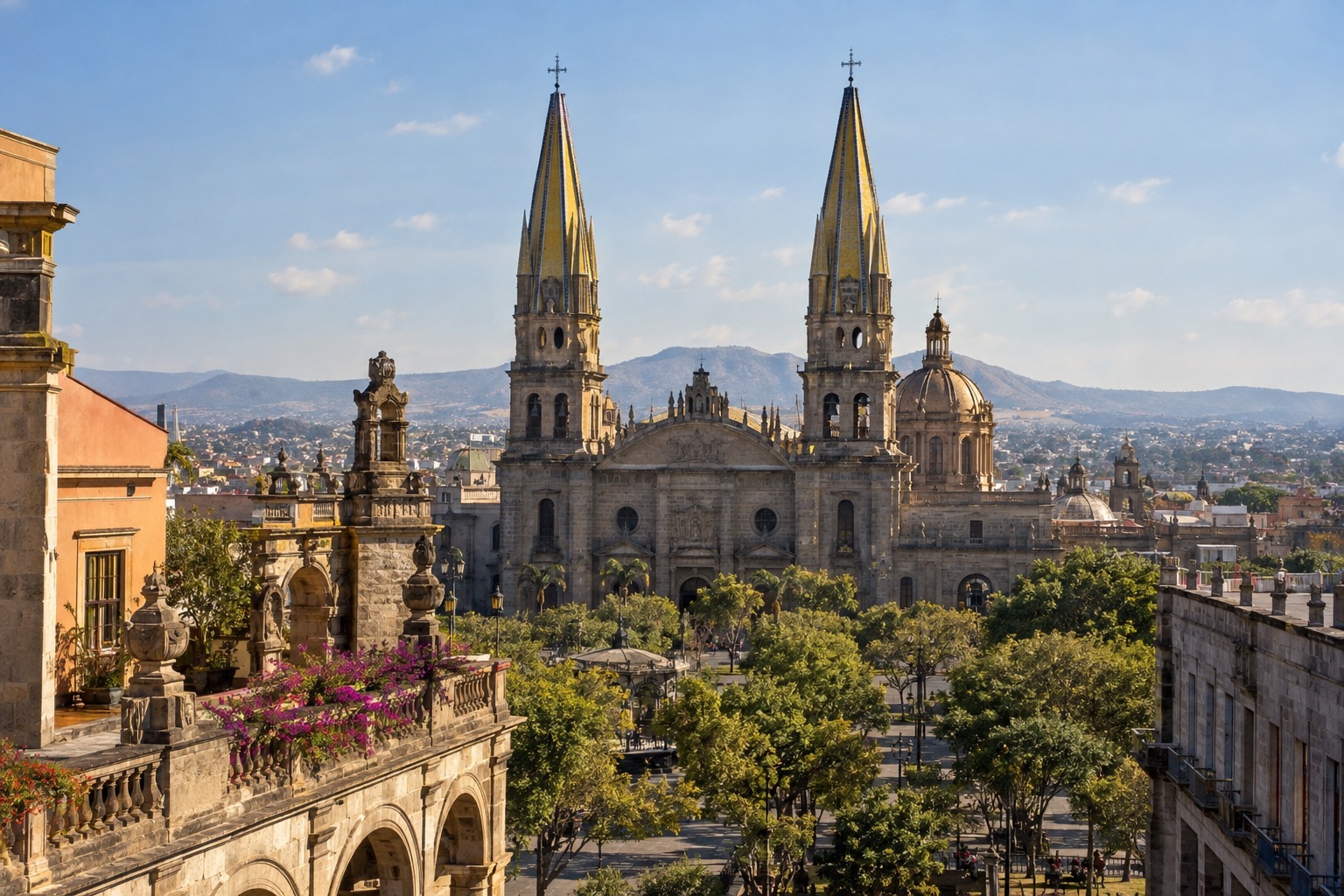
The afternoon feels warm and bright as you leave the airport, and when the taxi reaches town it stops below the cathedral’s twin spires tiled in yellow, while mariachi trumpets float from some plaza close by. Guadalajara is a big, busy, very Mexican city of colonial squares, craft towns and long lunches. A few things about its pace, its neighborhoods and its manners make a first visit much smoother.
What should you know before visiting Guadalajara?
Four things matter most: the city is inland and sprawling, the rainy season shapes summer afternoons, where you sleep changes your experience a lot, and a handful of sights are spread across the metro area rather than packed into one block. The historic center is walkable, but Tlaquepaque, Tonalá and the tequila country each deserve their own outing.
First-time visitors are often surprised that there is no beach anywhere near, and that the city feels more like a large capital than a resort. Mornings can be crisp in winter even when afternoons are warm, while July brings a wet, green city with a shower almost every day. Many people also expect one tourist center and find several distinct neighborhoods, each with its own mood.
Entry, fees and paperwork
Most of what you pay for in Guadalajara is simple: entry to a museum or a monument, and meals and rooms. A fine case in point is the Museo Regional de Guadalajara, which sits in the historic center. It is a classic stop for anyone who wants the story of western Mexico, and Mexican nationals and foreign residents pay half the general price.
| Site | Open | Admission |
|---|---|---|
| Museo Regional de Guadalajara | Tuesday to Sunday, 9 a.m. to 4 p.m. | 210 pesos general; 105 pesos for Mexican nationals and foreign residents in Mexico |
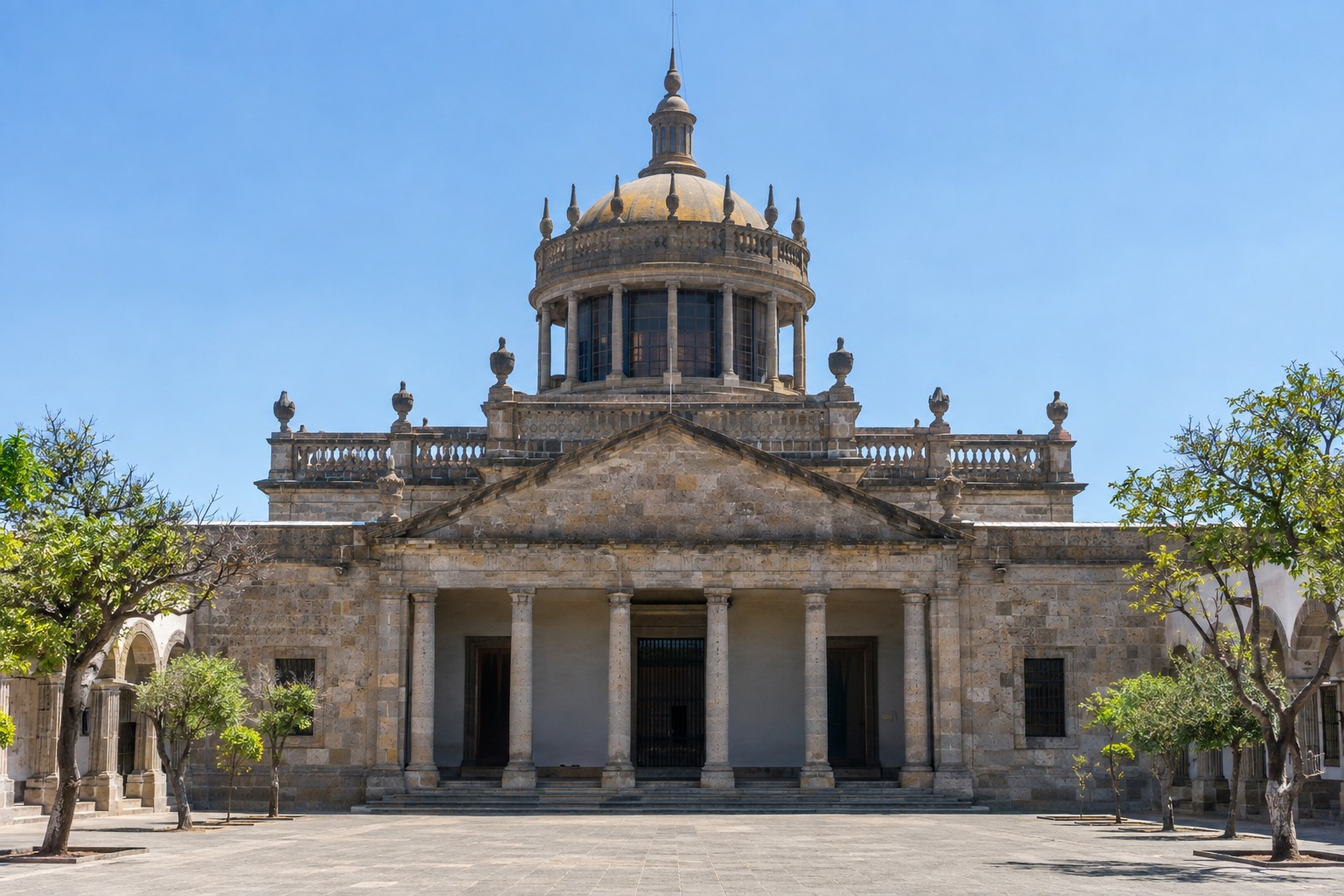
Some of the best sights cost little or nothing to simply look at. The Hospicio Cabañas, which is a UNESCO World Heritage Site, holds chapel murals that José Clemente Orozco painted during the late 1930s, while the cathedral and the Teatro Degollado stand facing each other across the center’s heart. The Plaza Tapatía links that area to the Hospicio on a pleasant pedestrian stroll.
Money, cards and tipping
Pesos are the currency that makes life easy here. Restaurants, hotels and larger shops usually take cards, but markets, taco stands, small craft stalls and many taxis run on cash, so it helps to keep small bills and coins on you. Dollars are not the everyday money, and prices at a market stall are quoted in pesos.
ATMs inside banks or shopping centers are more comfortable to use than those on a dark street corner. Tipping is a habit more than a rule: at a sit-down restaurant you normally add a tip to the bill, and it is common to leave a little for hotel porters, tour guides and the person who bags your groceries. Mariachis in the plazas play for tips and agree on a song and a price before they begin.
Getting around and staying connected
In the historic center you mostly walk, with the light rail, buses and taxis filling in the gaps. From the airport, the center is roughly 20 to 35 minutes by car or taxi depending on traffic, which makes a taxi or ride-hailing car the easy first move after landing.
Beyond the center, distances grow but stay manageable. Colonia Americana, with its bars and cafés along Avenida Chapultepec, is a short ride from the center, and Tlaquepaque is reachable by car, bus, taxi or ride-hailing.
Zona Minerva is the most car-oriented corner, with heavy traffic at rush hour, so a taxi is the practical choice there. Providencia is calmer and residential, and anyone driving should look for a place to stay with parking, since street spaces can be scarce. Day trips from the city are separate outings, so plan a full day for each.
Health, water and the sun
Guadalajara sits well above sea level, and the sun is strong even on cool days, so a hat, sunscreen and a water bottle are good companions for a day of walking. Most visitors stick to bottled or purified water for drinking, and it is the habit you will see in restaurants and hotels.
Seasons matter more than you might think. January is dry and the afternoons are pleasantly warm, but nights get cool, so a light jacket is welcome.
July is the wet month, with rain on most days and a few hours of sunshine in between, and the stormy afternoons are the time to be inside a museum or a café. The first day or two at this height can leave you a little short of breath on stairs, so take it easy on arrival.
Local customs and etiquette
A greeting goes a long way. A friendly buenos días or buenas tardes when you enter a shop, a café or a small restaurant is the norm, and a handshake or a light cheek kiss between friends is common. People in Guadalajara, who call themselves tapatíos, are warm, and a few words of Spanish are appreciated.
Cover your shoulders and knees when you step into the cathedral or a working church, and keep your voice low during services. Lunch is the main meal and tends to start in the afternoon, while dinner is late and light, so restaurants fill up later than you may be used to. In markets such as the Mercado San Juan de Dios, with its floors of food, leather and crafts, a friendly bit of bargaining is part of the fun, but it is less welcome in shops with marked prices.
Good to know before you go
The U.S. State Department rates the state of Jalisco at Level 3, Reconsider Travel.
Guadalajara is inland, so the official hurricane season on the Pacific coast is not a reason to rearrange your plans, but the summer rains are real, and an umbrella earns its place in the bag from about June on. Keep your receipts and any booking confirmations handy, and choose a room facing an interior courtyard if you want a quiet night in the historic center. One last habit: go early to the crafts towns and the big sights, when the light is soft and the streets are calm.
Sources
- UNESCO World Heritage Centre, Hospicio Cabanas Guadalajara (whc.unesco.org/en/list/815), checked September 29, 2026
- INAH, Museo Regional de Guadalajara (inah.gob.mx/museos/museo-regional-de-guadalajara), checked September 29, 2026
- US Department of State, Mexico Travel Advisory (travel.state.gov), advisory of May 29, 2026, checked September 29, 2026 (date issued May 29, 2026)
- Servicio Meteorologico Nacional (CONAGUA), normales climatologicas 1991-2020, estacion 14065 (Guadalajara (Obs), Guadalajara), checked September 29, 2026
- sunrise-sunset.org, sunrise and sunset on the 15th of the month, checked September 8, 2026
To plan your stay
- Best Time to Visit Guadalajara: Weather by Month, Rainy Season, Crowds and Festivals
- Things to Do in Guadalajara: Historic Center, Tequila, Tlaquepaque and Tapatío Food
- Where to Stay in Guadalajara: Historic Center, Colonia Americana, Providencia and Tlaquepaque
- Guadalajara Airport to City: Taxi Times, Neighborhoods and Tlaquepaque